








































Compliance Verification Report
Sample Report: See how compliance documentation is formatted. Includes all checks, results, compliance notes, and audit trail for regulatory review.
Run thorough, compliant, unbiased background verification. DPDP ready. Audit documentation automated. Risk-free hiring at every scale.
Trusted by 8,000+ companies






















Every verification is audit-ready. Every decision is documented. Every process is defensible.
Explicit hiring consent. Collect only role-required data, use it solely for hiring, and automate retention, deletion within 30 days, and breach notifications within 72 hours.
Apply uniform checks and decision standards to all candidates for each role, eliminating subjective assessments. Document decisions with criteria for audits and legal challenges.
Define compliance requirements by location. Apply local checks automatically. Update rules when regulations change, while protecting historical hires under prior rules.
Every verification logged with access details, timestamps, and actions. Export audit-ready reports anytime. Ensure traceability for regulators, audits, and legal discovery.
Dashboard tracks consent, documentation, and verification completion. Automated alerts flag missing consent, documents, and bottlenecks for proactive compliance.
Verify employees during transfers, promotions, and re-screening. Manage risks, document mobility decisions, and track workflows in one place. Compliance doesn't end at hire.
Compliance used to mean manual work, documentation gaps, and audit anxiety. SpringVerify changes that.
DPDP compliance embedded in every workflow. Secure, compliant verification from start to finish.
Consent records, verification results, and decisions documented. Export audit reports anytime.
DPDP requires consent, data minimization, and purpose limitation. We automate privacy compliance.
Trigger checks automatically via your ATS or HRMS. Zero manual intervention needed.

Track every verification, decision, and action. Full traceability for audits and legal reviews.
Access complete hiring records in one place. Prepare for audits in hours, not weeks.
Remove subjective judgment with uniform checks and documented hiring criteria.
Handle growing verification volumes without increasing workload. Maintain compliance across every hire.
From hire to retire, SpringVerify covers every stage of the employee lifecycle with continuous verification and compliance.
Compliance built into every step. Audit trails automated. Decisions documented. Risk managed.
Set verification requirements per role, location. Standardized across all hiring managers. Documented and enforced uniformly.
Candidates receive clear disclosure. Digital consent collected. Purpose stated. Consent logged and archived automatically for compliance.
SpringVerify runs all checks simultaneously. Complete audit trail recorded. All documentation archived for compliance reviews and audits.
Decision documented with compliance notes. Export audit-ready reports. Data retained per policy. No manual compliance paperwork.
From hire to retire, SpringVerify covers every stage of the employee lifecycle with continuous verification and compliance.
Skill and psychometric tests. Coding tests and plagiarism scoring. AI interviews in local languages. AI proctoring flags.
Identity, employment, education, criminal KYC. Verification from application, not post-offer. Complete background check.
Verified candidates move to day one. Single audit trail for compliance. Seamless transition to employment.
Group Health Insurance. Group Life Insurance. Group Personal Accident coverage for all employees.
Rewards and recognition. Pulse surveys. Performance management. Learning and development programs.
Exit interviews showing why people leave. Alumni verification handled automatically. Form 16 and relieving letters.
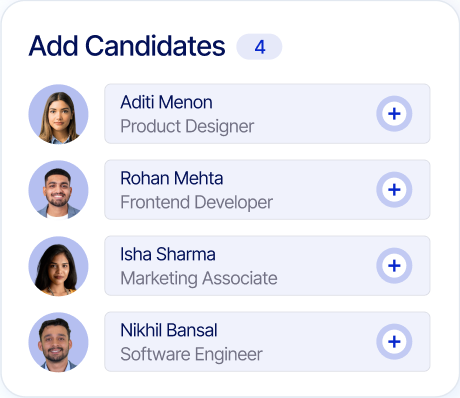
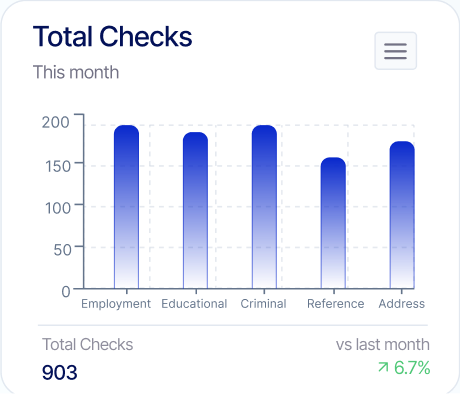
The numbers that matter for compliance teams managing risk at scale.
Every verification has complete audit trail. No gaps in documentation. All hiring decisions traceable and justified.
Compliance reviews that used to take weeks complete in hours. All documentation auto-generated and organized.
Standardized verification criteria applied uniformly. Subjective assessment eliminated. All hiring decisions documented and defensible.
ISO 27001 and SOC2 Type II certified infrastructure. AES-256 encryption. Secure data handling and access controls.






Healthcare hiring resources to help your team make informed decisions.
Sample Report: See how compliance documentation is formatted. Includes all checks, results, compliance notes, and audit trail for regulatory review.
Step-by-step guide for compliance teams. DPDP compliance, fair hiring practices, audit preparation, multi-location compliance, and regulatory management.
It's a comprehensive guide to employment verification - what it is, why it matters, how to do it, and how long it takes.