

Table of Contents
Demystifying HR Letters for Address Proof
An HR letter for address proof is a formal document provided by your employer. It verifies your current residential address, serving as confirmation for institutions that require it. This simple document is especially helpful when standard proofs, like utility bills, aren’t readily available.
Why HR Letters Hold Weight
HR letters offer valuable third-party validation of your address. Financial institutions, government agencies, and other organizations often prefer this verification method. They consider it more reliable than self-provided documents. This trust arises from the internal processes HR departments follow to validate address information.
Many companies ask for proof of residence when you join or update your details. This rigorous approach adds to the reliability of an HR letter as address proof. Address verification is also increasingly important for background checks, particularly during hiring.
In India, address discrepancies are among the most common issues found in background checks, along with employment, identity, and education verification. This highlights the need for strong address confirmation. Learn more about address verification here: What Everybody Ought to Know About Address Verification.
How HR Departments Validate Your Address
HR departments follow specific steps to ensure accuracy before issuing an address proof letter. They often compare the provided address with their internal records and may ask for supporting documents. This thorough process enhances the credibility of the HR letter.
Remote work can pose challenges, as employees may not have standard utility bills linked to their current address. In these situations, alternative verification methods might be required. For more on HR processes, see How to Master HR Processes.
Understanding the Verification Landscape
The growing need for address verification stems from increased concerns about identity theft and fraud. HR letters offer a secure and reliable method for confirming someone’s place of residence. This is particularly important for financial transactions, where verifying the applicant’s address is crucial.
Understanding the verification process, especially the role of HR letters, is key for navigating administrative and financial procedures. Knowing how it works lets you proactively address verification needs and smooth your interactions with organizations requiring address proof. Having an HR letter ready can, for example, speed up opening a bank account or getting a loan.
When You Need an HR Letter for Address Proof
Timing is everything when you need an HR letter for address proof. This document can be crucial for a variety of situations, from opening a bank account to fulfilling government requirements. Understanding when you might need one and how to plan your request can save you time and stress.
Common Scenarios Requiring HR Address Proof
Several situations may require you to present an HR address proof letter. Here are a few common examples:
- Financial Institutions: Opening a new bank account or applying for a loan often requires proof of address. An HR letter can be particularly helpful if you’ve recently moved and haven’t yet received updated utility bills.
- Government Requirements: Many government services and document applications require address verification. An HR letter can often streamline these processes, making them more efficient.
- Rental Agreements: Some landlords, especially when dealing with new tenants, request address proof. An HR letter provides additional verification, strengthening your rental application.
- Telecommunications Services: Setting up internet or phone service can sometimes involve providing proof of address. An HR letter offers a convenient alternative to traditional documents.
To help illustrate the different uses and acceptance levels of HR address proof letters, let’s take a look at the following table:
Common Uses for HR Address Proof Letters
This table outlines various situations where HR address proof letters are commonly required and the level of acceptance by different institutions.
| Purpose | Acceptance Level | Alternative Documents Typically Accepted |
|---|---|---|
| Opening a Bank Account | Generally Accepted | Utility Bills, Bank Statements, Lease Agreements |
| Government Document Applications | Varies by Agency | Aadhaar Card, Passport, Voter ID |
| Rental Agreements | Landlord Dependent | Utility Bills, Bank Statements, Previous Lease Agreements |
| Telecommunications Services | Often Accepted | Utility Bills, Bank Statements |
As the table shows, HR letters are generally accepted, but understanding acceptable alternatives is always recommended. Having backup documentation prepared can save you time and prevent potential issues.
Planning Your Request
Requesting an HR letter requires a little more than just sending a quick email. Here are a few things to keep in mind:
- Lead Time: Request your letter well in advance of your deadline. Processing times can vary between companies. Allowing extra time for unexpected delays will prevent last-minute scrambles.
- Company Policy: Familiarize yourself with your company’s specific policy regarding address proof letters. Some companies have designated procedures or personnel to handle these requests.
- Remote Work Considerations: If you work remotely, discuss alternative verification methods with your HR department. They may offer solutions tailored to remote workers to ensure you can still fulfill any required address verification. You might be interested in: How to master talent acquisition.
Alternative Documentation
While HR letters are often sufficient, understanding other accepted documents is important.
- Utility Bills: Recent utility bills (water, electricity, gas) in your name are generally widely accepted.
- Bank Statements: Current bank statements displaying your name and address can also serve as verification.
- Rental Agreements: A signed lease agreement is frequently accepted, especially if presented with a recent bank statement.
In India, address verification is essential not just for hiring, but also for financial services. Documents like Aadhaar cards and passports serve as both identity and address proof, but may not confirm current residence. Additional documents, such as utility bills and bank statements, often become necessary. Explore this topic further: Efficient Address Verification is Tricky. Knowing which documents are preferred by each institution can save you time and effort.

By understanding when and how to request an HR letter, you can navigate administrative processes with ease. Proactive planning and open communication with your HR department are key to smoothly obtaining the necessary documentation.
Securing Your HR Letter for Address Proof

Getting an HR letter for address proof doesn’t need to be stressful. This section offers a practical guide to obtaining your letter efficiently and professionally. By understanding good communication practices and following a straightforward process, you can minimize issues and potential hold-ups.
Effective Communication With HR
Clear, professional communication is key when requesting an HR letter for address proof. Think of it as requesting any other formal document. Your initial request should be brief and contain all the essential details.
This includes your full legal name, current address, and the purpose of the letter. For example, specifying that the letter is for “bank account opening” or “government document application” gives context and helps HR process your request quickly. This is much like providing a specific delivery method for important mail.
In addition, maintaining a polite and respectful tone throughout all interactions builds a good relationship with your HR team. This encourages smooth and efficient collaboration. This careful approach also shows professionalism and attention to detail.
Strategic Timing and Complete Information
Just as with sending physical mail, timing is important for your request. Submit it well before your deadline. HR departments often juggle various tasks, and processing times can fluctuate.
Some organizations might take a few days, while others may need a week or longer. Requesting the letter early accommodates unexpected delays and avoids last-minute scrambling. It’s similar to allowing ample travel time to account for potential traffic.
Also, ensure your initial request includes all the required information. This prevents back-and-forth communication and streamlines the process. This thoroughness ensures HR has everything they need to promptly issue the letter.
Addressing Challenges for Remote Workers
Remote workers sometimes face specific obstacles when obtaining address proof. Traditional utility bills might not reflect their current residence. However, solutions are available. For remote workers, open communication with HR is particularly vital.
For instance, talking with HR about your situation allows them to suggest other verification options. This might involve providing a recent bank statement, a lease agreement, or another official document. This collaborative approach shows initiative and a commitment to finding a solution. These alternatives provide flexibility, ensuring remote employees can still meet address proof requirements.
Follow-Up and Status Tracking
Following up on your request is important. If you haven’t received the letter within a reasonable period, politely check on its status. This displays diligence and keeps things moving. Much like tracking a package, tracking your HR letter request ensures its timely delivery.
Many HR departments have online portals or tracking tools. Using these resources allows you to independently monitor your request’s progress. This keeps you informed and proactive. By following these tips, you can secure your HR letter for address proof efficiently and effectively, allowing you to concentrate on other important matters.
Crafting HR Address Proof Letters That Get Accepted
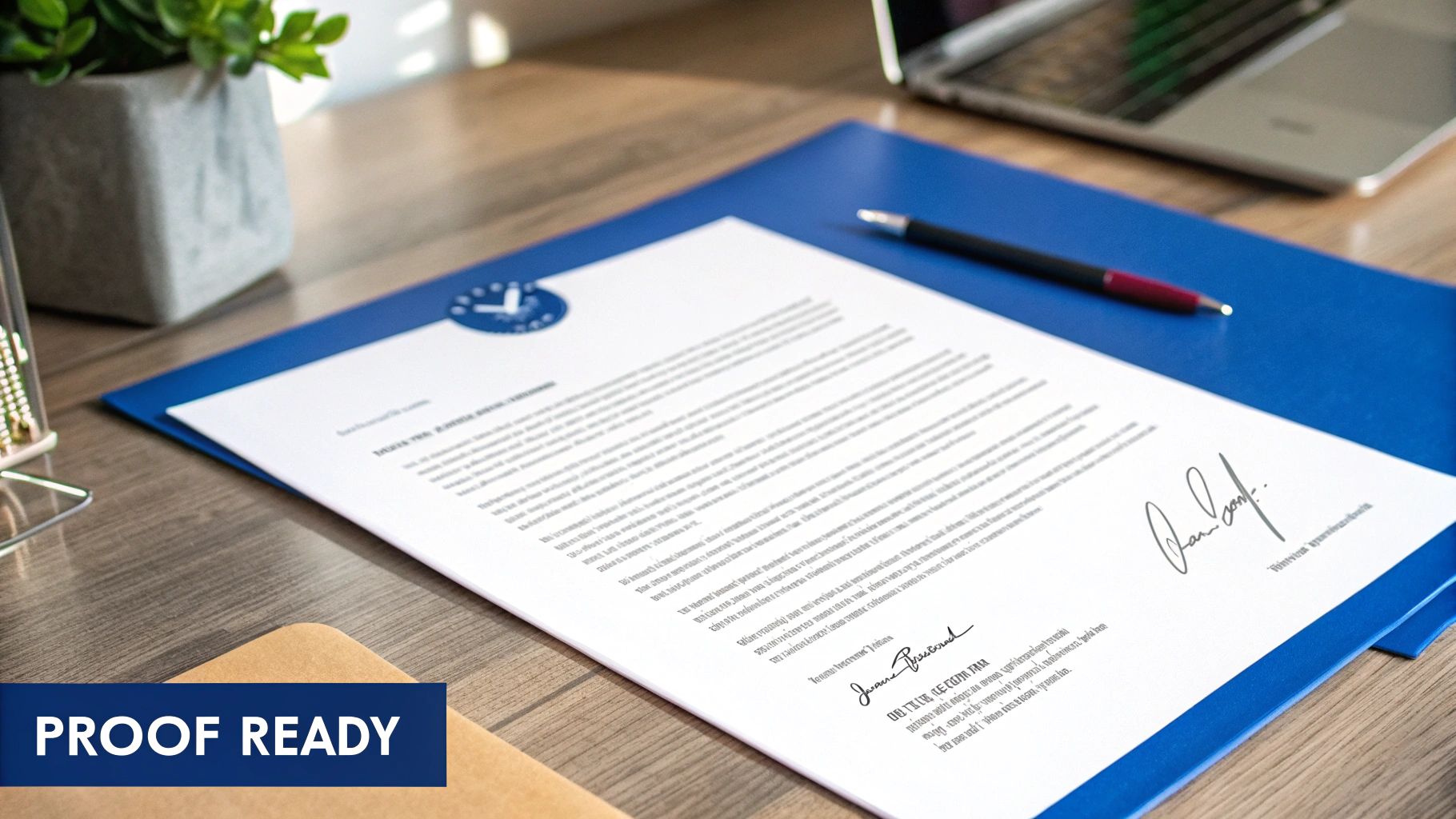
What makes the difference between an HR address proof letter that’s readily accepted and one that triggers verification problems? The key lies in the document’s perceived authority and trustworthiness. By studying both successful and rejected letters, we can identify the critical elements that receiving institutions prioritize.
Essential Components for Acceptance
Several factors contribute to a credible HR address proof letter. These include specific formatting, content, and authentication elements. For instance, a professional letterhead instantly conveys the document’s official status.
The signature placement also matters significantly. A clear, original signature from an authorized HR representative adds considerable weight and legitimacy. Combined with precise and unambiguous language, this reinforces the letter’s purpose and validity.
Furthermore, understanding the specific verification features different institutions look for is essential. Banks and government agencies may have varying criteria. Knowing these nuances can prevent delays in processing.
This means recognizing how even small inconsistencies in presentation and content can affect acceptance rates. Even with limited data, using percentages when discussing small-sample studies offers valuable comparative insights. Likewise, acknowledging the occurrence of address discrepancies, even in small samples, underscores the need for accurate verification. Find more detailed statistical guidance here: Should You Report Numbers with Small N?
The Impact of Formatting and Content
Beyond the basic requirements, the formatting and content of the letter heavily influence its perceived credibility. A well-structured letter with clear headings and concise language projects professionalism and builds trust.
Specific content elements also carry significant weight. The letter must clearly state the employee’s full legal name, current residential address, and the letter’s intended purpose. This detailed information offers clarity and context for the receiving institution.
Simply including the required information isn’t enough, however. The tone and language also play a crucial role in the letter’s effectiveness. A formal, professional tone ensures the document is taken seriously. This fosters trust and contributes to smoother processing.
Navigating Digital Verification
With technological advancements, digital verification is changing documentation standards. Some organizations now accept digitally signed and verified letters. This offers increased convenience and security. However, adoption isn’t universal.
Therefore, understanding the recipient’s specific requirements is crucial. Knowing whether a physical or digital letter is needed – and if digital, what format and authentication methods are accepted – saves time and effort. This proactive approach ensures a smoother process from submission to acceptance.
Evaluating Your HR Letter Before Submission
Reviewing your HR letter before submitting it can save you time and prevent potential problems. Checking the document for completeness, accuracy, and correct formatting allows you to identify and fix any errors. For example, verify that all necessary information is included, the language is professional, and the signature is legitimate.
This thorough review ensures the letter meets the recipient institution’s requirements, minimizing delays and ensuring smooth processing. It also demonstrates attention to detail and professionalism. By following these best practices, you can create HR address proof letters that are easily accepted, leading to efficient verification processes.
Ready-to-Use HR Address Proof Letter Templates
Why spend time creating an HR address proof letter from scratch? This section offers practical, ready-to-use templates that meet the requirements of various institutions. Whether you need a letter as an employee or you’re an HR professional issuing one, these templates will simplify the process. Each template includes explanations of key components and how they address common verification challenges.
HR Letter Request Template (For Employees)
This template helps employees effectively request an address proof letter from their HR department. A well-crafted request increases the likelihood of a prompt and positive response.
- Subject: Request for Address Proof Letter – [Your Name]
- Body:
Dear [HR Contact Person or Department],
I am writing to request an official letter from HR confirming my current residential address. I require this letter for [State the purpose, e.g., opening a bank account, applying for a government ID].
My current address is: [Your Full Address].
Please let me know if any additional information or documentation is required from my end. I would appreciate receiving this letter by [Date].
Thank you for your assistance.
Sincerely,
[Your Name]
[Your Employee ID]
[Your Contact Information]
HR Address Proof Letter Template (For HR Professionals)
This template helps HR professionals create compliant and effective address proof letters. It incorporates elements that enhance credibility and meet verification standards.
- Company Letterhead
- Date: [Date]
- To Whom It May Concern:
This letter confirms that [Employee Full Name] is currently employed at [Company Name] and resides at the following address:
[Employee Full Address]
[Employee’s start date with the company can be included here. This is optional, but helpful.]
This information is based on our company records. This letter is being issued for the purpose of [State intended purpose, as provided by employee. For example, “proof of residence for financial institution”].
Please contact us if you require further verification.
Sincerely,
[HR Representative Name and Title]
[Company Name]
[Company Contact Information]
Template Customization and Formatting
These templates can be customized to fit specific situations. For instance, if the letter is for a government ID process, include the relevant ID type. For financial applications, mention the institution’s name. This targeted approach demonstrates due diligence.
- Digital Letters: When sending digital letters, ensure they are in a widely accepted format like PDF. A digital signature from the HR representative enhances authenticity. Consider adding a timestamp for further verification.
- Physical Letters: Print physical letters on company letterhead for immediate visual recognition of legitimacy. Use high-quality paper and ensure the signature is original. This adds a tangible sense of authority.
Understanding the Key Components
The following table explains why each element is crucial for a well-structured HR address proof letter. It also highlights common mistakes to avoid, helping you create a flawless document.
| Component | Description | Why It’s Required | Common Mistakes to Avoid |
|---|---|---|---|
| Company Letterhead | Official company stationery | Establishes legitimacy at a glance | Using plain paper or personal stationery |
| Date | Date of issuance | Confirms the letter’s current validity | Omitting the date or using an incorrect date |
| Employee Information | Full name and address | Precise identification | Typos or incomplete information |
| Purpose Statement | Reason for the letter | Provides context for verification | Vague or missing purpose description |
| HR Representative Signature | Signature of authorized personnel | Authenticates the document | Unsigned or illegible signatures |
| Company Contact Information | Contact details for further verification | Enables recipient to verify the letter’s authenticity | Missing or incorrect contact details |
This table provides a clear overview of the essential components and their importance, guiding you in creating effective and compliant address proof letters. By understanding these elements, you can ensure your letters are readily accepted.
By using these templates and formatting guides, you can streamline the process of requesting and creating HR address proof letters. This structured approach helps avoid common pitfalls and ensures your documentation is effective and accepted without hassle. You can find more information on address verification at SpringVerify’s Address Verification Page.
Authentication: Ensuring HR Letter Legitimacy
In today’s world, verifying an HR letter for address proof is crucial because of the rise in document fraud. This section explores authentication from both the HR professional’s and the recipient’s point of view.
Protecting Your Organization: HR Security Measures
For HR professionals, protecting the legitimacy of issued letters is paramount. This means implementing strong security measures that deter fraud but still allow for efficient verification processing. It’s similar to how a bank protects its transactions – security is key, but so is easy access for legitimate customers.
- Digital Signatures and Watermarks: Using digital signatures and watermarks adds a layer of security, making it harder to forge or tamper with documents. They act as a digital fingerprint, uniquely identifying the document’s origin.
- Secure Document Storage: Securely storing HR letters, physically or digitally, is critical. This protects sensitive data and reduces unauthorized access risk.
- Verification Request Protocols: Clear protocols for handling verification requests ensure efficient processing and minimize the risk of data breaches.
Verification Protocols for Recipients and Requesting Organizations
Recipients and requesting organizations need efficient ways to authenticate HR letters. This involves understanding verification methods and spotting potential red flags.
- Contacting HR Directly: Contacting the issuing HR department directly provides a direct line of confirmation and quickly resolves discrepancies. It’s much like verifying a check with the issuing bank.
- Recognizing Red Flags: Learn to spot warning signs of fraudulent documents. These include inconsistencies in formatting, missing information, alterations, or a lack of proper authentication markers.
Digital Verification Technologies and Interorganizational Standards
Technology is changing how we verify documents. Digital verification technologies offer better security and speed, much like two-factor authentication (2FA) for online accounts.
- Blockchain Technology: Blockchain creates an unchangeable record of transactions, improving trust and transparency in verification. Each verification is recorded on a shared, tamper-proof ledger.
- Interorganizational Verification Standards: Standardized processes between organizations streamline authentication, similar to a universal adapter for travel. This eliminates extra steps and reduces delays.
Case Studies and Best Practices
Real-world examples highlight the importance of effective authentication.
- Successful Systems: Case studies of successful HR letter authentication offer valuable insights for organizations. They provide practical steps for improvement.
- Security Failures: Analyzing security breaches and fraud reveals vulnerabilities and highlights areas for improvement. This is like learning from past mistakes.
- Building Balanced Verification Processes: Effective authentication balances security with practicality. Overly complex procedures can create unnecessary hurdles. Just like airport security, HR letter verification needs to be thorough but efficient.
You might be interested in: How to master address verification.
Streamline your HR processes and improve hiring confidence with SpringVerify’s background verification services. Visit SpringVerify today.


