

Table of Contents
Finding the Right ATS for Your Needs
Drowning in resumes? Struggling to keep candidate communication organized? Worried about losing top talent to competitors because your hiring process is slow? In today’s competitive job market, an efficient and effective Applicant Tracking System (ATS) is essential. These tools streamline everything from job posting and candidate sourcing to interview scheduling and offer management, solving key recruitment pain points. But with so many options, choosing the right ATS can be overwhelming.
This guide will help you navigate the world of Applicant Tracking Systems and find the perfect solution for your needs in 2025. Whether you’re a growing startup, an established SME, or a large enterprise, the right ATS can significantly improve your hiring outcomes.
Key Factors to Consider
- Scalability: Can the ATS grow with your company?
- Integrations: Does it integrate with existing HR systems like BambooHR for payroll and onboarding?
- Customization: Can you tailor the ATS to your specific workflow?
- Reporting & Analytics: Does it offer robust reporting to track key metrics?
- Pricing: Does the pricing model fit your budget?
An effective ATS should automate tedious tasks and enhance the candidate experience, improve team collaboration, and help you secure top talent.
Technical Considerations
Don’t overlook important technical aspects:
- Data Security: Is your candidate data safe and secure?
- Compliance: Does the ATS meet regulations like GDPR?
- Mobile Accessibility: Can you access and manage the system on the go?
We’ll dive into a comparison of leading ATS platforms, examining their strengths, weaknesses, pricing, and ideal use cases. By the end, you’ll have the knowledge to confidently select an ATS that will improve your hiring process and empower you to build a world-class team.
1. Greenhouse
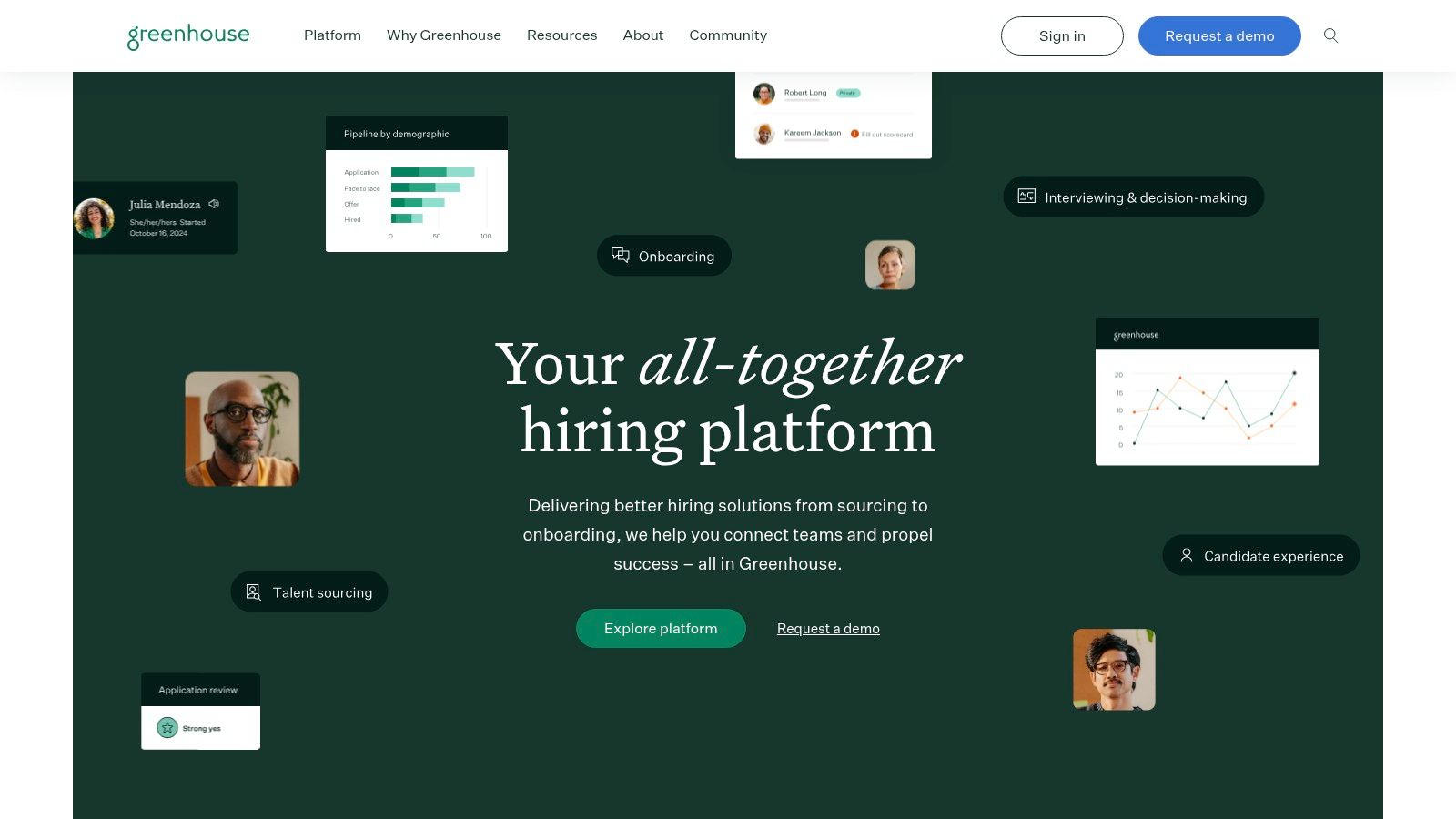
Greenhouse is a robust applicant tracking system (ATS) designed primarily for enterprise-level organizations and rapidly expanding businesses. Its core strength lies in its ability to create structured hiring processes. These processes minimize bias and empower data-driven recruitment decisions. Greenhouse earns its place on this list thanks to these powerful features and its dedication to inclusive and efficient hiring practices. This is especially important for larger organizations.
What kinds of companies benefit most from using Greenhouse?
Who Is Greenhouse Best For?
While suitable for mid-sized businesses, Greenhouse truly excels when serving large enterprises and high-growth companies. These organizations generally need a highly configurable and scalable ATS. It’s a particularly good fit if your company values data security, compliance, and seamless integration with existing HR systems. Startups and small to medium-sized enterprises (SMEs) might find Greenhouse overly complex and expensive, especially when just starting out.
What makes Greenhouse so effective? Let’s dive into its core functionalities.
Key Features and Benefits
- Structured Hiring: Standardized interview kits and scorecards maintain consistency in candidate evaluations across all hiring managers. This promotes fairer hiring and reduces unconscious bias, an essential aspect of scaling a team while preserving quality.
- Data-Driven Insights: Advanced analytics and reporting tools provide valuable metrics. These offer insight into recruiting effectiveness, time-to-hire, candidate sources, and more, empowering HR teams to optimize strategies and showcase return on investment (ROI).
- Extensive Integrations: Greenhouse seamlessly integrates with your existing systems through an API-first design and over 350 third-party integrations. These include connections with HRIS, background check providers, and assessment platforms. This interconnectedness streamlines workflows and reduces data silos.
- DEI Focus: In-built diversity, equity, and inclusion (DEI) tools and analytics help organizations track and improve DEI initiatives, ultimately leading to a more diverse and representative workforce.
- Mobile Optimization: A dedicated mobile app gives hiring teams access to candidate profiles and interview feedback on the go. This promotes collaboration and expedites the entire hiring process.
Pros
- Intuitive Interface: Greenhouse offers a user-friendly interface favored by recruiters and hiring managers alike, simplifying training and everyday usage.
- Customization: Robust customization options allow you to tailor the system to unique workflows and organizational structures, accommodating even the most complex hiring needs.
- Bias Reduction: Structured hiring processes combined with DEI tools actively help minimize bias in hiring decisions.
- Candidate Experience: Greenhouse facilitates an excellent candidate experience by offering engaging communication tools and a straightforward application process.
Cons
- Pricing: Greenhouse tends to be more expensive than other ATS solutions, a potential barrier for smaller companies with tighter budgets. Pricing is usually quote-based and varies based on company size and chosen features.
- Complex Setup: Implementing Greenhouse can be intricate and may demand considerable time and resources. Larger organizations sometimes need extra support from Greenhouse’s implementation team.
- Feature Overload: The wide range of features can be overwhelming for smaller companies that may not utilize all of the available functionalities.
- Customer Support: While generally well-regarded, some users have reported slower response times from customer support, particularly during busy periods.
Implementation Tips
- Plan Thoroughly: Before implementing Greenhouse, carefully analyze your current hiring procedures and pinpoint areas needing improvement.
- Utilize Training Resources: Greenhouse offers extensive documentation and training materials; make use of these resources to fully equip your team to leverage the platform’s capabilities.
- Start with Core Features: Avoid implementing all features at once. Begin with the essential functionalities that directly address your current hiring requirements and scale up gradually as needed.
- Integrate Strategically: Focus on integrating with your most important HR systems first to ensure maximum efficiency and optimal data flow.
Comparison With Similar Tools
While Lever and Workday Recruiting offer similar functionalities, Greenhouse often distinguishes itself with robust customization, a dedicated DEI focus, and a strong emphasis on structured hiring.
Website
2. Lever
Lever stands out as a top talent acquisition platform, blending the strengths of an Applicant Tracking System (ATS) with Customer Relationship Management (CRM) functionality into a comprehensive Talent Relationship Management (TRM) system. This focus on building and nurturing candidate relationships makes Lever a compelling option for organizations prioritizing long-term talent strategies.
Lever streamlines the entire hiring journey, from initial sourcing and nurturing to interviewing and final hiring decisions. The platform’s visual pipeline management, featuring a user-friendly drag-and-drop interface, provides hiring teams with a clear view of each candidate’s progress. This is particularly beneficial for startups and small to medium-sized enterprises (SMEs) experiencing rapid growth and managing high applicant volumes.
Automated email personalization and follow-up sequences ensure consistent and engaging communication with candidates. This automation frees up recruiters to focus on more strategic initiatives. Two-way email synchronization and calendar integrations further enhance efficiency by minimizing administrative tasks. For larger organizations, Lever offers advanced candidate relationship analytics, providing valuable data-driven insights for optimizing hiring strategies.
Features
- Combined ATS and CRM functionality with nurture campaigns
- Visual pipeline management with a drag-and-drop interface
- Automated email personalization and follow-up sequences
- Advanced candidate relationship analytics
- Two-way email sync and calendar integration
Pros
- Exceptional Candidate Experience and Relationship Management: Lever’s CRM capabilities empower companies to create a personalized and engaging experience for every candidate, regardless of the hiring outcome. This approach strengthens employer branding and cultivates a valuable talent pool for future opportunities.
- Intuitive Interface Requiring Minimal Training: Lever’s user-friendly design simplifies the onboarding process for new users, enabling HR teams to quickly adopt and effectively utilize the platform with minimal training.
- Strong Collaboration Tools for Hiring Teams: The platform facilitates seamless communication and collaboration among hiring managers, recruiters, and interviewers, ensuring alignment throughout the entire hiring process.
- Excellent Integration with LinkedIn and Other Sourcing Tools: Lever integrates seamlessly with LinkedIn and other popular sourcing tools, streamlining the process and expanding the reach to a broader pool of qualified candidates.
Cons
- Reporting Functionality Could Be More Robust: While Lever offers analytics, some companies may find the reporting functionality less comprehensive than other enterprise-focused ATS solutions, particularly those requiring highly granular and customizable reports.
- Customization Options Are Limited: Lever’s emphasis on ease of use may limit flexibility for large enterprises with highly specific workflow requirements.
- Limited Functionality for Complex Hiring Processes: Organizations with intricate hiring procedures may find Lever’s streamlined approach lacks the necessary flexibility for their specific needs.
- Cost May Be Prohibitive for Smaller Organizations: Lever’s pricing structure could be a barrier for budget-conscious startups and very small businesses. It is crucial to carefully consider your growth trajectory and hiring needs when evaluating the cost-benefit.
(Pricing and technical requirements are not publicly available and require contacting Lever directly.)
Implementation/Setup Tips
- Clearly define your hiring workflows and key metrics before implementation.
- Utilize Lever’s comprehensive knowledge base and customer support resources.
- Integrate Lever with your existing HR tech stack to maximize efficiency.
Comparison With Similar Tools
Lever shares similarities with tools like Greenhouse and Workday Recruiting in its modern approach to talent acquisition. However, Lever differentiates itself through its strong emphasis on candidate relationship management. Greenhouse is known for more robust reporting and customization features, while Workday Recruiting is often a better fit for large enterprises seeking a comprehensive HR suite.
Website: https://www.lever.co/
3. Workday Recruiting
Workday Recruiting goes beyond the typical Applicant Tracking System (ATS). It’s a complete talent acquisition platform built into the broader Workday Human Capital Management (HCM) environment. This integration makes it especially appealing for larger companies needing a single system for all HR tasks, from recruitment and onboarding to performance reviews and payroll. It aims to simplify processes and provide a centralized hub for all employee information.
Picture this: a candidate applies for a position, moves through interviews, accepts an offer, and gets onboarded—all within one system. Workday Recruiting makes this smooth transition possible. It automatically transfers candidate data to the employee database after hiring, removing manual data entry and the chance of mistakes. This seamless integration sets Workday apart from standalone ATS options.
Key Features and Benefits
Some of the key features that make Workday Recruiting stand out include:
- Machine Learning-Powered Recommendations: The platform proactively suggests qualified candidates from both internal talent pools and external sources, accelerating the hiring process.
- Internal Mobility and Succession Planning: Tools designed to help organizations identify and nurture internal talent, encouraging career development and reducing employee turnover.
- Global Compliance: For international companies, Workday Recruiting offers comprehensive tracking and reporting, helping ensure adherence to local regulations and minimizing legal risks.
- Robust Security: A strong security model with role-based access controls protects sensitive employee and candidate data.
Pros and Cons of Using Workday Recruiting
Let’s take a look at some of the advantages and disadvantages of using the platform:
| Pros | Cons |
|---|---|
| Seamless integration with other Workday modules | Significantly higher cost than standalone ATS solutions |
| Powerful reporting across the entire talent lifecycle | Complex implementation requiring specialized consultants |
| Single system of record for all employee and candidate data | Less user-friendly interface compared to modern ATS solutions |
| Strong compliance and security features | Customization often requires professional services engagement |
While specific pricing isn’t publicly available, Workday Recruiting is generally considered a substantial investment, reflecting its comprehensive features and enterprise-level capabilities. Technical requirements depend on the overall Workday HCM implementation.
For businesses already using Workday HCM, adding the Recruiting module is a logical step towards a unified HR system. However, the cost and complexity might be a barrier for startups and small to medium-sized enterprises (SMEs). Learn more about building a strong hiring strategy in our article about Talent Acquisition. Alternatives like Greenhouse or Lever provide more streamlined and user-friendly interfaces but offer fewer integration options.
Implementation Advice
Implementation Tip: Work with Workday-certified implementation partners early on. Their expertise is crucial for configuring the system to your specific needs and ensuring a seamless transition.
Workday Recruiting stands out for its integrated approach to talent acquisition within a robust HCM suite. While the cost and complexity might be prohibitive for some, large companies looking for a powerful, scalable, and compliant solution may find it a worthwhile investment. Visit Workday Recruiting for further details.
4. SmartRecruiters
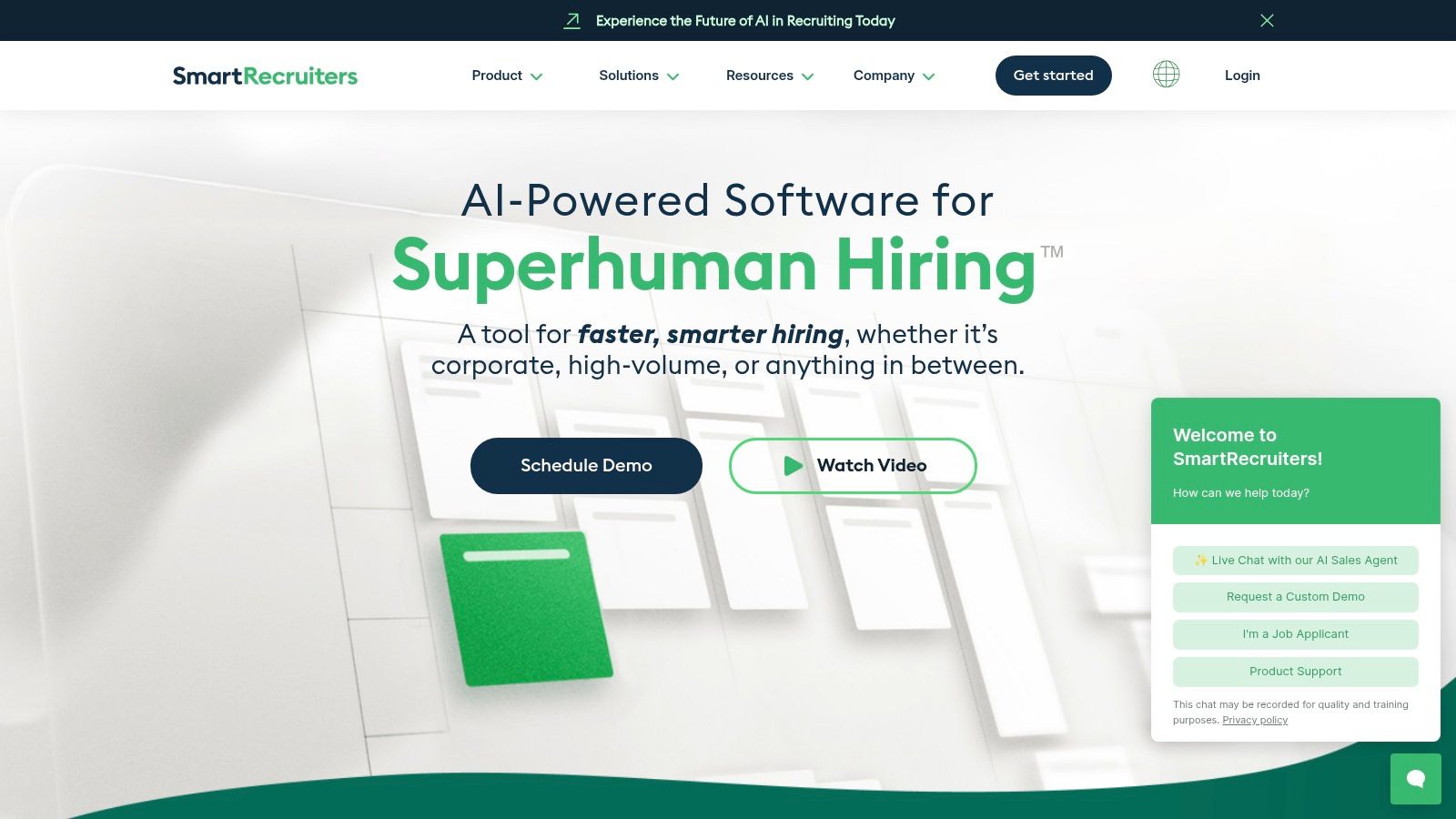
SmartRecruiters stands out as a complete talent acquisition suite, going beyond the usual applicant tracking system (ATS) features. It offers a strong customer relationship management (CRM) system and AI-driven tools. This makes it a good choice for larger companies with complex hiring needs, especially those wanting to improve the candidate experience and simplify global recruitment.
SmartRecruiters brings several important functions together in one platform: applicant tracking, recruitment marketing, candidate relationship management (CRM), and its own job advertising platform. This combined approach simplifies the entire hiring process, from finding and attracting candidates to managing applications and making offers.
Key Features and Benefits
- AI-Powered Candidate Matching and Screening: This feature automates time-consuming tasks like reviewing resumes and matching candidates to open positions. This saves recruiters time and can lead to better hires. It’s especially helpful for high-volume recruiting.
- Native Programmatic Job Advertising: You can reach a broader group of qualified candidates through automated job postings on multiple platforms. This simplifies recruitment marketing and helps make the most of your advertising budget.
- Collaborative Hiring with Mobile-First Design: SmartRecruiters makes it easier for hiring managers and recruiters to work together. This improves communication and speeds up decision-making. The mobile-first design makes it accessible anywhere.
- Advanced Analytics and Recruitment Marketing Tools: The platform gives you useful data on how well your recruitment strategies are working. This allows you to use data to make decisions and improve your hiring process.
- Extensive Marketplace of Pre-built Integrations: SmartRecruiters connects easily with many other HR tech tools, from background check providers to Human Resource Information Systems (HRIS) systems. This smooth, integrated workflow is a big plus for companies that want to connect SmartRecruiters with their existing systems.
Pros
- Modern, User-Friendly Experience: Recruiters and candidates both have a clear and intuitive experience, which improves engagement and satisfaction.
- Flexible Configuration Options: SmartRecruiters adapts to different hiring processes, making it a good fit for various industries and company sizes (mainly larger organizations).
- Comprehensive Talent Acquisition Suite: It offers more than just basic ATS features, providing a complete solution for managing the entire talent lifecycle.
- Strong Global Capabilities: The platform helps with international hiring, with features for compliance and global talent sourcing. This is particularly helpful for multinational companies.
Cons
- Premium Pricing: The cost of SmartRecruiters may be too high for smaller businesses and startups with limited budgets. The exact pricing isn’t public, but it’s known to be more expensive than many other ATS options.
- Additional Module Purchases: Some advanced features require buying extra modules, adding to the total cost.
- Complex Setup for Enterprise Implementations: Setting up SmartRecruiters can be complicated for larger organizations because of its many features and customization options. Dedicated support and training are often needed.
- Limited Mobile App Functionality: While the platform has a mobile-first design, the mobile app itself doesn’t have all the features of the desktop version.
Implementation/Setup Tips
- Plan Your Integration Strategy: Figure out which of your existing HR tech tools you need to connect with SmartRecruiters.
- Use the Available Training Resources: SmartRecruiters offers thorough training and support to help your team use the platform effectively.
- Start with a Pilot Program: Try using SmartRecruiters with one department or team before rolling it out across the whole company. This lets you test and refine your setup.
Comparison with Similar Tools
SmartRecruiters is often compared to platforms like Greenhouse and Lever. All three offer solid ATS and recruitment marketing capabilities. But SmartRecruiters sets itself apart with its complete talent acquisition suite and stronger focus on global hiring. Greenhouse and Lever might be better for smaller businesses because of their potentially more affordable pricing.
Website: https://www.smartrecruiters.com/
SmartRecruiters is a strong solution for companies that want a modern, complete talent acquisition platform. It’s especially good for those with complex or international hiring requirements. The cost and complex setup might be a challenge for smaller organizations. But its many features and focus on the candidate experience make it a good choice for larger businesses.
5. iCIMS Talent Cloud
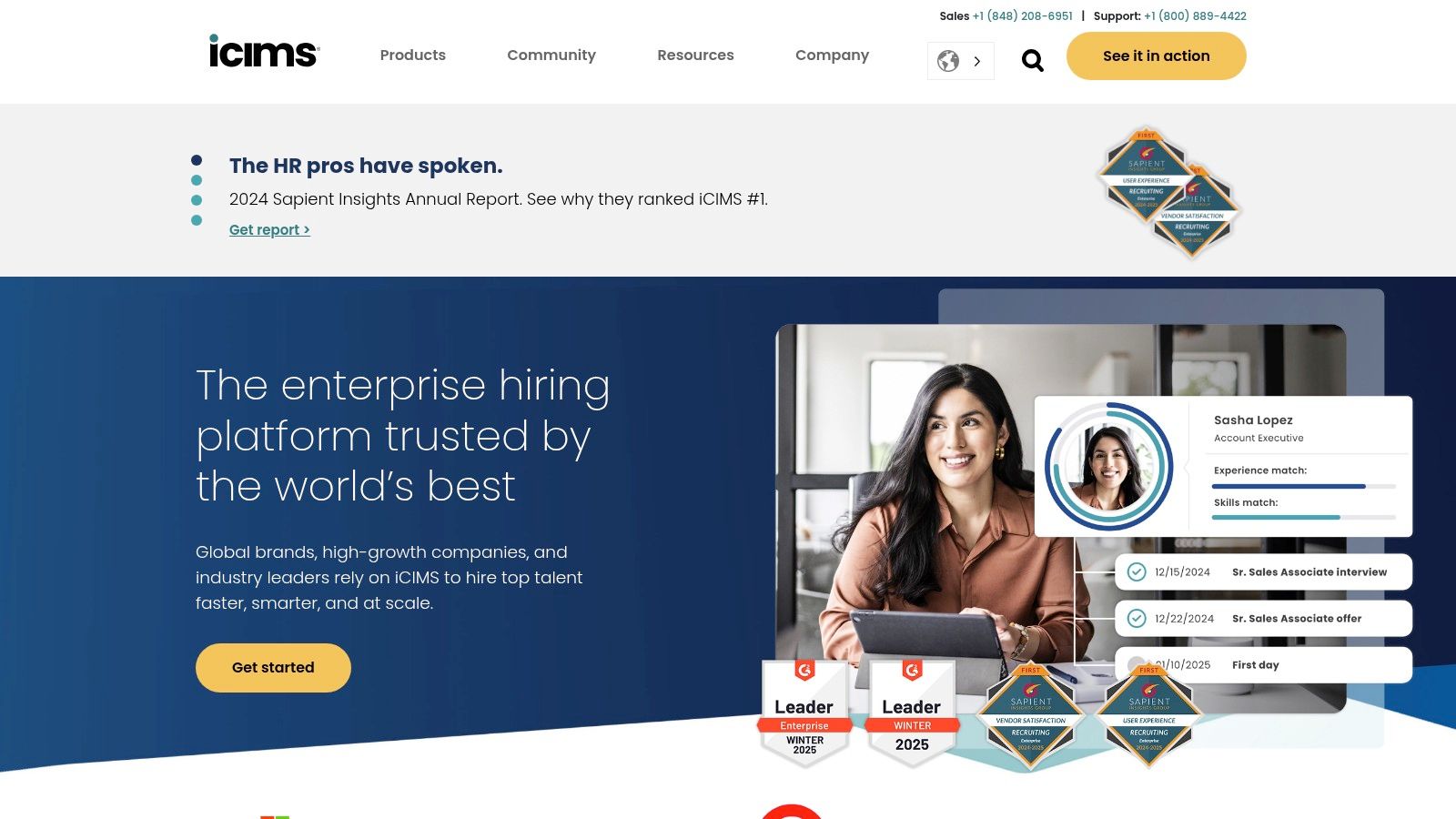
iCIMS Talent Cloud stands out for its comprehensive approach to talent acquisition. It goes beyond the basics of applicant tracking, offering a robust platform designed for mid-market and enterprise organizations. If your company needs a scalable solution for high-volume and complex hiring, this might be a good fit.
While geared toward larger organizations, the modular design of iCIMS allows businesses to select only the components they need. This offers a degree of flexibility, especially valuable for growing companies.
iCIMS provides specialized modules for various aspects of talent acquisition.
- Recruitment marketing
- Candidate relationship management (CRM)
- Applicant tracking
- Onboarding
This streamlines the entire hiring journey within a single platform, significantly improving efficiency and communication.
Deeper Dive into iCIMS Modules
For example, the recruitment marketing module empowers targeted campaigns and talent pooling. This proactive approach helps build a strong candidate pipeline. The CRM module facilitates ongoing engagement with potential candidates, nurturing relationships even before a position opens. AI-driven candidate matching and engagement tools automate tedious tasks, helping recruiters identify top talent more quickly.
iCIMS is particularly well-suited for organizations with complex hierarchical structures and diverse hiring needs due to its extensive configurability. Robust compliance management tools make it a great choice for government contractors and companies in regulated industries. If compliance is a major concern, this platform addresses those needs. You might also be interested in our guide on Employment Verification.
Key Features and Benefits of iCIMS
Features:
- Modular platform: Choose the components you need, from applicant tracking to onboarding.
- Configurable: Adapt the system to your specific organizational structure and workflows.
- AI-driven matching: Automate candidate screening and boost the quality of hires.
- Recruitment marketing: Build robust talent pipelines and attract top-tier candidates.
- Advanced compliance: Meet stringent regulatory requirements for your industry.
Pros:
- Highly scalable: Grows with your organization as your needs evolve.
- Specialized recruitment tools: Provides advanced functionality beyond basic ATS features.
- Strong compliance features: An ideal choice for companies in regulated industries.
- Excellent customer support: Offers ongoing assistance throughout implementation and beyond.
Cons:
- Dated interface: The user interface isn’t as modern or intuitive as some competitors.
- Potentially high cost: Choosing multiple modules can significantly increase overall expenses.
- Complex setup: Implementation and customization often require professional services.
- Overwhelming for casual users: The system’s depth can be challenging for infrequent users.
Pricing and Technical Requirements
iCIMS doesn’t publicly share pricing details. Contact their sales team for a customized quote tailored to your organization’s requirements and chosen modules.
As a cloud-based SaaS platform, iCIMS Talent Cloud is accessible through a web browser. Integration capabilities with other HR and business systems are available. While specific technical requirements are not publicly listed, contacting their sales team can provide further clarification.
Tips for Implementing iCIMS
- Clearly define your needs: Identify the essential modules and functionalities required before implementation.
- Engage with iCIMS professional services: Leverage their expertise for efficient configuration and integration.
- Develop a comprehensive training plan: Ensure all users understand the system’s various features and functionalities.
iCIMS Talent Cloud offers a powerful solution for mid-size to large organizations with complex hiring needs. While the cost and complexity may not be ideal for smaller businesses, the scalability and in-depth features make it a strong contender for those requiring a full-featured talent acquisition platform.
6. JazzHR
JazzHR secures a spot on this list due to its affordability and user-friendly design as an applicant tracking system (ATS). It’s geared towards small to mid-sized businesses (SMBs). While it might not have all the advanced features of larger platforms, its streamlined design and intuitive interface make it a great option for businesses prioritizing simplicity and quick setup.
Practical Applications and Use Cases
- Startups and rapidly expanding companies: JazzHR lets these businesses quickly implement a structured hiring process without the overhead of complex, expensive systems. Its ease of use minimizes training time, allowing teams to concentrate on finding the right talent.
- SMBs with limited HR staff: Automated features like job board syndication and interview scheduling give HR teams more time for strategic work. They can spend less time on administrative tasks.
- Businesses seeking to improve employer branding: Customizable career pages and application forms let companies present a strong brand and a positive candidate experience.
Features and Benefits
- Customizable application forms and branded career pages: Present a professional, consistent brand throughout the hiring process. This helps attract and engage top talent.
- Interview scheduling and candidate assessment tools: Organize the interview process and gather valuable insights into each candidate.
- Job board syndication and social media integration: Reach more candidates and attract a larger talent pool by posting openings across multiple channels.
- Collaborative hiring with shared notes and evaluations: Keep hiring teams aligned with tools for shared feedback and evaluation.
- Custom workflow creation: Create specific hiring workflows for different roles and departments within your organization.
Pros
- Affordable with transparent pricing: JazzHR provides tiered plans suitable for various budgets, making it accessible for businesses of all sizes. Contact JazzHR directly for specific pricing details.
- Quick implementation and minimal training: Get started quickly with its intuitive interface and available support resources.
- Balanced features for SMBs: Provides a strong feature set without overwhelming users with unnecessary complexity.
- Responsive customer support: A dedicated support team is available to assist when needed.
Cons
- Limited customization: While JazzHR offers customization, it’s less extensive than enterprise-grade platforms.
- Basic reporting: Reporting is suitable for basic tracking but may not be sufficient for in-depth analytics.
- Fewer integrations: JazzHR integrates with other tools, but the options are more limited than those offered by larger ATS platforms.
- Limited functionality for high-volume hiring: It is best suited for SMBs and may not be optimal for high-volume or complex hiring needs.
Implementation/Setup Tips
- Define your hiring process: Map your existing hiring process before implementing JazzHR and look for areas to improve.
- Use available resources: Take advantage of JazzHR’s onboarding and support resources to get started.
- Customize your career page and application forms: Create a strong first impression on candidates.
Comparison with Similar Tools
Similar to BambooHR and Zoho Recruit, JazzHR stands out with its affordability and ease of use. It’s a great choice if you need a straightforward, budget-friendly solution.
Website
JazzHR is a valuable tool for SMBs and startups looking for a streamlined, affordable, and user-friendly ATS. While it may not have the advanced features of enterprise systems, its core functionality addresses the key hiring needs of growing businesses.
7. Bullhorn
Bullhorn stands out as a leading applicant tracking system (ATS), specifically designed for the staffing and recruitment industry. While perhaps not the best fit for internal corporate HR teams, its specialized tools make it powerful for agencies handling large numbers of candidates and client relationships. If candidate placement is core to your business, Bullhorn is worth a look.
Bullhorn goes beyond typical ATS features by including a robust customer relationship management (CRM) system. This integrated approach allows staffing firms to manage the entire recruitment process. Everything from initial client outreach and acquisition to candidate sourcing, placement, and ongoing relationship management is handled within one platform.
Key Features and Benefits
- Combined ATS and CRM: Manage both candidates and clients in one place, track interactions, and simplify your communication. This is especially helpful for agencies working with numerous clients and open roles.
- Automated Candidate Matching and Intelligent Search: Find suitable candidates quickly from your database based on skills, experience, and other factors. This automation saves recruiters valuable time compared to manual searches.
- Placement Management and Client Portal: Improve the placement process with built-in tools for offer management, onboarding, and keeping clients in the loop. Client portals offer increased transparency and better collaboration.
- Time and Expense Tracking: Easily track billable hours and expenses tied to placed candidates, which simplifies invoicing and reporting.
- Commission Calculation and Reporting: Automate commission calculations based on successful placements, ensuring accurate and timely payments for your recruiters.
- Comprehensive Integrations: Bullhorn connects with a wide range of other staffing-specific tools, expanding its capabilities and allowing for smooth data transfer.
Pros
- Built for Staffing Agencies: Bullhorn’s features address the unique needs and workflows of the staffing and recruitment industry.
- Candidate Database Management: Build and maintain a strong talent pool with advanced search and filtering capabilities.
- Relationship Tracking: Gain a comprehensive overview of your recruitment pipeline and pinpoint areas for improvement by clearly tracking connections between candidates, jobs, and clients.
Cons
- Not Ideal for Corporate HR: The platform’s focus on staffing agencies makes it less suited for internal company hiring.
- Cost: Pricing, typically based on user numbers and features, can be a challenge for smaller agencies. Contact Bullhorn directly for pricing details.
- Learning Curve: Bullhorn’s powerful features mean it can take time for new users to become proficient.
- Limited Mobile Experience: While mobile access is available, certain features are best used on a desktop.
Implementation/Setup Tips
- Data Migration: Careful planning is essential for smooth data transfer from your old system. Bullhorn offers professional services to help with this.
- Training: Invest in training for your team to get the most out of the platform.
- Customization: Tailor Bullhorn to your specific needs and workflows by taking advantage of its customization options.
Comparison with Similar Tools
Other ATS platforms like Zoho Recruit and JobDiva also serve staffing agencies. Bullhorn distinguishes itself with its strong emphasis on relationship management and its broad set of integrations designed specifically for the staffing industry.
Bullhorn is a valuable tool for staffing and recruiting agencies looking to streamline operations, enhance candidate and client management, and boost growth. Though it has a learning curve and a potentially higher cost, its specialized features make it a worthwhile investment for businesses focused on candidate placement. If that sounds like your business, Bullhorn is worth exploring.
8. BambooHR
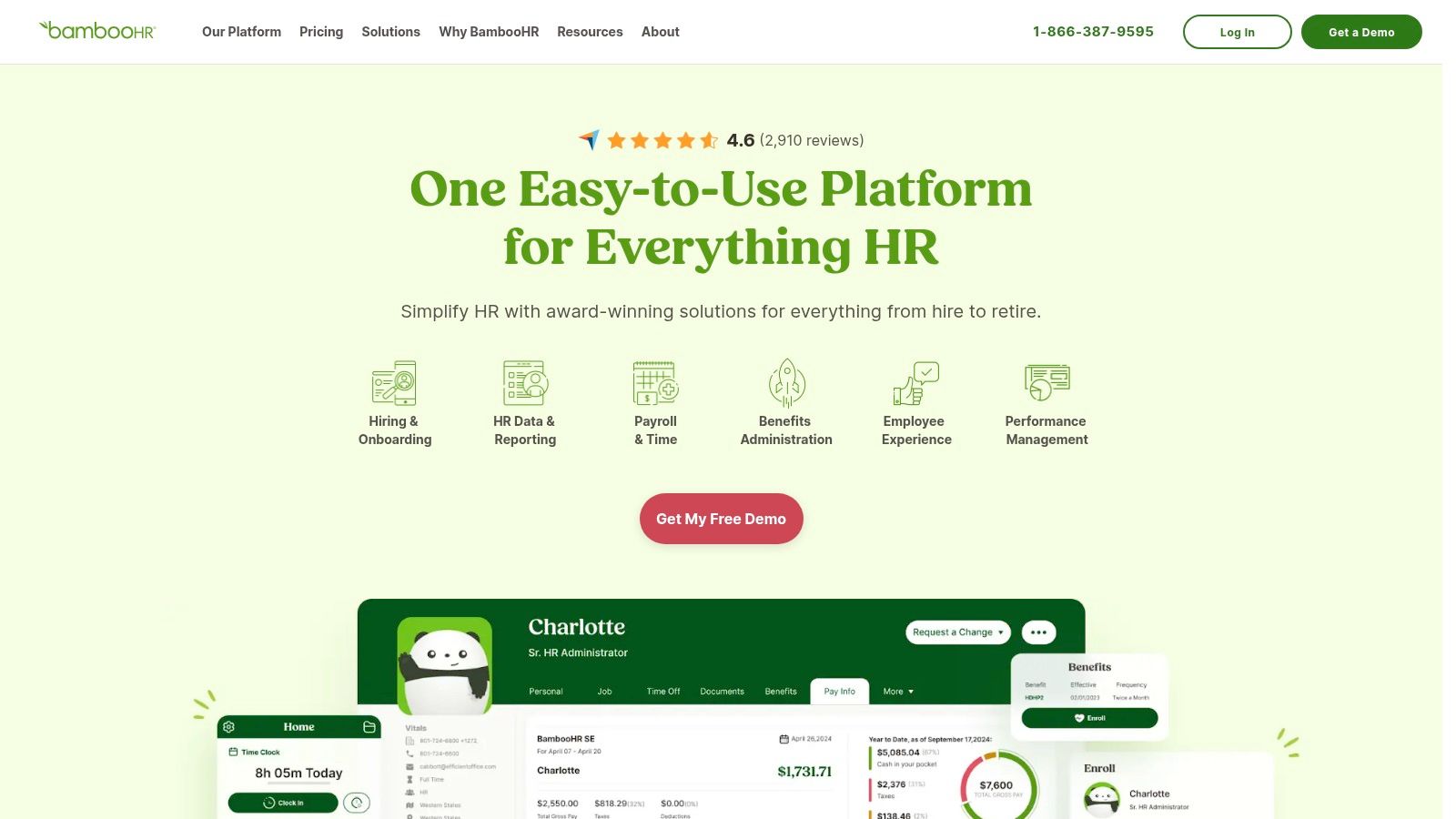
BambooHR is a compelling option for small and medium-sized businesses (SMBs) looking for comprehensive HR software. It stands out by offering a complete Human Resource Information System (HRIS), including applicant tracking, rather than just a standalone ATS. This integrated approach streamlines everything from hiring and onboarding to offboarding. You might be interested in: Our Guide on Human Resources.
BambooHR’s ATS handles the core aspects of recruitment. This includes customizable application forms, automated screening questions, and tools for team collaboration during the hiring process. Once a candidate is hired, their information smoothly transitions into the employee records system. The platform’s simple interface is easy to learn and use, allowing HR teams to quickly become proficient. It also offers basic reporting on hiring metrics, so you can keep track of your progress.
Practical Applications
BambooHR’s integrated approach makes it a good fit for various situations:
- First Structured Hiring Process: If your small business is moving from informal hiring to a more structured system, BambooHR’s intuitive design can make the transition easier.
- Limited HR Staff: The integrated HRIS reduces manual data entry and administrative tasks, giving HR professionals more time for strategic work.
- Employee Experience Focus: The seamless transition from applicant to employee ensures a positive onboarding experience, contributing to long-term engagement.
Pros
Here’s a quick look at the key benefits:
- Excellent Value: As part of the complete HRIS, BambooHR offers a comprehensive HR solution at a competitive price.
- User-Friendly: The interface is designed for ease of use, minimizing the need for extensive training.
- Strong Onboarding: The integration of hiring and onboarding creates a smooth and efficient transition for new hires.
- Ideal for Small Businesses: It’s a great option for small businesses setting up their first formal hiring process.
Cons
It’s also important to be aware of some limitations:
- Limited ATS Features: Compared to standalone ATS platforms, BambooHR’s applicant tracking features are less extensive.
- Basic Sourcing: Its candidate sourcing capabilities are basic, making it less suitable for businesses that rely heavily on active sourcing.
- Fewer Integrations: It has fewer integrations with recruiting-specific tools compared to some alternatives.
- Not for High Volume Hiring: It’s not designed for organizations with high-volume or complex hiring needs.
Pricing and Technical Requirements
BambooHR offers tiered pricing based on company size and features. Specific pricing details aren’t publicly available, so you’ll need to contact their sales team for a custom quote. The platform is cloud-based, so you don’t need to worry about managing on-premise infrastructure.
Comparison with Similar Tools
While tools like Zoho Recruit and Greenhouse offer more advanced ATS features, they often come with a higher price tag. BambooHR provides a good balance of features and affordability for SMBs looking for a unified HR and recruitment solution.
Implementation/Setup Tips
Here are a few tips to get started:
- Define Workflows: Map out your current hiring processes to customize BambooHR effectively.
- Use Custom Fields: Take advantage of custom fields to tailor application forms and candidate profiles to your specific requirements.
- Train Your Team: Although the interface is user-friendly, provide training to ensure your team can fully utilize the platform’s features.
Website: https://www.bamboohr.com/
9. Jobvite
Jobvite is a powerful talent acquisition suite perfect for mid-market and enterprise companies looking for a modern, marketing-focused hiring approach. It’s more than just an applicant tracking system (ATS). Jobvite includes recruitment marketing, onboarding, and powerful analytics, making it a great option for organizations that want to improve their entire hiring process.
Jobvite works particularly well for companies focused on proactive candidate engagement and social recruiting. It’s designed for organizations that are actively building talent pipelines and nurturing relationships with potential candidates, not just responding to applications. Building an employer brand and attracting the best talent are where Jobvite really shines.
Key Features and Benefits
Jobvite offers a suite of tools designed to enhance every stage of the hiring process. Here are some of its key features and benefits:
- Advanced Recruitment Marketing and CRM: Jobvite provides the tools to create targeted campaigns, manage candidate relationships, and automate communication, allowing for more personalized and efficient outreach. This is essential for building a strong talent pipeline and engaging potential hires.
- Industry-Leading Social Recruiting: Integrate with various social media platforms like LinkedIn to share job postings, source candidates, and track social recruiting efforts. This feature is incredibly helpful for reaching passive candidates and expanding beyond traditional job boards.
- Candidate Texting and Engagement Platforms: Engage with candidates instantly through SMS messaging, significantly improving communication speed and responsiveness. This is a crucial element for a positive candidate experience.
- Robust Reporting and Predictive Analytics: Get valuable, data-driven insights into your recruiting process with detailed reporting, allowing you to pinpoint areas for improvement and fine-tune your hiring strategy.
- Automated Reference Checking and Background Screening: Streamline the often tedious pre-employment screening process with integrated background check services. This boosts efficiency and reduces administrative overhead.
Pros and Cons
Like any software, Jobvite has its advantages and disadvantages:
Pros:
- Strong emphasis on recruitment marketing and candidate engagement.
- Exceptional social recruiting tools.
- Great balance of functionality and usability for mid-market companies.
- Comprehensive solution that covers the entire hiring lifecycle.
Cons:
- Higher cost compared to simpler ATS solutions.
- Some features come as add-on modules at an additional cost. (Contact Jobvite directly for specific pricing.)
- Implementation can be challenging and may require a significant time investment, potentially necessitating dedicated project management.
- The reporting interface could be more user-friendly.
Implementation/Setup Tips
Here are a few tips for a successful Jobvite implementation:
- Dedicated Project Management: Due to the system’s complexity, having a dedicated project manager for the implementation process can make a big difference.
- Clearly Defined Goals: Before you start, define your recruiting goals and objectives to ensure the system is configured correctly and meets your specific needs.
- Training and Support: Make the most of Jobvite’s training and support resources to ensure you’re fully utilizing the platform and that your team is comfortable using it.
Comparison With Similar Tools
While Jobvite is a comprehensive platform, there are other options worth considering. Avature is a strong contender for enterprise-level CRM and recruitment marketing, while Lever is known for its collaborative hiring features. For businesses needing a basic ATS, simpler and less expensive solutions might be a better fit.
Website and Conclusion
Jobvite provides a powerful platform for companies that want a modern, marketing-driven approach to talent acquisition. The platform’s comprehensive features and emphasis on candidate engagement make it a valuable tool for organizations looking to build robust talent pipelines and attract top talent. However, it’s essential to consider the costs and the complexity of implementation. For mid-market and enterprise companies prioritizing proactive recruitment and social engagement, Jobvite is certainly worth evaluating.
10. Zoho Recruit
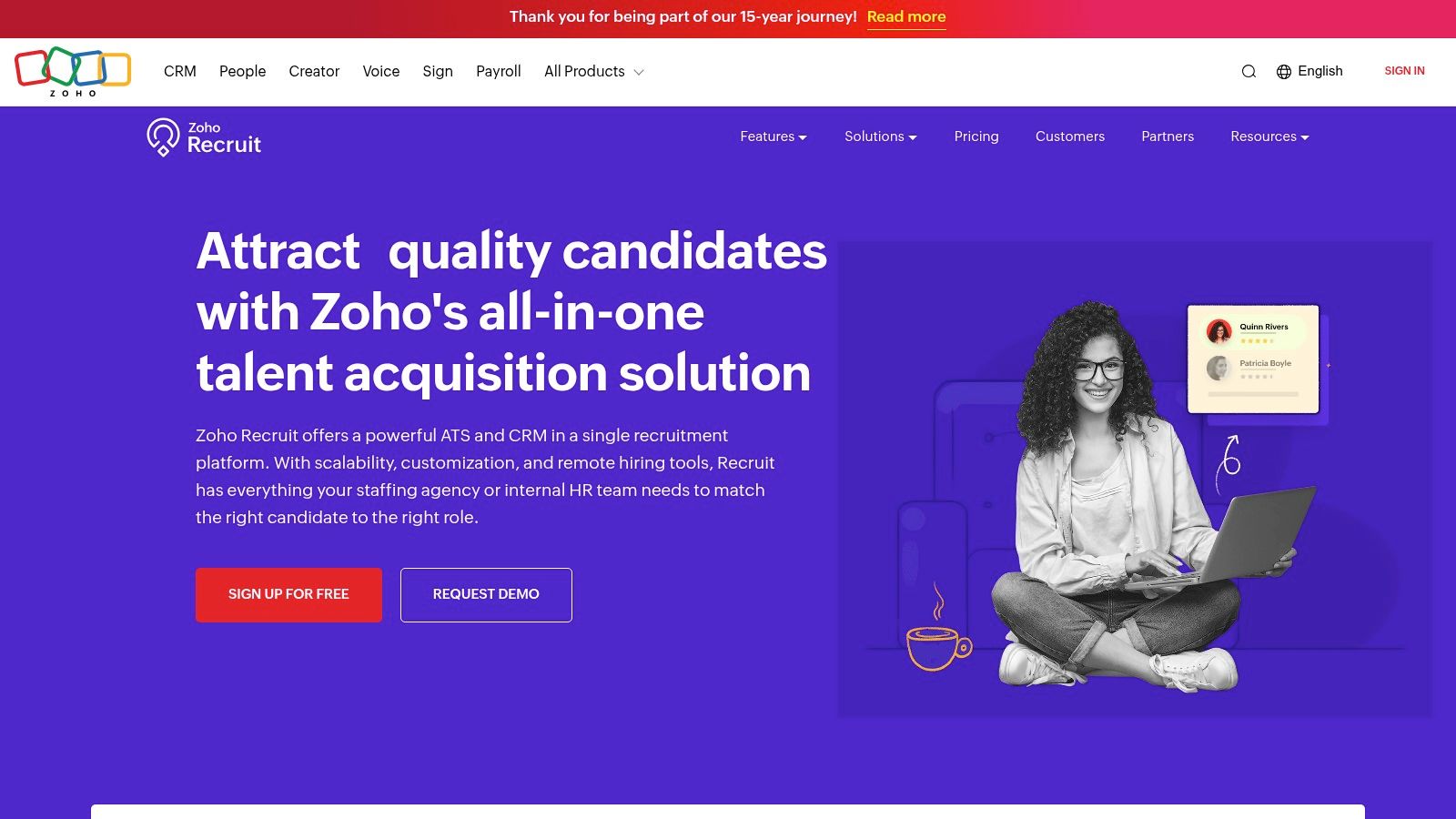
Zoho Recruit stands out for its compelling blend of comprehensive features and affordability. This makes it an attractive option for startups, small and medium-sized enterprises (SMEs), and even larger organizations seeking a cost-effective yet powerful Applicant Tracking System (ATS). It offers a solid core of recruiting functionalities without the hefty price tag of some enterprise-grade solutions.
Zoho Recruit streamlines the entire recruitment process, from attracting candidates to onboarding new hires. As part of the larger Zoho ecosystem, it seamlessly integrates with other Zoho applications, such as Zoho CRM and Zoho People. This creates a unified platform for managing various business processes, a significant advantage for businesses already using Zoho services.
Key Features and Benefits
Zoho Recruit offers several key features and benefits to enhance the recruitment process:
- Customizable Career Page and Application Forms: Build a branded career page reflecting your company culture. Tailor application forms to gather specific information from candidates, improving the quality of applications.
- Resume Parsing and Candidate Database Management: Automatically extract key information from resumes and store candidate data in a centralized, searchable database. This makes managing and tracking applicants throughout the hiring pipeline much easier.
- Email Templates and Automated Communication Workflows: Save time and ensure consistent communication with candidates through automated emails and personalized workflows for different recruitment stages.
- Integration with Job Boards and Social Media: Expand your reach and attract a wider talent pool by posting job openings directly to popular job boards and social media platforms.
- Interview Scheduling and Feedback Collection: Simplify interview scheduling by coordinating interviewer and candidate availability. Streamline feedback collection with standardized forms and automated reminders.
Pros and Cons
Like any software, Zoho Recruit has its strengths and weaknesses:
Pros:
- Excellent Value: Zoho Recruit provides a comprehensive set of features at a competitive price, making it a budget-friendly option for businesses of all sizes.
- Strong Zoho Integration: Seamlessly connect with other Zoho tools to create a unified business platform, streamlining various HR and business processes.
- Highly Customizable: Tailor the platform to fit your specific hiring needs and processes, creating a smooth and efficient recruitment experience.
- Suitable for Various Users: Caters to both in-house HR teams and staffing agencies, offering specific features and functionalities for their unique requirements.
Cons:
- User Interface: The interface, while functional, may not be as visually appealing or intuitive as some newer ATS platforms.
- Limited Advanced Features: Zoho Recruit may lack some advanced features found in high-end enterprise ATS solutions.
- Customer Support: Some users have reported inconsistent experiences with customer support.
- Basic Reporting: While offering basic reporting functionalities, it may not provide the in-depth analytics found in specialized ATS platforms.
Pricing and Technical Requirements
Zoho Recruit offers a free version for up to 5 employees. Paid plans begin at approximately $25/user/month and vary based on features and user count. Check their website for the most up-to-date pricing. As a cloud-based application, Zoho Recruit is accessible through a web browser with a stable internet connection.
Implementation/Setup Tips
Here are a few tips to get started with Zoho Recruit:
- Free Trial: Begin with a free trial to explore the features.
- Customization: Utilize the customization options to tailor the platform to your workflow.
- Zoho Integration: Integrate Zoho Recruit with other Zoho applications you use.
- Training Resources: Explore the available training resources and documentation.
Comparison with Similar Tools
Zoho Recruit is often compared to BambooHR and Breezy HR. BambooHR leans more towards HRIS functionalities, while Zoho Recruit focuses primarily on recruitment. Breezy HR offers a similar feature set but may be slightly more expensive.
Website: https://www.zoho.com/recruit/
Applicant Tracking Systems: Top 10 Software Comparison
| Product | Core Features | User Experience | Target Audience | Pricing/Value |
|---|---|---|---|---|
| Greenhouse | Structured scorecards, advanced analytics, API-first, DEI | Intuitive & robust | Enterprise & high-growth companies | Premium |
| Lever | ATS+CRM integration, visual pipeline, automated emails | Modern & collaborative | Mid-market to enterprise | Higher cost |
| Workday Recruiting | HCM integration, ML recommendations, compliance tracking | Integrated but less user-friendly | Large enterprises | High-cost |
| SmartRecruiters | AI matching, programmatic ads, global hiring tools | Consumer-grade experience | Global enterprises | Premium |
| iCIMS Talent Cloud | Modular design, AI matching, advanced compliance management | Configurable yet dated UI | Mid-market & enterprise | Higher TCO |
| JazzHR | Custom forms, interview scheduling, job syndication | Simple & user-friendly | Small to mid-sized businesses (SMBs) | Affordable |
| Bullhorn | ATS+CRM for staffing, candidate matching, placement management | Purpose-built with a learning curve | Staffing & recruitment agencies | Expensive for small agencies |
| BambooHR | Integrated HRIS & ATS, onboarding, seamless record transfer | Clean & intuitive | Small and medium businesses (SMBs) | Great value |
| Jobvite | Recruitment marketing, social recruiting, advanced analytics | Feature-rich but complex | Mid-market & enterprise | Premium with extra modules |
| Zoho Recruit | Customizable forms, resume parsing, job board integration | Practical and efficient | SMBs & staffing agencies | Cost-effective |
Making the Best Choice For Your Business
This applicant tracking system (ATS) comparison has explored a range of leading platforms suitable for various business needs and budgets – from Greenhouse and Lever to BambooHR and Zoho Recruit. Remember to consider factors like company size, hiring volume, budget, and required features when selecting an ATS.
Choosing the right ATS can feel overwhelming, but breaking down the process into manageable steps can simplify your decision. Start by understanding your specific needs and setting clear priorities. Are you a small startup aiming for rapid expansion, or a large corporation requiring extensive reporting and analytics?
How many new hires do you plan to make this year? Once you have a grasp of the big picture, you can prioritize the features that are most essential to your hiring workflow, such as interview scheduling, candidate communication, and performance reporting.
Implementation and Getting Started
After selecting your ATS, focus on a smooth implementation process. Most ATS providers offer onboarding support and training to help your team get up to speed quickly. Account for the time needed for data migration and system integration.
Be prepared to adapt your current hiring processes to seamlessly align with the new system. This preparation can prevent disruptions and ensure a more efficient transition.
Budget and Resource Considerations
ATS pricing models vary widely, from subscription-based plans to usage-based fees. Consider the total cost of ownership, including implementation, training, and ongoing support. Do you have the internal resources and expertise to effectively manage the ATS?
Answering these questions will help you determine the best fit for your budget and team capabilities.
Integration and Compatibility
Integrating your ATS with your existing HRIS, payroll system, and other business tools is critical for a streamlined workflow. Confirm that the ATS offers open APIs and supports the necessary integrations to connect with your current systems.
Also, consider compatibility with your existing hardware and software infrastructure to avoid any technical roadblocks.
Key Takeaways
- Define Your Needs: Understand your company size, hiring volume, and essential features.
- Prioritize Features: Focus on the functionalities that are critical for your workflow.
- Consider Costs: Evaluate pricing, implementation, and ongoing support expenses.
- Ensure Integration: Seamless compatibility with your existing systems is crucial.
- Focus on Scalability: Choose an ATS that can adapt and grow alongside your business.
While the right ATS is essential for streamlined hiring, remember the crucial importance of thorough and compliant background checks. Protecting your company by verifying the integrity of your candidates is key to building a strong and reliable team.
Streamline Your Hiring Process With Comprehensive Background Checks
SpringVerify provides dependable and comprehensive background verification services designed for high-growth companies, from nimble startups to large enterprises. Trusted for its quick, accurate, and efficient candidate screening processes, SpringVerify offers customized solutions to meet your unique requirements.
Integrate seamlessly with your chosen ATS through our robust API, automate repetitive tasks, and ensure secure and efficient background checks. Make well-informed hiring decisions faster and with greater confidence. Learn more at SpringVerify.


