

Table of Contents
Demystifying Document Verification
Document fraud poses a serious risk to businesses, regardless of their size or industry. Understanding document verification is key to mitigating this threat. This essential process confirms the authenticity and validity of important documents, safeguarding both businesses and individuals from potential fraud. It acts as a crucial first line of defense, ensuring that only legitimate information is accepted.
This goes beyond simply checking for fake IDs. Document verification covers a broad spectrum of documents, from passports and driver’s licenses to financial records and professional credentials. It’s about ensuring the information presented is accurate and trustworthy.
Different Documents, Different Approaches
The specific verification methods employed depend heavily on the type of document being examined. Verifying a passport, for example, involves checks against international databases and scrutiny of security features such as holograms and microprinting.
Financial documents, however, might require cross-referencing information with bank records or credit bureaus. Verifying professional credentials often involves contacting the issuing institutions directly to confirm their legitimacy. Each document type presents unique challenges and necessitates a specific verification approach.
Document verification has become increasingly critical, especially in sectors like finance and healthcare, where trust and security are paramount. Within the financial industry, document verification plays a vital role in Know Your Customer (KYC) regulations. As of 2022, over 70% of financial institutions used digital document verification methods to combat fraud and maintain regulatory compliance.
This highlights the growing importance of secure document verification across various sectors. The adoption of online document verification has grown by approximately 25% over the past decade, demonstrating its effectiveness in preventing identity theft and document forgery. Learn more about the importance of document verification here. This shift towards digital solutions underscores the need for more efficient and secure verification processes.
From Manual to Digital: The Evolution of Verification
Traditionally, document verification was a manual and time-consuming process. Physical documents were carefully examined for signs of tampering, and information was often verified through phone calls or faxes.
The advent of digital technology has transformed this landscape. Automated systems now utilize advanced techniques like Optical Character Recognition (OCR) and Artificial Intelligence (AI) to quickly analyze documents, extract key data, and identify even subtle signs of forgery. This shift has not only increased efficiency but has also dramatically improved accuracy.
You might be interested in: How to master compliance in the digital age. These digital advancements allow businesses to verify documents rapidly and efficiently, shortening processing times and improving the customer experience. Furthermore, automation minimizes the risk of human error, bolstering the reliability of the verification process. This evolution towards digital solutions is essential for businesses seeking to thrive in today’s competitive market.
Inside the Document Verification Workflow
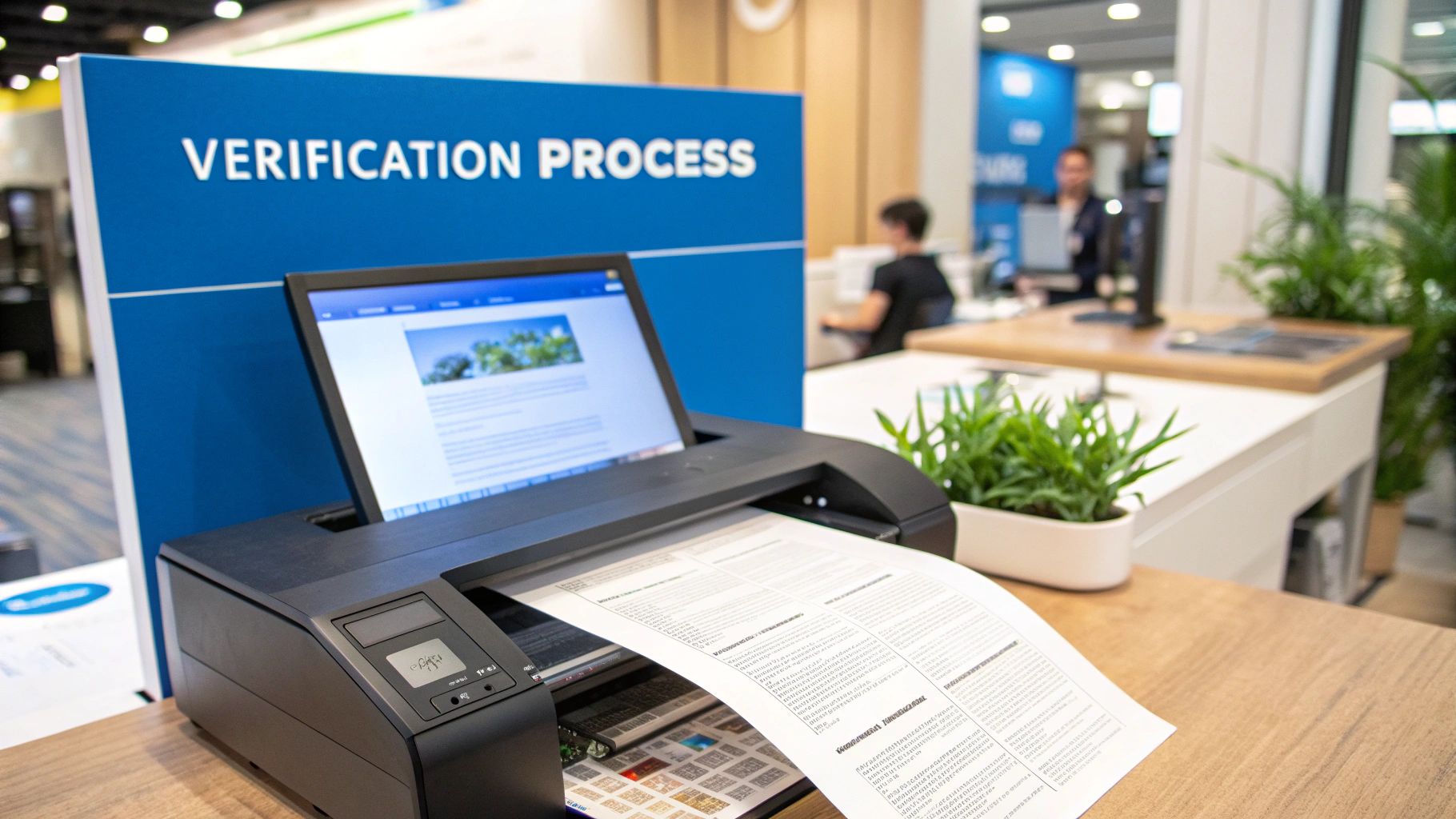
Understanding document verification means diving deep into its complex workflow. This multifaceted process spans from the initial document submission to the final authentication decision. Let’s explore the key stages.
Document Capture Optimization
The process starts with document capture. This stage is all about acquiring a high-quality digital image of the document. Optimizing this first step is critical. Blurry or poorly lit images can negatively impact the following steps. Clear images are crucial for accurate data extraction and identifying potential tampering, ensuring a solid foundation for the verification process.
Intelligent Data Extraction
Next comes intelligent data extraction. Using advanced techniques like Optical Character Recognition (OCR), the system pulls relevant information from the document. This might include names, dates, identification numbers, and other important details. This automated extraction is far more efficient than manual data entry. This extracted data is then used for comparison and validation.
Authentication Checks and Validation Protocols
The extracted data then undergoes rigorous authentication checks. This involves comparing the data against various databases, such as government records or credit bureaus. Validation protocols are also applied to analyze the document for signs of tampering or forgery. This includes examining security features like holograms and microprinting. These checks help ensure data accuracy and document integrity.
To further clarify the process, let’s examine the steps in a table format:
A detailed table outlining the document verification process can be helpful in understanding the workflow. The table below provides a step-by-step breakdown of what happens at each stage and key considerations.
| Process Step | Description | Key Considerations |
|---|---|---|
| Document Capture | Acquiring a high-quality digital image of the document | Image quality, lighting, resolution |
| Intelligent Data Extraction | Extracting relevant data using techniques like OCR | Accuracy of data extraction, data integrity |
| Authentication Checks | Comparing extracted data against authoritative databases | Database reliability, data matching algorithms |
| Validation Protocols | Analyzing the document for signs of tampering or forgery | Security feature recognition, fraud detection techniques |
This table summarizes the critical steps involved in verifying a document, from capturing the initial image to the final authentication checks. Each step plays a crucial role in ensuring accuracy and security.
Addressing Common Challenges
Document verification faces its share of challenges. Poor-quality images, increasingly sophisticated forgeries, and maintaining accuracy at high volumes are some of the biggest hurdles. Overcoming these challenges requires advanced technology and robust processes, including using advanced algorithms and keeping up-to-date on the latest forgery techniques. SpringVerify offers solutions designed to address these challenges, offering businesses reliable and accurate document verification.
Putting it All Together
Understanding these stages and challenges helps organizations strengthen their document verification processes. A robust system not only protects against fraud but also streamlines operations and improves customer experience. Learn more about streamlining your HR processes with SpringVerify’s API through their API integrations. Ultimately, effective document verification is crucial for building trust and security.
Technology Transforming Verification Landscapes

Document verification methods have undergone a significant transformation. Moving beyond manual reviews, modern systems increasingly leverage advanced technologies. This shift has drastically improved both the speed and accuracy of verification.
The Power of AI and Machine Learning
Artificial intelligence (AI) and machine learning are now central to document verification. These technologies can identify subtle forgery indicators often missed by human eyes.
For instance, AI can analyze microprinting or inconsistencies in font styles to flag potentially fraudulent documents. Machine learning algorithms can also adapt and learn to recognize new forgery methods as they appear, giving verification systems an edge against fraudsters.
OCR, Computer Vision, and Biometric Matching
Optical Character Recognition (OCR) extracts data from documents with remarkable precision. This automation eliminates manual data entry, reducing errors and saving valuable time.
Computer vision further enhances verification by analyzing document images for manipulation, like alterations or additions. Biometric matching, through fingerprints or facial recognition, provides another layer of security, linking documents to an individual’s unique biometric data.
The Rise of Blockchain and Encryption
Blockchain presents a compelling new approach to document verification. By generating a secure and tamper-proof record of a document’s history, blockchain can definitively confirm authenticity.
Encryption is crucial for protecting sensitive data throughout the verification process. Robust encryption methods ensure confidentiality, even during transmission and processing. These advancements contribute to the overall reliability and security of modern verification systems.
This growth is driven by increasing demand for secure and efficient identity solutions. The global document verification services market is expected to reach approximately $1.5 billion by 2025, experiencing a 20% CAGR from 2022 to 2025. This expansion is fueled by technologies like AI and OCR, which significantly improve the speed and accuracy of document verification. In some regions, like India, these advancements streamline document validation, reducing fraud by up to 30%. For more detailed statistics, see this blog post. This data underscores how technology isn’t just changing, but fundamentally improving document verification.
Building a Future-Proof Verification System
For seamless integration, explore our guide on API Integrations. As technology continues to evolve, organizations need to adapt their verification processes to address emerging threats. Embracing these technologies is essential for building robust, accurate, and efficient document verification systems. These advancements enhance speed, accuracy, and security, ultimately transforming how businesses and organizations manage trust and security.
Industry-Specific Verification Approaches
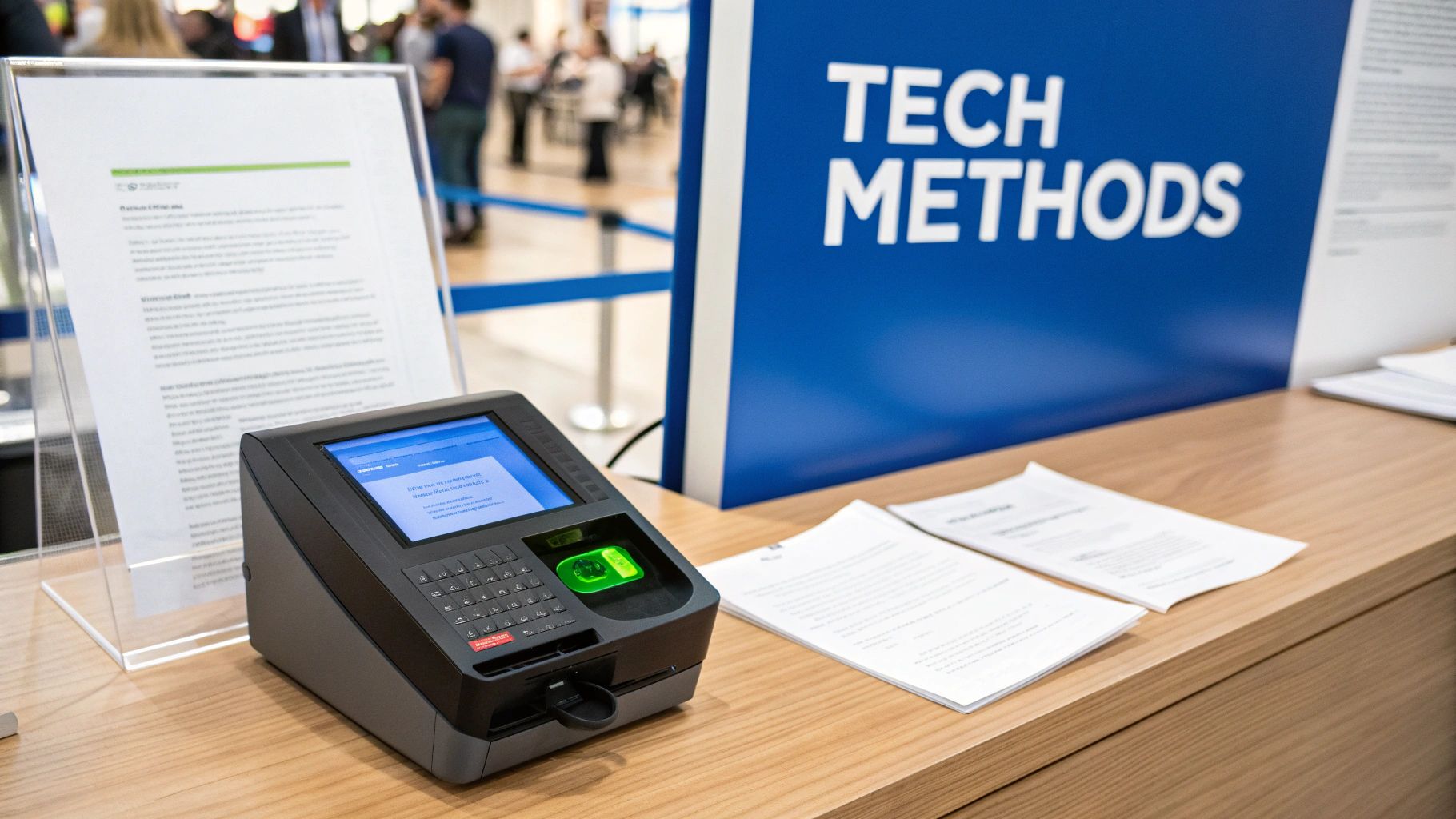
Document verification isn’t a one-size-fits-all process. Different industries have unique requirements, demanding tailored verification strategies. This means the ideal approach for a bank might not work for a hospital or a university.
To illustrate these differences, let’s explore document verification across various sectors. The following table provides a concise overview of key aspects across major industries:
To help visualize these industry-specific needs, the table below summarizes the key verification requirements, common documents, and regulations.
Document Verification Across Industries
| Industry | Primary Verification Needs | Common Documents | Key Regulations |
|---|---|---|---|
| Financial Institutions | KYC, AML compliance, fraud prevention | Government-issued IDs, proof of address, financial statements | KYC/AML regulations |
| Healthcare | Insurance eligibility, licensing, patient record integrity | Insurance cards, medical licenses, patient consent forms | HIPAA |
| Education | Credential authentication, enrollment verification | Transcripts, diplomas, enrollment records | FERPA |
| Ridesharing | Driver and vehicle verification | Driver’s license, vehicle registration, insurance | Varies by jurisdiction |
| Remote Hiring | Employment history, qualification verification | Resumes, employment letters, educational certificates | GDPR, CCPA |
| Property Rentals | Tenant screening, background checks | Rental applications, credit reports, background check consent forms | Fair Housing Act |
This table highlights the diverse requirements and considerations for document verification across different industries, emphasizing the need for tailored solutions.
Financial Institutions: Balancing KYC and UX
Financial institutions operate under strict Know Your Customer (KYC) and Anti-Money Laundering (AML) regulations. They must verify identities to prevent fraud, while also offering a seamless customer experience. This balancing act often requires advanced automated solutions for quick and accurate verification without hindering the onboarding process. For example, many banks use AI-powered systems like those offered by Onfido to analyze documents in real-time, enabling rapid online account opening. You can learn more about Fintech compliance best practices here.
Healthcare: Verifying Insurance and Protecting Privacy
Healthcare verification involves insurance eligibility, medical licenses, and patient records. Protecting patient privacy adds another layer of complexity. Systems must comply with regulations like HIPAA to ensure responsible handling of sensitive information. Robust encryption and access control measures are essential to prevent unauthorized access.
Educational Institutions: Authenticating Credentials
Educational institutions routinely verify transcripts, diplomas, and other academic credentials. Efficiency is paramount, especially during peak admissions. Automated solutions can streamline these processes, enabling quick authentication without administrative bottlenecks. Tools like National Student Clearinghouse can be invaluable for verifying enrollment and degree status.
Expanding Beyond the Obvious: Remote Hiring and Property Rentals
Document verification extends beyond identity documents to include non-identity purposes. Rideshare services verify driver and vehicle information, preventing fraud and building trust. Over 80% of rideshare platforms require document verification during onboarding, and automated systems now accurately validate over 95% of documents. Learn more about the document verification process here. Remote hiring relies on verification to confirm employment history and qualifications. Similarly, the property rental sector uses it for background checks and tenant screening.
Strategic Verification: Compliance, Security, and Efficiency
Each industry example underscores the importance of tailoring document verification to specific compliance, security, and efficiency needs. The right approach balances these factors to minimize risk while optimizing the user experience.
Balancing Benefits Against Real-World Challenges
Document verification offers significant advantages, but it also presents real-world hurdles. Understanding both sides is crucial for maximizing its value to your organization. Let’s explore the benefits and challenges of document verification.
Reaping the Rewards: Tangible Benefits of Document Verification
Robust document verification delivers several measurable benefits:
- Fraud Reduction: Effective document verification drastically reduces fraud rates. Studies show that implementing digital verification can reduce fraud attempts by 30%. This protects financial assets and brand reputation.
- Enhanced Security Posture: Verification strengthens overall security. By confirming the legitimacy of documents, organizations minimize the risk of unauthorized access and data breaches. This creates a more secure environment for businesses and customers.
- Streamlined Customer Onboarding: Automated document verification streamlines customer onboarding. It removes manual checks and reduces processing time, leading to a smoother, faster user experience. This improved efficiency can boost customer satisfaction and conversion rates.
- Regulatory Compliance: In regulated industries like finance and healthcare, document verification ensures adherence to KYC/AML and HIPAA requirements. This compliance avoids costly penalties and legal issues.
- Building Marketplace Trust: Demonstrating a commitment to secure practices builds trust among customers and partners. This trust strengthens relationships and increases brand loyalty.
Navigating the Hurdles: Real-World Challenges
While document verification offers significant advantages, it also presents real-world challenges:
- Technical Limitations: Issues like poor image quality, system integration complexities, and evolving fraud techniques present ongoing technical challenges. These limitations require constant updates and improvements to verification systems.
- User Experience Friction: Balancing security with user experience is an ongoing challenge. Overly complex or time-consuming verification processes can frustrate users and lead to abandonment. Solutions must be both secure and user-friendly.
- Evolving Privacy Regulations: Navigating ever-changing privacy regulations like GDPR and CCPA adds complexity to document verification. Organizations must comply with data privacy standards while ensuring efficient verification processes.
- Staying Ahead of Forgery: Fraudsters constantly develop more sophisticated forgery techniques. Verification systems must stay ahead by incorporating advanced technologies like AI and machine learning to detect these evolving threats.
Strategies for Maximizing Verification Value
To maximize the value of document verification, organizations should adopt these best practices:
- Choose the Right Solution: Select a verification solution tailored to your specific industry and needs. Consider factors like scalability, integration capabilities, and security features. SpringVerify offers flexible solutions designed to meet diverse business requirements.
- Prioritize User Experience: Streamline the verification process to minimize user friction. Implement clear instructions, offer multiple document upload options, and provide timely feedback.
- Stay Updated: Keep abreast of the latest fraud trends and regulatory changes. Ensure your verification system incorporates the most current security measures and compliance protocols.
- Invest in Ongoing Training: Train staff on the latest verification procedures and fraud detection techniques. This ongoing education empowers teams to effectively use the verification system and identify potential issues.
By understanding the benefits, acknowledging the challenges, and implementing strategic approaches, organizations can use document verification to enhance security, streamline operations, and build trust within their ecosystem.
Your Document Verification Implementation Roadmap
Implementing a robust document verification system might seem like a complex undertaking, but a structured approach can make the entire process smooth and efficient. This roadmap, drawing from successful implementations across diverse industries, will guide you through each step, from the initial assessment to ongoing system optimization.
Assessing Your Verification Needs
The first crucial step is understanding your specific requirements. This involves identifying the types of documents you need to verify, anticipating the volume of verifications, and outlining your particular security and compliance needs. For instance, the requirements for a financial institution will differ significantly from those of a healthcare provider. This initial assessment helps define the scope and complexity of your verification system.
Choosing the Right Verification Solution
After pinpointing your needs, the next step is selecting the appropriate verification provider. Look beyond marketing jargon and concentrate on features that directly address your use case. Key factors to consider include:
- Accuracy and Reliability: The solution should consistently deliver accurate results, minimizing both false positives and false negatives.
- Scalability: The system must handle your current and projected verification volumes without performance degradation.
- Integration: Seamless integration with your existing systems, such as your Customer Relationship Management (CRM) or Human Resource Information System (HRIS), is essential for workflow efficiency.
- Security and Compliance: The solution must adhere to industry-specific regulations and implement robust security measures to protect sensitive data.
- User Experience: A user-friendly interface streamlines the verification process for both your team and your customers.
Seamless Integration and Implementation
Integrating your chosen solution should be as straightforward as possible. Collaborate closely with your vendor to ensure a smooth transition. This typically involves Application Programming Interface (API) integration and data mapping. Thorough planning and clear communication are essential for successful implementation. Consider a phased rollout to test and refine the system before full deployment.
Ongoing Optimization and Monitoring
Document verification isn’t a one-time project. It’s a continuous process requiring regular monitoring and optimization. Track key metrics like verification speed, accuracy, and user feedback. Regularly assess the system’s effectiveness and make necessary adjustments. Stay informed about evolving fraud tactics and regulatory updates to maintain system effectiveness. This involves staying abreast of industry best practices and new technologies. For example, developments in Artificial Intelligence (AI) and machine learning can dramatically improve verification accuracy and efficiency. Regularly evaluate your system’s performance and adapt your strategies accordingly. This continuous improvement approach ensures your verification process remains a valuable asset.
Budgeting and ROI Measurement
Establish a clear budget for document verification. Factor in not only the initial implementation costs but also ongoing maintenance and support fees. Measuring the return on investment (ROI) is critical. Track important metrics like fraud reduction, operational efficiency gains, and customer satisfaction improvements. This data-driven approach showcases the value of your verification investment. Quantifying the benefits allows you to justify the ongoing expenses and highlight the positive impact on your bottom line.
Implementing a comprehensive document verification system requires careful planning, strategic decision-making, and continuous optimization. By following this roadmap, you can transform your verification process from an administrative burden into a competitive advantage. SpringVerify offers comprehensive solutions designed to streamline and secure your document verification processes. Learn more about how SpringVerify can benefit your business at https://in.springverify.com.


