

If your background verification (BGV) fails after you’ve already joined, the company will most likely put you on immediate suspension or start the process for termination. HR will formally notify you and give you a chance to explain what went wrong. But unless the failure is just a minor clerical error, termination is almost always the result.
Table of Contents
The Moment Your BGV Fails: What Happens Next
Getting the news that your background check has failed after you’ve already started a new job is a truly gut-wrenching experience. It can feel like the floor has just dropped out from under you. What happens in these first few moments is critical, as the company’s actions and your own responses will define everything that follows.
This situation is actually more common than most people think, largely because the verification process itself can take a while. In India, a comprehensive BGV can take anywhere from two to four weeks, and for more complex cases, it might even stretch to 60 days. This delay often means companies onboard new hires before all the checks are finalised, creating a period of uncertainty. You can read more about how these procedural delays impact HR teams.
The Immediate Process Unfolds
Once a BGV report comes back with a “red” or negative flag, it kicks off a standard internal process. Typically, you’ll be called into a meeting with someone from the Human Resources department. In this meeting, they will formally tell you that a discrepancy has been discovered in your background check.
You’ll usually be shown a copy of the BGV report that points out the specific areas that failed. This could be something as simple as unverified employment dates or something far more serious, like a fake document.
The key principle here is ‘natural justice.’ The company is generally expected to give you a fair chance to see the negative report and offer an explanation or challenge the findings before they make a final decision.
This is the critical moment when you’re alerted to the BGV failure, a turning point in your employment journey.
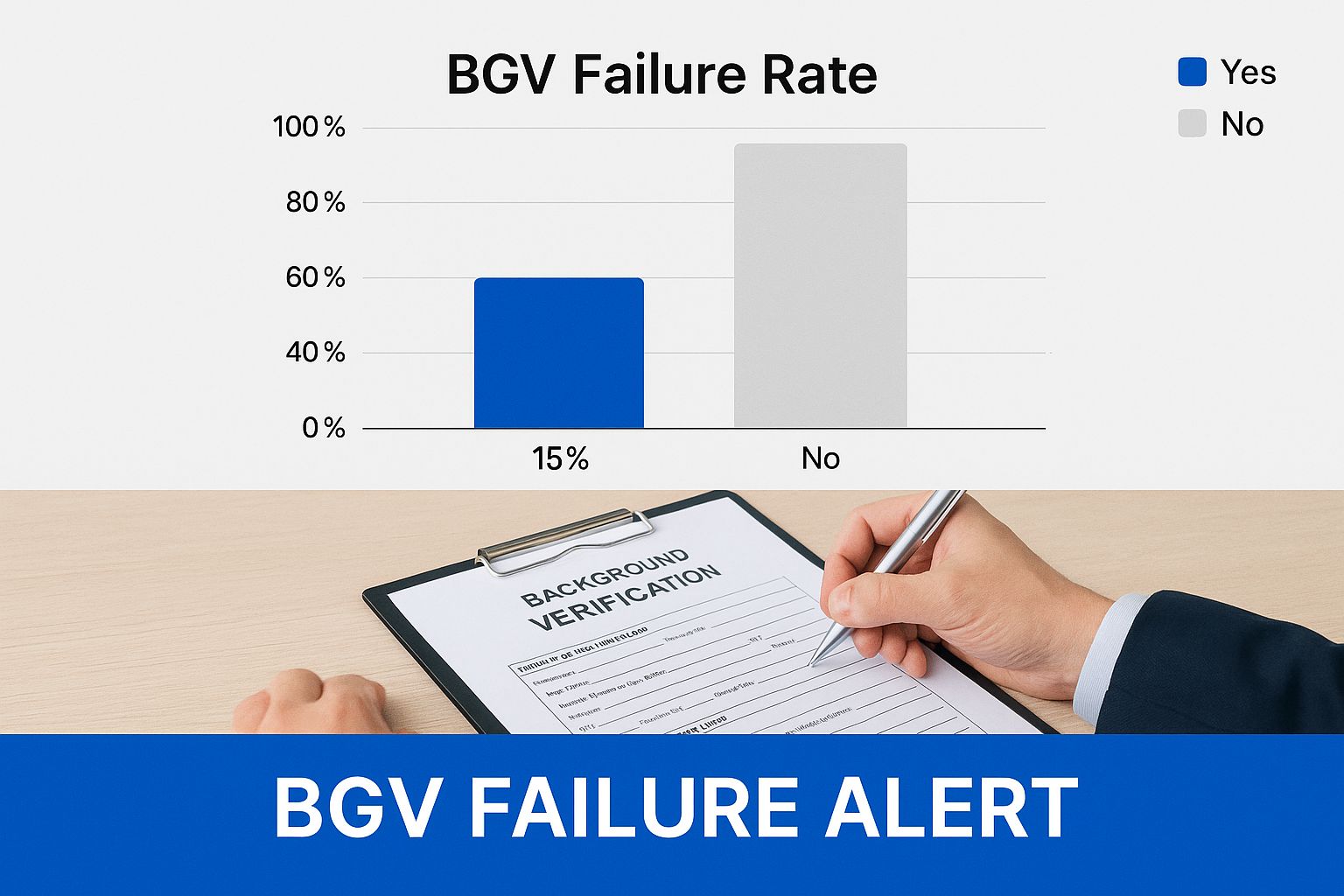
This alert marks the beginning of a formal process where how you respond is everything.
Gauging the Severity of the Failure
Not all BGV failures are created equal. The company’s reaction will depend almost entirely on the nature and severity of the discrepancy. A small, honest mistake is worlds away from a deliberate lie.
To help you understand where you stand, it’s useful to look at why checks fail and how employers typically react.
Common Reasons for BGV Failure and Their Severity
This table breaks down the common types of BGV discrepancies, from minor slip-ups to outright fraud, and shows the most likely employer response for each.
| Reason for Failure | Example | Severity Level | Likely Employer Action |
|---|---|---|---|
| Clerical Error | Incorrect joining/leaving dates by a few days; a typo in a previous company’s name. | Low | Often resolved with a discussion and by providing the correct documents. Termination is unlikely. |
| Unverifiable Education | The BGV agency can’t confirm your degree because the university isn’t responding. | Moderate | You’ll be asked to provide original degree certificates, marksheets, or other proof. The outcome depends on whether you can produce evidence. |
| Misrepresented Experience | Claiming a title you didn’t hold; significantly inflating your time at a previous company. | High | This is seen as a serious breach of trust. Termination is highly probable, as it brings your integrity into question. |
| Fraudulent Documents | Submitting fake experience letters, forged degree certificates, or false salary slips. | Critical | This is considered fraud and will almost certainly lead to immediate termination. The company might also pursue legal action. |
Ultimately, how a company proceeds comes down to a single question: was this an honest mistake or a deliberate attempt to deceive? Understanding this distinction is key to navigating the situation.
Why Post-Joining BGV Failures Are on the Rise
It might seem strange for a background check to fail after you’ve already settled into your new role, but it’s happening more and more. The main reason? The frantic race for talent. In today’s competitive job market, especially in fast-moving sectors like IT, companies are under immense pressure to hire skilled people before their rivals do.
Think of it like a builder starting construction before the final land survey is complete. To get a project moving and lock down a talented professional, a company might bring someone on board based on promising interviews and initial references. The formal background verification (BGV) then runs in the background while the employee is already working. It’s a calculated risk, but one many are willing to take to stay ahead. This “hire now, verify later” approach is a direct cause of the rise in post-joining BGV issues.
The Role of Industry Pressures
The need for speed in hiring often clashes with the time it takes to do a proper, thorough BGV. Companies, particularly in the IT and ITeS sectors, simply feel they can’t afford to wait weeks for every check to clear before making an offer.
This has created a clear trend: more and more discrepancies are being found after an employee is already on the payroll. This is a crucial point for anyone wondering what happens if a BGV fails after joining. For those in recruitment, it’s also a good reason to rethink and improve the overall talent acquisition process.
Recent data from India really shines a light on this growing problem.
The overall BGV failure rate has climbed to between 5% and 7%, a big jump from the 3-4% we saw in previous years. This uptick shows just how challenging it’s become for companies to verify credentials under such tight deadlines.
An almost unbelievable 90% of these failures boil down to discrepancies in employment history, like fudged dates or completely falsified experience. You can get more details on this trend from this detailed report on rising cheating cases.
Common Discrepancies Uncovered
So, what exactly are employers finding that leads to these failures? The issues range from small exaggerations to outright fraud. Here are the most common red flags that pop up:
- Employment History Mismatches: This is the big one. It can be anything from stretching employment dates by a few months to claiming to have worked for a company that has no record of them at all.
- Fake Experience Letters: This involves creating forged documents, often from fake companies or colluding entities, to invent a work history from thin air.
- Educational Inconsistencies: Some candidates claim to have degrees or certifications from universities that are either unaccredited or don’t even exist.
- Role and Responsibility Inflation: This happens when people grossly exaggerate their previous job titles, responsibilities, or even their salary figures to appear more qualified.
Understanding these common pitfalls makes it much clearer why post-joining BGV failures are on the rise and highlights the specific integrity issues that employers are determined to screen out.
The Company’s Perspective on a Failed BGV

When a BGV report lands on a desk with a red flag, it sets off a formal, multi-layered review process inside the company. It’s never just one person making a snap decision. Understanding this internal playbook is vital if you’re wondering what happens if a BGV fails after joining, as it helps you see what’s coming next.
The process usually involves three key players: the HR team, the hiring manager, and sometimes, the legal department. HR typically takes the lead, making sure every step is fair and documented. The hiring manager chips in with context about the role’s importance and how a discrepancy might affect things. If the issue is serious, like faked documents, the legal team gets involved to weigh the risks and guide the final call.
Material Discrepancy: The Tipping Point
Companies draw a sharp line between minor mistakes and what they call a “material discrepancy.” This concept is at the very heart of their decision. A small error, like a typo in a past company’s name or being a few days off on an employment date, is usually forgivable. It doesn’t fundamentally change who you are or what you’re qualified to do.
A material discrepancy, on the other hand, is a gap so wide it makes them question your integrity or your qualifications. It’s the kind of inconsistency that, had the company known about it earlier, would have stopped them from hiring you in the first place. This is the tipping point that often leads straight to termination.
A material discrepancy isn’t just an error; it’s a breach of trust. From the company’s viewpoint, if a candidate was dishonest about their past, it raises serious questions about their potential behaviour as an employee.
This is exactly why a polite, honest explanation for a tiny mistake might get a pass, while trying to justify a major fabrication will almost certainly fall flat.
The Business Risks Driving Tough Decisions
A company’s choice to let an employee go over a failed BGV isn’t personal—it’s all about risk management. They are carefully weighing several dangers that could come back to bite the business. Getting a handle on these risks gives you real insight into their motivations.
The main concerns usually boil down to:
- Security Threats: For jobs with access to sensitive data, an unverified background is a huge security gamble.
- Reputational Damage: Having an employee on the payroll who faked their credentials can seriously damage the company’s reputation with clients and business partners.
- Client Contract Violations: Many client contracts, especially in the IT and finance worlds, demand that every person working on their project passes a thorough background check. One failed BGV could jeopardise these valuable contracts.
- Legal and Compliance Issues: Hiring someone without the right credentials can spiral into major legal trouble. You can get a deeper sense of why organisational compliance in India is taken so seriously by companies.
At the end of the day, the company is just trying to protect itself. When a BGV fails, their top priority is to shut down these risks, and unfortunately, termination is often the most direct way to do that.
Know Your Rights as an Employee in India
Finding out your background check failed after you’ve already started a new job can feel like the ground has crumbled beneath you. But it’s crucial to remember this: it doesn’t mean you’re suddenly out of options. In India, you’re protected by specific legal principles and, just as importantly, by the terms of your own employment contract. Knowing your rights is the first step to navigating this incredibly stressful situation.
The most fundamental concept you need to grasp is the principle of natural justice. Think of it as a basic rule of fairness. It means your employer can’t just take action against you without hearing your side of the story. They are obligated to show you the negative report, give you a reasonable chance to explain any issues, and present evidence to counter the findings. They can’t just fire you on the spot based on a report from a third party.
This principle is a cornerstone of Indian labour law, designed to ensure the entire process is transparent and just. It prevents companies from making rash decisions based on what might be flawed or incomplete information from a BGV agency.
The Power of Your Employment Contract
In this scenario, your employment contract is your most important document. It’s the legally binding agreement that defines your job, and it will almost certainly have a clause about background checks. You need to read it, and read it carefully.
Most contracts will have a line stating that your employment is conditional upon a successful BGV. This is the clause that gives the company the legal standing to let you go if a serious issue is found. But the specific wording here is key. If the company doesn’t follow the exact process laid out in its own contract, you might have a strong case to challenge the termination.
A failed BGV isn’t a small matter, especially with background discrepancies becoming more common. In some industries like telecom, these issues shot up by nearly 50% between early 2020 and 2021. What’s more, up to 75% of candidates who undergo legal background checks fail, which shows just how seriously companies are taking these risks. To get a better sense of how employers use court data, you can explore this detailed report on legal background checks.
When Is a Dismissal Considered Wrongful?
Just because a BGV report comes back with a red flag doesn’t give your employer a free pass to fire you. A termination can cross the line into wrongful dismissal, which could give you grounds for legal action.
Here are a few situations where a firing might be challenged:
- No Opportunity to Explain: Your employer gets the report and immediately terminates your contract without ever speaking to you. This is a clear violation of the principles of natural justice.
- Action on a Flawed Report: BGV agencies can make mistakes. If you can prove the information is wrong—for example, by providing your genuine degree certificate when the report claimed it was fake—then a firing based on that faulty data could be considered wrongful.
- Disproportionate Action: The issue found was minor and didn’t impact your ability to do the job (like a one-week mix-up in employment dates), but the company fired you anyway. You could argue the punishment was far too harsh for the “crime.”
- Discriminatory Practices: The BGV failure cannot be used as an excuse to hide discrimination. If you suspect the real reason for your dismissal is tied to your caste, gender, religion, or another protected status under Indian law, that is illegal.
Understanding your rights changes the entire dynamic. You go from being a victim of bad news to an informed individual who can demand fairness and hold your employer accountable for their actions.
How to Craft Your Response to a Negative Report

It’s a moment no one wants to experience: HR calls you in to discuss a negative BGV report. Your mind might immediately start racing, but how you handle the next few hours can make all the difference. The key is to remain professional, composed, and strategic, no matter how serious the issue seems.
The very first rule is simple: do not panic or become confrontational. An emotional outburst will only suggest you’re unprofessional or, worse, have something to hide. Instead, listen carefully to what HR is saying, acknowledge the information, and then calmly ask for a copy of the discrepancy report. This is your right, and you’ll need it to understand exactly what the problem is.
Your Initial Response Playbook
Once you have the report in hand, it’s time to be methodical. You need to gather your thoughts and any evidence that can support your side of the story. This isn’t about picking a fight; it’s about presenting the facts clearly and professionally.
- Meticulously Review the Report: Read through the BGV report line by line. Is the issue a simple misunderstanding, like a typo in your last company’s name? Or is it something more serious, like a claim that your employment there couldn’t be verified? Pinpoint the exact problem.
- Gather Your Evidence: Don’t wait. Start collecting every document that can refute the negative finding. This could be anything from original degree certificates and past offer letters to relieving letters, bank statements showing salary credits, or even the contact details of a former manager who can vouch for you.
- Draft a Professional Explanation: Write a clear, concise, and unemotional email or letter to HR. Address the discrepancy head-on, explain your side of things, and attach all your supporting documents as proof.
For example, if the report disputes your employment dates, your response should be factual and structured. It helps to understand the specifics of what agencies check during the employment verification process to frame your explanation effectively.
Remember, your response is a clarification, not an apology. Maintain a respectful tone and keep the focus on providing concrete evidence. This shows you’re accountable and willing to cooperate to clear up the misunderstanding.
Handling Different Types of Discrepancies
The way you frame your response will depend entirely on the nature of the BGV failure. A minor hiccup requires a much different approach than a major red flag.
- For Minor Errors (e.g., date mix-up): Politely point out the mistake and provide clear proof. For example: “I noticed the report lists my start date as 15th June, but as you can see from my attached offer letter, my actual start date was 5th June. Please find the letter attached for your reference.”
- For Serious Allegations (e.g., unverifiable job): If a previous employer was unresponsive, explain the situation clearly. Provide alternate contact details for your manager or someone in HR from that company, along with any other proof of employment you have. This kind of proactive honesty goes a long way.
Ultimately, your goal is to give the employer a clear, evidence-backed response that makes it easy for them to see your side. This professional approach can often resolve the issue entirely. Even if it doesn’t, it allows you to part on more amicable terms, keeping your professional reputation intact.
Moving Forward After a BGV-Related Job Loss
Losing a job because of a failed background check is a tough pill to swallow. It’s a genuinely disheartening experience, but it’s absolutely not a career-ending event. The immediate setback feels significant, no doubt, but your focus has to shift—towards recovery and strategically shoring up your professional life for the future. This is a moment for honest reflection and proactive planning.
The most pressing question is, “How do I handle this in my next interview?” Honesty, when framed correctly, is almost always the best approach. You don’t need to lead with the bad news, but if you’re asked directly about a job that ended abruptly, a brief, professional explanation is far better than trying to evade the question. For example, you could explain that a discrepancy came up during a post-joining verification and that you’ve since taken steps to make sure all your documentation is in perfect order.
If a BGV failure does lead to a job loss, you might also need to think about strategies for addressing a job gap on your resume. This isn’t about hiding anything; it’s about presenting your work history clearly and with confidence.
Your Career Health Checklist
Think of your professional records like a personal health check-up. Performing regular maintenance is the best way to prevent bigger problems down the line. When you proactively manage your career history, you create transparency and build resilience against any future BGV issues.
Your career narrative is yours to control. A single setback does not define your skills, experience, or future potential. By taking ownership of your records, you shift from a reactive position to a proactive one.
Here’s a simple checklist to help you maintain impeccable records and avoid future surprises:
- Verify Your Own Credentials: Before you even start applying for new jobs, do your own informal BGV. Get official transcripts from your university. Request employment verification or experience letters from past employers to double-check that all your dates and job titles are accurate.
- Organise Your Documents: Create a secure digital folder where you keep all your essential career documents. This should include offer letters, relieving letters, payslips, degree certificates, and any professional certifications you’ve earned.
- Maintain Clear Communication: When you leave a job, always make sure you receive a formal relieving letter. This document, which clearly states your final designation and tenure, is one of the most critical pieces of evidence for any future verification.
By making these habits part of your professional life, you can turn a negative experience into a powerful lesson in diligence and career management.
Frequently Asked Questions About BGV Failures
When a background check comes back with a red flag, it’s natural to have a lot of specific, pressing questions. Let’s tackle some of the most common ones head-on.
Can a Company File a Police Complaint?
This is rare, but it’s not off the table. A police complaint is usually reserved for the most serious cases of fraud. If you’ve submitted forged documents, like a fake degree certificate or a bogus experience letter, the company might see it as a criminal act and decide to involve the authorities.
For minor discrepancies or simple misunderstandings, though, this is an extremely unlikely outcome.
Will a Failed BGV Affect Future Jobs?
While there isn’t some official industry-wide “blacklist,” a termination for cause can definitely be a hurdle down the line. Future employers conducting their own thorough checks might uncover the reason for your departure.
Your best strategy here is transparency. Prepare a professional, honest explanation for what happened. Show them you’ve taken steps to ensure all your records are accurate now. Owning the situation is far better than hoping no one finds out.
What If the Verification Agency Made a Mistake?
You absolutely have the right to dispute incorrect information. If you believe the agency got it wrong, your first move should be to gather all your evidence. This could be original degree certificates, relieving letters, or any other official documents that prove your case.
Once you have your proof, formally present it in writing to both your employer and the verification agency. A clear, well-documented challenge is your strongest tool for setting the record straight.
Should I Resign Before They Terminate Me?
This is a genuinely tricky decision with no easy answer. On one hand, resigning might look better on your record than a termination for cause, which could make your future job search a bit smoother.
However, there’s a flip side. By resigning, you might give up your right to formally dispute the BGV findings. You could also lose any potential grounds for claiming wrongful dismissal if you believe the company’s process was unfair or biased. You have to weigh which path makes the most sense for your specific situation.
For fast, reliable, and compliant background verification services designed to give you hiring confidence, trust SpringVerify. Our seamless screening process helps you make informed decisions quickly. Learn more and get started.


