

Third party risk management, or TPRM, is the formal game plan businesses use to spot, evaluate, and manage the risks that come with working with outside vendors, suppliers, and partners. It’s a structured way to make sure the companies you depend on don’t accidentally open your business up to unexpected threats—whether to your operations, your data, or your reputation.
Essentially, it’s about securing your entire business ecosystem, not just what happens within your own four walls.
Table of Contents
Why Third Party Risk Management Is Non-Negotiable
Picture your business as a fortress. Every single vendor, supplier, or contractor you bring into the fold is like a gatekeeper you’ve just handed a key to. They could be your cloud provider, a marketing agency, or even the company that caters your office lunches. Each one gets some level of access to your fortress, be it your data, your systems, or even your physical building.
Third Party Risk Management (TPRM) is the crucial process of making sure those gatekeepers are trustworthy. It’s about being certain they won’t carelessly—or deliberately—leave a gate wide open for threats to wander in. This isn’t just another bit of cybersecurity jargon; it’s a fundamental practice for business survival and resilience.
The Ripple Effect of Vendor Risk
When one of your third-party partners runs into a problem, that problem rarely stays put. The shockwaves can ripple directly into your organisation, touching every part of your business. We’ve all seen the headlines about supply chain meltdowns and massive data breaches; they’re constant reminders that a partner’s weakness can become your crisis in a heartbeat.
The potential damage usually falls into a few key buckets:
- Operational Risk: If a critical software provider has an outage, your own operations could grind to a screeching halt. We saw this happen when a single cloud service outage took down multiple major websites at once.
- Financial Risk: A supplier teetering on the edge of bankruptcy could go under overnight. That could disrupt your entire production line, costing you millions in lost revenue while you scramble to find a replacement.
- Reputational Risk: Partnering with a vendor that gets caught up in an ethics scandal can tarnish your brand by association, wiping out customer trust that took you years to build.
- Compliance and Legal Risk: If a vendor handling your customer data messes up and violates privacy laws, your company could be the one facing crippling fines and legal battles. You can learn more about navigating these challenges by exploring the essentials of maintaining business compliance.
Moving from Reactive to Proactive
Not too long ago, many companies operated on a “break-fix” model, only dealing with vendor issues after something went wrong. That approach just doesn’t work anymore. Today’s business environment, with its tangled web of digital systems and global supply chains, demands a proactive stance.
A structured approach to managing external relationships is no longer a choice—it is a core component of modern business strategy. A single weak link in your supply chain can compromise the entire organisation, making diligent TPRM indispensable.
This means doing your homework and thoroughly vetting partners before you sign on the dotted line. It means spelling out your security expectations clearly in every contract. And it means continuously keeping an eye on their risk posture for the entire duration of your relationship.
Without a formal TPRM framework, you’re essentially flying blind and just hoping your partners are as secure as they say they are. Putting a structured programme in place turns that hope into a verifiable reality, protecting your fortress from the inside out.
The Growing Need for TPRM in Today’s Market
Businesses just don’t operate in a silo anymore. Modern success is built on a complex web of external partners—think cloud providers, software vendors, payment processors, and countless other specialists. While this interconnected world fuels incredible growth, it also throws the door wide open to a whole new world of risks.
As a result, having a solid third party risk management (TPRM) plan has shifted from a “nice-to-have” best practice to an absolute business necessity.
This isn’t just theory; it’s the reality of today’s market. The massive push to digital-first operations, combined with increasingly tangled global supply chains, means companies are leaning on third parties more than ever. Every new partnership adds value, sure, but it also introduces another potential weak link. A security slip-up from your vendor can quickly become your data breach, and their operational hiccup can bring your services to a screeching halt.
Market Expansion and Key Drivers
It’s no surprise, then, that the demand for structured TPRM programmes is surging, especially in rapidly growing economies like India. The Indian Third Party Risk Management market is seeing some truly remarkable expansion. Valued at roughly USD 256.96 billion, it’s projected to explode to USD 1,139.93 billion by 2032. That’s a compound annual growth rate (CAGR) of a staggering 30.33%.
What’s fuelling this explosive growth? A few key things:
- Complex Regulatory Environments: Governments and industry bodies are clamping down with stricter data privacy and security rules. A compliance failure, even if it’s your vendor’s fault, can lead to massive fines and a damaged reputation.
- Digital Transformation: The move to cloud services, SaaS platforms, and IoT devices means more of your company’s critical data and operations are literally in someone else’s hands.
- Heightened Cyber Threats: Hackers are smart. They often target smaller, less secure vendors in a supply chain as an easy backdoor to compromise a much larger, well-defended organisation.
This chart really puts the projected growth of India’s TPRM market into perspective, showing just how seriously businesses are starting to invest in this area.

The data speaks for itself. Sectors like banking, financial services, and insurance (BFSI) are leading the charge, with this segment alone registering a CAGR of 32.38%.
TPRM as a Strategic Advantage
The financial services sector is a perfect case study for why diligent third party risk management is so urgent. Fintech companies, for instance, rely on a whole ecosystem of partners for everything from payment processing to data analytics. This exposes them to a unique set of regulatory and security headaches. For them, properly vetting and monitoring vendors isn’t just good practice—it’s essential for protecting customer data and maintaining the trust they’ve worked so hard to build. To get a better handle on these industry-specific needs, it’s worth exploring the role of verification in the fintech industry.
Viewing TPRM as just another compliance box to tick is a huge missed opportunity. A much better way to think about it is as a strategic tool that builds resilience and helps your business grow sustainably.
When you embed TPRM into your core operations, you’re not just putting out fires; you’re building a fundamentally stronger and more trustworthy business. A robust programme lets you partner with innovative new vendors with confidence, knowing you have the right visibility and controls to manage any associated risks. This proactive approach doesn’t just protect your assets and reputation—it gives you a real competitive edge in our increasingly connected world.
How to Build a TPRM Framework That Actually Works
Talking about risk is one thing; putting a solid plan into action is another. Building a third party risk management (TPRM) framework isn’t about creating a mountain of complex, rigid rules. It’s about developing a structured, repeatable process that shields your organisation from harm while still allowing you to grow and innovate with partners. A strong framework is your roadmap for the entire lifecycle of a vendor relationship.
Think of it like building a house. You wouldn’t just start laying bricks without a detailed architectural plan. Your TPRM framework is that plan. It ensures every stage—from laying the foundation with a new vendor to eventually winding down the partnership—is handled with precision and foresight.
The Foundation: Identifying and Vetting Vendors
The very first stage of any effective TPRM lifecycle is identification and selection. This is where you do your homework, long before any contracts are even drafted. It’s a common and costly mistake to rush this step; you absolutely need to understand who you’re about to go into business with.
This initial phase involves a few critical activities:
- Initial Risk Scoping: Figure out the inherent risk of the service or product the vendor will provide. Will they handle sensitive customer data? Will they connect to your core network or support a business-critical function? The answers determine how deep you need to dig.
- Security Questionnaires: Send detailed questionnaires to potential partners to get a clear picture of their security controls, compliance certifications, and internal risk management policies.
- Background and Financial Checks: Verify the vendor’s operational and financial health. A partner on the verge of bankruptcy poses a serious continuity risk that could bring your own operations to a halt.
Onboarding and Contracting
Once you’ve picked a winner, the next step is to make it official through a careful onboarding and contract negotiation process. This is your prime opportunity to set crystal-clear expectations and establish legally binding requirements for security, performance, and everything in between. A vague contract is just an open invitation for risk.
Your contract needs to be much more than a simple service level agreement (SLA). It must include specific, ironclad clauses that address risk head-on.
The contract is your most powerful tool for enforcing your risk standards. It should explicitly define data handling protocols, breach notification timelines, and your right to audit the vendor’s security controls. Without these clauses, you have little recourse if something goes wrong.
This visual shows the critical process of risk assessment during the early stages of building a TPRM framework.
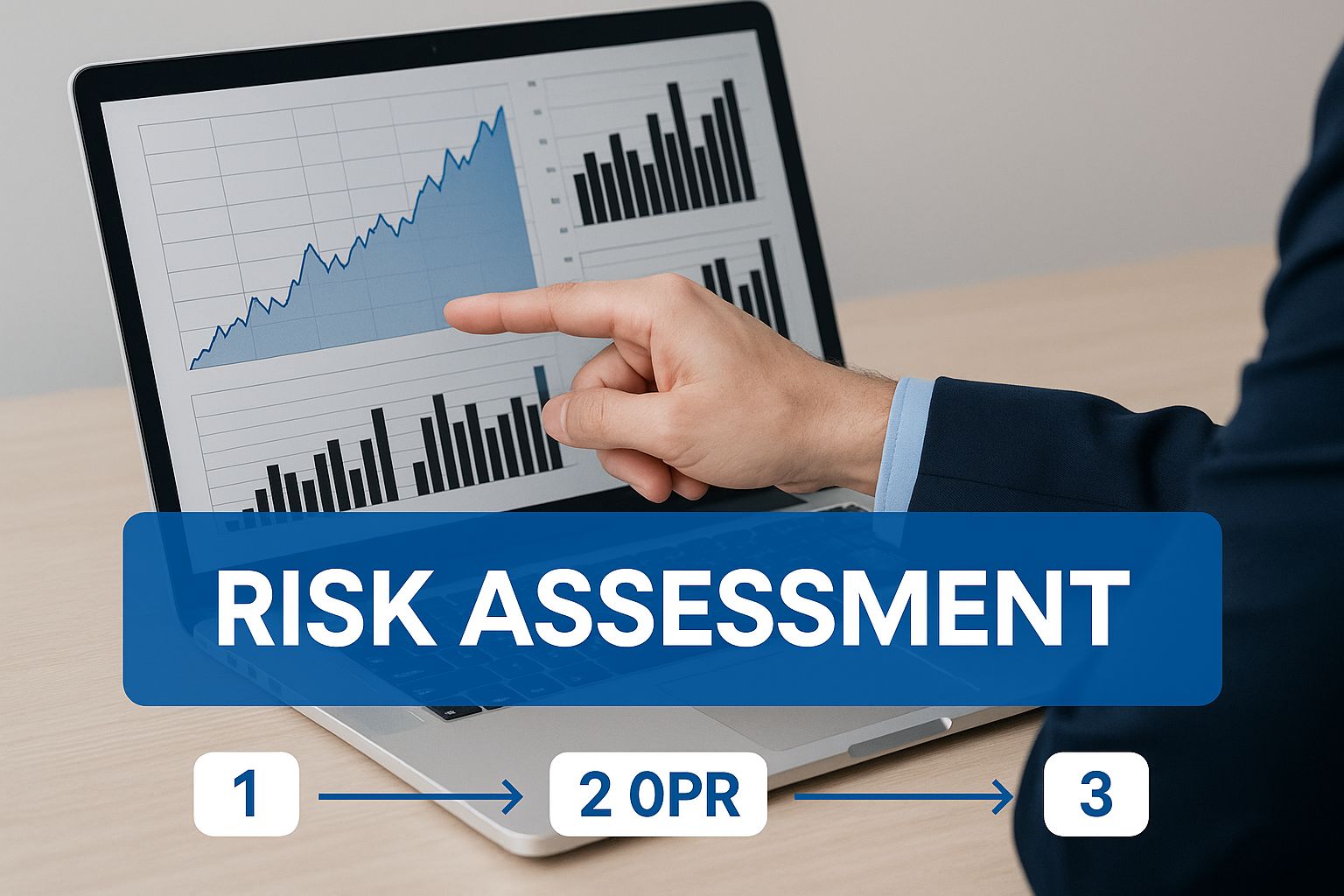
This kind of detailed analysis is essential for categorising vendors and making sure the right level of due diligence is applied right from the start.
Ongoing Monitoring and Review
The work doesn’t stop once the ink is dry on the contract. In fact, the most critical phase of TPRM is continuous monitoring. A vendor who was low-risk yesterday could become high-risk tomorrow because of a security breach, a change in ownership, or a simple lapse in their own controls.
This phase is all about maintaining clear visibility into your vendor’s risk posture throughout the entire relationship. Key activities include:
- Periodic Assessments: Conduct regular risk assessments, with the frequency tied to how critical the vendor is. High-risk partners might need quarterly reviews or even real-time monitoring.
- Performance Tracking: Keep a close watch on the vendor’s performance against the key performance indicators (KPIs) and SLAs you set in the contract.
- Threat Intelligence Monitoring: Pay attention to external threat intelligence feeds for any news of breaches or vulnerabilities that could affect your vendors.
Offboarding and Termination
All business relationships eventually come to an end. A secure, structured offboarding process is just as vital as a thorough onboarding one. If you terminate a vendor relationship improperly, you could leave your sensitive data exposed and create security gaps that linger long after they’re gone.
A solid offboarding checklist should always include:
- Revoking all access credentials to your systems, applications, and physical locations. No exceptions.
- Ensuring the secure return or destruction of all your data held by the vendor, with documented proof that it’s been done.
- Finalising all contractual obligations and payments to close out the relationship cleanly and professionally.
To help you visualise how these stages fit together, here’s a quick summary of the TPRM lifecycle.
The Third Party Risk Management Lifecycle Stages
| Lifecycle Stage | Key Activities | Primary Goal |
|---|---|---|
| Vendor Selection & Vetting | Initial risk scoping, due diligence questionnaires, financial and background checks. | To identify and select a trustworthy partner with an acceptable risk profile. |
| Onboarding & Contracting | Negotiating risk-specific clauses, defining SLAs, setting up access controls. | To formalise the relationship and establish clear, legally-binding expectations. |
| Ongoing Monitoring | Periodic risk assessments, performance tracking, threat intelligence monitoring. | To maintain continuous visibility and proactively manage emerging risks. |
| Offboarding & Termination | Revoking access, ensuring data destruction/return, finalising contracts. | To securely and completely end the relationship without leaving security gaps. |
By following these lifecycle stages, you transform third party risk management from a reactive, checklist-ticking task into a proactive, strategic function that strengthens your entire business.
Identifying the Key Third Party Risks to Watch
To build a solid third party risk management strategy, you first need to know what you’re up against. Thinking of vendor risk as one big, generic problem is a huge mistake. The reality is that it’s a complex web of different dangers, and each one can hit your business in a completely different way.
Imagine you’re inspecting a ship before a long journey. You wouldn’t just check the hull for leaks; you’d also look at the engines, the navigation systems, and whether the crew is ready. In the same way, a thorough TPRM programme looks beyond the obvious to assess all the potential points of failure within your vendor network.
Beyond the Obvious Cybersecurity Threats
When most people hear “third party risk,” their minds immediately jump to cybersecurity. And for good reason. Data breaches that start with a vendor are a constant and expensive threat. A fintech partner handling your payment processing could get breached, exposing your customers’ sensitive financial data and landing you in serious trouble with regulators.
But focusing only on cyber threats leaves your organisation dangerously exposed to other major risks. A truly resilient business has to prepare for a much wider range of challenges that can pop up in its supply chain.
The Hidden Dangers of Operational Risk
Operational risk is the danger that a vendor will simply fail to deliver their services, causing a direct disruption to your business. This isn’t about someone stealing your data; it’s about keeping the lights on.
Think about these scenarios:
- A Critical Software Outage: Your entire sales team depends on a third-party CRM platform. If that platform goes down for a day because of a technical glitch on their end, your sales pipeline grinds to a halt.
- Supply Chain Disruption: You rely on a single supplier for a key component in your manufacturing process. If their factory gets shut down by a natural disaster, your production line could be idle for weeks, costing you millions in lost revenue.
Operational failures in your supply chain can be just as damaging as a cyberattack. They hit your ability to serve customers and make money, making them a top priority in any risk assessment.
The Domino Effect of Financial Risk
Another area that’s often missed is financial risk. This is the risk that a key partner’s financial troubles will start to affect your own bottom line. You might have a great contract with a vendor, but that contract is worthless if the company goes bankrupt.
Before you bring on a new partner, especially one that’s critical to your operations, checking their financial health is non-negotiable. An unstable vendor could suddenly shut down, leaving you scrambling to find a replacement under huge pressure. This creates not just an operational crisis but a financial one for your business, too.
Guarding Your Brand Against Reputational Risk
In today’s connected world, your brand’s reputation is tied to the actions of your partners. Reputational risk pops up when a vendor’s unethical or illegal behaviour tarnishes your company’s image just by association.
A business’s reliance on vendors spans all sorts of sectors, creating a complex TPRM landscape. Environmental, social, and governance (ESG) compliance rules are now forcing companies to look closely at their supply chains for sustainability issues and risks related to greenwashing, with regulators stepping up enforcement. If one of your key suppliers is exposed for violating labour laws or environmental standards, the public backlash can easily spill over onto your brand and destroy customer trust. You can explore more about how these interconnected risks are shaping the market by reading the full report on the Third-Party Risk Management Market.
By understanding these distinct risk categories—cybersecurity, operational, financial, and reputational—you can move beyond a one-size-fits-all view of third party risk management. This multi-layered perspective is the foundation for creating a truly comprehensive assessment strategy that protects your entire organisation.
Why Continuous Monitoring Is the New Standard
The days of the annual vendor check-up are officially over. A ‘set it and forget it’ approach to third party risk management, where you assess a partner once during onboarding and then maybe glance at them a year later, is no longer a viable defence. It’s like checking the locks on your doors only once a year; it ignores the reality that threats can emerge at any moment.
In today’s fast-paced environment, a vendor’s security posture is not a static photograph but a constantly changing video stream. What was secure yesterday could be vulnerable tomorrow.
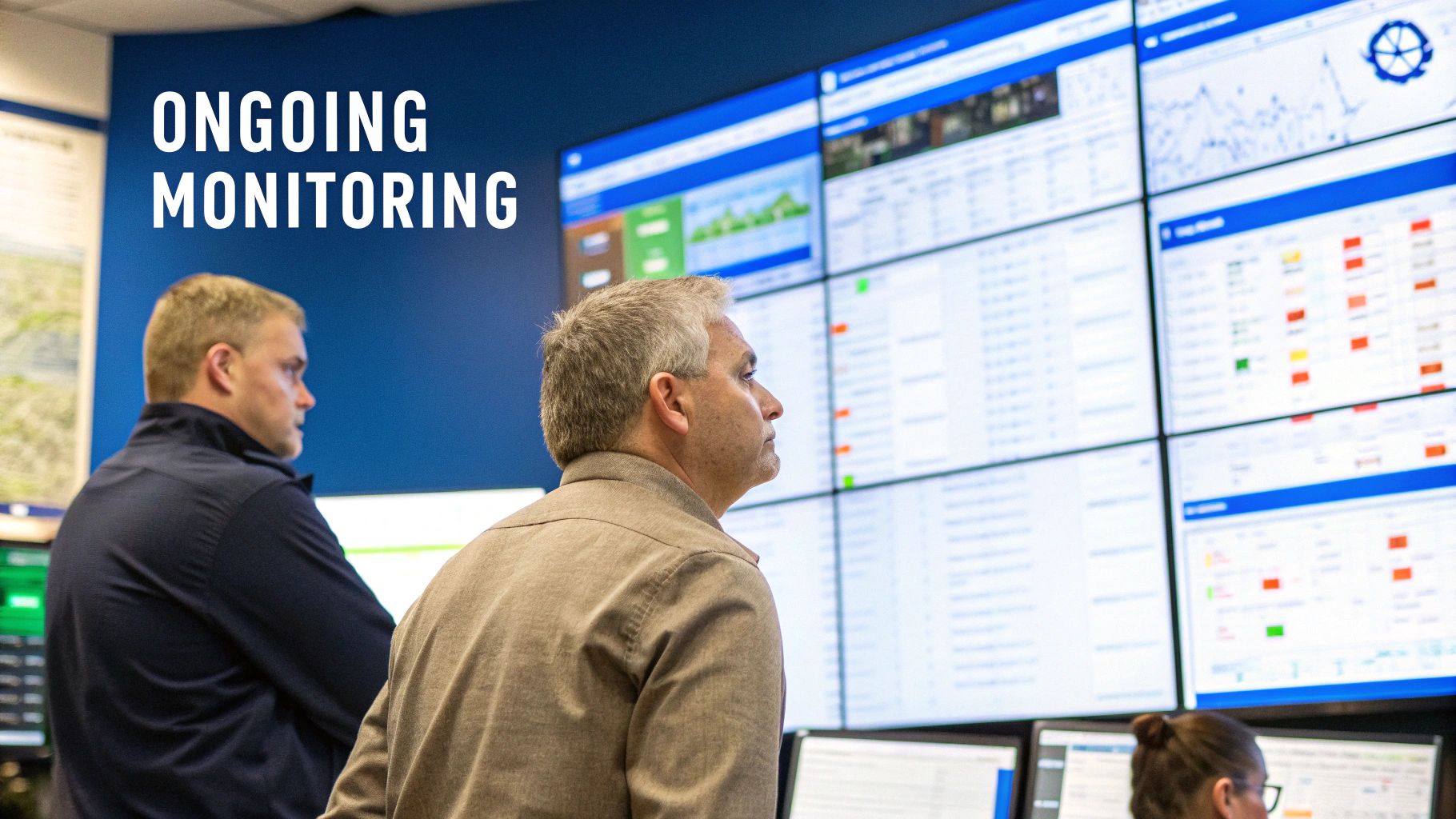
This essential shift moves us from static, point-in-time assessments to a dynamic, continuous monitoring model. Instead of relying on an outdated snapshot of a vendor’s risk, this modern approach provides a real-time view, allowing you to see new risks as they appear.
From Static Snapshots to Real-Time Defence
The traditional method of vendor risk assessment was built for a slower, less connected world. It typically involved an annual security questionnaire or audit. While useful, this approach has a critical flaw: it creates massive blind spots between assessments.
A lot can happen in a year, a month, or even a single day:
- A vendor could suffer a data breach that they fail to disclose immediately.
- Their financial stability could suddenly decline, putting your supply chain at risk.
- Negative news or regulatory action could emerge, creating significant reputational damage for you by association.
Continuous monitoring closes these gaps. It’s a proactive strategy that keeps a constant watch on your entire vendor ecosystem, giving you the visibility needed to act before a potential issue becomes a full-blown crisis.
The core idea behind continuous monitoring is simple yet powerful: you cannot manage risks you cannot see. By maintaining constant vigilance, you transform your third party risk management programme from a reactive, compliance-driven exercise into a proactive, threat-informed defence.
The Rise of Sophisticated Supply Chain Attacks
The urgent need for this shift has been driven by the increasing cleverness of cyberattacks targeting the supply chain. Attackers understand that directly targeting a large, well-defended organisation is difficult. It’s often much easier to find a weak link in their network of third-party vendors and use that as an entry point.
This exact strategy is why continuous real-time monitoring has become a cornerstone in third party risk management practices globally. Traditional, once-a-year assessments are being replaced by technology that provides dynamic risk scoring and constant surveillance of vendors. This change is a direct response to major cyberattacks that exploited third-party relationships. You can learn more about how these incidents are shaping the future of TPRM by exploring these key trends in third-party risk management.
Modern, AI-powered tools are now essential for this level of vigilance. These platforms can automatically and continuously scan for a wide array of red flags, including:
- Security Vulnerabilities: Identifying new weaknesses in a vendor’s public-facing systems.
- Negative News and Media Mentions: Alerting you to reputational or legal troubles.
- Data Breach Disclosures: Catching mentions of a vendor in data dumps or dark web forums.
- Changes in Financial Health: Monitoring for signs of financial distress that could impact their services.
This automated approach allows your team to get ahead of threats before they impact your business. In today’s volatile landscape, a proactive defence is the only effective one, making continuous monitoring the undisputed new standard.
Adding a Human Layer to Your TPRM Strategy
A sophisticated third party risk management framework is a great start, but it often misses one of the most unpredictable variables in your entire supply chain: people. Your TPRM strategy is only as strong as the individuals working for your vendors, especially those with access to your sensitive data, systems, or facilities. Technical controls and iron-clad contracts are crucial, but they don’t fully account for human risk.
This is where the human element comes into play. While you’re busy assessing a vendor’s security protocols and financial stability, it’s just as important to think about the integrity of their personnel. An insider threat doesn’t have to come from your own company; a disgruntled or compromised employee at a third-party organisation can cause just as much damage, if not more.
Verifying People, Not Just Policies
Simply trusting that a vendor has a solid internal hiring process isn’t enough. You need a way to gain real assurance that the specific individuals interacting with your assets are trustworthy. This means adding a layer of human-focused due diligence to your vendor vetting.
Comprehensive background verification acts as a powerful tool to mitigate these human-centric risks. It bridges the gap between a vendor’s policies on paper and the reality of the people they employ. This process helps ensure the individuals representing your partners are as reliable as the organisations themselves.
Key Areas for Vendor Employee Verification
When integrating this human layer, the goal isn’t to screen every single employee of every vendor. That would be impractical. Instead, you should focus on key personnel from your high-risk partners—those with privileged access to your ecosystem.
Key verification checks should include:
- Identity Verification: The foundational first step. Is this person who they claim to be?
- Criminal Record Checks: This helps identify any relevant criminal history that could pose a direct risk to your organisation’s security or reputation.
- Employment History Verification: Validating professional experience ensures key personnel are qualified and have been truthful about their background.
- Education Verification: This is especially important for roles that require specialised expertise, confirming academic qualifications.
By confirming these details, you add a crucial layer of security that directly tackles the potential for insider threats coming from your supply chain. It’s a proactive step to ensure the people granted access to your valuable assets have been properly vetted. To manage this effectively, it’s also smart to ensure your own teams are sharp on best practices. You can explore more on optimising human resources processes to align your internal standards with what you expect from your partners.
Trusting your partners is essential, but verifying their key personnel is strategic. Background screening for third-party employees isn’t about micromanagement; it’s about completing your risk picture and closing a significant, often-overlooked security gap.
Ultimately, integrating employee verification into your TPRM framework transforms it from a purely technical exercise into a truly holistic security strategy. It acknowledges that your defences must account for both the systems and the people who operate them, ensuring your entire business ecosystem is fortified against a much wider spectrum of threats.
Common Questions About Third Party Risk Management
Even with a solid framework in place, questions about the day-to-day realities of third party risk management are bound to pop up. Getting these common queries sorted helps clarify your strategy and makes sure everyone on your team is on the same page.
Let’s tackle some of the questions we hear most often.
What Is the First Step to Starting a TPRM Programme?
Before you can do anything else, you need a complete inventory of all your third-party vendors. Simple, right? But you’d be surprised what gets missed. You can’t manage risks you don’t even know exist, and it’s easy to overlook smaller contractors or SaaS tools that have crept into your operations. Each one is a potential door for risk.
Once you have that comprehensive list, your next move is to categorise them. Figure out who has access to sensitive data and which vendors are absolutely critical to your business staying afloat. This simple inventory becomes the foundation for everything else, letting you prioritise your efforts and focus on the highest-risk relationships first.
How Often Should We Assess Our Vendors?
The frequency of your assessments should always match the level of risk. A one-size-fits-all annual review is an outdated practice that leaves some serious gaps. It’s far better to adopt a cadence based on risk.
- High-Risk Vendors: These are the partners handling your most sensitive data or propping up mission-critical functions. They need continuous monitoring and at least one formal, deep-dive assessment every year.
- Low-Risk Vendors: For the partners with limited access and non-critical roles, a formal review every two or three years might be perfectly fine.
The goal is to tailor your oversight to the specific risk profile of each partner, not just check a box once a year.
Your approach to vendor assessment should be dynamic, not static. Tying review frequency directly to risk level ensures you allocate your resources efficiently, focusing intensive efforts where they are needed most.
Is TPRM Only for Large Corporations?
Not at all. While big companies have sprawling, complex supply chains, small and medium-sized businesses are often seen as prime targets by attackers. Cybercriminals frequently assume SMBs have weaker security, making them an easier way in.
A breach that comes through a vendor can be just as devastating for a small business as it is for a corporate giant. The key is to scale your third party risk management programme to fit your organisation’s size and resources. A simpler framework built on the same core principles—due diligence, solid contracts, and ongoing monitoring—is essential for any business, no matter the size. It keeps you protected without drowning you in administrative work.
A robust TPRM strategy is essential, but verifying the people behind your partners adds a crucial security layer. SpringVerify provides comprehensive background verification services, helping you mitigate human risk within your supply chain. Ensure the vendor personnel with access to your data are as trustworthy as their security policies. Learn more at https://in.springverify.com.


