

Table of Contents
Navigating India’s Shifting Talent Landscape

India’s talent market presents a dynamic and complex environment, especially within high-growth sectors. This constant change requires companies to adapt their recruitment strategies. Traditional methods often fall short in this rapidly evolving landscape, unable to meet the increasing pace and scale of hiring needs. This necessitates a more efficient and effective recruitment process to maintain a competitive edge.
Understanding the Current Market Dynamics
The demand for skilled professionals, particularly in IT and manufacturing, has created a highly competitive job market. This puts immense pressure on organizations to quickly identify and secure top-tier candidates. Lengthy recruitment cycles, for instance, can result in missed opportunities and decreased productivity.
A negative candidate experience can also tarnish an organization’s employer brand, making it harder to attract talent. This dynamic talent landscape is supported by concrete data. India’s recruitment industry is undergoing significant growth and transformation.
Projections estimate approximately 500,000 new job openings across major sectors in 2025. Hiring intent is expected to grow by 19% year-over-year. Early 2025 staffing activity already demonstrates a substantial 40% increase. The IT sector leads this growth, with job opportunities projected to rise by 15-20%, and specialized roles experiencing a surge in demand between 30-35%. Manufacturing and automotive follow closely, with hiring intent increasing by 25% and 20%, respectively. These numbers underscore the importance of efficient recruitment to connect qualified candidates with suitable opportunities. More detailed information can be found in this report: India’s Recruitment Industry Outlook for 2025.
The Challenges of Traditional Recruitment
Traditional recruitment practices often rely on manual processes and outdated systems, leading to several key challenges:
- Time-Consuming: Manually reviewing resumes, scheduling interviews, and managing candidate communication can significantly extend the hiring process.
- Inefficient: Traditional methods often struggle to effectively target the appropriate candidates, resulting in a large number of unqualified applications.
- Costly: Prolonged hiring timelines, wasted resources, and the risk of bad hires can lead to substantial financial losses.
- Poor Candidate Experience: Lengthy application procedures and a lack of communication can create a negative experience for candidates, ultimately impacting an organization’s employer brand and ability to attract top talent.
The Need for a Streamlined Approach
Successfully navigating India’s evolving talent landscape requires a streamlined recruitment process. Organizations must embrace technology, data-driven insights, and a candidate-focused approach. This includes:
- Automating Repetitive Tasks: Using technology to automate tasks like resume screening, interview scheduling, and communication allows recruiters to focus on more strategic activities.
- Improving the Candidate Experience: A positive and engaging candidate experience, from application to offer, can improve offer acceptance rates and strengthen the employer brand.
- Leveraging Data Analytics: Analyzing recruitment data to identify trends, optimize sourcing, and improve the overall hiring process is critical for success.
By implementing these strategies, organizations can improve their recruitment efficiency while attracting and retaining the skilled professionals needed to thrive in India’s competitive market.
Breaking Free From Traditional Recruitment Bottlenecks

Traditional recruitment methods can often feel cumbersome and inefficient. Think of navigating a busy Indian roadway during rush hour – slow, frustrating, and complex. In today’s competitive job market, optimizing the recruitment process is essential for success. But what specific obstacles slow down traditional hiring, and what’s the true cost of sticking with outdated methods?
The High Cost of Inefficiency
Traditional recruitment often relies on manual tasks. These range from reviewing countless resumes to scheduling interviews and gathering feedback. This manual approach can result in a lengthy time-to-hire. This not only increases recruitment expenses but also gives competitors an advantage, allowing them to hire top talent while your process lags. These inefficiencies also create a negative candidate experience, potentially damaging your employer brand and hindering your ability to attract skilled professionals.
Identifying the Pain Points
Several common issues plague traditional recruitment. Manual resume screening, for instance, is both time-consuming and susceptible to human error. Interview scheduling can become a logistical puzzle, requiring endless communication between candidates and hiring managers. A lack of centralized communication also keeps candidates in the dark, leading to frustration and lower offer acceptance rates.
Real-World Impact in India
These challenges have a real impact on Indian businesses. Long hiring cycles can cause project delays and lost productivity. The difficulty in finding qualified candidates, especially in specialized fields, can stifle innovation and growth. The Indian hiring market currently faces distinct hurdles. Despite predicted job growth, 80% of Indian employers struggle to find qualified candidates, particularly in the IT and energy sectors. This talent shortage is especially noticeable in fields like AI, cloud computing, and cybersecurity, pushing recruiters to rethink their strategies. This further emphasizes the need for a more effective recruitment process. Learn more about India’s hiring trends and talent acquisition in India.
Moving Towards a Streamlined Approach
Overcoming these traditional recruitment bottlenecks requires a new strategy. Organizations need to adopt technologies that automate manual tasks, improve communication, and enhance the candidate experience. Transitioning to a streamlined recruitment process will enable businesses to secure top-tier talent quickly and efficiently, creating a significant competitive advantage in the Indian market. This includes adopting AI-driven recruitment technologies. These tools automate sourcing and screening, reducing bias and shortening hiring cycles. This improved process will also lead to a better candidate experience, ultimately resulting in stronger hires and a better brand reputation. Read more on how to master talent acquisition.
Tech-Powered Solutions That Actually Deliver Results
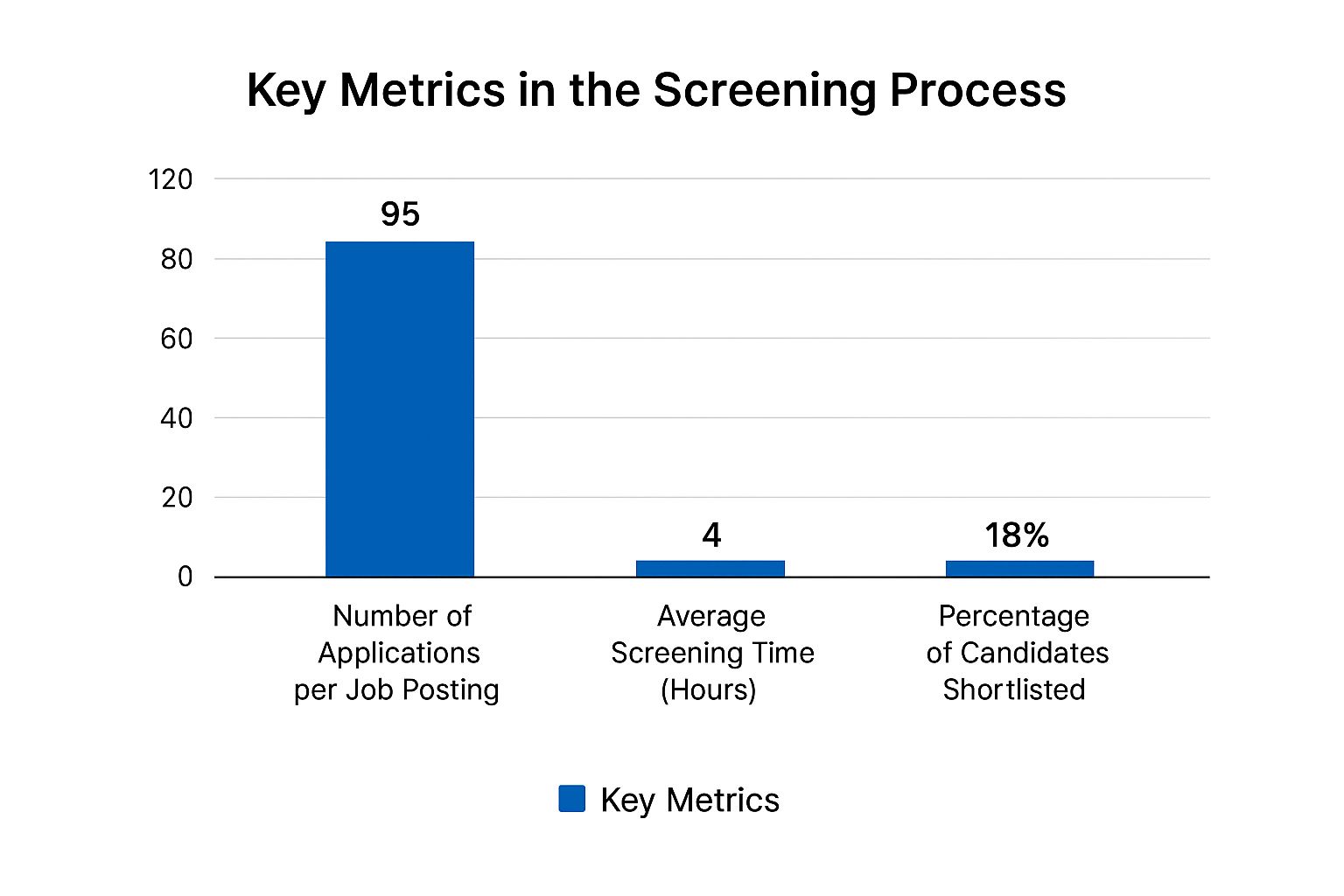
The infographic above shows how tech solutions impact key recruitment metrics. These metrics include the number of applications per job posting, average screening time, and the percentage of candidates shortlisted. Using the right technology significantly reduces screening time and increases the number of suitable candidates. This creates a more efficient selection process.
Traditional recruitment methods are being replaced by technology. In India’s competitive job market, using the right tools can greatly improve hiring outcomes. But which technologies are most effective, and how can companies use them well?
AI-Powered Matching: Finding the Right Fit Faster
AI-powered matching is a game-changer. These tools analyze candidate profiles and job descriptions to find the best matches, moving beyond simple keyword searches. An AI system can examine a candidate’s work history, skills, and even their online presence to assess their suitability for a role.
This significantly cuts down on manual resume screening. Recruiters can then focus on interacting with qualified candidates.
Video Interviewing Platforms: Enhancing Efficiency and Reach
Video interviewing platforms offer more flexibility and broader reach. Candidates can record interviews when it’s convenient for them, avoiding scheduling conflicts and expanding the talent pool. This is particularly helpful in India, given its diverse geography, making it easier to connect with candidates across the country.
Video interviews also create a better candidate experience and enhance your employer brand. You might be interested in: How to master API integrations.
Intelligent Screening Tools: Automating Key Tasks
Intelligent screening tools automate tasks like resume screening and initial assessments. These tools filter out unqualified applicants quickly, letting recruiters concentrate on strategic activities. They can also find strong candidates who might be missed using traditional methods.
This automated process can considerably reduce time-to-hire and enhance the quality of hires.
To help you evaluate different technology options, we’ve compiled a comparison table:
The following table compares various recruitment technologies. We’ve analyzed them based on implementation difficulty, cost, and their impact on key recruitment metrics.
Technology Solutions to Streamline Recruitment
| Technology Solution | Implementation Complexity | Cost Range (INR) | Time-to-Hire Reduction | Quality of Hire Impact |
|---|---|---|---|---|
| Applicant Tracking System (ATS) | Low | 5,000 – 50,000 per month | Moderate | Moderate |
| AI-Powered Matching | Medium | 10,000 – 1,00,000 per month | High | High |
| Video Interviewing Platforms | Low | 2,000 – 20,000 per month | Moderate | Moderate |
| Intelligent Screening Tools | Medium | 8,000 – 80,000 per month | High | High |
As the table shows, AI-powered matching and intelligent screening tools offer the greatest potential for reducing time-to-hire and improving the quality of hires, but they also come with higher implementation complexity and cost. An ATS and video interviewing platforms are easier to implement and more affordable, making them a good starting point for many organizations.
Building a Tech Stack That Works for You
The best mix of technologies depends on your company’s specific needs and budget. A small startup might choose a basic Applicant Tracking System (ATS) and a video interviewing platform. A larger company might need a more advanced AI-powered recruitment suite. Focus on solutions that address your biggest hiring challenges and work well with your current systems.
Practical Implementation: Avoiding Common Pitfalls
Technology offers clear advantages. However, successful implementation requires careful planning. Businesses should consider factors like budget, company culture, and existing technology.
Define your goals. Select technologies that support those goals, and train your team. Also, ensure data security and compliance, especially with sensitive candidate data. This will help maximize your return on investment and avoid costly mistakes.
Integrating these tech solutions can significantly improve your recruitment process. Automating tasks, expanding your reach, and improving the candidate experience allows you to attract and hire top talent efficiently in India.
Data-Driven Decision Making: Beyond Basic Metrics

Using data is essential for better recruitment decisions. Data-driven recruitment goes beyond simply tracking numbers like time-to-hire. It helps you understand why certain outcomes occur and how to improve them. This empowers companies to fine-tune every part of hiring, from attracting talent to extending offers.
Identifying Key Metrics for the Indian Context
Knowing which metrics are most important within the Indian context is critical for insightful data analysis. While time-to-hire and cost-per-hire are valuable, relying solely on these can be deceptive. For example, a short time-to-hire might seem positive, but if it leads to high turnover because of poor candidate fit, it’s not a true success.
Instead, Indian organizations should consider tracking metrics like:
- Source of Hire: Figuring out where your best hires come from (for instance, employee referrals, job boards, or social media) helps you invest wisely in recruitment channels.
- Quality of Hire: This metric focuses on the performance of new hires, giving you a glimpse into how effective your screening and selection processes are.
- Candidate Experience: Gauging candidate satisfaction throughout the hiring process reveals areas for improvement and builds a stronger employer brand.
Building a Measurement System That Drives Improvement
A strong measurement system is fundamental to a data-driven approach. This involves defining clear objectives, tracking relevant metrics, and analyzing the data regularly. Think of it as a health check for your recruitment process.
This approach uncovers hidden patterns. You might discover that a particular job board delivers lots of applications, but the quality of hire is poor. This could suggest the need to adjust job descriptions or find different talent pools. Data reveals specific trends in India’s hiring landscape. By 2025, only 14% of new hires are projected to be fresh graduates, while 47% will have 1 to 5 years of experience. Overall hiring intent is estimated at 29%, a significant jump from 17.7% in 2024. Find more detailed statistics here. This highlights the importance of adjusting strategies to effectively target mid-level professionals.
Transforming Data into Strategic Insights
Collecting data is just the beginning. The real benefit lies in converting raw data into actionable insights to guide decisions. For example, if candidate engagement drops after the initial application, it may indicate a need to improve communication or streamline the application process. Data Driven Decision Making offers further information.
By using data effectively, organizations in India can:
- Identify Untapped Talent Pools: Data can reveal new candidate sources and help customize outreach for specific groups.
- Refine Job Descriptions: Analyzing which descriptions attract the most qualified candidates allows you to optimize wording and target specific skill sets.
- Develop Targeted Engagement Strategies: Understanding candidate preferences helps you personalize communication and improve the candidate experience.
Data-driven decisions move companies beyond basic metrics, giving them a deeper understanding of their recruitment processes. This enables them to adapt to India’s changing talent market, improve strategies, and ultimately achieve better hiring outcomes.
Crafting Candidate Experiences That Win Top Talent
In today’s competitive job market, a positive candidate experience is essential. It can be the deciding factor for top talent choosing your company. Think of it as choosing a restaurant: delicious food is expected, but the overall experience—from the atmosphere to the service—determines if you’ll return. A well-crafted candidate experience significantly impacts recruitment success.
Understanding the Candidate Journey
The candidate journey includes every interaction a potential employee has with your company, from the initial job posting to the final decision. Each touchpoint shapes their perception of your organization. Many companies mistakenly treat this journey as a series of transactions instead of a holistic experience. This can lead to candidate frustration and missed opportunities to showcase your company culture. Read also: How to master human resources.
Creating Culturally Relevant Job Descriptions
Attracting the best talent in India begins with job descriptions that resonate with the local culture. This requires understanding the nuances of language and the career goals of Indian professionals. Highlighting professional growth and development opportunities can be particularly attractive. Avoid generic descriptions; focus on the specific skills and experience needed, showcasing your unique company culture.
Designing Friction-Free Application Processes
A cumbersome application process discourages even highly qualified candidates. Imagine navigating a crowded market with confusing directions – it’s frustrating. A complicated application form creates a negative first impression. Streamline the process, minimizing required fields and ensuring mobile compatibility. This improves the candidate experience and expands your talent pool.
Implementing Effective Communication Protocols
Communication is crucial throughout the candidate journey. Employer silence creates uncertainty and can push talent toward competitors. Regular updates, even automated ones, keep candidates engaged and show respect for their time. This is especially important in India, where personal connections and clear communication are valued.
Learning From Successful Indian Employers
Leading Indian companies recognize the importance of candidate experience. They invest in a positive and engaging journey, resulting in higher offer acceptance rates and a stronger employer brand. To enhance your recruitment strategy, consider Data Driven Decision Making. These organizations prioritize transparency and efficiency, often using technology to streamline communication and provide personalized feedback.
To illustrate practical steps companies can take to improve their candidate experience, let’s examine some common challenges and solutions. The following table offers a framework for enhancing the recruitment process:
Candidate Experience Improvement Framework
This table outlines key touchpoints in the recruitment journey, common pain points experienced by Indian candidates, and strategies to address these issues.
| Recruitment Stage | Common Pain Points | Improvement Strategies | Expected Impact |
|---|---|---|---|
| Job Description | Vague requirements, lack of cultural relevance | Use clear language, highlight growth opportunities, tailor content to Indian professionals | Increased applications from qualified candidates |
| Application Process | Complex forms, lack of mobile compatibility | Simplify forms, ensure mobile-friendly design, reduce required fields | Higher completion rates, wider applicant pool |
| Communication | Lack of updates, slow response times | Implement automated updates, provide timely feedback, personalize communication | Increased candidate engagement, improved perception of employer |
| Feedback | Generic rejection emails, no constructive criticism | Offer personalized feedback, explain reasons for decisions, suggest areas for improvement | Positive candidate experience, even for those not selected |
By addressing these common pain points, companies can create a more positive and efficient recruitment process, leading to a better overall candidate experience.
Implementing Actionable Improvements
Improving your candidate experience isn’t necessarily complex. Begin by assessing your current process and finding areas for improvement. Consider implementing an Applicant Tracking System (ATS), automating communication, or providing more detailed candidate feedback. Small changes can make a significant difference in attracting and retaining top talent.
Building High-Performance Recruitment Teams
The structure of your recruitment team significantly impacts your hiring success. This section examines how successful organizations structure their talent acquisition teams for maximum efficiency. We’ll explore various team models, effective role specialization strategies, and when outsourcing might be the right choice.
Centralized vs. Decentralized: Finding the Right Fit
One of the first decisions involves choosing between a centralized or decentralized recruitment team. A centralized team manages all hiring for the entire organization. This approach promotes consistency but may be less responsive to individual department needs. A decentralized model embeds recruiters within specific departments, providing specialized knowledge, but potentially leading to inconsistencies across the organization.
The optimal model depends on factors such as company size, industry, and hiring volume. A large company with high hiring needs might benefit from a centralized approach, while a smaller company with specialized hiring needs might prefer a decentralized structure.
Role Specialization: Maximizing Team Efficiency
As recruitment teams expand, role specialization becomes essential for streamlining the recruitment process. Clearly defined roles and responsibilities—like sourcing specialists, interview specialists, and onboarding specialists—prevent duplicated efforts and allow team members to focus on their expertise. This creates a more efficient and effective process.
Workflow Optimization and Performance Measurement
After defining roles, optimizing workflows is the next step. This involves implementing clear processes for each recruitment stage, from sourcing to onboarding. Using an Applicant Tracking System (ATS) like Greenhouse can significantly improve workflow efficiency and enable better tracking of key metrics. Regular performance measurement holds team members accountable and provides insights into effective strategies and areas for improvement.
Recruitment Process Outsourcing (RPO): A Strategic Solution
Recruitment Process Outsourcing (RPO) can be a strategic solution, especially for companies with fluctuating hiring needs or limited internal resources. RPO providers manage all or part of the recruitment process, offering flexibility and cost savings. Selecting a reputable RPO provider with relevant industry expertise is essential.
Hybrid Models: Combining Internal and External Resources
Many organizations choose a hybrid approach, combining internal recruitment teams with RPO providers. This allows companies to maintain control over key hiring aspects while utilizing the expertise and flexibility of an external partner. For instance, a company might handle sourcing and initial screening internally, while outsourcing later-stage interviews and onboarding to an RPO provider.
Real-World Examples: Improved Recruitment Outcomes
Real-world restructuring examples demonstrate how thoughtful organizational design leads to better recruitment outcomes. By adopting a specialized, data-driven approach, companies can significantly reduce time-to-hire, improve quality of hire, and create a more positive candidate experience. These improvements contribute to overall business success by ensuring the right people are in the right roles at the right time.
Your 90-Day Plan to Improve Your Recruitment Process
Revamping your recruitment process isn’t a quick fix. It takes a planned approach, ongoing work, and dedication to making things better. This 90-day plan offers a practical guide, specifically designed for businesses in India, to help you optimize your hiring step by step.
Phase 1: Assessment and Early Improvements (Days 1-30)
This first phase is all about understanding your current recruitment process and finding areas you can improve right away.
- Process Mapping: Create a visual map of each step in your current hiring process, from the initial job posting to onboarding. This helps you identify roadblocks and inefficiencies. For instance, are too many approval steps slowing things down? Is communication with candidates inconsistent?
- Metric Analysis: Analyze important recruitment metrics like time-to-hire, cost-per-hire, and source of hire. This data-driven approach reveals which areas need the most attention. Maybe your time-to-hire is much longer than the industry average, suggesting the need to streamline specific stages.
- Stakeholder Interviews: Talk to hiring managers, recruiters, and candidates to fully grasp their challenges and get their suggestions. This ensures your solutions are tailored to your organization’s unique needs.
- Quick Wins: Implement simple changes that yield immediate results. This might include automating emails, simplifying application forms, or improving how you write job postings. Early successes build momentum and demonstrate the value of these efforts.
Phase 2: Technology and Process Optimization (Days 31-60)
This phase focuses on using technology to streamline key recruitment tasks and optimize your core processes.
- Technology Evaluation: Research and choose technology solutions that meet your needs and work with your existing systems. This could mean implementing an Applicant Tracking System (ATS), a video interviewing platform, or background check software like SpringVerify.
- Process Re-engineering: Redesign your recruitment process using the information gathered in the assessment phase and the capabilities of your chosen technologies. This could involve automating resume screening, conducting structured interviews, or improving onboarding workflows.
- Training and Adoption: Thoroughly train your recruitment team on the new technologies and processes. Emphasize skill-building and ensure a seamless transition. This fosters user adoption and makes implementation successful.
Phase 3: Refinement and Measurement (Days 61-90)
The final phase concentrates on refining your improved recruitment process and measuring its results.
- Ongoing Monitoring: Continuously track key recruitment metrics to identify areas for ongoing improvement. This allows you to adjust your process to the ever-changing job market and your organization’s evolving needs. Keep in mind that only about 14% of new hires are freshers, while 47% have 1-5 years of experience. This emphasizes the importance of tailoring your strategies to attract more experienced professionals.
- Feedback and Iteration: Regularly collect feedback from everyone involved to refine your process and ensure continuous improvement. This could involve adjusting interview formats, enhancing candidate communication, or simplifying onboarding steps.
- ROI Demonstration: Measure and demonstrate the return on investment (ROI) of your streamlined process. This could include showcasing reduced recruitment costs, faster time-to-hire, or improved quality of hire. This highlights the value of these changes to leadership and reinforces the importance of continuous improvement.
By following this structured 90-day plan, you can build a sustainable and effective recruitment process that attracts top talent, boosts efficiency, and gives your company a competitive edge in India’s dynamic talent market. Ready to transform your hiring? Visit SpringVerify to explore how their comprehensive background verification services can help you make informed hiring decisions faster and with more confidence.


