

Table of Contents
The Modern Recruitment Landscape: Why Traditional Methods Fail

The Indian job market is a whirlwind of activity and competition. Traditional recruitment methods, often slow and inflexible, are struggling to keep up. These outdated practices create roadblocks that stifle company expansion and leave both recruiters and candidates feeling discouraged. Ultimately, companies risk watching their top talent walk out the door and into the arms of competitors who have adopted more contemporary recruitment strategies.
One major drawback of traditional recruitment is the prolonged hiring cycle. These extended processes result in lost opportunities and high attrition rates among promising candidates.
Imagine a lengthy interview process. This delay could easily mean the difference between securing a highly sought-after software engineer and losing them to a competing firm. Furthermore, relying on manual procedures for tasks like sifting through resumes can quickly overwhelm HR departments, leading to crucial errors. This inefficiency directly impacts a company’s financial performance.
The Challenges of Traditional Recruitment in India
Traditional recruitment methods often miss the mark when it comes to addressing the unique cultural and economic characteristics of the Indian job market. Many conventional systems don’t account for the diverse range of educational backgrounds and local languages spoken across the country. This can unintentionally exclude qualified candidates from even being considered.
Additionally, relying solely on traditional job boards may not be the most effective strategy. In a market where networking and personal recommendations hold significant sway, companies need to explore alternative avenues for reaching potential hires.
One key challenge is finding the right partners to improve recruitment efforts. Resources like this article on streamlining hiring offer helpful guidance on potential collaborations. This is particularly important for connecting with a broader talent pool in such a diverse nation.
In India, optimizing the recruitment process is more critical than ever due to talent shortages. Approximately 80% of Indian employers struggle to find qualified candidates, particularly in fields like IT and energy. This is especially apparent for specialized positions involving AI, cloud computing, and cybersecurity. To delve deeper into these evolving trends, find more detailed statistics here.
To address these challenges, companies are increasingly turning to AI-powered recruitment tools. These tools automate tasks like candidate sourcing and screening, mitigate biases, and expedite hiring decisions. Using technology strategically not only improves efficiency but also makes the application process more attractive to skilled professionals. This translates to a significant competitive advantage in today’s talent-driven market.
Transforming Your Hiring Workflow Through Smart Technology
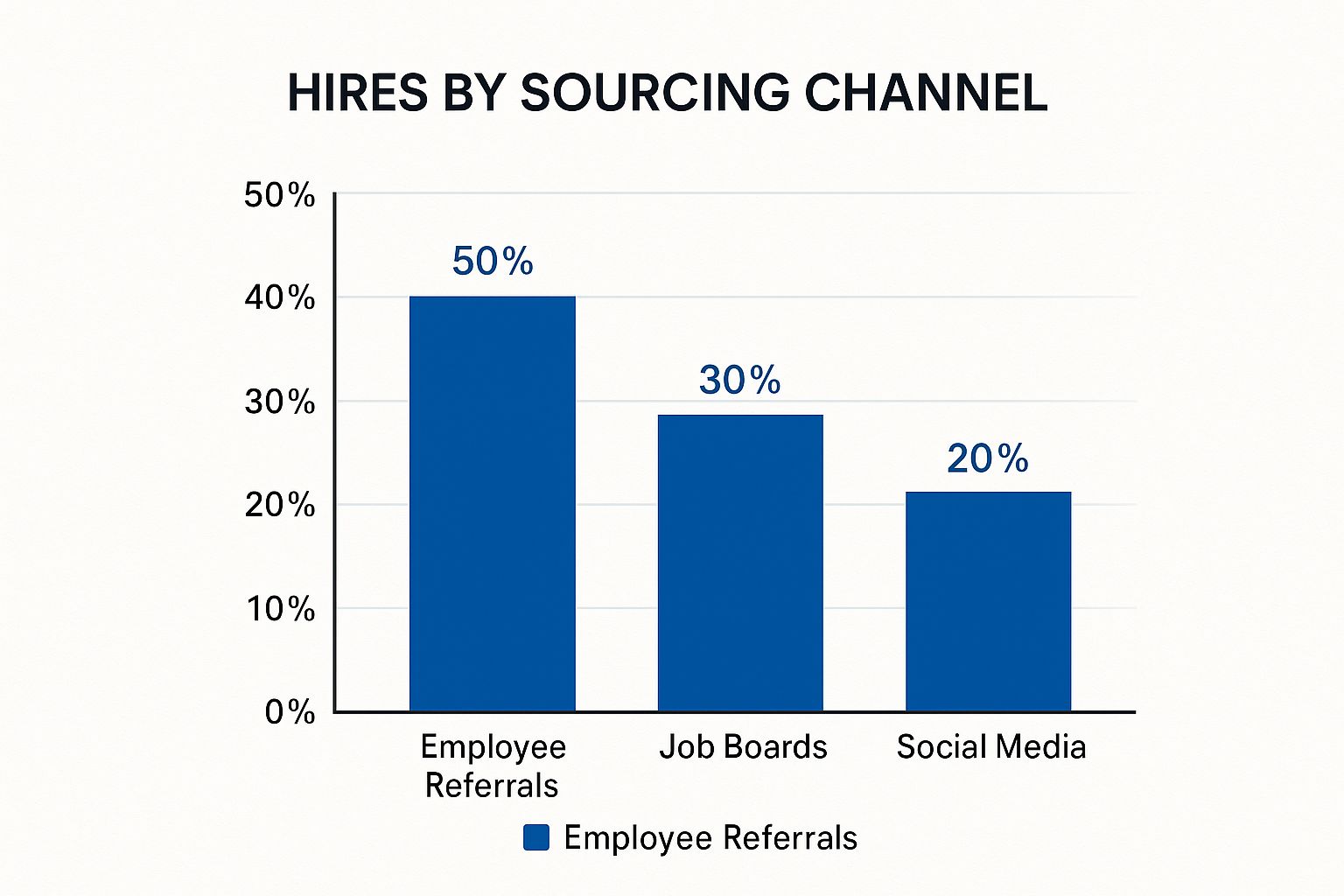
In today’s competitive business world, outdated recruitment practices can significantly hinder a company’s growth. Using smart technology isn’t just a bonus anymore; it’s a necessity for a smooth and efficient hiring process. This is especially true in India, where the competition for qualified professionals is intense.
Applicant Tracking Systems (ATS) designed for the Indian market can process local languages and educational credentials, ensuring qualified candidates aren’t missed. AI-powered tools can also analyze candidate communications, helping recruiters understand cultural nuances and gain valuable insights. This focused approach leads to a more effective hiring process.
The Indian tech sector is experiencing rapid growth, and the need for skilled employees is expected to rise. The sector anticipates a 40% increase in new graduate hiring in FY25, with salaries up to 30% higher than the industry average. This highlights the need for effective talent acquisition. For more detailed statistics, see this report: Fresh Grad Hiring in India Predicted to Surge 40% in FY 2025
How Technology Improves Recruitment in India
Integrating the right technology can significantly boost efficiency and create a better experience for candidates. Here are some key benefits:
- Automated Screening: AI algorithms can quickly filter resumes, saving recruiters time and effort.
- Better Communication: Automated emails and chatbots keep candidates informed and engaged throughout the hiring process.
- Data-Driven Decisions: Tracking metrics like time-to-hire and source of hire allows companies to refine their recruitment strategy.
- Fairer Evaluations: AI algorithms can help reduce unconscious bias by focusing on skills and experience.
Learn more about effective talent acquisition strategies: How to Master Talent Acquisition
Measuring the Impact of Technology
The following data chart visualizes key metrics – time-to-hire, cost-per-hire, and candidate quality – before and after implementing smart technology solutions.
- Time-to-hire: This measures how long it takes to fill a position. The chart shows a significant reduction in time-to-hire after technology adoption.
- Cost-per-hire: This considers all expenses related to hiring. The chart indicates a substantial drop in cost-per-hire.
- Candidate quality: This assesses the performance and retention of new hires. The chart demonstrates a notable improvement in candidate quality.
The data chart clearly illustrates that integrating smart technology optimizes the recruitment process. Automation, reduced manual effort, and data-driven insights lead to measurable improvements in important recruitment metrics. This ultimately helps companies attract and retain top talent in India’s competitive job market.
The following table provides a comparison of various recruitment automation tools, offering insights into their features, pricing, and suitability for different company sizes.
To help you choose the right tool for your organization, we’ve compiled a comparison of popular recruitment automation tools available in India. This table breaks down key features, pricing models, and ideal company size for each tool, along with integration capabilities.
Recruitment Automation Tools Comparison for Indian Companies
| Tool Name | Key Features | Pricing Model | Best For | Integration Capabilities |
|---|---|---|---|---|
| Naukri RMS | Resume parsing, AI-powered candidate matching, interview scheduling | Subscription-based | Medium to Large Enterprises | Integrates with popular HRMS and ATS systems |
| CutShort | AI-powered sourcing, automated outreach, candidate relationship management | Freemium and paid plans | Startups and SMEs | Integrates with various communication and collaboration tools |
| SpringVerify | Background verification, automated reference checks, candidate onboarding | Pay-per-use and subscription plans | All company sizes | Integrates with ATS and HRMS platforms |
| iimjobs.com | Job board for management professionals, candidate search, resume database | Subscription-based | Companies hiring management professionals | Limited integration options |
This table highlights the diverse range of recruitment automation tools available, catering to various needs and budgets. Choosing the right tool depends on your specific requirements and the size of your company.
Building a Candidate Screening System That Actually Works

Many companies in India struggle with candidate screening. Often, their processes are either too rigid or applied inconsistently. This wastes time and effort, potentially overlooking qualified candidates. This section explores how to build screening systems that are both effective and efficient.
Moving Beyond Traditional Qualification Filters
Traditional screening often overemphasizes qualifications like degrees and years of experience. However, these don’t always predict job success. Forward-thinking organizations are adopting skills-based assessments. These assessments evaluate a candidate’s practical abilities directly relevant to the role, leading to more accurate predictions of on-the-job performance.
For example, a company might assess coding skills through a practical test instead of requiring a specific degree for a programming role. This approach identifies talented individuals who may not have a traditional academic background. It broadens the talent pool and focuses on what truly matters: the ability to perform the job effectively. You might be interested in: How to master employment verification.
Designing a Multi-Stage Screening Process
An effective system usually involves multiple stages. This allows for a gradual filtering of candidates, ensuring a thorough evaluation while respecting everyone’s time.
- Initial Screening: This stage reviews resumes and applications, filtering out candidates who don’t meet basic requirements.
- Skills Assessments: Practical tests and exercises evaluate candidates’ abilities relevant to the role.
- Interviews: Interviews provide a deeper understanding of a candidate’s experience, personality, and cultural fit.
Reducing Unconscious Bias in Screening
Bias can unintentionally influence screening, leading to unfair evaluations. Implementing strategies to mitigate this is crucial.
- Standardized Evaluation Criteria: Predefined criteria ensure all candidates are assessed fairly against the same standards.
- Blind Resume Reviews: Removing identifying information reduces bias based on factors like name, gender, or education.
- Diverse Interview Panels: A diverse interview panel brings different perspectives, minimizing the impact of individual biases.
By following these strategies, organizations can create a candidate screening system that is efficient, fair, and effective. This data-driven approach leads to better hiring outcomes, benefiting both the company and the candidates.
Crafting Job Descriptions That Attract Perfect-Fit Talent
Your job description is often the first impression a potential candidate has of your company. A poorly written job description that doesn’t accurately represent the role can mean missing out on top talent. Attracting the right candidates from the outset is crucial for a smooth recruitment process. This requires crafting job descriptions that speak directly to the Indian job market’s unique needs and priorities.
Conducting Proper Job Analysis
Understanding the exact requirements of a role is the cornerstone of successful hiring. This means going beyond a simple list of tasks. Companies should conduct thorough job analyses to identify the core skills, experiences, and personality traits that drive success. This analysis distinguishes between essential qualifications and desirable skills, preventing unnecessary restrictions on your candidate pool. For instance, demanding five years of experience when three would be adequate may discourage otherwise qualified applicants.
Job analysis also helps identify potentially arbitrary qualifications that could exclude talented individuals. Rather than requiring a specific degree, consider whether a combination of experience and demonstrable skills might be more appropriate. This approach widens the talent pool and promotes diversity.
Writing Compelling Descriptions for Indian Professionals
An effective job description transcends technicalities; it should resonate with the priorities of Indian professionals. This includes aspects like career growth potential and work-life balance. Highlighting opportunities for professional development and advancement appeals to ambitious candidates. Additionally, showcasing your company culture, work-life integration initiatives, and benefits relevant to the Indian context makes your company more attractive.
Optimizing for Naukri and LinkedIn
Platforms like Naukri and LinkedIn are essential for candidate sourcing in India. Optimizing your job descriptions with relevant keywords is vital for visibility. Use specific terms and phrases common among Indian job seekers. Generic terms may fail to capture the attention of the right candidates.
Tailored Templates for Success
Developing templates for different roles and seniority levels helps streamline the writing process without sacrificing quality. These templates should incorporate best practices for crafting compelling and informative job descriptions. This not only saves time but also ensures consistency in your recruitment messaging.
To illustrate the impact of optimization, let’s look at some practical examples. The table below demonstrates how a few key changes can dramatically improve the effectiveness of your job descriptions.
Before and After: Job Description Optimization Examples
| Element | Traditional Approach | Optimized Approach | Impact on Recruitment |
|---|---|---|---|
| Title | Sales Executive | B2B Sales Executive – SaaS Solutions (Bangalore) | More specific title, attracting relevant candidates |
| Responsibilities | “Manage sales” | “Develop and implement sales strategies, build client relationships, achieve sales targets in the SaaS industry” | Clearer understanding of role expectations |
| Requirements | “Bachelor’s degree, 5+ years of experience” | “Proven sales track record in SaaS, strong communication skills, experience with CRM software (preferred)” | Focus on skills and experience, broader candidate pool |
| Company Culture | Generic statement | Specific details about company values, work-life balance, growth opportunities | Increased candidate interest and improved cultural fit |
As the table shows, optimized job descriptions are significantly more effective in attracting qualified candidates.
For more human resource insights and information regarding SpringVerify’s background verification services, check out our resources on human resources.
By focusing on these strategies, your job descriptions will attract the right talent, leading to a smoother and more effective recruitment process. Ultimately, this allows you to build a stronger, more successful team.
Reinventing Your Interview Process for Speed and Insight
Interviews are often the most time-consuming part of hiring. This section explores how companies in India are making their interviews more insightful and efficient. We’ll look at practical examples and discuss how to implement these changes in your organization. A better interview process not only saves time but also provides a better experience for both the candidate and the hiring team, ultimately improving your ability to attract top talent.
Implementing Structured Interview Frameworks
Many companies conduct interviews without a clear structure, leading to inconsistent evaluations and missed opportunities to assess crucial skills. Structured interviews, where each candidate is asked the same pre-determined questions, offer a more effective approach. This consistency helps eliminate redundancy across interview rounds, ensuring a fairer and more objective evaluation.
Instead of asking general questions, focus on behavioral questions. These questions ask candidates to describe how they handled past situations, providing valuable insights into their skills and experience. A structured approach makes comparing candidates easier and reduces the chance of overlooking qualified individuals.
Coordinating Panel Interviews Efficiently
Panel interviews, where multiple interviewers assess a candidate simultaneously, can be highly effective, particularly in India’s collaborative work culture. However, scheduling these interviews can present logistical challenges. Efficient coordination respects everyone’s time.
Using scheduling tools like Calendly and clearly defining roles within the panel can greatly simplify the process. This ensures that all decision-makers are involved without unnecessary delays. For example, designate one person to manage scheduling and communication with the candidate. This reduces confusion and streamlines the process.
Leveraging Video Technology Effectively
Video technology has become essential for interviews, especially in remote or hybrid work environments. In India, where many companies operate across multiple locations, video interviews offer flexibility and convenience. They save time and resources by reducing travel needs.
Additionally, recording interviews allows for later review and comparison, enabling more thorough evaluations and accommodating busy schedules. Platforms like Zoom or Microsoft Teams offer recording functionalities that can be invaluable for this purpose.
Training Interviewers for Consistent Evaluations
Even with a structured approach, inconsistencies can arise if interviewers aren’t properly trained. Training equips interviewers to evaluate candidates objectively based on established criteria. This improves the quality of hiring decisions and ensures alignment on company values and role expectations.
Training should focus on recognizing and mitigating unconscious biases, ensuring a fair and equitable process for all candidates.
Designing Culturally Appropriate Interview Experiences
While efficiency is important, interviews should also be culturally sensitive. Indian business culture values respect and relationship-building. Interviews should reflect these norms while still maintaining efficiency.
Incorporating time for introductory conversation creates a more comfortable atmosphere for the candidate. This allows them to showcase their interpersonal skills and build rapport with the interviewers. It’s a balancing act, but one that pays off in creating a positive candidate experience. By implementing these strategies, companies in India can streamline recruitment while gaining valuable insights into each candidate’s potential.
Measuring What Matters: Data-Driven Recruitment Excellence

You can’t improve your recruitment process without a clear understanding of its strengths and weaknesses. Collecting data is important, but it’s not the whole story. True success comes from focusing on the right metrics. We need to look at the numbers that genuinely reflect how effective your hiring strategies are within the Indian market.
This means moving beyond simple application counts and diving into more significant indicators. By doing so, you can identify roadblocks, discover why candidates abandon applications, and gauge the success of your sourcing strategies.
Establishing Relevant Benchmarks
The first step towards data-driven recruitment is setting appropriate benchmarks. These should be tailored to your specific industry, region, and the types of roles you’re trying to fill.
For example, the average time-to-hire for a software engineer in Bangalore will likely differ from that of a sales representative in Mumbai. Understanding these regional and role-based differences allows you to create realistic goals and spot areas for improvement. You might find this resource helpful: How to master human resource management.
Implementing Practical Data Collection Methods
Effective data collection doesn’t need to be complicated. Begin by pinpointing the key metrics you want to track. Then, put simple, consistent tracking methods in place within your Applicant Tracking System (ATS) or other recruitment platforms.
For example, to improve your time-to-hire, track the time spent at each stage of the process, from the initial application to the job offer.
Developing Insightful Reporting Dashboards
Raw data is useless without proper analysis. Create reporting dashboards that visually represent key metrics in an easy-to-grasp format. This allows you to quickly identify trends and bottlenecks.
For instance, a dashboard could display the candidate drop-off rate at each stage of the recruitment process, highlighting problem areas that require attention. AI job interview tools can help further refine your interview process.
Using Data to Optimize Your Strategy
Smart organizations use recruitment data to optimize their strategies. For example, if your data reveals that a specific sourcing channel is bringing in many unqualified candidates, you can shift resources to more effective channels.
Similarly, a high drop-off rate after a particular interview round signals a need to investigate and adjust. By consistently measuring what matters and using data to inform decisions, you can greatly improve the efficiency and effectiveness of your recruitment in India’s competitive talent market. This data-driven approach allows you to make more informed hiring choices, cut costs, and build a stronger, more successful team.
Creating Talent Pipelines That Transform Future Hiring
The most efficient recruitment process often avoids starting from scratch. Instead of scrambling for candidates when a position opens, envision a readily available pool of qualified individuals eager to join your team. This is the power of talent pipelines. This section explores how strategic organizations build these robust talent communities, drastically reducing time-to-hire for critical roles.
Engaging Passive Candidates Respectfully
Many top professionals aren’t actively job hunting. These passive candidates represent a valuable talent source. Engaging them, however, requires a delicate approach.
- Build Relationships: Networking events, online forums, and professional platforms like LinkedIn are valuable tools. Avoid impersonal mass outreach. Instead, personalize interactions and focus on developing genuine professional relationships.
- Respect Cultural Norms: Respectful communication is essential. Avoid aggressive recruitment tactics. Focus on building trust and showcasing your company’s values.
- Offer Value: Sharing insightful content relevant to their field establishes you as a resource. This positions you well when they are ready for a new opportunity.
This proactive relationship-building creates a foundation for future hiring success.
Campus Relationships and Beyond
India’s educational institutions produce a wealth of talent. Building strong relationships with colleges and universities provides access to promising graduates. Participating in career fairs, offering internships, and sponsoring student events increases brand visibility and gives early access to potential hires.
Talent pipelines extend beyond recent graduates. Staying connected with impressive candidates from previous recruitment cycles, even if they weren’t selected for a specific role, is crucial. This shows respect for their skills and keeps your company top-of-mind.
Leveraging Networks and Referrals
Professional networks and industry events provide opportunities to meet talented individuals. Maximizing these opportunities requires strategy.
- Targeted Networking: Identify events and communities aligned with your industry and ideal candidate profiles. Attending a technology conference is more effective than a general business event if you’re hiring software engineers.
- Referral Programs: Encourage employees to refer qualified candidates. Offer incentives for successful referrals to boost participation and create a collaborative recruitment culture.
This consistent networking and relationship-building ensures a steady stream of pre-qualified candidates.
Regional Talent Pools Across India
India’s size means talent pools vary significantly by region. Understanding these regional differences is key for effective pipeline development.
Certain cities are known for specific industries. Bangalore is an IT hub, while Mumbai is a center for finance. Aligning your outreach strategies with these regional specializations improves your chances of finding the right talent.
By understanding regional talent markets and building targeted pipelines, organizations streamline recruitment and secure top talent efficiently. This proactive talent acquisition strategy positions companies for success in India’s competitive job market. Ready to build a robust talent pipeline and transform your recruitment process? SpringVerify offers comprehensive background verification services that help you hire with confidence. Visit SpringVerify today to learn more.


