

Let’s be honest, reference checking can sometimes feel like just another box to tick on the hiring checklist. But it’s so much more than a formality. Think of it like getting a trusted mechanic to look over a used car before you buy it—it’s about looking under the bonnet to see if everything is as good as it seems.
Table of Contents
What Reference Checking Really Means For Recruiters
The real purpose of a reference check often gets buried under a mountain of paperwork. At its heart, it’s about managing risk. You’re not just confirming dates and job titles; you’re gathering real-world insights into a candidate’s skills, work ethic, and how they behave on the job. It’s the step that takes you beyond the polished resume and the well-rehearsed interview answers to build a complete picture.
This process is a deliberate effort to understand how a candidate actually performs in a professional environment. The goal is to uncover the crucial details—the good and the bad—that an interview simply can’t reveal.
Digging Deeper Than The Resume
Recruiters lean on reference checks to probe several key areas that are absolutely critical for making a confident hire. Getting this right helps prevent the massive costs of a bad hire and ensures you’re building a team you can count on from day one.
Here’s what you’re really looking for:
- Performance and Skills Validation: Do their claimed skills match what a former manager saw day-to-day?
- Work Ethic and Reliability: Are they punctual? Do they take ownership? How do they handle pressure and responsibility?
- Team Collaboration: How well do they actually work with others? Are they a good communicator and a positive force in a team?
In modern Indian recruitment, this has become a non-negotiable step. It’s the final piece of the puzzle that helps verify a candidate’s suitability and protects the company from potential integrity issues.
This practice is now a standard, especially in the high-stakes IT and corporate sectors. In fact, an estimated 85% of large Indian companies now carry out formal reference checks before making an offer. It’s a trend that reflects a global standard for responsible hiring.
Before we go further, it’s helpful to quickly clarify what reference checking truly is—and what it isn’t.
Reference Checking At A Glance
| Core Component | What It Involves | What It Is Not |
|---|---|---|
| Verification | Confirming factual details like job titles, employment dates, and responsibilities with previous employers or supervisors. | A simple confirmation that the person worked there. |
| Qualitative Insight | Asking open-ended questions about performance, strengths, weaknesses, and teamwork from someone who managed the candidate. | A friendly chat with a contact the candidate provided. |
| Risk Assessment | Identifying potential red flags related to integrity, reliability, or interpersonal conflicts. | A witch-hunt or an attempt to dig up personal gossip. |
| Cultural Fit Evaluation | Gaining a sense of the candidate’s work style and how they might fit into your company’s unique culture. | A guarantee of perfect team chemistry, but a strong indicator. |
This table helps frame the process correctly. It’s a strategic tool, not just a procedural task.
Ultimately, a thorough reference check gives you the confidence to move forward with an offer, knowing you’ve done your homework. To sharpen your own process, you can explore our detailed guide on effective reference verification.
The Strategic Value of Thorough Reference Checks

A well-structured reference check is so much more than a box-ticking exercise to confirm employment dates. For any savvy Indian business, it’s a powerful strategic tool. Think of it as your first, and best, line of defence against a bad hire. It gives you a peek behind the curtain, offering a glimpse into a candidate’s real-world professional behaviour that a polished interview simply can’t capture.
This is where you discover the crucial difference between someone who interviews well and someone who actually performs well. The process directly boosts your quality of hire by creating a more complete, 360-degree view of a candidate. While a CV lists achievements, a solid reference check tells you the story behind those achievements—how they collaborate under pressure, contribute to the team, and truly operate day-to-day.
Uncovering The Real Story
The genuine power of a reference check is its ability to flag potential problems long before they can become full-blown organisational headaches. This proactive vetting highlights inconsistencies and can reveal critical behavioural traits that might otherwise go unnoticed. Often, the insights you get from former managers—similar to what you’d find in detailed employee review examples—add rich, practical detail to the picture you’re building.
The numbers back this up. Data from one Indian recruitment consultancy revealed that 12% of candidates had significant discrepancies between their resumes and what was uncovered during reference checks. What’s more, employers reported that implementing structured checks helped reduce employee turnover by 8% on average within the first year alone.
A small investment in proper reference checking pays huge dividends. It prevents costly hiring mistakes, builds stronger team cohesion, and ultimately protects your bottom line. It’s an absolutely essential step in building a trustworthy and high-performing workforce.
This vetting process solidifies the very foundation of your team. The insights you gain are critical for effective talent acquisition strategies that prioritise long-term success over just filling a seat. By confirming a candidate’s skills, integrity, and cultural fit, you’re not just hiring an employee; you’re making a hire you can truly count on.
Executing a Modern Reference Check Step by Step
Building a repeatable, effective reference checking process is your secret weapon for making confident hiring decisions. A modern approach is more than just informal chats; it’s a structured framework that puts fairness, compliance, and genuine insight first. The entire journey kicks off by securing explicit consent from your candidate—this isn’t just a professional courtesy, it’s a non-negotiable legal requirement in India that respects privacy.
With consent in hand, it’s time to identify the right people to speak with. Your candidate will give you a list, but don’t hesitate to dig a bit deeper. Ask specifically for their direct previous manager, not just a friendly colleague. This ensures the feedback you get comes from someone who actually supervised their performance and can speak to it directly.
Structuring The Conversation
So, do you pick up the phone or use a digital platform? It really depends on what you’re trying to achieve. A phone call is great for asking spontaneous follow-up questions, but digital surveys offer consistency and help sidestep the risk of unconscious bias creeping in.
Whichever path you choose, the magic is in asking insightful, open-ended questions. This is how you unlock the true value of a reference check.
Instead of a generic question like, “Were they a good employee?” try probing a little more:
- “Could you tell me about a challenging project they worked on and how they navigated it?”
- “How did they work with other team members and handle constructive feedback?”
- “What were their biggest strengths in the role, and in what areas did they have room for growth?”
This infographic breaks down the core steps for a modern, effective check.
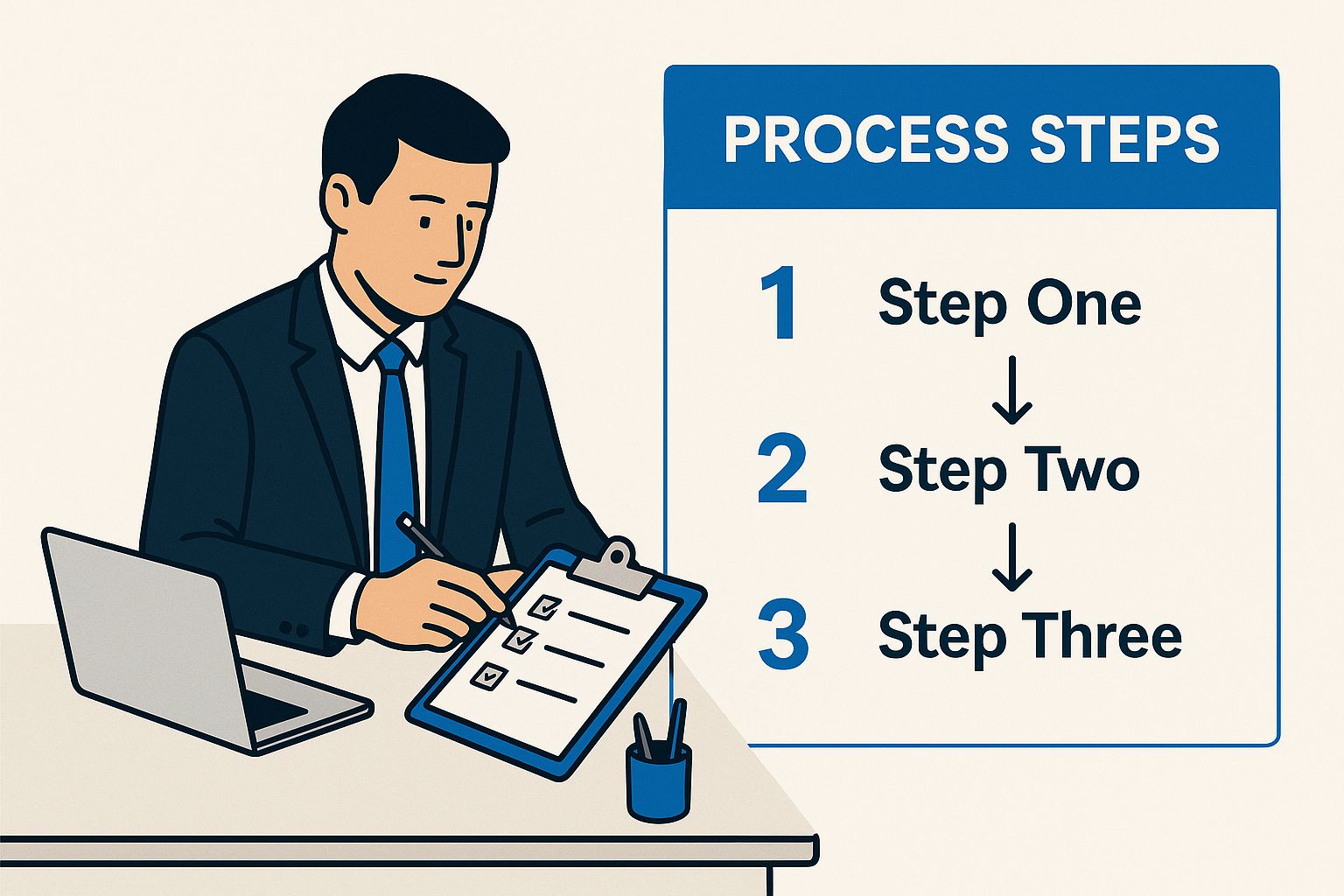
As you can see, the process flows logically from getting consent all the way to analysing the feedback. The final, crucial step is meticulously documenting every response. This isn’t just for comparing candidates; it creates a compliant, defensible record of your decision-making. This kind of documentation is a cornerstone of a thorough employment verification and gives you a clear audit trail.
How Digital Platforms Are Reinventing Reference Checks

The days of playing endless phone tag with a candidate’s referees are fading fast. A major shift towards digital and automated reference checking platforms is completely changing the game for Indian companies. These modern tools are built to solve some of the oldest hiring headaches: slow turnaround times, unconscious bias, and messy, inconsistent documentation.
Instead of chasing people for phone calls that often yield subjective feedback, these platforms offer a structured and far more efficient alternative. They give companies, especially those hiring remotely or across different cities, the power to conduct thorough and reliable verifications with ease. This isn’t just about speeding things up; it’s about fundamentally improving how fair and accurate the entire process is.
Advantages of Digital Verification
Digital platforms bring a much-needed consistency to the process. By asking every referee the same set of well-thought-out questions, they help strip out unconscious bias and ensure every candidate is measured against the same yardstick. It creates a level playing field.
On top of that, these systems create a clear, documented audit trail for every single check. This is no longer just good practice—it’s essential for compliance with data privacy laws.
The results are pretty staggering. A recent survey showed that with these digital tools, 65% of mid-to-large enterprises in India now wrap up reference checks in just 3-5 days. That’s a massive improvement from the old average of 10-15 days. What’s more, over 70% of recruiting managers reported a noticeable drop in unconscious bias. You can discover more about these findings from Xref.
This tech-driven approach transforms reference checking from a time-consuming administrative task into a sharp, strategic tool for making faster, fairer, and more confident hiring decisions.
For any Indian business looking to grow, adopting this kind of technology means you can secure top talent much faster than your competitors, all while maintaining the highest standards of due diligence.
Common Reference Check Mistakes to Avoid
Even a reference check with the best intentions can go sideways if it isn’t handled carefully. A poorly executed check can actually do more harm than good, leading to misleading information or even opening your company up to legal risks. Knowing the common pitfalls is the first step to making sure your reference checks provide real value.
One of the most common missteps is to rely only on the contacts the candidate gives you. Of course, this list is your starting point, but remember, these people have been hand-picked to sing the candidate’s praises. For a more balanced picture, it’s a smart move to ask the referee if there’s another colleague or manager who also worked closely with the candidate.
Another big mistake is falling into the trap of confirmation bias. This is what happens when you already have a good feeling about someone and, without realising it, you start asking questions that confirm your positive opinion instead of digging for objective facts. This often looks like asking leading questions, such as, “She was a great team player, wasn’t she?” which simply doesn’t invite honest, detailed feedback.
Asking The Wrong Questions
The questions you ask are the backbone of any good reference check. If they’re unstructured, illegal, or just plain irrelevant, you can undermine the entire process and expose your organisation to legal trouble. It’s vital to prepare a consistent set of job-related questions for every candidate.
To run a compliant and insightful check, steer clear of these questioning mistakes:
- Asking illegal questions: Never ask about a candidate’s age, marital status, religion, family plans, or health. These are protected characteristics under Indian law and have zero bearing on their ability to do the job.
- Using leading questions: Avoid phrasing that hints at the answer you want. Instead of, “I assume he handled pressure well?” try an open-ended question like, “Can you describe a high-pressure situation and how he responded to it?”
- Conducting informal chats: An unstructured conversation can easily wander into inappropriate territory. Always stick to your prepared questions to keep the discussion focused, fair, and professional for every single reference check.
A quick-reference guide can be incredibly helpful for keeping your team on the right track.
Reference Check Dos And Don’ts
Here’s a quick summary of best practices versus common errors to help ensure your reference checks are both effective and compliant.
| Action | Do (Best Practice) | Don’t (Common Mistake) |
|---|---|---|
| Preparation | Prepare a standardised, job-related question list for all candidates. | Winging it with an informal, unstructured chat. |
| Questioning | Ask open-ended questions like “How did they handle…” to get detailed stories. | Use leading questions like “They were good at that, right?” that suggest an answer. |
| Source of References | Ask initial references to suggest other colleagues who worked with the candidate. | Relying solely on the hand-picked list provided by the candidate. |
| Legal Compliance | Focus strictly on job performance, skills, and professional conduct. | Inquire about personal topics like age, marital status, or family plans. |
| Bias | Actively listen for objective facts and examples, remaining neutral. | Letting a positive first impression (confirmation bias) influence your questions. |
Sticking to these simple guidelines helps maintain a fair and legally sound process for everyone involved.
The goal of reference checking is not just to verify information but to gather objective insights that help predict future performance. A structured, disciplined approach ensures fairness and delivers the dependable information needed to hire confidently.
By sidestepping these common mistakes, you can turn the reference check from a simple formality into a powerful tool for validating talent and managing risk.
Answering Your Top Reference Checking Questions
Even with a solid process in place, some situations can leave even the most experienced hiring managers scratching their heads. When it comes to reference checking in India, navigating the finer points is key. This section is all about tackling those common—but critical—questions with practical, straightforward answers you can use right away.
Think of this as your go-to guide for those tricky “what if” moments. Having clear policies for these scenarios doesn’t just make your process smoother; it keeps it fair, compliant, and genuinely useful. Let’s dive into the questions that pop up most often.
What Are the Best Questions to Ask a Referee?
The real value of a reference check comes down to the quality of your questions. To get genuine insights, you have to move beyond queries that only get a simple ‘yes’ or ‘no’.
Your goal should be to ask open-ended questions that prompt the referee to share stories and details about the candidate’s performance, skills, and behaviour at work. For instance, instead of asking, “Were they a good employee?”, which just begs for a one-word answer, try getting more specific.
- For performance: “Can you tell me about a time they showed exceptional problem-solving skills?”
- For teamwork: “How did they typically collaborate with others on major projects?”
- For leaving a role: “Could you share a little context around their decision to move on from that position?”
These kinds of questions push referees to give you concrete examples, not just vague compliments. That’s how you get a much clearer, more honest picture of what the candidate can do.
Can a Candidate Receive a Bad Reference in India?
Yes, absolutely. A referee in India can give a negative or critical reference, but there’s a huge string attached: the feedback must be truthful and based on documented facts from their time working with the candidate.
India has some pretty strong defamation laws, which means referees can’t just make up false or malicious statements to hurt someone’s reputation. Because of this legal reality, most professionals stick to objective, fact-based feedback. A properly conducted reference check isn’t about collecting glowing reviews; it’s about getting a balanced view, including any areas where the candidate might need to grow.
How Should I Handle a Fake Reference?
Finding a fake reference is a massive red flag. It speaks directly to a candidate’s integrity. If you get a feeling that a referee isn’t who they say they are, your first job is to do a bit of digging. A quick search on LinkedIn can usually confirm if they hold the position they claim and actually worked at the company when the candidate did.
If you confirm the reference is a fraud, you’ve got a serious problem on your hands. Integrity isn’t really a negotiable trait for any role. The best way forward is to address it directly and professionally with the candidate. In almost every situation, this kind of dishonesty is clear grounds for taking them out of the running.
A candidate’s willingness to provide a fake reference signals a significant lack of integrity. This is not a risk worth taking, as it raises questions about what else they might be dishonest about if hired.
Is It Necessary to Inform Candidates Before a Check?
Without a doubt, yes. Telling a candidate you’re about to contact their references isn’t just a professional courtesy—in India, it’s a critical legal requirement. You must get explicit consent from the candidate before you reach out to anyone on their reference list.
This step is vital for respecting the candidate’s privacy and keeping your company out of legal trouble. The best practice is to get this consent in writing as a formal part of your application or screening process. It ensures everything is transparent and compliant right from the start.
Ready to build a hiring process you can trust? SpringVerify offers fast, reliable, and compliant background verification services designed for Indian companies. Make informed hiring decisions with confidence. Learn more about our seamless screening solutions at SpringVerify.


