

Table of Contents
Understanding The Modern Recruitment Automation Landscape
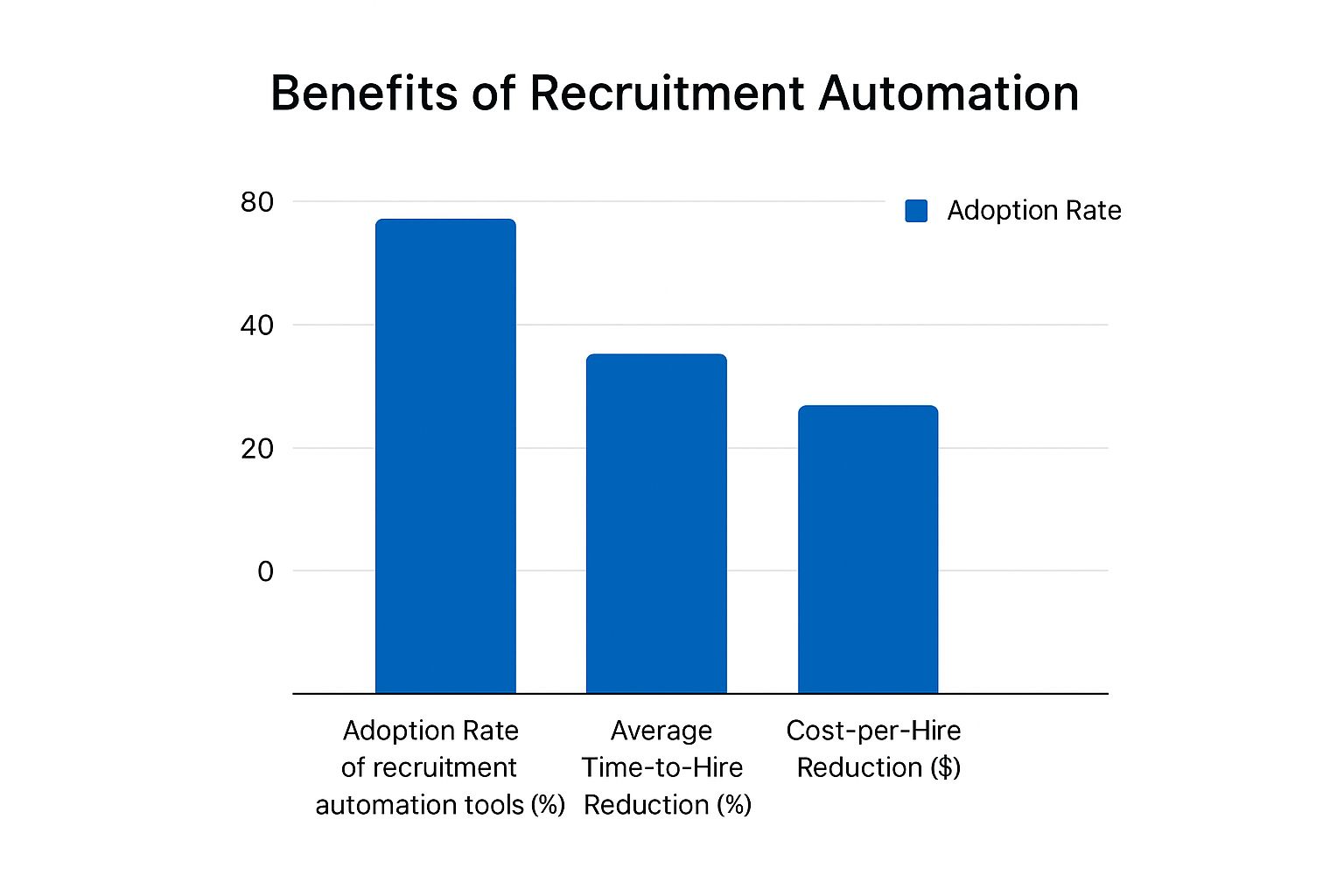
The infographic above highlights key data on recruitment automation adoption, including the average reduction in time-to-hire and cost-per-hire. Organizations using these tools see notable improvements. These include faster hiring, lower costs, and a more efficient process. This move towards automation is reshaping how companies find and hire talent. For a deeper dive into talent acquisition, check out this resource: How to master talent acquisition.
The Driving Forces Behind Automation in India
Competition for skilled professionals in India is a major factor driving this change. Companies need to fill roles quickly and effectively. Recruitment automation gives them the tools to do so, speeding up sourcing, screening, and onboarding. The modern workplace is also becoming more complex. This requires a more nuanced approach to hiring, including evaluating candidates on a broader range of skills and cultural fit. Recruitment automation helps simplify this process.
Streamlining the Screening Process
Consider the challenge of reviewing hundreds of resumes for a specialized technical role. This manual process is slow and prone to errors. AI-powered recruitment automation tools analyze resumes in minutes, identifying candidates with the right skills. This frees up recruiters to connect with the best candidates instead of doing administrative work.
This shift isn’t unexpected. The adoption of recruitment automation, especially using artificial intelligence (AI), has transformed India’s hiring landscape since around 2020, accelerating through 2025. By early 2025, AI-driven tools were widely used across IT, financial services, retail, and manufacturing in India. There’s been a striking 42% growth in AI-related hiring in the last two years. For more insights on this topic, explore hiring trends in India.
Leveraging Automation for Strategic Advantage
Tools like Salesloop are key to understanding the current landscape; see this article on LinkedIn automation for recruiters for more details. In a competitive market like India, businesses need every advantage. Recruitment automation doesn’t replace human input, it enhances it. It lets HR professionals build relationships with candidates and create a positive experience. This proactive approach to talent management is a major step towards a real competitive edge.
The following table offers a snapshot of recruitment automation adoption across different industries in India:
Recruitment Automation Adoption by Industry
This table compares automation adoption rates and primary use cases across various sectors in India.
| Industry | Adoption Rate | Primary Use Cases | ROI Impact |
|---|---|---|---|
| IT | High (Estimated 60%) | Candidate sourcing, skills assessment, automated shortlisting | Significant reduction in time-to-hire and improved quality of hires |
| Financial Services | Moderate (Estimated 45%) | Compliance checks, background verification, candidate relationship management | Reduced risk and improved efficiency in hiring processes |
| Retail | Moderate (Estimated 40%) | High-volume hiring, candidate screening, onboarding | Improved speed and cost-effectiveness of hiring |
| Manufacturing | Emerging (Estimated 30%) | Skills gap analysis, talent pipelining, employee training | Enhanced workforce planning and development |
Key observations from this table include the high adoption rate in the IT sector, driven by the need for specialized talent. While other sectors like Financial Services and Retail are also adopting these tools, the focus is often on efficiency and compliance. Manufacturing is an emerging market for automation, with potential for improving workforce planning. Overall, the table highlights the diverse applications and benefits of recruitment automation across different Indian industries.
Game-Changing Benefits That Actually Matter

Indian businesses are experiencing tangible advantages with recruitment automation. These improvements are impacting hiring teams in significant ways. Let’s explore these real benefits.
Speeding Up the Hiring Process
Time is of the essence in recruitment. Recruitment automation significantly reduces hiring timelines, vital in competitive markets. Using an Applicant Tracking System (ATS) can reduce hiring cycles by 60%. Imagine reducing a 30-day hiring process to just 12. This speed allows companies to secure top talent quickly.
Enhancing the Candidate Experience
Automation also benefits candidates. Automated workflows keep candidates informed throughout the process. Real-time updates and personalized communication demonstrate respect for their time and create a positive impression. This is key in today’s candidate-driven market. In fact, 85% of candidates report positive experiences with automated recruitment systems. A smoother process also improves employer branding.
Boosting Recruiter Productivity
Recruiters often get bogged down by administrative work. Over 80% of recruiters agree that automation greatly increases their productivity. Tasks like scheduling interviews, which can consume 35% of a recruiter’s time, can be automated. This frees recruiters to focus on building relationships and strategic decisions. The result? Recruiters can save 3-5 hours per day for higher-value activities.
Improving the Quality of Hires
Beyond speed, automation improves the quality of hires. 62% of teams using an ATS report making better choices. AI-powered tools identify top candidates based on skills and experience, minimizing bias. Unilever, for example, saw a 50% increase in hiring manager satisfaction after implementing AI-powered video interviews. This emphasis on qualifications results in a stronger workforce.
Reducing Costs and Increasing Scalability
Automation offers cost savings. Automating resume screening and job postings can reduce costs by up to 30% per hire. This is especially valuable for businesses where cost management is key. Furthermore, automation allows for scaling hiring efforts without increasing staff, enabling adaptation to changing business needs.
Data-Driven Recruitment for Strategic Advantage
Automation shifts hiring from reactive to strategic and data-driven. Metrics on time-to-fill, cost-per-hire, and source-of-hire empower informed decision-making. This allows for proactive talent pipeline management. For example, analyzing sourcing channels for quality candidates helps optimize recruitment strategy and maximize ROI. This approach is crucial for long-term success.
Choosing Tools That Actually Work For Your Needs
Finding the right recruitment automation tools can be a daunting task. This section offers practical advice for Indian businesses, helping you navigate the complexities and build a tech stack that truly works. We’ll cover essential features, vendor selection, and building a system tailored to your unique requirements.
Identifying Your Specific Requirements
Before exploring specific tools, take a close look at your current hiring process. Where are the biggest challenges? Are you overwhelmed by a high volume of applications? Is scheduling interviews a constant struggle? Or is managing candidate communication proving inefficient? Identifying these pain points is essential to choose tools that solve your real problems. For example, if manually reviewing resumes takes too much time, then AI-powered resume parsing becomes a must-have.
Key Features to Look For
The ideal recruitment automation tools should offer features specifically designed for Indian businesses:
- Multilingual Support: Considering India’s diverse linguistic landscape, tools should handle multiple languages, especially for candidate communication.
- Integration with Local Job Boards: Seamless integration with leading Indian job boards like Naukri.com and Indeed India is crucial for reaching a wider pool of candidates.
- Compliance with Indian Regulations: The tools you choose must comply with Indian labor laws and data privacy regulations.
- Scalability: Choose tools that can grow with your business, handling increasing volumes and complexities as your hiring needs evolve.
Evaluating Vendors: Beyond Flashy Demos
Don’t be fooled by dazzling demos alone. Look for vendors who genuinely understand the Indian market and offer:
- Strong Customer Support: Reliable and knowledgeable support is vital, especially during implementation and day-to-day use.
- Transparent Pricing: Ensure you understand the complete pricing structure, including any potential hidden fees or usage-based limitations.
- Integration Capabilities: The tools you select should integrate smoothly with your existing HR systems, such as SpringVerify‘s background check services, to create a streamlined workflow.
Building Your Recruitment Automation Tech Stack
Creating the right technology stack involves selecting tools that cover various aspects of the recruitment process.
- Applicant Tracking System (ATS): This is the core of your system, managing applications, tracking candidates, and automating communication.
- AI-Powered Screening Tools: These tools use AI to analyze resumes, evaluate skills, and quickly pinpoint top candidates.
- Video Interviewing Platforms: Streamline your interview process with platforms that enable asynchronous interviews and AI-driven assessments.
- Background Verification Services: Services like SpringVerify integrate seamlessly with your ATS, automating the essential background check process.
To help you compare available options, the following table highlights key features of several popular recruitment automation tools suitable for Indian businesses:
Popular Recruitment Automation Tools Comparison: Feature comparison of leading recruitment automation platforms suitable for Indian businesses
| Tool Name | Key Features | Pricing Model | Best For | Integration Options |
|---|---|---|---|---|
| Example ATS | Resume parsing, candidate tracking, automated communication | Per user/month | Small to medium businesses | Integrates with popular HRIS and job boards |
| Example AI Screener | AI-powered resume screening, skills assessment | Pay-as-you-go | High-volume hiring | API integration with ATS |
| SpringVerify | Background checks, compliance solutions | Per check/package | Startups to Enterprises | API and ATS integrations |
Choosing the right recruitment automation tools can transform your hiring process from a challenge into a competitive advantage. A well-planned approach, considering these practical aspects, will ensure your tech stack boosts efficiency and elevates your overall hiring strategy.
Conquering Implementation Roadblocks Before They Derail You
Implementing recruitment automation can feel like navigating a minefield. While the benefits are undeniable, many organizations stumble upon unforeseen obstacles. This section sheds light on these common challenges, offering practical advice from HR leaders who have successfully overcome them.
Overcoming Resistance to Change
One of the biggest hurdles is resistance to change within your HR team. Many recruiters worry about automation replacing their jobs. This fear can breed reluctance to embrace new systems. Addressing these concerns proactively is essential.
Clearly communicate how automation will improve their roles, freeing them from repetitive tasks. This allows them to focus on relationship building and strategic initiatives. For instance, explain how automated screening tools can handle initial resume reviews, giving recruiters more time to connect with promising candidates.
Navigating Integration Nightmares
Integrating new software with existing HR systems presents another common challenge. This process can be complex and time-consuming, particularly when data migration is involved.
Before implementing anything, carefully evaluate the integration capabilities of your chosen tools. Ensure a smooth data flow between platforms, like your Applicant Tracking System (ATS) and background check services such as SpringVerify. Thorough planning minimizes disruptions and prevents future integration headaches. For a smoother transition, consider our guide on How to Master Compliance.
Maintaining the Human Touch
While automation drives efficiency, preserving genuine human connection throughout the hiring process is paramount. Over-reliance on automation can create impersonal experiences, potentially damaging your employer brand.
The key is finding a balance. Automate repetitive administrative tasks, but prioritize human interaction at crucial points, like interviews and offer discussions. This approach ensures your recruitment process remains efficient and engaging.
Strategies for Smooth Implementation
A successful implementation requires a strategic approach. Here are a few best practices:
- Pilot Programs: Begin with a small-scale pilot program to test the new system and gather feedback. This helps identify and address any kinks before a full rollout.
- Targeted Training: Provide comprehensive training focused on the specific features of the new tools. This empowers your team to use the system effectively and confidently.
- Continuous Measurement: Track key metrics, such as time-to-hire and cost-per-hire, to measure the impact of the implementation. This data-driven approach allows you to identify areas for improvement and demonstrate ROI.
Maintaining Recruitment Quality During Transition
Upholding recruitment quality during the transition is critical. While adapting to new workflows, prioritize consistent candidate evaluation and selection processes. This ensures you continue attracting and hiring top-tier talent.
For example, use standardized scorecards for interviews, even when using automated scheduling tools. This consistency protects recruitment standards and prevents a decline in hire quality. This meticulous approach enables organizations to realize the full benefits of recruitment automation while maintaining high standards for candidate experience and recruitment outcomes.
Proving ROI With Metrics That Matter To Leadership
Demonstrating the return on investment (ROI) of recruitment automation is critical for securing ongoing support from leadership. This section offers a framework for measuring the impact of your automation initiatives, using metrics aligned with core business objectives. This shifts your investment from a cost center into a strategic advantage.
Identifying Key Performance Indicators (KPIs)
The first step is pinpointing KPIs that align with your organization’s overarching goals. These metrics should clearly show how automation contributes to both cost savings and better hiring outcomes. Consider these key areas:
- Cost-Related Metrics:
- Cost-per-Hire: Track the total cost of filling a position, including advertising, agency fees, and internal recruiter time. Automation should significantly lower this number.
- Recruitment Marketing ROI: Evaluate the effectiveness of your automated recruitment marketing campaigns by analyzing cost per application and conversion rates.
- Reduced Agency Spend: If you currently use external recruitment agencies, automation can substantially decrease your reliance on them, leading to significant savings.
- Time-Related Metrics:
- Time-to-Fill: This metric measures how long it takes to fill an open position. Automation streamlines processes, resulting in a quicker time-to-fill.
- Time-to-Productivity: Track how long it takes for new hires to become fully productive. Automating onboarding can accelerate this process.
- Recruiter Time Savings: Calculate how much time recruiters save on repetitive tasks such as resume screening and interview scheduling. This frees them up to concentrate on more strategic activities.
- Quality-Related Metrics:
- Quality of Hire: Evaluate the performance and retention rates of new hires. Automated screening and assessments can lead to better candidate quality.
- Candidate Experience Scores: Measure candidate satisfaction throughout the hiring process. Automated communication and optimized workflows can improve the candidate experience.
- Hiring Manager Satisfaction: Assess hiring manager satisfaction with the speed and quality of new hires. This reflects the effectiveness of the automated recruitment process.
You might be interested in: How to master enterprise solutions.
Establishing Benchmarks and Tracking Progress
After identifying your KPIs, establish realistic benchmarks based on your existing hiring data. This creates a baseline to measure improvement. Regularly track your progress against these benchmarks to showcase the positive impact of automation. For instance, if your average time-to-fill is currently 45 days, aim to reduce it to 30 days after implementing automation. Continuously monitor this metric to evaluate progress and adjust as necessary.
Creating Compelling Reports and Dashboards
Data is valuable only when presented effectively. Develop clear and concise reports that highlight the impact of your recruitment automation initiatives on key business goals. Visualize data with dashboards that display:
- Cost Savings: Clearly show the reduction in cost-per-hire and agency fees.
- Time Efficiencies: Illustrate the decrease in time-to-fill and the improvements in recruiter productivity.
- Improved Quality of Hire: Showcase data on employee performance, retention rates, and hiring manager satisfaction.
These visually engaging dashboards make it easier for leadership to grasp the value of your investment in automation. They also provide actionable insights for continuous improvement.
Building Executive Buy-In and Securing Future Investments
Presenting data-driven reports to leadership is essential for continued support. Clearly explain the connection between automation and business outcomes. For example, show how a reduced time-to-fill contributes to quicker project completion and increased revenue. This strengthens confidence in your automation strategy and improves the chances of securing future investment. By showcasing the tangible benefits of recruitment automation, you position your team as a strategic driver of organizational growth and success. This allows your organization to effectively navigate the complexities of the Indian talent market.
Future-Proofing Your Recruitment Automation Strategy

The recruitment landscape is in constant flux. To stay ahead, your recruitment automation strategy needs to be agile and future-oriented. This section explores important trends and factors to ensure your approach remains successful and aligned with your long-term objectives.
Embracing Advanced AI and Predictive Analytics
Artificial intelligence (AI) is now a fundamental component of modern recruitment. Beyond basic automation, consider how advanced AI tools, like machine learning and predictive analytics, can elevate your strategy.
Predictive analytics, for example, can anticipate future hiring needs by analyzing past data and market trends. This proactive approach empowers better workforce planning and ensures you’re ready for future talent requirements. AI can also create a more personalized candidate experience by offering job recommendations and communication tailored to individual profiles.
Integrating With Broader HR Technology Ecosystems
A standalone recruitment automation system has its limitations. The future lies in seamless integration with a comprehensive HR technology ecosystem. This interconnected approach streamlines operations from recruitment to onboarding and even performance management.
Linking your Applicant Tracking System (ATS) with your HR Management System (HRMS) provides a centralized view of employee data. This creates a more efficient and holistic approach to talent management. Integrating background check services, such as those offered by SpringVerify, directly into your workflow further strengthens security and ensures compliance.
Adapting to Changing Candidate Expectations
Today’s candidates expect a seamless and personalized experience. They want quick responses, clear communication, and mobile-friendly applications. Your recruitment automation strategy must evolve to meet these changing expectations.
Using chatbots for instant answers and providing mobile-optimized application processes significantly improves candidate engagement. Personalized communication also keeps candidates informed and enhances your employer brand.
Navigating Evolving Compliance and Data Privacy
Data privacy is paramount. With regulations like GDPR, maintaining compliance is essential. Your recruitment automation tools must adhere to these strict requirements.
Choose tools that prioritize data security and offer features like data encryption and secure storage. Regularly review your processes to ensure compliance with current regulations and industry best practices.
Maintaining Flexibility and Adaptability
The future of recruitment automation is uncertain, but change is constant. Building adaptable systems allows you to integrate new technologies and respond to new developments without completely rebuilding your strategy.
A modular approach to your technology stack, selecting tools that integrate easily or can be replaced as needed, is key. Stay up-to-date on industry trends and be prepared to adapt your strategy accordingly. This ongoing evaluation helps your organization remain competitive in attracting top talent.
Key Takeaways
This section summarizes the important aspects of recruitment automation, providing a concise action plan for implementation and achieving measurable results. It offers practical checklists, timelines, and success metrics suitable for organizations of all sizes and hiring volumes in the IN region.
Essential Strategies for Recruitment Automation Success
Adopting recruitment automation is an ongoing process. These key strategies will ensure a smooth transition and maximize your return on investment:
- Define Clear Objectives: What do you hope to accomplish with automation? Is your goal to reduce time-to-hire, find better candidates, or improve the candidate experience? Well-defined goals will guide your tool selection and implementation.
- Secure Buy-in: Get support from your HR team and leadership. Discuss any concerns about job displacement and highlight how automation allows recruiters to focus on more strategic work.
- Choose the Right Tools: Select tools that meet your specific requirements and work well with your current systems. Consider factors such as multilingual support for India’s diverse languages, compatibility with local job boards like Naukri.com, and compliance with Indian regulations.
- Pilot and Iterate: Don’t implement everything at once. Begin with a pilot program to test the system, collect feedback, and refine your process before a company-wide rollout.
Critical Success Factors
Several factors are essential for successful recruitment automation:
- Strong Change Management: Successfully manage the shift to new workflows and address any resistance to change within your team. Training and communication are vital.
- Data-Driven Approach: Monitor key metrics like time-to-fill, cost-per-hire, and candidate satisfaction to measure the impact of automation and find areas for improvement.
- Maintaining the Human Element: Although automation streamlines processes, remember that personal interaction is important for building relationships with candidates. Balance efficiency with a personalized touch.
- Integration with Existing Systems: Ensure seamless data flow between your new tools and your current HR systems, including your Applicant Tracking System (ATS), Human Resource Management System (HRMS), and background check services.
Warning Signs to Watch For
Be aware of these potential problems:
- Over-Reliance on Automation: Don’t create an impersonal experience for candidates. Find the right balance between automation and human interaction.
- Ignoring Integration Challenges: Integration problems can disrupt your implementation. Carefully assess integration capabilities before choosing a tool.
- Lack of Measurement: If you don’t track important metrics, you can’t show the return on investment of your automation efforts.
- Neglecting Candidate Experience: Prioritize the candidate experience throughout the hiring process. Automation should improve their experience, not worsen it.
Building Internal Capabilities for Long-Term Success
A successful long-term recruitment automation strategy requires building in-house expertise. This includes:
- Training Your Team: Conduct thorough training on the new tools and processes. Make sure your recruiters can use the system effectively and with confidence.
- Developing Data Analysis Skills: Give your team the skills to understand data and gain useful insights.
- Staying Up-to-Date: Recruitment automation is always changing. Stay informed about new trends and technologies to adapt your strategy. Future trends include smart home integration. For an example in window treatments, see: Smart Home Integration For Window Treatments
- Building Flexible Systems: Select tools that can adapt to future needs and integrate new technologies as they appear.
Action Plan for Different Organizational Sizes
- Startups (1-50 employees): Concentrate on basic automation tools, such as an ATS with built-in resume parsing and automated communication features.
- SMEs (51-500 employees): Consider AI-powered screening and interview scheduling tools for greater efficiency.
- Large Enterprises (500+ employees): Explore advanced AI, predictive analytics, and integration with a wider range of HR technology.
By following these guidelines, organizations in the IN region can use recruitment automation to improve their hiring process, attract top talent, and meet their business goals. Regular evaluation and adjustments are essential to ensure your recruitment automation strategy stays effective and aligned with your organization’s changing needs. Ready to improve your hiring? SpringVerify offers reliable and comprehensive background verification services designed for Indian businesses of all sizes.


