

Think of a pre-employment background check as more than just a box to tick in your hiring process. It’s a fundamental part of building a solid, trustworthy team. This isn’t just about administrative due diligence; it’s your company’s first line of defence, making sure a candidate is exactly who they claim to be and helping you create a safe, reliable workplace from day one.
Table of Contents
Why Background Checks Are Your First Line of Defence

Hiring someone without a background check is a bit like buying a house without getting an inspection. It might look great on the surface, but you have no idea what costly or dangerous issues could be hiding just out of sight. A CV always shows a candidate in their best light, but pre-employment background checks help you see the full, verifiable story.
This isn’t about being suspicious of every applicant. It’s about laying a foundation of trust and safety that benefits your entire organisation. A single bad hire can create ripples across the company, dragging down team morale, hurting productivity, and even damaging the confidence your customers have in you. For Indian businesses serious about building a dependable workforce, verifying a candidate’s history is simply non-negotiable.
Protecting Your Most Valuable Assets
A thorough screening process is about safeguarding your company’s most critical assets—and we’re not just talking about money. Your people and your reputation are just as, if not more, valuable. By confirming a candidate’s credentials and looking into their past, you’re actively managing risks before they ever set foot in the workplace.
This protection covers several key areas:
- Workplace Safety: Identifying individuals with a history of violent or criminal behaviour is crucial for protecting your current employees and customers from potential harm.
- Financial Integrity: For roles that involve handling money, verifying credit history or uncovering past instances of fraud can prevent huge financial losses and protect your company from scandal.
- Company Reputation: Hiring someone who has lied about their qualifications or has a problematic history can turn into a public relations nightmare, eroding the trust you’ve worked so hard to build in your brand.
A well-structured background check programme says a lot about your company’s values. It signals a deep commitment to integrity, security, and creating an environment where everyone can feel safe and thrive. This elevates the process from a simple administrative task to a core part of your business strategy.
The Growing Importance in India
The push for more rigorous verification isn’t just a good idea; it’s a response to a growing need in the market. The global background check industry is expanding rapidly, projected to grow at a compound annual growth rate of 8% between 2025 and 2033. This growth is driven by rising concerns over workplace safety and the need to meet compliance standards.
Here in India, this trend is even more pronounced. The rise of remote work and the gig economy has introduced new hurdles in verifying who people are and what they’ve done. As a result, Indian companies, especially in sensitive sectors like finance, healthcare, and IT, are leaning more heavily on advanced screening to secure their hiring and build that essential foundation of trust. If you want to dig deeper, you can explore additional insights on the growing background check market to see these trends in action. This proactive approach isn’t optional anymore; it’s a fundamental part of smart, responsible hiring.
Deconstructing a Comprehensive Background Check
What exactly are you looking for when you run a background check? It’s tempting to think of it as a single, simple step, but it’s much more like assembling a detailed puzzle. Each check is a different piece of a candidate’s history, and you only see the complete picture when they all fit together.
This isn’t about a simple pass-or-fail exercise. It’s about digging deeper and understanding the purpose behind each specific verification. A truly robust pre-employment background check goes way beyond just taking a CV at face value. It’s about independently confirming that a candidate’s experience, education, and identity are what they claim them to be, letting you build a team on a foundation of fact, not just faith.
Let’s break down the essential components that create this reliable picture.
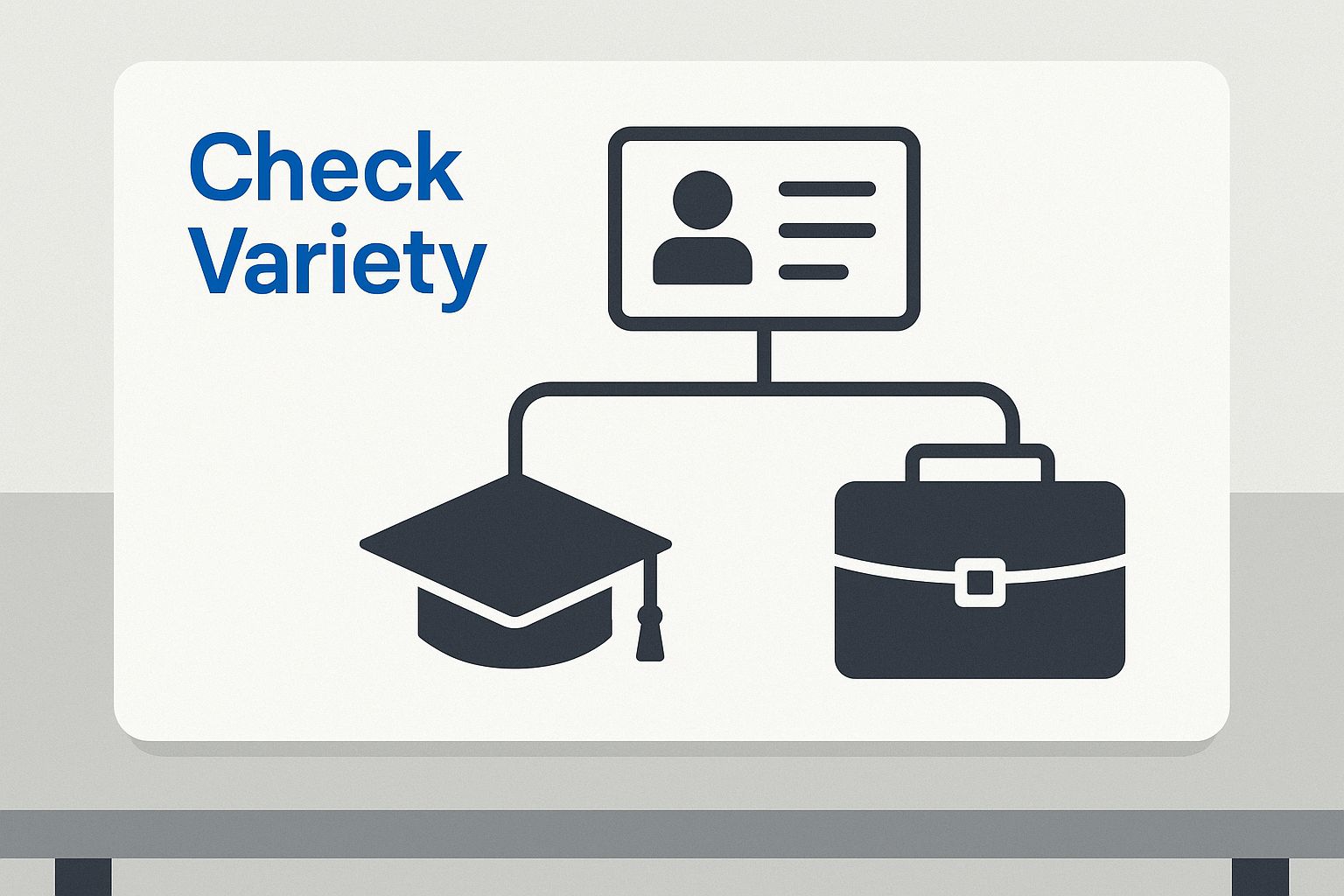
As you can see, a solid verification process examines a candidate’s identity, qualifications, and professional track record to build a profile you can actually trust.
Key Components of a Pre-Employment Background Check
To get a clearer sense of how these pieces fit together, let’s look at the most common types of checks and the specific risks they help you manage.
| Type of Check | What It Verifies | Primary Purpose and Risk Mitigation |
|---|---|---|
| Identity Verification | Confirms the candidate’s name, date of birth, and legal identity using government-issued documents. | The absolute starting point. Mitigates the risk of identity fraud and ensures you are vetting the correct person. |
| Address Verification | Confirms the candidate’s current and permanent addresses are legitimate. | Establishes a verifiable point of contact and helps in locating individuals if needed. A core part of identity confirmation. |
| Criminal Record Check | Searches court and police databases for any criminal convictions. | Essential for creating a safe workplace. Mitigates risks of theft, workplace violence, and other illegal activities. |
| Employment History | Contacts previous employers to confirm job titles, dates of employment, and role. | Verifies a candidate’s professional experience and competence. Mitigates the risk of hiring unqualified individuals. |
| Education Qualification | Contacts universities or colleges to confirm degrees, certificates, and graduation dates. | Confirms the foundational knowledge required for a role. Mitigates the risk of hiring based on fraudulent credentials. |
| Credit History Check | Reviews a candidate’s financial history for signs of significant debt or mismanagement. | Crucial for roles with financial responsibility. Mitigates the risk of internal fraud or financial mismanagement. |
Each of these checks adds another layer of confidence, helping you make a well-rounded and informed hiring decision.
Verifying Professional Experience
Let’s be honest: the employment history section of a CV is where a little “creativity” often creeps in. A candidate might stretch their employment dates to cover up a gap, give themselves a more impressive job title, or puff up their responsibilities. An employment history check cuts straight through the fluff.
This check involves contacting past employers to confirm:
- Dates of Employment: Are they accurate, or are there unexplained gaps?
- Job Title and Role: Did they actually hold the position they claim?
- Reason for Leaving: This can sometimes offer useful insights, though many companies have policies that limit what they can share.
This check is fundamental. It confirms that the experience you’re about to hire someone for is real, helping you sidestep the disaster of bringing on someone who simply can’t handle the job.
Validating Educational Qualifications
A degree or a professional certification is often a key requirement. It’s meant to represent years of dedicated study and a specific base of knowledge. An education verification confirms that this foundation is solid and not built on a lie.
Verification partners get in touch with the educational institution directly to confirm the candidate’s attendance, the qualification they received, and when they graduated. One study revealed discrepancies in educational claims in 13% of profiles. This makes the check absolutely critical for roles where specific qualifications are non-negotiable, like in engineering, healthcare, or finance.
Uncovering Criminal Records
For most organisations, the criminal record check is one of the most critical components. Its purpose is crystal clear: to maintain a safe and secure environment for everyone—employees, clients, and customers alike. It’s a direct move to reduce risks tied to workplace violence, theft, or other illegal behaviour.
These checks sift through various court and police records to find any criminal convictions. The scope can be tailored, from local district courts to a broader national search, depending on how sensitive the role is. A clean record brings peace of mind, while a conviction allows you to make an informed decision based on the nature of the crime and whether it’s relevant to the job.
Beyond these core checks, you might also need specific verifications like verifying employee driving licences for any role that involves getting behind the wheel of a company vehicle.
Other Essential Verification Checks
While the components above form the core of most checks, a truly thorough process might pull in other verifications based on the job’s specific demands. These add even more depth to your understanding of a candidate.
- Address Verification: This confirms that the address a candidate provides is legitimate. It’s a basic but vital step in establishing their identity and is often one of the very first checks run.
- Credit History: For roles with a hand in the company’s finances, like accounting or senior leadership, a credit check can flag signs of financial distress that might point to a higher risk of fraud. This is a sensitive check and should only be used for relevant positions.
- Identity Verification: This uses government-issued documents, like an Aadhaar or PAN card, to confirm that a candidate is who they say they are. It’s the non-negotiable starting block for any background check.
Each check serves a unique purpose. When you combine the right ones for each role, you’re not just making safer hiring decisions—you’re making smarter ones.
Staying Compliant with Indian Data Privacy Laws
When you’re conducting pre-employment background checks in India, you’re navigating a complex web of legal requirements. This isn’t just about ticking boxes; it’s about handling the process in a way that respects a candidate’s privacy and sticks to the letter of the law. One wrong move could expose your company to serious legal trouble and tarnish your reputation.
The absolute cornerstone of any compliant screening process is getting explicit consent from the candidate. Think of it as a mandatory permission slip. Before you even think about starting a verification, you need clear, written authorisation that tells the candidate exactly what you’ll be checking and why.
This isn’t just a formality. It’s a legal necessity that builds a foundation of trust and transparency right from the get-go.
Understanding the Legal Framework
While India doesn’t have one single, overarching law just for background screening, several key regulations govern how it’s done. The most important ones to know are the Information Technology Rules of 2011 and the more recent Digital Personal Data Protection (DPDP) Act of 2023. These laws are very clear about how personal and sensitive data must be collected, handled, and stored.
Essentially, the law sees a candidate’s personal details—from their address to their financial history—as their own property. You’re only allowed to access and use it with their direct permission and for a legitimate reason, which in this case, is to see if they’re a good fit for the job. The rules get even stricter when you’re dealing with Sensitive Personal Data or Information (SPDI), which includes things like:
- Financial information like bank accounts or credit card details
- Health records and physical or mental health conditions
- Biometric information
- Caste or tribe
- Religious or political beliefs
The core principle is simple: the more sensitive the information, the greater your responsibility to protect it. A compliant background check programme shows your company is committed to handling data ethically and respecting every candidate’s right to privacy.
The Power of Informed Consent
A legally sound consent form is much more than just a signature on a page. To be truly “informed,” your consent form has to be crystal clear, specific, and easy for anyone to understand. It should spell out:
- Purpose: Clearly explain the check is for employment purposes.
- Scope: List every single verification you plan to run (e.g., criminal record, employment history, education).
- Data: Specify what information will be collected and used.
- Third Parties: Disclose if you’re using a third-party partner to conduct the checks.
Vague or overly broad consent forms just won’t cut it. The goal is to make sure the candidate knows exactly what they’re agreeing to, leaving zero room for misunderstanding. Ensuring you meet these standards is critical, and you can learn more by exploring our detailed guide on background check compliance.
Applying Policies Uniformly to Avoid Discrimination
Compliance isn’t just about data privacy; it’s also about being fair. Your background screening policy must be applied the same way to all candidates applying for a similar role. You can’t decide to run a deeper check on one candidate over another because of their gender, religion, caste, or where they come from. That’s a fast track to a discrimination claim.
Your best defence against such claims is a standardised, role-based screening policy. By defining which checks are necessary for which jobs—and applying them to every single applicant for that role—you create a hiring process that is fair, defensible, and equitable for everyone.
The Soaring Threat of Employment Fraud in India

Employment fraud is no longer a fringe issue for Indian companies. It’s a widespread and escalating problem. From slightly puffed-up CVs to completely fabricated degrees, the ways candidates are misrepresenting themselves are becoming alarmingly common and increasingly difficult to detect. This surge in deception poses a direct, serious threat to your company’s integrity, security, and bottom line.
This isn’t about small white lies, either. We’re witnessing a sharp rise in major discrepancies: fake employment histories, non-existent qualifications, and even hidden dual employment, where someone works for two companies at once. Getting a handle on this trend is the first step toward building a solid defence.
A robust pre-employment background check is your most critical filter, designed to catch these deceptions before they can cause any real damage. Without it, you’re essentially hiring on blind faith—a risky bet in today’s environment.
The New Loopholes in Hiring
The move towards remote and hybrid work, while great for flexibility, has unintentionally flung open new doors for fraudulent activity. When interviews are virtual and documents are digital, it’s far easier for a dishonest person to present a version of themselves that simply isn’t real.
This modern hiring landscape has fuelled a few specific types of fraud:
- Resume Fraud: Candidates are inventing roles, inflating their responsibilities, or fabricating entire stints of employment, knowing that a virtual interview makes it harder to poke holes in their story at a glance.
- Fake Educational Documents: High-quality forged degree certificates and mark sheets are now distressingly easy to buy online. This makes it simple for unqualified applicants to look perfectly qualified on paper.
- Dual Employment: Remote work has made it much easier for people to secretly hold two full-time jobs. This creates obvious conflicts of interest, huge data security risks, and a massive drop in productivity for both employers.
The new landscape of hiring demands a new level of vigilance. Simply taking a candidate’s self-reported information at face value is no longer a viable strategy. Independent verification is the only way to confirm you’re hiring someone honest and truly dedicated to the role.
The Staggering Scale of Discrepancies
The numbers paint a clear and frankly alarming picture. An EY study from 2025, which analysed over a million pre-employment screenings in India, found that employment fraud has risen sharply. It revealed that a staggering 83% of candidates with flagged profiles had discrepancies in their employment history. Another 13% had issues with their educational credentials. This data really drives home how critical verification has become. If you want to dig deeper, you can read the full EY study on employment fraud risks.
What’s really interesting is that this trend is particularly common among experienced professionals. The same study showed that fraud cases were highest in critical sectors. Think 96% of incidents in healthcare, 88% in financial services, and 79% in IT/ITeS involving people who have been in the workforce for years. It’s a stark reminder that experience is no guarantee of honesty.
The Financial and Reputational Stakes
The fallout from hiring a fraudulent candidate goes way beyond just having an underqualified employee on your team. The financial and reputational damage can be immense and stick around for a long, long time.
Just consider the potential consequences:
- Financial Losses: A bad hire comes with direct costs from wasted recruitment efforts, training investments, and salary paid for poor work. If the role involves financial responsibility, the risk of internal theft or fraud goes through the roof.
- Productivity Drain: An employee who lied about their skills will almost certainly struggle to perform. This drags down team productivity and morale as others are forced to constantly pick up the slack.
- Reputational Damage: If a fraudulent employee’s actions become public—especially if they’re in a client-facing or senior role—the damage to your company’s brand and the trust you’ve built with customers can be devastating.
These stakes are just too high to ignore. A thorough verification process isn’t just another expense; it’s an essential investment in protecting your business from the inside out. By proactively spotting and deterring these growing risks, you build a stronger, more reliable, and ultimately more successful organisation.
How to Build Your Background Check Program
Moving from theory to practice with pre employment background checks can feel like a huge step. But here’s the thing: building a strong, fair, and effective screening programme isn’t as daunting as it seems. It’s really about creating a clear framework you can use consistently, so you can hire with confidence every single time.
This roadmap will walk you through the essentials, from setting your internal ground rules to picking the right partner to bring your vision to life. The goal isn’t just to be compliant, but to make your screening process a genuine asset to your hiring strategy.
Define a Clear and Consistent Policy
Before you even think about running a check, you need a written background check policy. This document is the constitution for your entire programme. It lays out exactly what you’ll check, for which roles, and why. Think of it as your best defence against any claims of inconsistency or discrimination, because it proves your process is standardised and fair for everyone.
Your policy should spell out:
- The specific checks you’ll run for different job levels or functions.
- How you’ll assess the findings and who has the final say.
- The process for handling any negative information, which must include giving candidates a chance to respond.
A solid policy gets your entire hiring team on the same page and ensures the rules are applied uniformly to every single candidate.
Implement a Tiered Screening Approach
Not every role in your company carries the same level of risk, so your background checks shouldn’t be a one-size-fits-all affair. A tiered approach is the smartest way to go. It just means you tailor the depth of the screening to what the job actually demands.
You can think of it in layers:
- Tier 1 (All Employees): This is your baseline. It usually covers the fundamentals like identity, address, and criminal record verification. It establishes a basic foundation of trust and safety for every new hire.
- Tier 2 (Mid-Level/Specific Functions): For roles with a bit more responsibility, you might add employment history and education verification. After all, you need to know they’ve done what they say they’ve done. You can learn more about how crucial verifying past employment history is to confirm someone’s competence.
- Tier 3 (Senior/High-Risk Roles): For leadership positions or roles with access to finances, you’ll want to be much more thorough. This is where you bring in comprehensive checks like credit history, in-depth reference checks, and searches of global regulatory databases.
This tiered method is not only more relevant to the risks of each position, but it’s also much more cost-effective.
Choose the Right Verification Partner
Unless you have a specialised team in-house, you’re going to need a professional background screening provider. This partner is more than just a vendor—they’re an extension of your HR team. Picking the right one is absolutely critical to the success of your programme.
Look for a partner that offers:
- Accuracy and Compliance: They must have a deep understanding of Indian data privacy laws, like the DPDP Act, and guarantee that their processes are legally sound.
- Technological Integration: The ability to plug into your existing Applicant Tracking System (ATS) or HRIS is a game-changer. It automates the whole process, cuts down on manual data entry, and seriously speeds up hiring.
- Candidate Experience: A good partner treats your candidates with respect, providing clear communication and support. A clunky, frustrating experience can make you lose top talent to competitors.
The right partner doesn’t just send you reports. They offer real expertise, streamline your workflow, and help you make faster, smarter decisions—all while keeping the candidate experience positive. It’s a partnership that should make your life easier, not more complicated.
Integrate Technology to Improve Speed and Experience
In a competitive hiring market, speed is everything. A slow, clumsy background check process is a great way to have top candidates drop out and accept other offers. Modern verification partners use technology to accelerate every step, from getting consent to delivering the final report.
Features like instant KYC verification through WhatsApp or simple digital consent forms make the process completely frictionless for candidates. On the backend, powerful platforms can search databases and automate requests in minutes, drastically cutting down turnaround time. This efficiency doesn’t just help you secure talent faster; it also frees up your HR team to focus on more strategic work. To make sure your screening process is really working for you, tie it into your bigger picture and keep an eye on essential talent acquisition metrics.
Handling Adverse Findings Fairly
So, what happens when a check comes back with a red flag? This is where your policy truly proves its worth. Having a fair and legally compliant process for handling adverse findings is non-negotiable. It protects your company from legal trouble and protects the candidate from an unfair decision.
Just follow these steps:
- Review the Findings: Look at the information in the context of the job. Is a minor issue from ten years ago actually relevant to this role today? Use common sense.
- Notify the Candidate: Before making any final call, you must inform the candidate about the negative finding. This is often called a “pre-adverse action notice.”
- Allow for a Response: Give the candidate a fair chance to review the report and explain their side or dispute the information. Honestly, mistakes happen.
- Make a Final Decision: After you’ve considered the candidate’s response, make your final hiring decision based on the criteria you set out in your policy.
By following a structured, humane, and compliant process, you ensure your programme is not only good at managing risk but is also fundamentally fair to every person who applies.
Common Questions About Pre Employment Background Checks
Even after you’ve got a good handle on background checks, a few specific questions always seem to pop up. It’s only natural. We’ve gathered some of the most common queries we hear from hiring managers and even candidates across India to clear up any lingering confusion.
Think of this as your quick reference guide. Getting these details right helps your screening programme run like a well-oiled machine, ensuring it’s fair, effective, and helps you build a team you can trust.
How Long Do Pre Employment Background Checks Take in India?
This is usually the first question on every hiring manager’s mind: how long will this take? The honest answer is, it depends. The timeline for a pre-employment background check in India isn’t set in stone; it’s shaped entirely by the kinds of checks you decide to run.
Simple, digital-first verifications like confirming an Aadhaar or PAN number and checking an address can be incredibly fast. Many of these are wrapped up within 1 to 3 business days because they pull from easily accessible government databases.
Naturally, the more thorough the check, the longer it will take. Whenever we have to contact a third party, we’re on their schedule. This is common for:
- Education Verification: The speed here is all about how quickly a university’s registrar’s office can process our request.
- Employment History: Getting in touch with past employers can sometimes be slow, especially if it’s a large company or the candidate’s manager has since left.
- Criminal Record Checks: While many court records are now digitised, some checks still need a manual search at a specific courthouse, which adds to the timeline.
A truly comprehensive screening that covers all these bases typically takes between 5 and 15 business days. While modern verification partners use technology to accelerate things, you simply can’t rush a high-quality, accurate check.
What Happens If a Discrepancy Is Found?
Seeing a red flag or a discrepancy on a report can feel a bit jarring, but it’s not a reason to panic. It’s a moment to follow a fair and structured process, not to jump to conclusions. The first step is almost never an immediate rejection.
Instead, a good verification partner will reach out to the candidate directly. This gives them a chance to clear things up. It could be a simple mistake—a typo on their start date, a misunderstanding about their official job title, or an official record that just hasn’t been updated yet.
If the discrepancy is confirmed even after the candidate has had a chance to respond, the ball is back in your court. This is where your company’s background check policy comes in. You need to weigh the finding against the policy you’ve already set. A minor issue, like being off by a month on an employment date, probably won’t change your hiring decision.
However, a major misrepresentation—like faking a degree or a serious criminal conviction for a role that handles sensitive data—would likely mean withdrawing the job offer. The golden rule is to always give the candidate a fair opportunity to explain their side before making a final call.
Can a Candidate Refuse a Pre Employment Background Check?
Yes, absolutely. A candidate has every right to refuse a pre-employment background check. In India, the entire legal process is built on the foundation of explicit, informed consent. Without the candidate’s signed permission, an employer cannot legally start any verification.
Of course, this refusal comes with a very clear consequence. For almost every company, passing a background check is a non-negotiable, mandatory step in the hiring process. It’s a standard procedure to ensure a safe workplace, protect company assets, and maintain a culture of integrity.
So, if a candidate says no, the company will almost certainly pull the conditional job offer and move on. The refusal itself often signals a lack of transparency that most businesses simply aren’t willing to risk.
What Information Is Needed to Run a Background Check?
The single most important piece of the puzzle is the candidate’s signed consent form. This is the legal document that authorises you or your verification partner to conduct the screening. If you need more tips on managing this and other key HR functions, our guides for human resources professionals are a great place to start.
Along with that consent, you’ll need specific personal details to make sure the checks are accurate. The exact list depends on what you’re verifying, but here’s what’s typically required:
- For Identity and Address: Their full legal name, date of birth, current and permanent addresses, and a government ID number (like Aadhaar, PAN, or Passport number).
- For Employment History: The names of previous companies, job titles, and the precise start and end dates for each role.
- For Education Verification: The name of the college or university, the degree they earned, and their years of attendance.
Getting this information right from the beginning is vital. It’s the best way to prevent delays and ensure the final report you receive is accurate and reliable.
Ready to build a safer, more reliable team with confidence? SpringVerify provides prompt, accurate, and seamless candidate screening designed for Indian businesses. Our powerful platform and dedicated support make informed hiring decisions faster and easier than ever. Get started with SpringVerify today!


