

Think of police verification as an official background check needed for big life moments, like getting a passport or a new job. To get it done, you’ll need a specific set of police verification documents—your Aadhaar card and address proof are the big ones. It’s basically a formal process to confirm you are who you say you are and that you have a clean record.
Table of Contents
What Police Verification Is and Why It Matters
In India, police verification is a critical safety step. It acts as a gatekeeper for any process where trust and security are non-negotiable.
Just like a company calls a candidate’s references before making a job offer, the government uses this check to make sure an individual’s background is clear. It’s a required step for a bunch of official purposes, all tying back to national security and public safety. You’ll run into it more often than you think.
Common Types of Verification
The need for a police check usually pops up in a few key situations. While the focus might be slightly different for each, the core goal is always the same: confirming your credentials.
- Passport Issuance: This is the most common one. It’s to ensure passports are given only to legitimate Indian citizens who don’t have a criminal history that would prevent them from travelling abroad.
- Employment Screening: For jobs in sensitive fields or government positions, employers need to be sure about a candidate’s character and criminal background. You can see how this fits into the bigger picture of a comprehensive identity verification process.
- Tenant Verification: Landlords do this to make sure they’re renting their property to responsible people without a criminal past. It’s about protecting their investment and keeping the community safe.
Once you clear the process, you’re issued a Police Verification Certificate (PVC). If you want to dig deeper, you can find more insights about police verification in India on surepass.io.
Your Essential Police Verification Documents Checklist
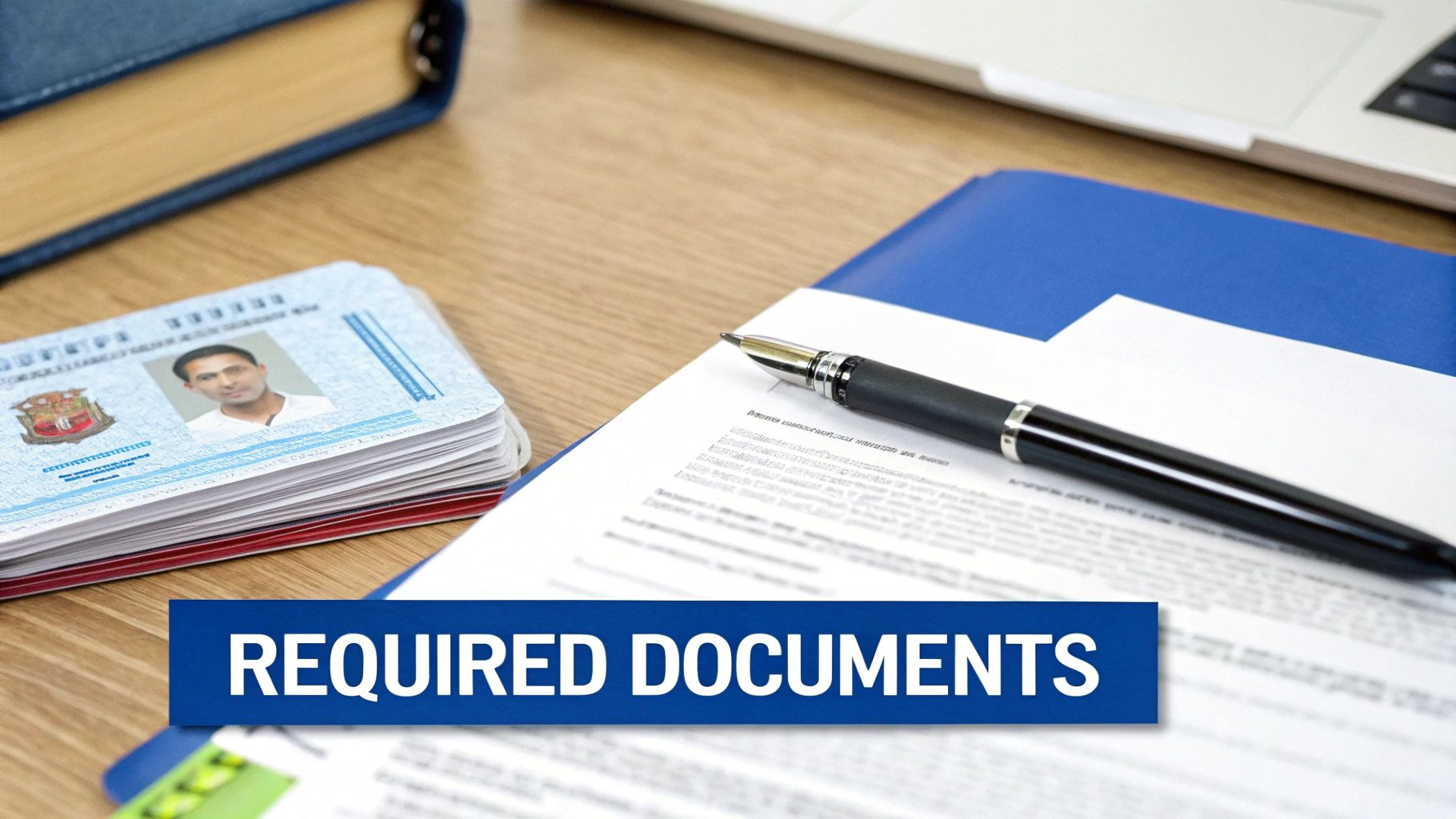
Think of getting your police verification documents in order like prepping for a journey. Just as you wouldn’t pack the same gear for a beach holiday and a mountain trek, the exact documents you’ll need depend entirely on why you’re getting verified. Nailing this from the get-go is the secret to avoiding annoying delays and sailing through the process.
At its core, the entire system is built on two simple pillars: proof of identity and proof of present address. Every single document the police ask for is meant to reinforce one of these pillars, confirming that you are who you say you are and that you live where you claim to live. Trust me, an incomplete file is the number one reason applications get stuck or outright rejected.
Documents for Passport Verification
When you’re applying for a new passport, the document requirements are understandably strict. The goal here is to establish your citizenship, identity, and current residence without a shadow of a doubt.
- Proof of Present Address: This is a big one. You can use your Aadhaar Card, recent utility bills (like electricity, water, or telephone), a valid rent agreement, or even a passbook from a public sector bank that has your photograph on it.
- Proof of Date of Birth (DOB): Your Birth Certificate is the gold standard. If you don’t have that handy, a PAN Card or Aadhaar Card that clearly states your full date of birth will also work.
- Photo Identity Proof: An Aadhaar Card or Voter ID card is perfect for this.
Documents for Employment and Tenant Checks
The checklist for employment and tenant verifications can be a bit more flexible, as the focus shifts more towards your recent history and general character. It’s often part of a broader screening process; you can learn more about what goes into comprehensive employment verification services, which frequently run alongside police checks.
For these types of verifications, here’s what you’ll usually be asked to provide:
- Primary ID Proof: Your Aadhaar Card and PAN Card are the standard go-to documents.
- Address Proof: A registered rent agreement is non-negotiable for tenants. For job-related checks, utility bills or your passport are commonly accepted.
- Photographs: You’ll almost always need a couple of recent passport-sized photos.
To make things easier, here’s a quick-reference table that breaks down what you’ll likely need for the most common types of police verification.
Required Documents Checklist by Verification Type
This table gives you a snapshot of the mandatory and supporting documents needed for passport, employment, and tenant police verifications.
| Document Type | Passport Verification | Employment Verification | Tenant Verification |
|---|---|---|---|
| Aadhaar Card | Mandatory (ID & Address) | Mandatory (ID) | Mandatory (ID) |
| PAN Card | Supporting (DOB) | Mandatory (ID) | Supporting (ID) |
| Proof of Birth | Mandatory | Not Required | Not Required |
| Utility Bills | Supporting (Address) | Supporting (Address) | Supporting (Address) |
| Rent Agreement | Supporting (Address) | Supporting (Address) | Mandatory (Address) |
| Photographs | Mandatory | Mandatory | Mandatory |
As you can see, while there’s some overlap, each verification type has its own set of critical documents. Always double-check the specific requirements for your situation.
A very common slip-up is submitting documents where your name or address doesn’t match perfectly across the board. For example, a tiny difference in the spelling of your name between your Aadhaar and PAN card can flag your application for a manual review, leading to major delays. Consistency is key.
Make sure you have both the original documents and a set of clear, readable photocopies with you. The visiting officer will need to compare the copies against the originals before they can finalise their report. A little bit of organisation goes a long way in ensuring your verification is quick, smooth, and successful.
How Aadhaar Streamlines the Verification Process
The Aadhaar card has completely changed the game for police verification in India, transforming what was once a painfully slow process into something much more efficient. Think of it like swapping out an old, dusty manual ledger for a lightning-fast digital database. The magic lies in its use of biometric data—your fingerprints and iris scans—which creates a truly unique digital identity for every single citizen.
This one-of-a-kind identification system is an incredibly powerful tool for police departments. Instead of just relying on physical police verification documents that could be faked or altered, officers can now use Aadhaar to instantly confirm who you are and where you live. This drastically cuts down the time they’d normally spend on physical visits and sifting through paper records. The upshot? A faster, more reliable verification process for everyone.
Aadhaar and Passport Verification
Nowhere is this shift more obvious than in the passport issuance process. Bringing biometric data into the mix has given a massive boost to both the speed and accuracy of police checks for passports all over India. Back in August 2015, the Ministry of External Affairs smartly linked the Passport Seva System with the Aadhaar database. This connection allows for real-time authentication of an applicant’s details against their Aadhaar records, which has seriously clamped down on identity fraud. You can get more details on biometric data use for passports on mea.gov.in.
By using Aadhaar as the main proof of identity and address, some applicants can even qualify for post-police verification. This means the passport gets issued first, and the physical check happens later—a huge advantage for anyone needing to travel urgently.
As Aadhaar makes verification smoother, it naturally involves more digital platforms. This makes it a good time to brush up on the essentials of protecting your personal information online. This digital integration proves Aadhaar is far more than just another ID card. It’s a foundational piece in modernising the entire police verification framework, making sure the documents you submit are backed by a secure and verifiable system.
Navigating the Police Verification Process Step by Step
Knowing the sequence of events in a police verification can make the whole thing feel a lot less intimidating. Think of it like following a clear roadmap with distinct checkpoints, each one getting you closer to your goal—whether that’s a new passport or a rental agreement. And these days, the journey almost always starts online.
The first port of call for most people, especially when it comes to passports, is to submit an application through an official portal.
This logo belongs to Passport Seva Kendra, which is the main online hub for kicking off any passport-related police verification. Using this official portal is vital because it guarantees your application and documents are correctly logged in the system right from the get-go.
The Home Visit and What to Expect
Once you’ve submitted your application and it gets processed, your details are forwarded to the police station that covers your address. A constable is then assigned your case, which brings us to the most well-known part of the process: the home visit. This is where all your preparation really counts.
The point of the physical visit is simple: to confirm your identity and make sure you actually live at the address you’ve provided. It’s a basic but crucial step to prevent fraud and keep all information accurate.
Make sure you have all your original documents ready for the officer to see. They will need to compare them with the photocopies you submitted earlier. It’s also a good idea to have a family member or a trusted neighbour around, as the police often need a statement from at least one witness who can confirm your identity and residence.
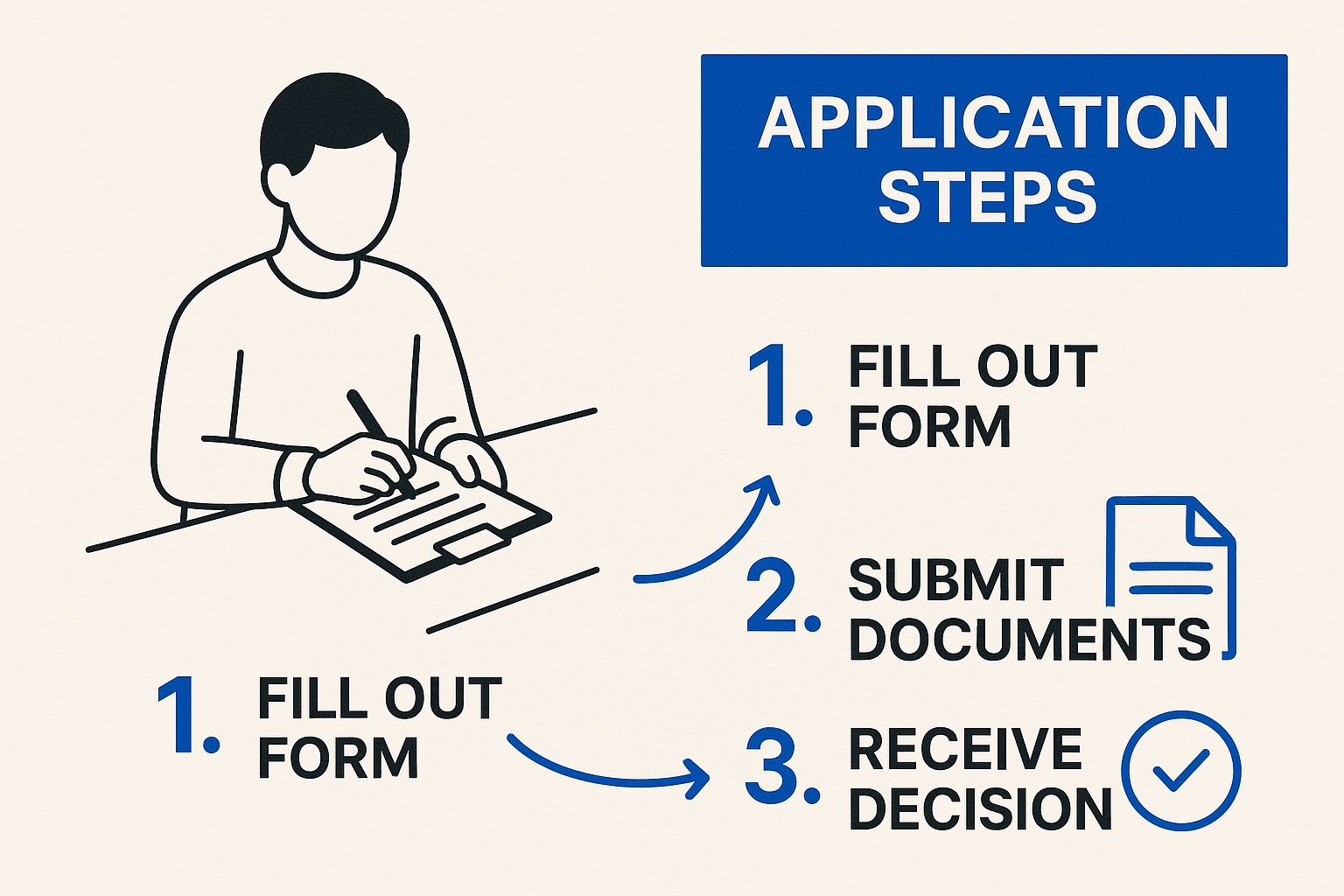
To help you get a better picture of the whole journey, take a look at the process flow below.
As you can see, a smooth verification depends on organised steps, from the initial digital submission to the final physical check. After a successful visit, the officer submits their report, which is then updated online. And just like that, your verification is complete.
Understanding Timelines and Tracking Your Application
Once you’ve submitted your documents, the big question on everyone’s mind is, “So, how long will this actually take?” The honest answer is: it depends. The timeline hinges heavily on the type of verification and, crucially, where you live.
Think of it like a courier service. A package delivered across Mumbai is going to get there much faster than one headed to a remote village in the hills. In the same way, a standard passport check usually moves along quicker than a detailed employment verification that might need more digging.
Your location plays a massive role. Major metro areas like Delhi or Bengaluru have pretty robust digital systems, so you could see your check completed in just 7 to 14 days. Head out to a more rural area, however, and the process can stretch to 30 days or even longer. In fact, for employment checks, a good benchmark is that 70-80% are typically wrapped up within 21 days. You can get more state-wise insights on Indian police verification timelines on authbridge.com.
How to Track Your Application Status
Thankfully, you don’t have to just sit and wait in the dark. Most systems these days let you keep an eye on your application’s progress, which offers some much-needed peace of mind.
The best way to stay in the loop is by using the official government portals and apps. These platforms pull information straight from the source, giving you real-time updates.
- For Passport Verification: Your go-to is the official Passport Seva website. Just pop in your file number and date of birth, and you can track its status.
- Mobile Apps: For convenience, the mPassport Seva app is fantastic. It gives you the same tracking features right on your smartphone.
By checking these official channels every so often, you can see exactly where your application is in the pipeline—whether it’s sitting with the local police station, is under review, or has been successfully cleared. This kind of transparency helps you manage your expectations and plan your next steps without any guesswork.
Common Mistakes That Can Delay Your Verification
Getting through the police verification process should be straightforward, but a few simple slip-ups can bring everything to a grinding halt. Think of it like assembling flat-pack furniture; if you miss one small screw, the whole thing can fall apart. The good news is that the most common issues are also the easiest to avoid with a little extra attention to detail.
One of the biggest culprits we see is submitting police verification documents with conflicting information. A classic example is having one address on your application form and a completely different one on your Aadhaar card. This kind of mismatch immediately throws up a red flag for the authorities, leading to a negative report or, at best, a much longer wait while they try to figure things out.
Another surprisingly frequent problem is the quality of the documents themselves. Sending in blurry or unreadable photocopies is a surefire way to slow down your application. The visiting officer needs to clearly see the details on your copies to compare them with your originals. If they can’t, your file gets pushed to the side.
Key Errors to Avoid
To keep your verification moving smoothly, make sure you steer clear of these common blunders:
- Mismatched Details: Go through every document with a fine-tooth comb. Your name, date of birth, and address must be identical everywhere. Even a tiny spelling mistake can cause a major headache.
- Being Unavailable: The police officer’s home visit isn’t optional; it’s a mandatory part of the process. If you’re not there and haven’t asked a family member to be present, the verification simply can’t move forward.
- Incomplete Address Information: A vague or incomplete address makes it tough for the police to find you, which naturally leads to delays. For more on getting this right, you can check out our guide on the address verification process.
Remember, the police are there to confirm facts. Any grey areas or inconsistencies in your paperwork force them to stop and dig deeper, and that’s what causes those frustrating hold-ups.
By being meticulous and ensuring your paperwork is spot-on, you can sidestep these common hurdles and help your verification sail through without a hitch.
A Few Final Questions About Police Verification
It’s only natural to have a few lingering questions as you wrap your head around the police verification process. Getting these sorted out beforehand can save you a lot of headaches and make sure everything goes smoothly.
A big one we often hear is, “What happens if I get a negative report?” It’s not the end of the road. If this happens, you can appeal the decision. Your first step should be to contact the senior police officials at the issuing office, like the Regional Passport Office, to find out exactly why the report came back adverse.
Common Scenarios and Rules
People often get tripped up by specific situations. What if you live in a rented place? Do you absolutely have to be there when the officer shows up? Let’s clear that up.
- Rented Accommodation: Yes, you can definitely get verified while living in a rented home. No problem at all. The key is to make sure your rent agreement is properly registered and you’ve listed it as your current address proof.
- Being Present: It is highly recommended that you are there for the visit, but it’s not always a deal-breaker. If you’re caught up and can’t make it, a responsible adult family member living with you can usually handle it. Just make sure they have all your original documents ready to show the officer.
A Police Clearance Certificate (PCC) is typically valid for six months from the day it’s issued. But here’s a pro-tip: the organisation asking for it (like an embassy or your new employer) might have its own rules on how recent the certificate needs to be.
It’s always a good idea to double-check the specific requirements of whoever is requesting the verification. Their standards might be slightly different. Nailing down these small details will help you get through the whole process without any last-minute surprises.
For reliable and comprehensive background verification services trusted by India’s top companies, explore SpringVerify. Learn more at https://in.springverify.com.


