

Table of Contents
Understanding India’s Digital Identity Transformation

India’s digital identity landscape is changing how businesses verify their customers. This shift impacts everyone, from small fintech startups performing their first Know Your Customer (KYC) check to large banks managing millions of daily verifications. It represents a move away from document-heavy processes toward smoother digital experiences that benefit both businesses and consumers. What’s driving this change, and how are businesses adapting?
The Rise of Digital IDs and Smartphones
A major factor is the growth of digital IDs in India. Over 94% of the Indian population possesses a digital ID. Combined with a smartphone penetration rate nearing 50%, even in rural areas, this creates a perfect environment for online identity verification to thrive. This digital infrastructure allows businesses to verify customer identities quickly and efficiently. You can learn more here.
Key Components of Effective Online Identity Verification
Effective online identity verification systems rely on several key elements. These include smart document analysis, using AI to extract information from uploaded documents like Aadhaar cards and PAN cards. Biometric flows, like fingerprint or facial recognition, offer secure and user-friendly identity confirmation. Real-time validation ensures instant verification, even in areas with inconsistent internet access, a challenge across India.
Balancing Security and User Experience
The best systems balance strong security with a seamless user experience. This is critical in India’s diverse market, where solutions must work for both tech-savvy urban users and those in rural locations with limited digital literacy. Successful companies prioritize simple interfaces and multilingual support. Some even use voice guidance and local language options.
Building Trust in the Digital Economy
These advancements in online identity verification are about more than just convenience. They’re essential for fostering trust in India’s growing digital economy. Secure verification processes protect consumers from fraud, encouraging greater participation in online transactions. This trust translates into more business opportunities and expanded digital reach. This interplay between security and user experience will shape the future of online identity verification in India.
Market Growth That’s Actually Changing The Game
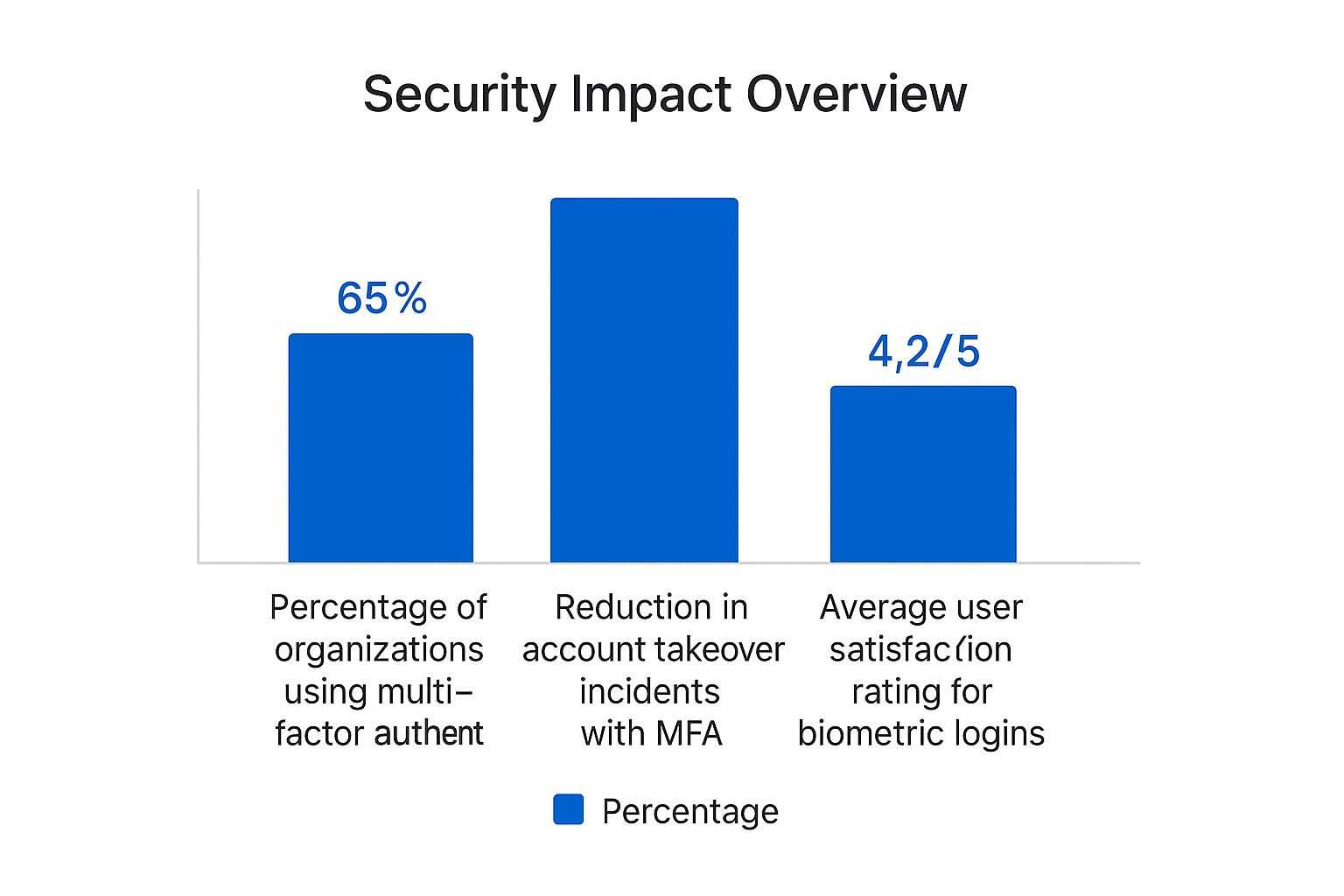
The infographic above highlights the positive impact of robust security measures. Think multi-factor authentication and biometric logins. These measures directly influence organizational adoption, decrease account takeovers, and boost user satisfaction. They offer tangible benefits for both businesses and users.
The data clearly shows a link between increased security and fewer breaches, coupled with happier users. This underscores the vital role of strong online identity verification. For instance, multi-factor authentication has led to a 90% drop in account takeovers, effectively protecting user accounts.
This enhanced security builds trust, encouraging users to engage in online transactions with greater confidence.
Drivers of Growth in the Indian Market
This demand for better security isn’t random. Several factors are driving the rapid expansion of online identity verification in India. Government programs like Digital India are promoting digitization across industries. This creates a perfect environment for online identity verification solutions to flourish, fostering digital service adoption and demanding robust security.
Consumers are also more aware of online security risks. They expect businesses to prioritize their data protection. This awareness translates into higher demand for secure and user-friendly identity verification methods.
Fraud prevention is another key factor. As online transactions rise, so do fraud attempts. Businesses now recognize the importance of robust online identity verification to mitigate these risks. The Indian digital identity solutions market is expected to grow from USD 1,707.9 million in 2024 to USD 6,014.6 million by 2030. This demonstrates the rising need for advanced identity verification technologies. Learn more about this remarkable growth.
To illustrate the evolution of this market, let’s look at some key data points:
India’s Digital Identity Market Evolution
| Year | Market Value (USD Million) | Growth Rate (%) | Primary Growth Drivers |
|---|---|---|---|
| 2024 | 1,707.9 | – | Baseline Year |
| 2030 | 6,014.6 | (Calculated based on the provided values, approximately 252% total growth over the period) | Increased digitization, government initiatives, rising consumer awareness, fraud prevention needs |
This table clearly showcases the substantial growth projected for the Indian digital identity market. The key drivers include increased digitization efforts, government initiatives like Digital India, and a growing awareness among consumers regarding online security risks.
Economic Impact Beyond Revenue
Online identity verification’s financial impact goes beyond revenue. It generates considerable cost savings for businesses by reducing compliance expenses. Efficient online identity verification streamlines Know Your Customer (KYC) and Anti-Money Laundering (AML) procedures. This reduces manual verification and associated costs.
Improved customer acquisition rates are another direct benefit. Simplified and secure onboarding, driven by online identity verification, creates a seamless customer experience. This leads to greater satisfaction and encourages wider adoption of digital services.
Strategies for Success in the Growing Market
Smart businesses are leveraging this growth by strategically positioning themselves. This involves investing in advanced technologies like AI-powered document analysis and biometric authentication. These tools improve verification accuracy and efficiency, enhancing both security and user experience.
Building scalable verification systems is also crucial. Businesses need flexible solutions to manage growing transaction volumes and meet increasing demand. Some companies are integrating online identity verification directly into existing workflows for optimized efficiency. By aligning with market trends and prioritizing customer needs, these organizations are achieving a measurable return on investment and distinguishing themselves in this competitive market.
Navigating Compliance Without Losing Your Mind

India’s regulatory landscape for online identity verification is undoubtedly intricate. This section breaks down the key components of KYC regulations, AML requirements, and data protection laws that impact your verification systems. We’ll share practical insights from experts who have successfully managed these regulations.
Understanding Key Regulations
Understanding the specific regulations governing online identity verification in India is the crucial first step. The Prevention of Money Laundering Act (PMLA) outlines the requirements for Anti-Money Laundering (AML) compliance. This involves verifying customer identities and monitoring transactions for any suspicious activity.
The Know Your Customer (KYC) regulations, mandated by the Reserve Bank of India (RBI), dictate how businesses must verify the identities of their customers. This includes collecting and verifying information such as Aadhaar and PAN card details. These regulations are fundamental to preventing financial crimes and maintaining the integrity of the financial system.
Data Protection and Privacy
Data protection is paramount in today’s business environment. The Information Technology (Reasonable security practices and procedures and sensitive personal data or information) Rules, 2011 details how sensitive personal information should be managed. Online identity verification systems must adhere to these rules, ensuring user data is protected and handled responsibly.
This includes securing data both during transmission and storage, as well as obtaining explicit consent for data usage. Protecting user data is not just a legal requirement; it’s also crucial for building and maintaining customer trust.
Building Compliant Verification Processes
Building compliant verification processes demands a strategic approach. This involves seamlessly integrating verification steps into the customer journey without introducing unnecessary friction. For example, employing AI-powered document analysis can expedite the verification process while maintaining accuracy.
Selecting the right verification methods is also critical. Consider implementing a combination of methods like biometric authentication and document verification to strengthen security and meet regulatory requirements. This multi-layered approach provides robust fraud prevention and a positive user experience.
Staying Ahead of Regulatory Changes
Regulations are constantly evolving in the dynamic regulatory landscape. Staying up-to-date on these changes is vital for maintaining compliance. This involves actively monitoring regulatory announcements and consulting with legal experts when necessary. Consider exploring resources like How to master compliance in India to deepen your understanding.
Handling Compliance Audits
Regular compliance audits are a standard part of doing business. Being prepared is essential for a smooth audit process. Maintain comprehensive records of your verification processes, including the specific methods used, data collected, and security measures implemented.
This documentation will be invaluable during audits, demonstrating your commitment to regulatory compliance. Establishing robust internal controls and implementing staff training programs are also key to ensuring consistent adherence to compliance standards. By proactively addressing compliance, businesses can build customer trust, avoid penalties, and maintain smooth operations.
Technology Solutions That Actually Work
Finding the right online identity verification method can feel overwhelming. It’s important to look past the marketing and focus on what truly delivers results in the Indian market. This section explores the practical aspects of implementing solutions like AI-powered document analysis, biometric authentication, and multi-factor verification.
AI-Powered Document Analysis: Accuracy and Efficiency
AI algorithms can analyze uploaded documents like Aadhaar and PAN cards incredibly quickly and accurately. These algorithms extract important information, verify authenticity, and flag potential problems, automating a previously manual and time-consuming process. This is particularly helpful in India, where the variety of document types and quality can be challenging.
For example, AI can distinguish a real Aadhaar card from a fake one by examining micro-prints and security features. This significantly lowers the risk of fraud and makes verification faster, improving the user experience. AI also handles regional differences in document formats and languages, which is essential in a diverse country like India. This adaptability helps maintain accuracy and efficiency for all users.
Biometric Authentication: Enhanced Security and User Experience
Biometric methods, such as fingerprint and facial recognition, offer increased security for online identity verification. These technologies use unique biological characteristics, making it very difficult for fraudsters to impersonate legitimate users. When implementing new technologies, staying compliant with rules and regulations is crucial. For more information, see this helpful resource on call center compliance.
Biometric authentication also often improves the user experience. Users can authenticate themselves with a touch or a glance, eliminating the need for complex passwords. This is especially useful in India, with its varying levels of digital literacy. This simplicity can increase user adoption and satisfaction.
Multi-Factor Verification: Layered Protection Against Fraud
Multi-factor verification combines several authentication methods, like OTPs sent to registered mobile numbers or email addresses, with document analysis or biometrics. This layered strategy considerably boosts security. Even if one factor is compromised, the others protect the user’s identity.
This is key to reducing the increasing risk of online fraud. For example, if a user’s password is stolen, the additional OTP requirement adds another layer of protection, blocking unauthorized access. This multi-layered security is vital for building trust in online transactions. For further reading on integration strategies, check out this article on How to master API Integrations.
Building Robust Verification Stacks: Integration and Scalability
Many leading companies now build robust verification stacks by integrating various technologies to create a comprehensive and secure system. This usually involves combining AI-powered document analysis, biometric authentication, and multi-factor verification for a complete solution. However, integrating these systems can be challenging. Businesses must carefully consider factors like system compatibility, data flow, and security protocols.
As verification volumes increase, scalability becomes essential. The chosen system must handle growing demand without affecting performance or security. This requires investment in robust infrastructure and optimized processes for efficient large-scale verification handling. Selecting a future-proof solution is vital for long-term success.
To help illustrate the differences between the various methods, we’ve compiled a table summarizing their performance.
Identity Verification Technology Performance Analysis
| Technology Type | Accuracy Rate | Implementation Complexity | User Experience Score | Compliance Rating |
|---|---|---|---|---|
| AI-Powered Document Analysis | High | Moderate | High | High |
| Biometric Authentication | Very High | Moderate | Very High | High |
| Multi-Factor Verification | High | Low | Moderate | High |
This table highlights the strengths and weaknesses of each technology. It emphasizes the importance of selecting the right combination of solutions to meet specific business needs and regulatory requirements. By understanding how these technologies work in practice, businesses can build strong and effective online identity verification systems that improve trust and security.
Industry Applications That Drive Real Results

Online identity verification is changing how businesses operate across various sectors in India. This includes everything from minimizing fraud in fintech to improving patient safety in healthcare. Let’s explore some practical examples that show the real-world impact of these important technologies.
Fintech: Streamlining KYC and Reducing Fraud
Fintech companies in India face a tough challenge: balancing fast customer onboarding with strong security. Online identity verification provides a solution by automating Know Your Customer (KYC) procedures. This drastically cuts down the time and money spent on manual verification.
For example, AI-powered document analysis helps fintech platforms instantly verify customer identities using Aadhaar and PAN cards. This minimizes delays and creates a smoother user experience. This automation also boosts fraud prevention.
By verifying identities quickly and accurately, fintech companies can significantly lower the risk of fraudulent accounts and transactions. This added protection builds user trust and creates a more secure financial environment. You might be interested in: How to master Fintech Identity Verification in India.
Healthcare: Ensuring Patient Safety and Data Privacy
Accurate patient identification is critical for safe and effective treatment in healthcare. Online identity verification plays a key role in this. It allows healthcare providers to confirm patient identities quickly and reliably, reducing the risk of medical errors. This is especially vital in emergencies where accurate information is paramount.
Strong identity verification also improves data privacy. This protects sensitive patient data from unauthorized access and ensures compliance with data protection regulations. This compliance isn’t just a legal requirement; it’s essential for establishing patient trust and confidence in the healthcare system.
E-commerce: Enhancing Security and Building Trust
Online identity verification brings numerous advantages to e-commerce businesses in India. It improves security by verifying both buyers and sellers, preventing fraudulent transactions and building a more secure online marketplace. This added security boosts customer trust, encouraging more online shopping.
Streamlined identity verification also simplifies customer onboarding. It makes creating accounts and completing purchases easier, improving customer satisfaction and boosting sales. This seamless experience is key for customer retention in today’s competitive market.
Government Services: Improving Efficiency and Accessibility
Government agencies in India are increasingly using online identity verification to make public services more efficient and accessible. It simplifies access to government benefits and services by allowing citizens to verify their identities online. This eliminates the need for in-person visits to government offices, saving time and effort.
Moreover, online identity verification can reduce the risk of fraud and identity theft. It strengthens the security of government programs and makes sure benefits reach the intended people. This is vital for maintaining public trust and ensuring the efficient delivery of services.
The Future of Online Identity Verification in India
These applications are just a small sample of the potential of online identity verification. As technology advances, we can anticipate even more innovative uses across various sectors. This will further contribute to a more secure and efficient digital economy in India.
The increasing use of these technologies highlights the growing importance of digital trust and security. This emphasis on trust will shape the future of online identity verification, helping to create a more secure digital environment for everyone.
Future Trends Worth Your Attention
The online identity verification landscape in India is constantly changing. Beyond the hype around technologies like blockchain and AI, what trends will truly reshape how businesses verify their customers? Let’s explore the real innovations, separating them from the distractions.
The Rise of Decentralized Identity
Decentralized identity, often using blockchain technology, is gaining momentum. This approach gives users control over their own digital identities. Instead of relying on central authorities, users manage their verified information and choose what they share with businesses. This improves privacy and simplifies verification.
Imagine verifying your age once with a government-issued digital ID. You could then use this verified age for any age-restricted service online, without repeatedly submitting documents. This shift toward user-centric identity is growing as people become more aware of data privacy.
Biometric Authentication: Beyond Fingerprints
Biometric authentication is expanding beyond fingerprints. Facial recognition and behavioral biometrics, which analyze typing patterns and mouse movements, offer convenient and secure identity verification. These methods reduce our reliance on passwords and knowledge-based authentication, boosting security and improving user experience.
However, wider adoption of biometrics in India needs to address data privacy and ensure reliable performance across different devices and networks. These factors will influence how businesses approach authentication as they prioritize both security and smooth user experiences.
AI-Powered Risk Assessment: Sophistication and Scale
Artificial intelligence (AI) is key for analyzing user behavior and assessing risk in real-time. AI algorithms can spot suspicious activity by looking at transaction patterns, device information, and other data. This lets businesses quickly identify and stop fraud during online identity verification.
AI also simplifies due diligence by automating document checks and background verification. This streamlines the process, reducing compliance costs and speeding up customer onboarding. The India identity verification market, valued at USD 451.1 million in 2024, is expected to reach USD 1,719.7 million by 2033, with a CAGR of approximately 16%. Learn more here.
The Growing Importance of User Experience
User experience (UX) is becoming central to online identity verification. Businesses are realizing that complicated and lengthy verification processes frustrate customers and lead to lost business. Therefore, there’s a growing focus on creating seamless and intuitive verification flows.
This includes simplifying user interfaces, providing multilingual support, and offering various verification options. Catering to different user preferences and accessibility needs is crucial. Businesses that prioritize a positive UX during verification can significantly improve customer satisfaction and encourage greater use of their services.
Staying Ahead of the Curve
These trends highlight the evolving needs of online identity verification in India. Businesses must stay informed to adapt effectively. This means investing in new technologies, prioritizing user experience, and actively engaging with the regulatory landscape.
By understanding these future trends, businesses can strategically position themselves for success in this expanding market. They can identify real customer needs and invest wisely in effective solutions, avoiding costly and ineffective measures.
Key Takeaways
Building a robust online identity verification system requires careful planning and execution. This section distills key insights into actionable steps, timelines, and metrics you can use immediately. It’s your practical roadmap to securing digital trust and optimizing your verification process.
Checklist for Technology Selection
Choosing the right technology is the foundation of any successful online identity verification system. Here’s what to consider:
- Accuracy: Prioritize technologies with high accuracy rates to minimize errors and ensure reliable verification. Biometric methods, like fingerprint scanning, are known for their accuracy.
- Implementation Complexity: Evaluate the ease of integration with your existing systems. Simpler integration reduces implementation time and costs. Multi-factor authentication (MFA) often has a lower implementation complexity.
- User Experience: Focus on technologies that offer a smooth and user-friendly experience. A mobile-first approach caters to high mobile usage.
- Compliance: Ensure chosen technologies comply with all relevant regulations, including Know Your Customer (KYC), Anti-Money Laundering (AML), and data protection laws.
Preparing for Compliance
Navigating the regulatory landscape can be complex. A proactive approach simplifies compliance and prevents future issues. Here’s how:
- Understand the Regulations: Familiarize yourself with KYC, AML, and data protection requirements. Stay updated on any changes to these regulations.
- Data Security: Implement strong data security measures to protect sensitive user information. Encrypt data both in transit and at rest.
- Documentation: Maintain thorough records of your verification processes, including methods used, data collected, and security measures implemented.
- Audits: Prepare for regular compliance audits by having all necessary documentation readily available.
Evaluating Vendors
Choosing the right vendor is critical for long-term success. Consider these factors:
- Experience: Select a vendor with proven experience in the market and a track record of successful implementations.
- Technology: Assess the technology offered by the vendor. Does it meet your accuracy, scalability, and integration needs?
- Support: Ensure the vendor provides adequate support throughout the implementation process and ongoing maintenance.
- Cost: Evaluate the overall cost, including implementation fees, ongoing maintenance, and transaction fees. As online identity verification becomes more common, it’s important to be aware of potential risks. For further reading, consider this article on social media privacy concerns.
Implementation Timelines and Budget
Realistically, implementing a comprehensive online identity verification system can take several months. Factor in time for technology selection, integration, testing, and staff training. Budget considerations should include technology costs, integration expenses, and ongoing maintenance fees. Careful planning and resource allocation ensure a smooth implementation process.
Measuring Success
Tracking Key Performance Indicators (KPIs) helps measure the effectiveness of your verification system. Monitor these metrics:
- Verification Success Rate: Track the percentage of successful verifications. A high success rate indicates an efficient and user-friendly system.
- Fraud Reduction Rate: Measure the impact of your system on reducing fraud attempts and successful fraudulent activities.
- Customer Satisfaction: Collect user feedback to understand their experience with the verification process. High satisfaction scores signal a positive user experience.
- Cost Savings: Analyze the reduction in manual verification costs and any improvements in operational efficiency.
Change Management
Successfully implementing online identity verification involves managing change within your organization. Communicate clearly with staff about the new system, provide thorough training, and address any concerns. A well-managed transition ensures smooth adoption across your organization.
SpringVerify provides reliable and comprehensive identity verification services. From KYC and AML compliance to biometric authentication and document verification, SpringVerify streamlines your processes and enhances security. Learn how SpringVerify can help your business at https://in.springverify.com.


