

Table of Contents
Setting the Stage for Success: Why Onboarding Matters
A strong onboarding process is key to employee success and business growth. This 7-step onboarding process checklist helps you build a program that quickly integrates new hires, boosts productivity, and improves retention. Learn how to effectively manage pre-boarding, workspace setup, first-day orientation, role expectations, training, cultural integration, and stakeholder introductions. This checklist offers a practical framework for startups, SMEs, and large enterprises alike, covering everything from documentation and compliance to fostering a positive and productive work environment.
1. Pre-boarding Documentation and Compliance
A crucial step in any successful onboarding process checklist is pre-boarding documentation and compliance. This phase, which occurs before an employee’s first day, focuses on organizing and completing all necessary paperwork, legal documents, and compliance requirements. This proactive approach ensures a smooth transition for new hires and allows them to feel prepared and informed before they even step foot in the office. Pre-boarding sets the stage for a positive employee experience from the outset.
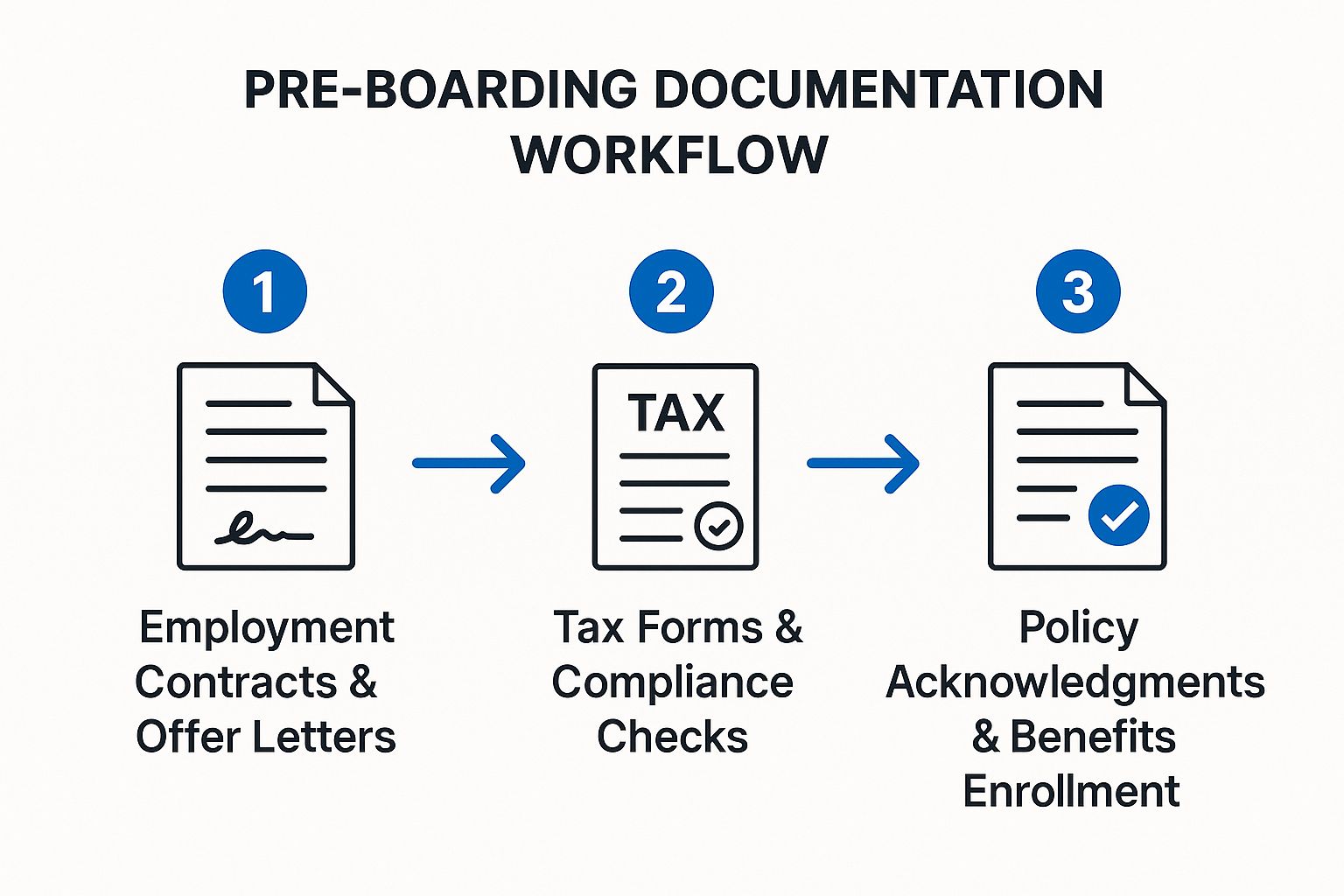
The infographic above visualizes the pre-boarding process flow, starting with the offer acceptance and extending to the employee’s first day. It highlights the key stages involved, including document collection, background checks, policy acknowledgements, and benefits enrollment. This organized flow ensures that no crucial steps are missed and contributes to a streamlined, efficient process for both the HR team and the new hire. The sequential nature of the infographic emphasizes the importance of completing each step before moving on to the next, ensuring full compliance and a positive onboarding experience.
This pre-boarding process typically involves handling a range of essential documents, including: employment contracts and offer letters; tax forms (W-4, I-9, and applicable state tax forms); background check authorization; non-disclosure agreements (NDAs); company policy acknowledgments; and benefits enrollment forms.
Addressing these requirements upfront reduces the administrative burden on the employee’s first day, allowing them to focus on integrating into the team and understanding their role. Furthermore, pre-boarding ensures legal compliance from day one, protecting both the company and the employee. Allowing new hires to review documents at their own pace contributes to a more thorough understanding of the terms and conditions of their employment. It also creates a professional first impression, demonstrating the organization’s commitment to efficiency and a positive employee experience.
While pre-boarding offers numerous advantages, there are potential drawbacks to consider. Sending too many documents at once can be overwhelming for new hires. Therefore, it’s vital to utilize secure document handling systems and implement a phased approach to document delivery. Additionally, sending administrative requests without accompanying welcoming communication may create unnecessary anxiety. Learn more about Pre-boarding Documentation and Compliance
Companies like Google and Salesforce exemplify successful pre-boarding practices. Google uses a digital pre-boarding portal for new hires to complete all paperwork a week before their start date. Salesforce utilizes a drip campaign, spacing out pre-boarding materials to avoid overwhelming new hires. These examples demonstrate how technology and thoughtful communication can be combined to create a seamless and engaging pre-boarding experience.
To optimize your own pre-boarding process, consider the following tips:
- Use digital onboarding software: Streamline document collection and management.
- Create a checklist: Provide new hires with a clear overview of required documents and their completion progress.
- Batch document delivery: Send documents in manageable groups rather than a single overwhelming package.
- Personalize communication: Include friendly welcome messages alongside administrative requests.
- Set clear expectations: Provide concise instructions and deadlines for each document.
Pre-boarding documentation and compliance rightly deserves its place in the onboarding process checklist. Its benefits, from reducing administrative burden and ensuring legal compliance to creating a professional first impression, are crucial for both the employer and the new hire. Solutions like Workday’s onboarding modules, BambooHR’s pre-boarding features, and DocuSign’s integrated HR solutions demonstrate the widespread adoption and effectiveness of structured pre-boarding practices. By implementing these best practices, organizations can significantly improve the onboarding experience and set the stage for long-term employee success.
2. Workspace and Technology Setup
A crucial part of any successful onboarding process checklist is workspace and technology setup. This involves preparing all the physical and digital resources an employee needs to perform their job effectively from day one. Having a functional workspace ready to go demonstrates organizational competence and allows the new hire to be immediately productive, contributing to a positive first impression and faster integration into the team. This preparation encompasses everything from the physical desk and chair to the configuration of software, email accounts, and access to relevant systems.

This step deserves its place in the onboarding process checklist because it directly impacts employee productivity and experience. A smooth setup eliminates delays caused by missing tools or access issues, reducing frustration for both the new hire and the IT support team. It also projects an image of efficiency and professionalism, making the employee feel valued and welcomed. Specific features of a comprehensive workspace and technology setup include: physical workspace preparation (desk, chair, stationery supplies), computer setup with required software, email account creation, access to necessary systems and platforms, communication tools configuration (Slack, Microsoft Teams, etc.), mobile device provisioning (if applicable), and security access (building access, ID badges).
Pros:
- Eliminates productivity delays: New hires can start contributing immediately without waiting for IT support.
- Creates a positive first impression: A well-prepared workspace shows the employee they are valued.
- Reduces IT support burden: Proactive setup minimizes post-onboarding requests and troubleshooting.
- Enhances employee satisfaction: A smooth start contributes to a positive overall onboarding experience.
Cons:
- Requires cross-departmental coordination: IT, facilities, and HR need to collaborate effectively.
- Can be resource-intensive: Advance preparation requires time and effort.
- May need last-minute adjustments: Employee preferences may necessitate some changes after their arrival.
Examples of Successful Implementation:
- Apple: Known for providing new employees with a perfectly configured workstation and welcome kit on day one.
- IBM: Utilizes an automated ticketing system that triggers workspace setup tasks upon confirmation of a new hire.
- Zapier (Remote-first company): Ships pre-configured laptops to arrive before a new employee’s start date.
Actionable Tips for Your Onboarding Process Checklist:
- Create standard technology packages: Define specific software and hardware configurations for each department/role.
- Use a checklist: Develop a detailed checklist for workspace setup, requiring sign-off by IT, facilities, and HR.
- Schedule setup in advance: Aim to have everything prepared at least 2-3 days before the employee’s start date.
- Personalize the workspace: A welcome note or small gift adds a thoughtful touch.
- Conduct a final check: Verify all systems and access are functioning correctly the day before the employee arrives.
Popularized By:
- Okta: Identity management solutions for rapid system access.
- ServiceNow: IT onboarding workflows for streamlined setup processes.
- Jamf: Automated device setup for Apple environments.
By prioritizing workspace and technology setup in your onboarding process checklist, you can ensure a seamless and positive experience for new hires in the IN region, fostering productivity and contributing to a strong company culture.
3. First-Day Orientation Program
A crucial element of any successful onboarding process checklist is the First-Day Orientation Program. This structured experience is designed to warmly welcome new employees, introduce them to the company culture, key team members, and address any immediate questions they might have. A well-executed orientation program significantly reduces new hire anxiety and sets a positive tone for their journey with the organization, ultimately contributing to higher retention rates and faster integration into the team.

A typical first-day orientation program includes features like an official welcome by a management or HR representative, a presentation covering the company’s overview and history, a tour of the facilities, introductions to team members and key stakeholders, an overview of the first-week schedule, a team lunch or social event, and a Q&A session. For remote or hybrid teams, consider virtual tours, online introductions, and interactive online sessions to replicate the in-person experience. When planning these sessions, think about how you can make the experience more engaging. You can supplement existing onboarding materials with engaging and informative resources, such as customer onboarding videos to help reinforce key information and make new hires feel more welcome.
This approach is beneficial for several reasons. It creates a memorable first impression, reduces new-hire anxiety and uncertainty, builds immediate connections with colleagues, and clearly communicates company values and expectations. However, it’s important to be mindful of potential downsides. Overloading new hires with too much information on their first day can be overwhelming. Effective execution requires dedicated staff time and resources. The program also needs adaptation for remote or hybrid employees to ensure they feel equally included.
Many successful companies prioritize their first-day orientation. Netflix, for example, has executives personally welcome each new hire cohort and share the company story, creating a strong sense of belonging from the start. LinkedIn’s “new hire roadshow” takes employees through different departments to understand their functions and how they contribute to the overall mission. Zappos, renowned for its strong company culture, dedicates a significant portion of the first day to emphasizing its core values.
To create an impactful first-day orientation as part of your onboarding process checklist, consider these tips: Balance information sharing with social interaction to avoid information overload. A visual agenda helps new hires know what to expect throughout the day. Assigning a buddy or mentor provides a friendly face and a go-to person for initial questions. Interactive elements, rather than lecture-style presentations, keep new hires engaged. A welcome kit with company-branded items can add a personal touch. Finally, collect feedback about the orientation experience to continuously improve and adapt it to the evolving needs of your workforce. This approach, popularized by figures like Tony Hsieh (former Zappos CEO), Google’s “Noogler” orientation program, and the Ritz-Carlton’s Day 1 immersion in service values, consistently proves its effectiveness in fostering a positive and productive work environment from day one.
4. Role Clarity and Performance Expectations
This crucial step in the onboarding process checklist ensures new employees understand their responsibilities, performance metrics, and what constitutes success in their role. A well-defined understanding of role clarity and performance expectations from the start prevents misalignments, fosters a productive work environment, and lays the groundwork for fair performance evaluations. This is particularly important for startups and SMEs in the IN region looking to maximize the impact of new hires quickly. Large enterprises also benefit from this clarity to maintain consistency and efficiency across teams.
What it is and How it Works:
Establishing role clarity and performance expectations involves a structured approach to communicate the job’s scope, key responsibilities, and how performance will be measured. This includes reviewing the job description in detail, setting SMART (Specific, Measurable, Achievable, Relevant, Time-bound) goals for the first 30, 60, and 90 days, explaining key performance indicators (KPIs), establishing a regular check-in schedule, outlining the performance evaluation process, and even discussing potential career progression pathways within the company. This approach ensures new hires hit the ground running and understand how their contributions align with the company’s overall objectives.
Features and Benefits:
- Detailed job description review and discussion: Clarifies the day-to-day tasks and overall responsibilities.
- SMART goals for 30/60/90 days: Provides concrete, achievable targets for the initial onboarding period.
- Key performance indicators explanation: Defines how success will be measured and tracked.
- Regular check-in schedule establishment: Ensures ongoing communication and feedback.
- Performance evaluation process overview: Sets clear expectations for performance reviews.
- Career progression pathways discussion: Motivates employees by outlining growth opportunities.
Pros:
- Reduces ambiguity about job responsibilities.
- Provides concrete targets for the employee to aim for.
- Enables objective performance evaluation.
- Helps employees prioritize their learning and activities.
Cons:
- May create performance anxiety if expectations seem too demanding.
- Requires managers to be well-prepared with clear expectations.
- Needs regular review and adjustment as the role evolves.
Examples of Successful Implementation:
- Microsoft: Uses the ‘Model-Coach-Care’ framework to structure expectations for new employees.
- Amazon: Defines success through their Leadership Principles from day one.
- Shopify: Provides new hires with a ‘Job Expectations Canvas’ that clearly maps responsibilities and impact measurements.
Actionable Tips for Onboarding Process Checklist Inclusion:
- Document expectations in writing and review verbally: Ensures clarity and provides a reference point.
- Break down long-term goals into achievable milestones: Makes the onboarding process less daunting.
- Use examples of what success looks like in the role: Provides practical context and clarifies expectations.
- Schedule weekly check-ins during the first month to clarify expectations: Facilitates open communication and addresses any questions promptly.
- Provide examples of previous employees who excelled in the role: Offers inspiration and demonstrates best practices.
- Be explicit about both measurable outcomes and behavioral expectations: Provides a holistic view of performance expectations.
Why this Item Deserves Its Place in the Onboarding Process Checklist:
Role clarity and performance expectations are foundational to a successful onboarding experience. This step ensures new hires understand their purpose within the organization, how their work contributes to the bigger picture, and what they need to do to succeed. It sets the stage for long-term employee engagement, productivity, and retention, ultimately benefiting both the individual and the organization. By including this in your onboarding process checklist, you are investing in your new hires’ success and setting them up for a fulfilling career within your company.
Popularized By:
- Andy Grove’s (Intel) Management by Objectives approach
- Jack Welch’s (GE) performance management systems
- John Doerr’s Objectives and Key Results (OKRs) methodology
5. Training and Knowledge Transfer Plan
A crucial element of any successful onboarding process checklist is a robust Training and Knowledge Transfer Plan. This structured approach equips new employees in India and elsewhere with the necessary skills, knowledge, and information to excel in their roles. It goes beyond simply introducing the company; it’s about empowering new hires to become productive contributors quickly and efficiently. This plan encompasses both formal training programs and informal knowledge sharing, ensuring a smooth transition and the preservation of valuable institutional knowledge.
How it Works:
A well-designed Training and Knowledge Transfer Plan incorporates various elements, including:
- Role-Specific Skills Training Modules: These modules focus on the specific skills required for each role, ensuring employees have the practical abilities to perform their tasks effectively.
- Product and Service Knowledge Education: Understanding the company’s offerings is fundamental. This component educates new hires about the products or services they will be working with.
- Systems and Tools Training: Familiarization with the company’s software, platforms, and internal tools is essential for daily operations.
- Company Policies and Procedures Instruction: This ensures new employees understand the rules, regulations, and guidelines governing the workplace.
- Job Shadowing Opportunities: Shadowing experienced team members provides practical insights into the role and fosters valuable connections.
- Access to Knowledge Base and Documentation: A centralized repository of information allows employees to quickly find answers to their questions and access relevant resources.
- Learning Management System (LMS) Enrollment: An LMS streamlines training delivery, tracks progress, and facilitates ongoing learning.
Examples of Successful Implementation:
Several companies have effectively implemented comprehensive training programs:
- HubSpot: Their certification program provides a standardized onboarding experience for all new employees, ensuring a consistent level of knowledge across the organization.
- Deloitte University: Immersive training experiences provide consultants with the skills and knowledge needed to succeed in their demanding roles.
- AT&T’s Future Ready Program: This blended learning approach combines online modules with hands-on training, catering to different learning styles.
Actionable Tips:
- Mix it up: Create a blend of self-paced and instructor-led training to cater to different learning preferences.
- Keep it digestible: Break training into smaller, manageable modules to avoid overwhelming new hires.
- Hands-on is key: Incorporate practical exercises and simulations to reinforce learning.
- Variety in media: Use a combination of videos, text, and interactive elements to engage different learning styles.
- Expert guidance: Designate subject matter experts for each knowledge area to provide specialized training.
- Knowledge checks: Implement quizzes and assessments to ensure comprehension and identify areas for improvement.
- Regular reviews: Schedule follow-up sessions after initial training to reinforce learning and address any lingering questions.
Why this Item Deserves its Place in the Onboarding Process Checklist:
A well-executed Training and Knowledge Transfer Plan is essential for accelerating employee productivity, minimizing errors, and fostering a culture of continuous learning. It ensures that new hires, whether joining a startup or a large enterprise in the IN region, are equipped with the knowledge and skills needed to contribute effectively from day one. This directly impacts employee confidence and job satisfaction, ultimately benefiting the organization as a whole.
Pros and Cons:
Pros:
- Accelerates productivity and competency development
- Standardizes knowledge across the organization
- Reduces errors and improves quality of work
- Builds employee confidence
Cons:
- Can be time-consuming and resource-intensive
- May delay immediate productivity on certain tasks
- Training effectiveness varies based on learning styles
- Knowledge may become outdated if not regularly updated
Learn more about Training and Knowledge Transfer Plan
This comprehensive approach to training and knowledge transfer is crucial for startups, SMEs, and large enterprises alike, enabling them to onboard new hires effectively and maximize their potential. It also assists HR professionals in ensuring compliance and integrating new employees seamlessly into existing systems.
6. Culture Integration and Social Onboarding
Culture integration and social onboarding are crucial components of any successful onboarding process checklist. This stage goes beyond the administrative and logistical aspects of starting a new job and focuses on helping new employees understand, connect with, and embody the organization’s culture, values, and social dynamics. It’s about the human element – making employees feel welcome, supported, and like they truly belong. This is especially important in the IN region, where strong interpersonal relationships are often highly valued in the workplace.
How it Works:
Culture integration and social onboarding involve a range of activities and processes designed to foster a sense of community and belonging. This isn’t just about knowing what work to do, but understanding how things are done within the company’s unique environment. It helps new hires quickly acclimate to the unwritten rules, build relationships with colleagues, and internalize the company’s mission and values.
Features of Effective Cultural Integration and Social Onboarding:
- Company Values and Mission Immersion: Clearly communicating the company’s core values and mission from day one helps new hires understand the bigger picture and how their role contributes.
- Team-Building Activities and Social Events: Organized activities, both formal and informal, help break the ice and foster connections between team members.
- Buddy or Mentor Program Assignment: Pairing new hires with experienced employees provides personalized guidance and support during the initial onboarding phase.
- Introduction to Employee Resource Groups: Connecting employees with relevant groups based on shared interests or backgrounds fosters inclusivity and a sense of belonging.
- Cultural Norms and Unwritten Rules Explanation: Openly addressing the unspoken aspects of company culture helps new hires navigate the social landscape effectively.
- Sharing of Company Traditions and Stories: Anecdotes and stories help bring the company’s history and culture to life, making it more relatable and engaging.
- Cross-Departmental Networking Opportunities: Creating opportunities for new hires to interact with colleagues from different departments broadens their understanding of the organization and builds valuable connections.
Examples of Successful Implementation:
- Airbnb: Assigns new hires a culture buddy separate from their work mentor to specifically focus on social integration.
- Spotify: Organizes ‘fika’ sessions (Swedish coffee breaks) where new employees can meet colleagues from across the organization in a relaxed setting.
- Buffer: Encourages all new remote employees to have virtual coffee chats with team members in their first month to combat isolation and build connections.
Pros:
- Accelerates employee engagement and belonging
- Reduces isolation, especially for remote workers
- Creates support networks for new employees
- Preserves and strengthens organizational culture
Cons:
- May feel forced or inauthentic if not well-executed
- Cultural fit emphasis can sometimes promote homogeneity
- Requires ongoing attention, not just initial activities
- Effectiveness varies based on individual personality types
Tips for Effective Cultural Integration:
- Make it Organic: Avoid forced activities; create natural opportunities for interaction and connection.
- Share Stories: Illustrate company values with real-life examples and anecdotes.
- Encourage Early Contribution: Allow new hires to share ideas and contribute from the beginning.
- Executive Buy-in: Ensure leadership models and reinforces the desired cultural elements.
- Celebrate Small Wins: Recognize new employee contributions to boost morale and engagement.
- Informal Settings: Provide relaxed environments for relationship building, like team lunches or casual coffee breaks.
- Consider Personality Differences: Offer a variety of social integration activities to cater to different personality types.
Why This Item Deserves Its Place in the Onboarding Process Checklist:
Effective cultural integration and social onboarding are essential for long-term employee success and retention. By prioritizing the human element of onboarding, companies can create a positive and supportive environment that fosters engagement, productivity, and a strong sense of belonging. This directly contributes to lower turnover rates, increased employee satisfaction, and a stronger organizational culture. Investing in this aspect of onboarding is crucial for startups, SMEs, and large enterprises alike, especially in a competitive market like the IN region. This focus on cultural onboarding aligns with the philosophies popularized by Patty McCord’s Netflix Culture Deck, Airbnb’s approach to cultural belonging, and Daniel Coyle’s concepts from ‘The Culture Code’.
7. Stakeholder and Cross-functional Introductions
A crucial element of any successful onboarding process checklist is stakeholder and cross-functional introductions. This systematic process connects new employees with key individuals and teams they’ll collaborate with beyond their immediate department. It helps them quickly integrate into the organization, understand interdependencies, and navigate the company culture effectively from day one. This is especially important for a successful onboarding process checklist because it sets the stage for long-term success and engagement.
How it Works:
Stakeholder and cross-functional introductions involve a series of planned interactions designed to build a robust internal network for the new hire. This can include scheduled meetings, cross-departmental presentations and Q&A sessions, and even informal coffee chats. The goal is to familiarize new employees with the broader organizational landscape and the key players within it. A visual aid like an organizational chart with relationship mapping can further clarify reporting structures and interconnections. Introductions should also cover essential support functions like IT, HR, and Finance, and may even extend to clients, customers, vendors, or partners depending on the role.
Examples of Successful Implementation:
Several leading companies have successfully implemented robust stakeholder introduction programs. Facebook (Meta), for instance, schedules ‘Stakeholder Success Sessions’ for all new management hires. McKinsey rotates new consultants through different practice areas during onboarding, providing broad exposure. Procter & Gamble utilizes a ‘Connect Tour’ to introduce new employees to cross-functional partners. These initiatives underscore the value placed on early relationship building.
Actionable Tips for Implementation:
- Prioritize: Create a stakeholder map to prioritize the most critical relationships first.
- Prepare: Equip new hires with brief talking points before each introduction.
- Pace Yourself: Space out meetings over several weeks to avoid overwhelming new hires.
- Provide Context: Explain why each connection is important and how it relates to the new hire’s role.
- Reinforce Connections: Follow up introductions with collaborative assignments whenever possible.
- Embrace Informality: Leverage informal settings like coffee chats for more relaxed relationship building.
- Document: Encourage new hires to document key insights from each stakeholder meeting.
When and Why to Use This Approach:
This approach is essential for any organization, regardless of size. For startups and SMEs, it fosters quick integration and collaboration within smaller teams. Large enterprises benefit from streamlined communication and reduced siloed thinking. Implementing this process is particularly beneficial when:
- Onboarding employees in roles with high cross-functional interaction.
- Integrating new hires into a complex organizational structure.
- Seeking to accelerate the new employee’s time to productivity.
Pros and Cons:
Pros:
- Builds the organizational network necessary for job success.
- Prevents siloed thinking and encourages collaboration.
- Helps employees understand how their role impacts others.
- Facilitates faster problem-solving through established connections.
Cons:
- Can be logistically challenging to coordinate multiple meetings.
- May overwhelm new hires with too many introductions at once.
- Requires time commitment from stakeholders across the organization.
- Relationships need nurturing beyond initial introductions.
Popularized By:
The importance of stakeholder introductions has been highlighted by various thought leaders and organizations. Keith Ferrazzi’s relationship-building methodologies, Microsoft’s interconnected organization approach, and Amazon’s ‘Working Backwards’ cross-functional collaboration model all emphasize the value of strong internal networks.
Learn more about Stakeholder and Cross-functional Introductions This resource can provide further insights into talent acquisition and onboarding best practices, which are particularly relevant for startups, SMEs, and large enterprises seeking efficient hiring solutions, scalable background check processes, HR system integrations, and robust data security and compliance. This component of the onboarding process checklist contributes significantly to successful and efficient onboarding for all involved.
7-Point Onboarding Checklist Comparison
| Checklist Item | Implementation Complexity | Resource Requirements | Expected Outcomes | Ideal Use Cases | Key Advantages |
|---|---|---|---|---|---|
| Pre-boarding Documentation and Compliance | Medium | Moderate | Legal compliance and reduced admin burden | New hires starting soon, compliance-heavy industries | Ensures smooth start and professional impression |
| Workspace and Technology Setup | High | High | Immediate productivity and operational readiness | Roles requiring specific tech/tools and remote setups | Minimizes delays and IT issues |
| First-Day Orientation Program | Medium | Moderate | Improved engagement and reduced anxiety | All new hires, culture-focused onboarding | Sets positive tone and builds connections |
| Role Clarity and Performance Expectations | Medium | Low to moderate | Clear goals and performance alignment | Jobs with measurable outcomes and growth potential | Prevents ambiguity, supports evaluation |
| Training and Knowledge Transfer Plan | High | High | Faster competency and standardized knowledge | Complex roles needing skill-building and knowledge retention | Boosts confidence and reduces errors |
| Culture Integration and Social Onboarding | Medium | Moderate | Enhanced engagement and belonging | Remote teams, organizations emphasizing culture | Strengthens culture and social bonds |
| Stakeholder and Cross-functional Introductions | Medium to High | Moderate to high | Strong networks and collaboration | Cross-functional roles and leadership positions | Accelerates relationship building and collaboration |
Reap the Rewards: The Impact of Great Onboarding
A well-structured onboarding process is more than just a checklist; it’s a strategic investment in your company’s future. From pre-boarding documentation and compliance to culture integration and stakeholder introductions, each step in this onboarding process checklist plays a crucial role in setting new hires up for success. By prioritizing role clarity, providing comprehensive training, and fostering a welcoming environment, you can significantly reduce time-to-productivity and boost employee engagement. This, in turn, leads to higher retention rates, a stronger company culture, and ultimately, a more successful organization. Mastering these seven key steps transforms your onboarding program from a mere formality into a powerful engine for growth. Remember, a smooth and efficient onboarding experience contributes directly to a positive employee experience, fostering loyalty and reducing costly turnover. By implementing this onboarding process checklist, you are not just hiring employees; you are building a thriving team.
For a secure and compliant start to your onboarding process checklist, consider SpringVerify. SpringVerify streamlines pre-boarding with efficient background verification services, integrating seamlessly with your existing HR systems. Visit SpringVerify today to learn more about how we can help you build a robust and compliant onboarding program.


