

Table of Contents
Understanding ISO 27001 Requirements in Your Context

Implementing ISO 27001 can seem complicated, especially when figuring out what it means for your organization in India. This section breaks down the practical steps involved in implementing ISO 27001. We’ll see how successful Indian companies handle regulations and compliance, making ISO 27001 crucial for doing business today.
Data protection is increasingly important in India, and this is a major reason for implementing ISO 27001. The Information Technology Act 2008, specifically Section 43A, outlines requirements for protecting “Sensitive Personal Information” and implementing “Reasonable Security Practices.” These align closely with the core ideas of ISO 27001, showing the government’s focus on strong data security.
Implementing ISO 27001 in India means taking a thorough approach to meet international standards. The Indian government has been moving toward making ISO 27001 mandatory for protecting sensitive data. In 2011, there were discussions about legislation requiring companies to implement ISO 27001 as part of the Information Technology Act (ITA) 2008, specifically under Section 43A. This section defines ‘Sensitive Personal Information’ and ‘Reasonable Security Practice’. Learn more here. This focus on legal compliance is pushing many organizations to adopt the standard.
Addressing Unique Challenges in India
Putting ISO 27001 into practice in India has its own set of challenges. Cultural factors, how resources are allocated, and using existing digital systems all affect successful ISMS implementation. Understanding your organization’s specific situation, including its culture and resources, is key for success.
For example, organizations in India may have to tailor communication and training to their diverse workforce. Resource allocation also needs careful planning, balancing security investments with other business needs. However, using existing digital systems can often simplify implementation and lower costs. You can find more information on How to master technology compliance.
Practical Approaches for Success
Successful organizations in India achieve ISO 27001 compliance with practical, step-by-step methods. This includes clearly defining the ISMS scope, doing thorough risk assessments, and choosing the right security controls. It also means creating a robust Information Security Management System (ISMS) with clear roles, responsibilities, and communication.
Integrating ISO 27001 into everyday work is vital for long-term success. This ensures security isn’t a separate task but a core part of operations. By proactively addressing these aspects, Indian organizations can achieve ISO 27001 certification, improve their security, and build stakeholder trust.
Your Step-By-Step Implementation Roadmap
Ready to bolster your company’s security? This section offers a practical roadmap for implementing ISO 27001, guiding you from the initial planning stages to achieving certification. We’ll break down the implementation process into manageable phases suitable for real-world scenarios.
Phase 1: Planning and Scope Definition
This initial phase sets the foundation for your entire ISO 27001 implementation. Begin by defining the scope of your Information Security Management System (ISMS). This includes pinpointing the information assets requiring protection, identifying key stakeholders, and establishing the boundaries of your ISMS. A clearly defined scope concentrates your resources and efforts where they matter most.
Also, assemble a project team with clearly defined roles and responsibilities. This team will spearhead the implementation process. Finally, secure buy-in and support from management. Their commitment is essential for resource allocation and the overall success of the project.
Phase 2: Risk Assessment and Treatment
Next, conduct a comprehensive risk assessment. This involves identifying potential threats and vulnerabilities to your information assets. This is a practical exercise requiring a deep understanding of your organization’s specific environment. Evaluate the likelihood and impact of each risk.
Then, develop a risk treatment plan to address these identified risks. This might involve implementing security controls, accepting certain risks, or transferring them to third parties. For instance, you might choose to implement multi-factor authentication to mitigate unauthorized access risks. You might be interested in: How to master API integrations for seamless security.
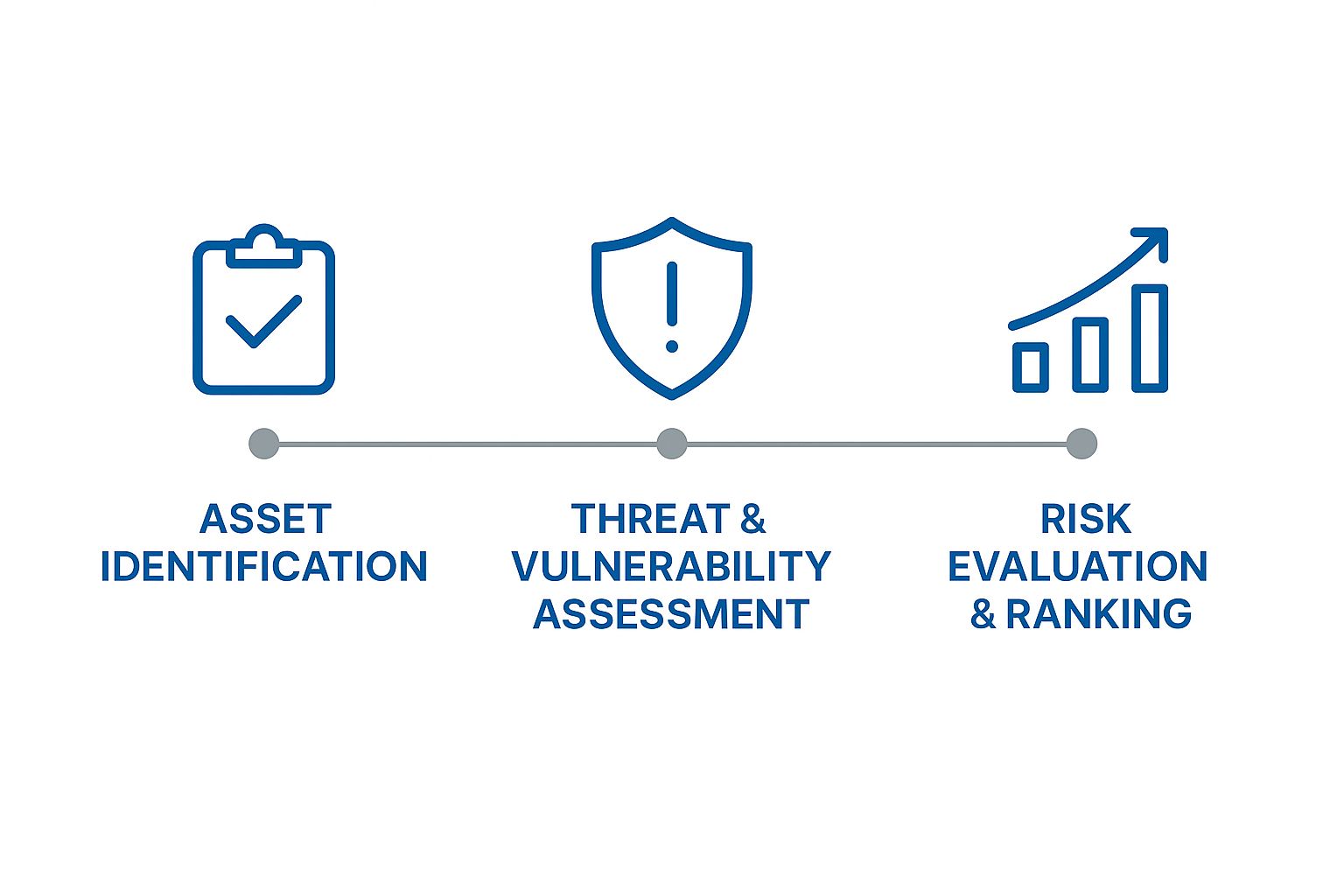
As the infographic demonstrates, a structured approach to risk assessment ensures a systematic review of every critical element. This methodical approach gives you a clear picture of your security landscape.
Phase 3: Security Control Implementation
Based on your risk treatment plan, select and implement suitable security controls from Annex A of ISO 27001. This involves selecting controls that address the risks effectively while considering your organization’s resources and operational needs. These controls can be technical, like firewalls and intrusion detection systems, or organizational, such as security policies and awareness training.
Ensure the selected controls are correctly implemented and functioning as intended. Regular testing and monitoring are vital to validating their effectiveness.
Phase 4: ISMS Documentation and Internal Audit
Document every aspect of your ISMS, including policies, procedures, risk assessments, and implemented controls. Comprehensive documentation demonstrates your commitment to ISO 27001 and provides evidence of compliance during the certification audit.
Next, conduct an internal audit to evaluate the effectiveness of your ISMS. This audit will likely involve reviewing documentation, interviewing staff, and observing operational processes. The internal audit highlights areas for improvement and confirms your ISMS is ready for the external certification audit.
Phase 5: Certification Audit and Continual Improvement
Finally, choose a certified auditor and undergo the Stage 1 and Stage 2 audits. The Stage 1 audit primarily reviews your ISMS documentation. The Stage 2 audit verifies the implementation and effectiveness of your controls. Address any non-conformities found during the audits.
Once certified, commit to continual improvement. Regularly review your ISMS, conduct internal audits, and update controls as needed to maintain compliance and adapt to evolving security threats. This ongoing process ensures your ISMS remains effective in safeguarding your valuable information assets, strengthening your security posture over time.
This table summarizes the key milestones in the ISO 27001 implementation process.
ISO 27001 Implementation Timeline and Key Milestones
| Implementation Phase | Duration | Key Activities | Deliverables | Success Criteria |
|---|---|---|---|---|
| Planning and Scope Definition | 2-4 weeks | Define ISMS scope, establish project team, secure management buy-in | Scope document, Project charter | Defined scope and secured resources |
| Risk Assessment and Treatment | 4-6 weeks | Identify and analyze risks, develop risk treatment plan | Risk assessment report, Risk treatment plan | Identified and prioritized risks |
| Security Control Implementation | 6-8 weeks | Select and implement security controls | Implemented security controls | Operational security controls |
| ISMS Documentation and Internal Audit | 4-6 weeks | Document ISMS, conduct internal audit | ISMS documentation, Internal audit report | Documented ISMS and identified areas for improvement |
| Certification Audit and Continual Improvement | 2-4 weeks | Undergo Stage 1 and Stage 2 audits, address non-conformities | ISO 27001 certification | Achieved certification and established continual improvement process |
This table provides a general framework, and the actual duration of each phase may vary depending on the complexity of your organization and the scope of your ISMS. Remember to adapt this timeline to your specific needs.
Mastering Risk Assessment That Actually Works
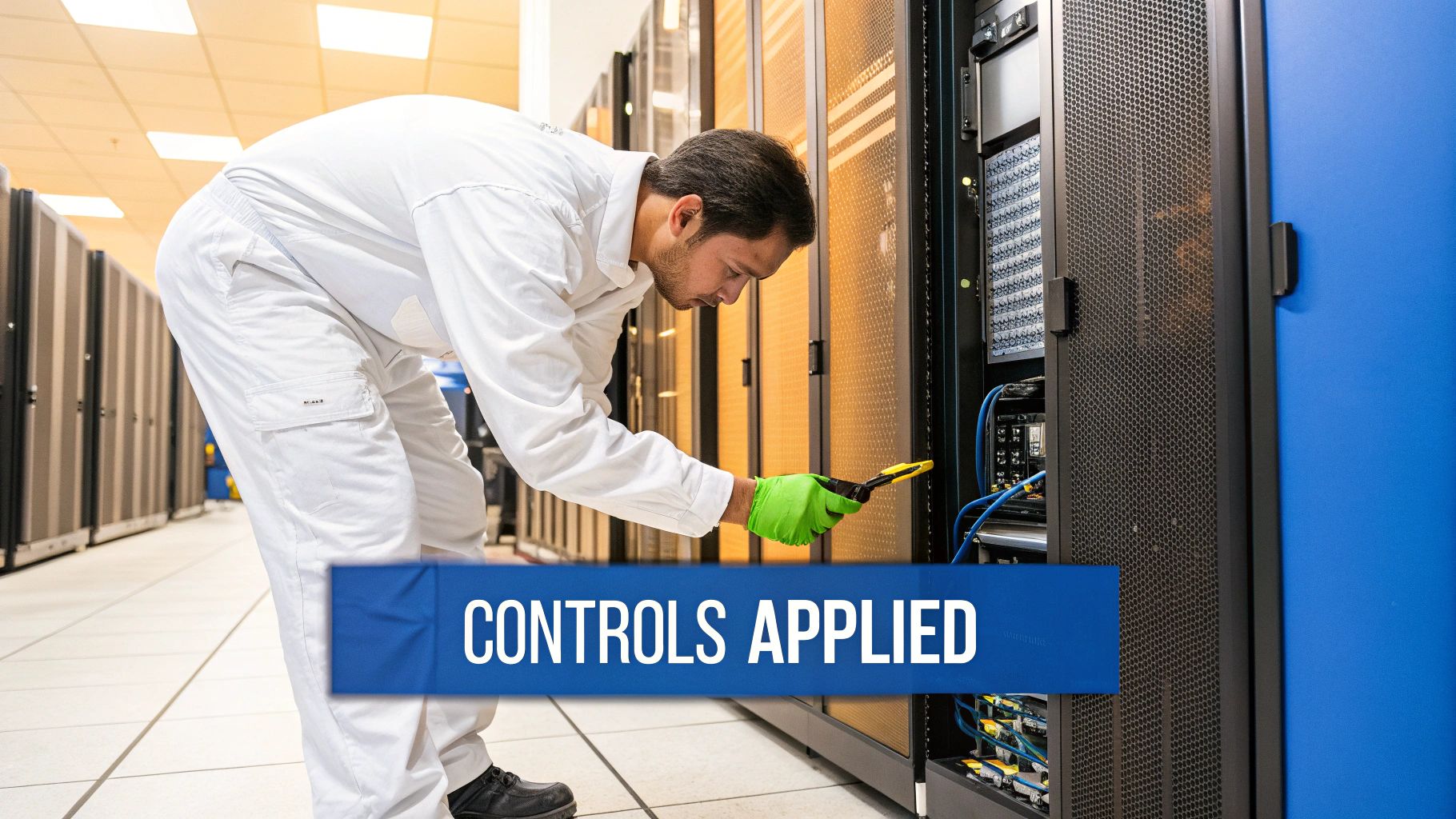
Risk assessment forms the foundation of any successful ISO 27001 implementation. However, many organizations find it challenging to conduct these assessments effectively. This section provides practical guidance on identifying, analyzing, and evaluating information security risks, emphasizing approaches that deliver tangible benefits to your business.
Identifying Your Information Assets
The first step in a robust risk assessment is identifying your organization’s valuable information assets. This encompasses everything from sensitive customer data and crucial financial records to invaluable intellectual property and proprietary software. Think broadly and consider both digital and physical assets.
For example, employee laptops, external hard drives, and even paper documents containing confidential information should be included. Categorizing these assets by their importance to your business operations allows you to prioritize your security efforts effectively.
Threat Modeling and Vulnerability Assessment
After identifying your assets, you need to understand the threats and vulnerabilities that could potentially impact them. Threat modeling involves identifying potential threats, such as cyberattacks, natural disasters, or even accidental data breaches. A vulnerability assessment focuses on weaknesses within your systems that could be exploited by these threats.
These weaknesses might include outdated software, weak passwords, or inadequate physical security measures. For instance, a manufacturing company might identify a targeted cyberattack on its industrial control systems as a major threat. A vulnerability assessment could then reveal outdated firmware on these systems as a significant vulnerability.
Evaluating Risks and Developing Treatment Plans
The next step is evaluating the likelihood and potential impact of each identified risk. This involves considering both the probability of a threat exploiting a vulnerability and the resulting consequences for your business operations. This evaluation process helps prioritize risks based on their potential severity.
Following this, you should develop risk treatment plans to address these prioritized risks. Risk treatment options include mitigating the risk by implementing security controls, accepting the risk if its impact is low, or transferring the risk to a third party, such as an insurance provider.
Engaging Stakeholders and Building a Risk Register
Effective risk assessment requires active engagement from stakeholders across your organization. Involving representatives from different departments ensures diverse perspectives are considered, leading to a more comprehensive understanding of your organization’s risk landscape.
The findings of your risk assessment should be documented in a risk register. This register should be regularly reviewed and updated to reflect changes in your business environment and becomes a valuable tool for informed decision-making. Achieving ISO 27001 certification involves thorough risk assessments, implementing appropriate security controls, and establishing clear protocols for incident response and business continuity. This certification enhances an organization’s credibility and builds trust with stakeholders regarding data security. By following these steps, you can establish a robust risk assessment process that strengthens your security posture and supports your ISO 27001 implementation.
Selecting Security Controls That Deliver Results
Transitioning from risk assessment to implementing security measures demands a strategic approach. This section guides you through selecting the right controls from Annex A of ISO 27001. The goal is to bolster your security while staying within budget and leveraging your technical capabilities. It’s about building a practical security framework, not just checking boxes.
Prioritizing Controls Based on Your Risk Profile
Different security controls offer different levels of protection. After completing your risk assessment, prioritize controls that directly address your most significant risks. This involves understanding the potential impact and likelihood of each risk. Choose the controls that provide the most effective mitigation. This focused approach maximizes your resources where they’re needed most.
For example, if your risk assessment flags phishing attacks as a high risk, prioritizing multi-factor authentication and strong email security is critical. This risk-based approach tackles the most immediate threats. Remember to also consider how controls work together. Some controls complement each other, strengthening your overall security posture.
Implementing Controls Effectively Within Your Existing Infrastructure
Integrating security controls successfully requires careful consideration of your current IT infrastructure. Select controls that fit seamlessly into your existing systems and workflows to minimize disruption and maximize efficiency. This might involve using existing technologies or investing in new solutions that integrate smoothly.
Consider your team’s technical skills and expertise. Choosing controls your team can manage and maintain is essential for long-term success. This practical approach ensures your security controls become an integral part of your operations. Organizations using risk-based control selection see impressive results. They experience 45% fewer security incidents and achieve certification 30% faster compared to those using generic implementations. Learn more about security control effectiveness.
Documentation, Testing, and Validation
Thorough documentation is essential. Document how each control is implemented, its purpose, and how it’s maintained. This documentation demonstrates your commitment to ISO 27001 and serves as a valuable resource for your team. It also simplifies future audits and ensures consistency in your security practices.
Regularly test and validate how well your controls are working. This could involve penetration testing, vulnerability scans, or simulated phishing attacks. Consistent testing uncovers weaknesses and makes sure your controls stay effective against evolving threats. This proactive approach allows you to address vulnerabilities before they’re exploited.
Managing Vendor Relationships and Third-Party Services
Many organizations rely on third-party vendors for security services. If you use external vendors, ensure they align with your ISO 27001 goals. Review their security practices and ensure they meet your standards. Clear communication and regular reviews are key to a strong security partnership. This collaborative approach makes your third-party vendors an extension of your security team.
By carefully selecting and implementing the appropriate controls, you create a robust security posture. This not only satisfies ISO 27001 requirements but also protects your organization from real-world threats. This proactive approach strengthens your business, builds trust with stakeholders, and promotes long-term success.
Building Your Information Security Management System
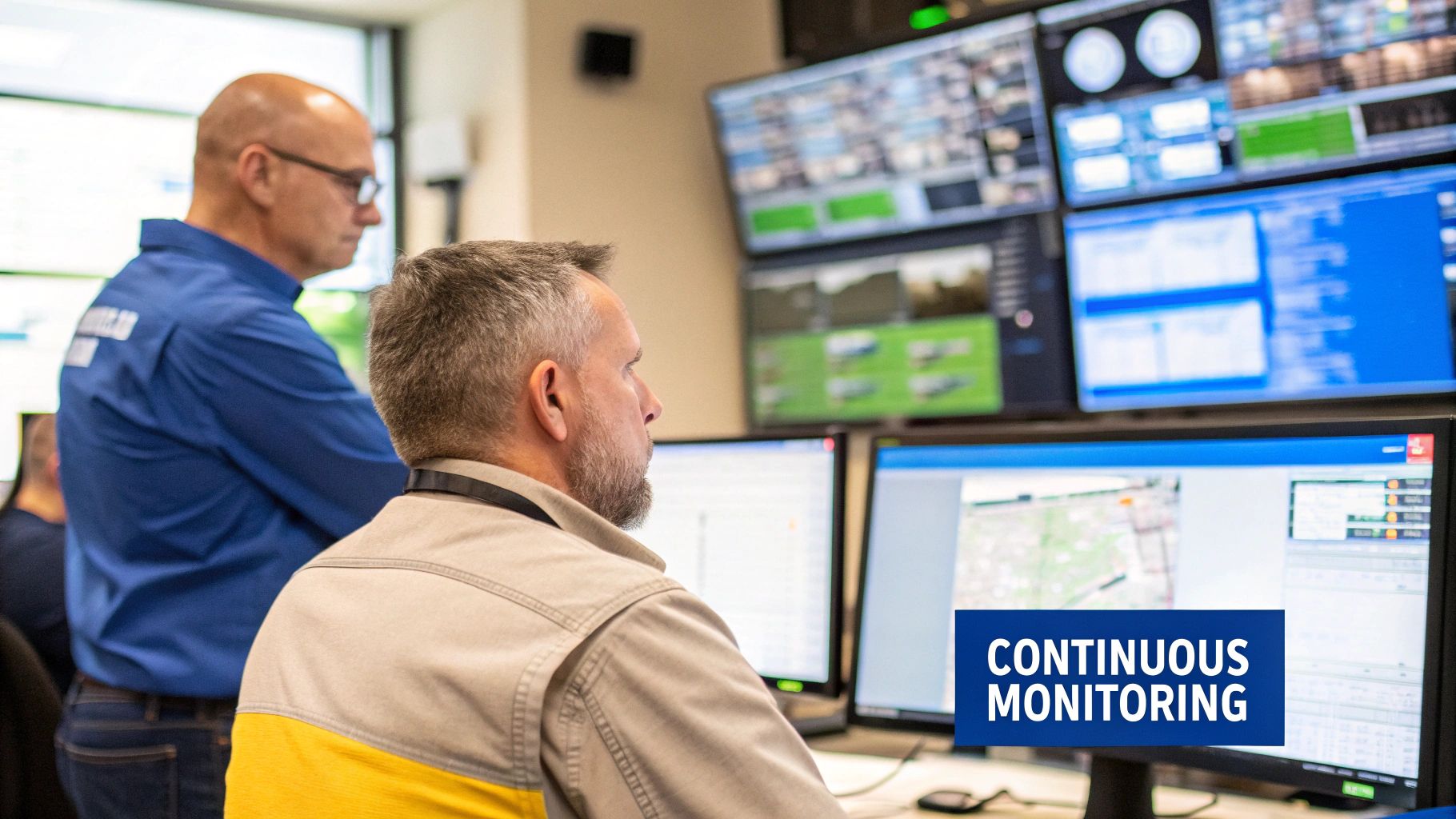
Your Information Security Management System (ISMS) is more than a set of policies. It’s a living framework that grows and adapts along with your organization. This section explores practical ways to build governance structures, create easy-to-follow policies, and establish monitoring processes that give you real insights, not just compliance checkmarks. We’ll also look at practical strategies for incident management, business continuity, and internal audits to truly strengthen your security.
Establishing Effective Governance Structures
A clear governance structure is essential for ISO 27001 implementation. This means defining roles and responsibilities for information security across your company. For instance, appointing an Information Security Officer with the authority to manage the ISMS can greatly improve its effectiveness. This provides direct ownership and accountability for security initiatives.
Also, consider establishing a steering committee made up of key people from different departments. This committee provides direction and ensures that the ISMS aligns with your overall business goals. Effective governance makes information security a core part of how your organization works.
Creating Policies That People Actually Follow
Clear and concise security policies are crucial for ISO 27001 implementation. But policies alone aren’t enough. They need to be easy to understand and follow. Instead of complex technical terms, use plain language that everyone can grasp.
Make sure policies are accessible to all employees and offer regular training to reinforce key concepts. User-friendly policies, combined with practical training, enable your team to incorporate secure practices into their everyday work. This builds a stronger security culture.
Monitoring for Meaningful Insights
Monitoring processes provide crucial visibility into how well your ISMS is working. This means regularly tracking important security metrics and conducting periodic reviews. It’s not just about checking boxes, but actively assessing your security performance.
Track metrics like the number of security incidents, the time it takes to resolve them, and the effectiveness of your security controls. These insights help you spot weaknesses, improve controls, and show management the value of your ISMS. Effective monitoring helps your ISMS constantly improve.
Integrating Key Processes for Enhanced Security
Integrating essential processes, like incident management, business continuity planning, and internal audits, further improves your security posture. Develop clear incident response procedures to handle security breaches quickly and efficiently. This minimizes the damage from incidents and speeds up recovery.
A solid business continuity plan ensures minimal disruptions to your operations during a disaster or major incident. Regular internal audits verify your ISMS effectiveness and highlight areas for improvement. These integrated processes add significant value to your ISO 27001 implementation.
Building a Culture of Security Awareness
Creating a culture of security awareness is key for long-term ISO 27001 success. Create security awareness programs that engage your employees and address their specific needs. For example, try using interactive training modules, quizzes, and real-life examples to make security training more engaging and relevant.
Set up clear communication channels to keep everyone informed about security updates and best practices. Regular communication builds trust and reinforces the importance of security. A strong security culture empowers everyone to contribute to the organization’s overall security.
The table below, “ISMS Components and Implementation Requirements,” compares essential ISMS elements, their complexity, and implementation priorities. It offers a helpful framework for planning your ISMS.
| ISMS Component | Implementation Complexity | Resource Requirements | Timeline | Business Impact |
|---|---|---|---|---|
| Governance Structure | Medium | Moderate | Ongoing | Improved accountability and alignment |
| Security Policies | Low | Low | Ongoing | Clear expectations and consistent practices |
| Monitoring Processes | Medium | Moderate | Ongoing | Data-driven insights and continuous improvement |
| Incident Management | Medium | Moderate | Ongoing | Reduced impact of security breaches |
| Business Continuity Planning | High | High | Ongoing | Minimized disruption to operations |
| Internal Audit Program | Medium | Moderate | Periodic | Verification of ISMS effectiveness |
| Security Awareness Program | Medium | Moderate | Ongoing | Enhanced security culture and employee engagement |
Building a strong ISMS is an ongoing process, not a one-time project. By focusing on these practical approaches, you can create an ISMS that not only meets ISO 27001 requirements but also improves your security and supports your business goals. You can learn more about achieving and maintaining compliance here.
Achieving Certification and Maintaining Excellence
The journey to ISO 27001 certification requires meticulous planning and a proactive approach to long-term success. This section outlines the key steps, from selecting a certification body in India to confidently navigating the Stage 1 and Stage 2 audits.
Selecting the Right Certification Body
Choosing the right certification body is a crucial first step. Seek a body accredited by a reputable accreditation board with a proven history of auditing similar organizations. Consider factors like the auditor’s experience, their familiarity with Indian regulations, and their overall audit approach.
For instance, a certification body knowledgeable about the Information Technology Act 2008 will be better prepared to evaluate your organization’s compliance within the Indian context. This ensures a smoother and more efficient audit.
Navigating the Audit Process
The ISO 27001 audit is a two-stage process. The Stage 1 audit focuses primarily on reviewing your ISMS documentation, ensuring its completeness and alignment with the standard. The Stage 2 audit verifies the practical implementation and effectiveness of your security controls.
Thorough preparation for both stages is essential for success. This includes well-maintained documentation, trained personnel, and evidence of implemented controls. Be ready to answer any auditor questions about your ISMS.
Addressing Non-Conformities
Auditors might identify areas where your ISMS doesn’t fully comply with the standard. These are called non-conformities. Addressing these efficiently and effectively is vital for certification. Develop a clear plan to rectify each non-conformity, documenting the corrective actions and providing evidence of their implementation. This demonstrates your commitment to the standard.
Maintaining Certification and Driving Continual Improvement
Achieving certification isn’t the final destination, but the start of a continuous improvement journey. Maintaining ISO 27001 certification requires ongoing review, updates, and improvements to your ISMS.
Implement regular internal audits, management reviews, and processes for continual improvement. This proactive approach ensures your ISMS remains relevant and effective against evolving threats. Learn more from our article on How to master compliance in India.
Interestingly, organizations maintaining ISO 27001 certification for over three years demonstrate significantly better security outcomes. They report 67% fewer security breaches and 23% higher client trust, compared to newly certified companies. Find more detailed statistics here.
Leveraging Certification for Business Growth
ISO 27001 certification is more than a compliance requirement; it’s a valuable asset for growth. It showcases your commitment to information security, boosts your reputation with clients and partners, and can even unlock new business opportunities.
Communicating your certification’s value to stakeholders reinforces trust and positions you as a reliable and secure partner. This proactive approach can contribute to increased market share and profitability.
Key Takeaways
Your journey towards ISO 27001 implementation in India doesn’t have to be overwhelming. This section summarizes key insights from security leaders who’ve successfully navigated the certification process. These practical tips, combined with realistic expectations, will empower you to build a sustainable security program.
Prioritize a Risk-Based Approach
Begin by thoroughly assessing your organization’s specific risks. This involves pinpointing your crucial information assets, potential threats, and existing vulnerabilities. A comprehensive risk assessment, tailored to your unique situation in India, forms the foundation of an effective Information Security Management System (ISMS). This focused approach, rather than a generic one, guarantees your security efforts target what truly matters.
Build a Robust ISMS
Your ISMS should be more than just a static set of documents. It must be a dynamic system that adapts and grows. Clearly define roles and responsibilities for information security. Develop policies that are straightforward and easy to follow. Regular monitoring and review are crucial for maintaining effectiveness and tackling emerging risks. This ongoing improvement process helps your ISMS stay ahead of potential threats.
Select Appropriate Security Controls
Choosing the right security controls from Annex A can feel daunting. Prioritize controls based on your risk assessment findings and your operational reality. Consider your budget and technical capabilities. Implementing controls that are manageable and maintainable, particularly given local expertise, is essential for long-term success. For example, emphasizing controls aligned with existing IT infrastructure in your IN region streamlines implementation.
Documentation Is Key
Thorough documentation of your ISMS is essential. This provides verifiable proof of your compliance during audits and maintains consistency across your security practices. Document all policies, procedures, risk assessments, and implemented controls. Clear documentation also acts as a valuable internal resource, fostering better understanding and adherence to security protocols. This clarity ensures everyone is aligned on security best practices.
Secure Leadership Buy-In
Securing support from senior management is paramount. Their commitment guarantees resource allocation and propels the implementation process forward. Clearly articulate the benefits of ISO 27001, emphasizing its alignment with core business objectives. For instance, showcasing how the standard enhances data protection and builds client trust can reinforce the value of investment.
Continual Improvement Is Essential
Achieving certification isn’t the finish line. It marks the beginning of an ongoing journey of improvement. Regularly review your ISMS, update controls, and conduct internal audits. Maintaining compliance requires adapting to evolving threats and changing business needs. This proactive approach ensures your ISMS remains a valuable asset to your organization.
Choosing the Right Certification Body
Selecting an accredited certification body with experience in the Indian market is key. Consider factors such as auditor expertise, familiarity with local regulations like the Information Technology Act 2008, and their overall audit methodology. Choosing a certification body familiar with the nuances of the IN region ensures a smoother audit process.
Prepare for the Audit
The audit process can be rigorous. Ensure your documentation is current and your team is well-prepared. Address any identified non-conformities promptly and thoroughly. This preparation demonstrates your commitment to ISO 27001 and contributes to a successful audit outcome.
By focusing on these key takeaways, your organization can achieve ISO 27001 certification and establish a robust security program that protects your valuable information assets and fosters business growth.
Ready to optimize your background verification process and strengthen your security posture? SpringVerify provides comprehensive and reliable background verification services tailored to the needs of organizations in India. Learn more about how SpringVerify can help you build a more secure and efficient hiring process.


