

Table of Contents
Unlocking HR’s Potential: Exploring the Advantages of HRIS
Want to know how a Human Resource Information System (HRIS) can revolutionize your HR processes? This listicle explores seven key HRIS benefits for startups, SMEs, and large enterprises in IN. Discover how HRIS can streamline operations, improve decision-making, enhance compliance, and boost employee satisfaction. From automated workflows to strategic talent management, learn how leveraging HRIS benefits contributes to organizational success and optimizes your ROI. Explore these advantages to understand why an HRIS is crucial for modern HR in 2025.
1. Streamlined Employee Data Management
One of the most significant hris benefits is streamlined employee data management. A Human Resource Information System (HRIS) revolutionizes how businesses handle employee data. It replaces outdated paper files and scattered spreadsheets with a single, secure, and centralized digital repository. This comprehensive system becomes the single source of truth for all personnel information, storing everything from basic contact details and employment history to performance reviews, compensation details, and benefits enrollment. This centralization enables faster data retrieval, improved data integrity, and significantly reduces the administrative burden on HR teams.

Features that Drive Efficiency:
- Centralized Database: All employee information resides in one easily accessible location.
- Secure Storage: Data is protected with robust security measures and customizable access permissions, ensuring confidentiality.
- Digital Document Management: Say goodbye to overflowing filing cabinets. Contracts, performance reviews, and other crucial documents are stored digitally and readily available.
- Data Validation and Integrity Checks: Built-in mechanisms ensure data accuracy and consistency, minimizing errors and discrepancies.
- Searchable Employee Records: Quickly locate specific employee information with powerful search functionalities.
- Employee Self-Service Portals: Empower employees to update their personal information, access payslips, and manage benefits enrollment, freeing up HR’s time for more strategic tasks.
Pros of Streamlined Data Management:
- Reduces Manual Data Entry and Associated Errors: Automation minimizes manual data entry, drastically reducing the risk of human error.
- Decreases Time Spent on Administrative Tasks: HR professionals can spend less time on tedious paperwork and more time on strategic initiatives.
- Enhances Data Security and Compliance: Centralized data management strengthens security and simplifies compliance with data privacy regulations.
- Provides Instant Access to Employee Information: Authorized personnel can access necessary information quickly and efficiently.
- Ensures Consistent Record-Keeping Across Departments: Standardized data management ensures consistency and accuracy across the organization.
Cons to Consider:
- Initial Data Migration Can Be Time-Consuming: Transferring existing data into the new system requires careful planning and execution.
- Requires Proper Training for Optimal Use: Investing in training ensures that HR staff can effectively utilize the system’s features.
- May Need Customization to Fit Specific Organizational Needs: Some businesses may require customization to align the HRIS with their unique processes.
Real-World Success Stories:
- Marriott International: Implemented Workday HRIS, reducing HR administrative time by a remarkable 40%.
- Adobe: Streamlined employee data management with Workday, eliminating over 100 separate systems, consolidating data, and improving efficiency.
- Schneider Electric: Centralized global employee data for 135,000 employees across more than 100 countries, demonstrating the scalability of HRIS solutions.
Actionable Tips for Implementation:
- Create a Comprehensive Data Migration Plan: Plan the data migration process meticulously to ensure a smooth transition.
- Establish Clear Data Governance Policies: Define roles, responsibilities, and procedures for data management to maintain data integrity.
- Regularly Audit Data Quality and Completeness: Conduct periodic audits to identify and rectify any data inconsistencies.
- Train HR Staff Thoroughly on Data Management Best Practices: Equip your team with the skills and knowledge to maximize the system’s potential.
- Implement Role-Based Access Controls: Restrict access to sensitive data based on job roles to enhance security.
Why Streamlined Data Management Deserves its Top Spot:
In today’s fast-paced business environment, efficient data management is crucial. For startups, SMEs, and large enterprises alike, an HRIS offers invaluable hris benefits. It empowers HR teams to move away from manual processes, improve data accuracy, enhance security, and ultimately, contribute more strategically to the organization’s success. This makes streamlined employee data management a foundational element of any successful HR strategy and a must-have for organizations in the IN region and beyond.
2. Automated HR Processes and Workflows
One of the most significant hris benefits is the automation of HR processes and workflows. HRIS solutions transform manual, paper-based HR procedures into efficient digital sequences. This automation streamlines everything from onboarding and time-off approvals to performance review cycles and benefits enrollment. By eliminating bottlenecks and reducing human error, HRIS creates consistent experiences across the organization, contributing to increased efficiency and employee satisfaction.
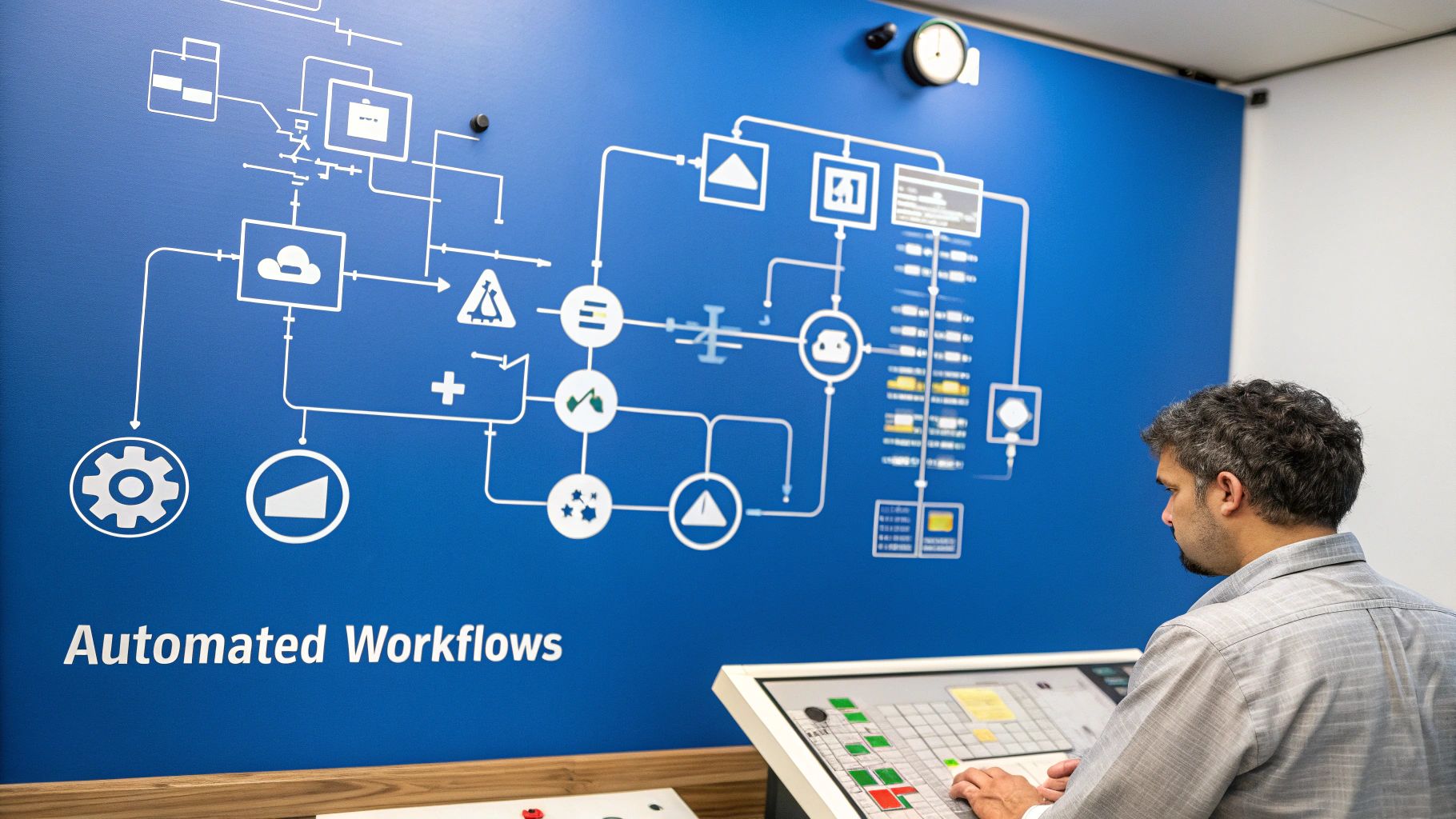
HRIS platforms achieve this automation through features like configurable workflow engines, automated approval hierarchies, digital forms with pre-filled information, notification and reminder systems, and status tracking with enhanced visibility. Integration with email and messaging platforms further streamlines communication and ensures timely action. This automation dramatically reduces processing time for routine HR tasks, ensuring consistency in process execution and creating audit trails for compliance purposes. Consequently, HR staff are freed from tedious administrative burdens and can focus on more strategic initiatives. Employees also benefit from faster service and a smoother, more transparent experience.
For example, L’Oréal implemented SAP SuccessFactors and reduced onboarding time by 30%. Siemens automated approval processes with Workday, cutting approval times from weeks to days. Delta Airlines automated leave management with UKG Pro, reducing administrative time by 75%. These examples highlight the tangible benefits of automating HR processes.
Pros:
- Dramatically reduces processing time for routine HR tasks
- Ensures consistency in process execution
- Creates audit trails for compliance purposes
- Frees HR staff for more strategic initiatives
- Improves employee experience through faster service
Cons:
- Complex processes may require significant customization
- May necessitate process reengineering before implementation
- Can create resistance from employees accustomed to old methods
Tips for Successful Implementation:
- Map current processes before automation to identify improvement opportunities.
- Start with high-volume, low-complexity processes for quick wins.
- Include end-users in workflow design to ensure usability.
- Build in appropriate escalation procedures for exceptions.
- Review and optimize automated processes regularly.
This approach is particularly beneficial for startups and SMEs looking for efficient hiring solutions, large enterprises needing scalable background check processes, and HR professionals seeking integration with existing systems. Companies prioritizing data security and compliance will also find this aspect of HRIS invaluable. Learn more about Automated HR Processes and Workflows.
Automated HR processes and workflows deserve a prominent place in any discussion of hris benefits because they are fundamental to improving efficiency, reducing costs, and enhancing the overall employee experience. Popularized by platforms like ServiceNow, Workday, SAP SuccessFactors, and Oracle HCM Cloud, this functionality is a key driver for organizations seeking to modernize their HR operations and gain a competitive edge.
3. Data-Driven Decision Making
One of the most significant hris benefits is the ability to leverage data for improved decision-making. HRIS platforms transform HR departments from administrative centers into strategic partners by providing powerful analytics capabilities. These platforms convert raw employee data into actionable insights, empowering organizations to make informed, data-driven decisions that directly impact business outcomes. This shift allows HR to contribute directly to the company’s bottom line and solidify its role as a vital part of the organization’s success.
HRIS systems achieve this through a variety of features, including:
- Customizable reporting dashboards: Create tailored dashboards to visualize key HR metrics relevant to specific departments or the organization as a whole.
- Real-time metrics and KPI tracking: Monitor critical performance indicators in real-time to identify emerging trends and potential issues promptly.
- Predictive analytics capabilities: Forecast future workforce needs, potential attrition risks, and the impact of HR initiatives before they are implemented.
- Visualization tools for complex data: Translate complex data sets into easily understandable charts and graphs, making insights accessible to a wider audience.
- Trend analysis and benchmarking: Identify patterns within your organization’s data and compare your performance against industry benchmarks.
- Export capabilities to multiple formats: Easily share data and insights with stakeholders in various formats, including spreadsheets and presentations.
The advantages of data-driven decision making in HR are numerous:
- Enables strategic workforce planning based on data: Forecast future talent needs, identify skill gaps, and develop proactive recruitment strategies.
- Provides objective measures of HR program effectiveness: Evaluate the impact of HR initiatives and make data-backed adjustments to improve outcomes.
- Helps identify root causes of organizational challenges: Analyze employee data to pinpoint the underlying causes of issues like high turnover or low engagement.
- Supports business cases for HR initiatives with concrete data: Justify budget requests and demonstrate the ROI of HR programs with quantifiable data.
- Allows for more precise budgeting and resource allocation: Optimize resource allocation by accurately forecasting workforce needs and program costs.
However, implementing data-driven HR also presents some challenges:
- Requires data literacy among HR staff: HR professionals need training to interpret data and extract meaningful insights.
- Analytics quality depends on data quality: Accurate and consistent data input is crucial for generating reliable analytics.
- Advanced analytics features may require additional investment: Some sophisticated analytics tools and capabilities may come at an extra cost.
Several companies have successfully leveraged HRIS analytics to achieve significant results. For example, IBM used their HRIS analytics to reduce turnover by 20% through targeted retention programs. Unilever implemented predictive analytics through their HRIS to improve talent acquisition, reducing time-to-hire by 50%. Microsoft uses Power BI integrated with their HRIS to create real-time workforce dashboards for executives.
For companies looking to implement data-driven HR, consider these tips:
- Define key metrics aligned with business objectives: Focus on collecting and analyzing data that directly contributes to the organization’s strategic goals.
- Train HR staff on data interpretation and storytelling: Equip your HR team with the skills to understand and communicate data effectively.
- Start with basic reports before moving to advanced analytics: Begin with simple reports and gradually incorporate more complex analytics as your team’s data literacy improves.
- Establish data quality checks to ensure reliable insights: Implement processes to validate data accuracy and consistency.
- Create executive dashboards tailored to leadership needs: Provide senior management with concise and actionable insights relevant to their decision-making.
Atlassian offers valuable resources on data-driven decision making, exploring how HRIS systems empower businesses to leverage data for enhanced decision-making across all HR functions by integrating various data sources and providing comprehensive analytics dashboards. Popular analytics platforms like Tableau, Power BI, Visier, and Oracle Analytics offer robust solutions for visualizing and analyzing HR data. By embracing data-driven decision making, HR departments can become true strategic partners, driving business success and contributing significantly to organizational growth. This makes it a crucial hris benefit for organizations of all sizes, especially for those in the IN region looking to optimize their HR processes and gain a competitive edge.
4. Enhanced Compliance and Risk Management
One of the most significant hris benefits is the enhanced compliance and risk management capabilities it offers. Navigating the complex web of labor laws, data privacy regulations, and industry-specific mandates can be a daunting task, especially for businesses operating in India. HRIS solutions streamline this process by building these regulatory requirements directly into their system processes. This helps organizations minimize errors, reduce manual workload, and ultimately protect themselves from costly penalties and reputational damage.
HRIS platforms achieve this through several key features:
- Automated compliance reporting: Generate reports demonstrating adherence to various regulations with just a few clicks.
- Built-in regulatory rule engines: Automatically flag potential violations based on pre-configured rules aligned with current legislation.
- Configurable approval workflows with segregation of duties: Ensure proper authorization and prevent conflicts of interest for sensitive actions.
- Document retention and destruction scheduling: Automate the management of important documents according to legal requirements.
- Audit trail logging and reporting: Maintain a detailed record of all system activities for auditing and investigation purposes.
- Role-based security controls: Restrict access to sensitive data based on predefined roles, minimizing the risk of unauthorized access.
These features translate into tangible benefits for organizations:
Pros:
- Reduces exposure to compliance violations and associated penalties: Proactive monitoring and automated alerts help prevent violations before they occur.
- Simplifies audit preparation and execution: Readily available reports and audit trails streamline the audit process.
- Automatically adapts to changing regulations: Vendors typically update their systems to reflect new legislation, minimizing the burden on internal teams.
- Enforces consistent application of policies across the organization: System-driven processes ensure consistent adherence to policies, regardless of location or department.
- Provides evidence of due diligence in compliance efforts: Comprehensive documentation and audit trails demonstrate a commitment to compliance.
Cons:
- Requires regular updates to maintain regulatory currency: While vendors handle major updates, organizations may need to configure system settings for specific regional or industry requirements.
- May need region-specific customizations for global organizations: Companies operating in multiple jurisdictions may need to tailor the system for different legal environments.
- Cannot eliminate all compliance risks without proper configuration: The system’s effectiveness depends on accurate configuration and ongoing maintenance.
Real-world Examples:
Large multinational corporations have successfully leveraged HRIS systems for enhanced compliance. General Electric implemented Oracle HCM Cloud to standardize global compliance practices across 170+ countries. Closer to home, you can learn more about Enhanced Compliance and Risk Management and how it pertains specifically to the Indian market. Other examples include Kaiser Permanente using Workday to ensure HIPAA compliance in healthcare HR operations, and Bank of America utilizing ADP for consistent regulatory compliance across banking operations.
Actionable Tips:
- Regularly update system rules to reflect regulatory changes.
- Conduct periodic compliance audits using system reports.
- Use workflow approvals to enforce review of sensitive actions.
- Document compliance processes supported by the HRIS.
- Train HR staff on compliance functionality in the system.
Why this matters for you:
Whether you’re a startup navigating early-stage compliance hurdles or a large enterprise managing complex regulatory landscapes, an HRIS can be a game-changer. This is particularly crucial in India, with its evolving labor laws and data privacy regulations. Implementing an HRIS like ADP, SAP SuccessFactors, or Workday Compliance Cloud can significantly reduce your compliance burden, allowing you to focus on strategic HR initiatives. Enhanced compliance is not just a feature; it’s a fundamental necessity for any organization seeking sustainable growth and a strong reputation in today’s business environment.
5. Improved Employee Experience and Self-Service
One of the most significant hris benefits is the improvement it brings to the overall employee experience. Modern HRIS platforms offer intuitive self-service portals that empower employees to manage their own information, benefits, and HR transactions. This shift towards employee autonomy creates a more streamlined and satisfying experience for staff while simultaneously reducing the administrative burden on HR teams. These user-friendly interfaces give employees greater control over their data, including personal details updates, time-off requests, benefits enrollment, and access to important company resources. This consumer-grade experience contributes to increased job satisfaction and frees up HR professionals to focus on more strategic initiatives.

This approach works by providing a centralized platform where employees can access and manage all HR-related tasks. Features like mobile-optimized employee portals, personalized dashboards and notifications, digital document access and management, benefits enrollment and comparison tools, automated time-off request and approval workflows, and training and development resource centers make the entire HR process more efficient and transparent.
This self-service model is particularly valuable in today’s fast-paced business environment. Employees expect instant access to information and the ability to manage their own administrative tasks. This is especially true for the IN region’s growing millennial and Gen Z workforce, who are accustomed to digital-first experiences. For startups and SMEs, this reduces the need for large HR departments, while large enterprises benefit from the streamlined management of a large workforce. HR professionals can integrate these systems with existing infrastructure, further enhancing efficiency and ensuring data security and compliance.
Examples of Successful Implementation:
- Salesforce: Implemented Workday’s self-service portal, achieving 90% employee adoption and reducing HR inquiries by 35%.
- Deloitte: Their custom PeopleSoft self-service platform provides personalized HR experiences for 330,000+ professionals globally.
- Hilton Hotels: Uses UKG’s mobile app to enable 170,000 team members to access HR services anytime, anywhere.
Pros:
- Dramatically reduces routine inquiries to HR staff.
- Increases employee satisfaction through 24/7 access.
- Provides greater transparency into HR processes.
- Improves data accuracy through direct employee input.
- Creates a modern, tech-enabled workplace experience.
Cons:
- Requires thoughtful UX design to ensure adoption.
- May create challenges for less tech-savvy employees.
- Could reduce personal interactions with HR teams (though this can be mitigated with other initiatives).
Tips for Implementation:
- Design intuitive interfaces with minimal steps to complete common tasks.
- Create short video tutorials for complex self-service functions.
- Gather employee feedback regularly to improve user experience.
- Implement single sign-on for seamless access.
- Promote self-service features through multiple communication channels.
Popularized By:
- ServiceNow Employee Experience
- Workday People Experience
- Oracle ME
- Microsoft Viva
This element deserves a place on this list because it directly addresses a major pain point for both employees and HR departments. By empowering employees and streamlining HR processes, self-service portals offer a win-win scenario that enhances efficiency, improves satisfaction, and contributes to a more modern and engaging workplace. This is a crucial hris benefit for any organization seeking to optimize its human capital management.
6. Strategic Talent Management and Development
One of the most significant HRIS benefits is the ability to streamline and optimize talent management and development. A robust HRIS platform provides integrated talent management capabilities that connect previously siloed functions like recruitment, performance management, learning and development, and succession planning into a cohesive ecosystem. This holistic approach empowers organizations to effectively identify, develop, and retain their top talent, contributing directly to business success. Learn more about Strategic Talent Management and Development
How it Works:
An HRIS facilitates strategic talent management by providing a centralized platform for all talent-related data and processes. It enables organizations to create competency and skills frameworks, automate goal setting and performance reviews, integrate with learning management systems (LMS), utilize succession planning tools, visualize career paths, and leverage talent calibration capabilities. This data-driven approach allows businesses to align individual career aspirations with organizational needs, fostering a culture of growth and development.
Features and Benefits:
- Competency and Skills Frameworks: Define the skills and competencies required for each role, enabling targeted development and recruitment.
- Goal Setting and Performance Review Automation: Streamline performance management processes, making them more efficient and objective.
- Learning Management Integration: Seamlessly connect learning opportunities with performance outcomes and development plans.
- Succession Planning Tools: Identify and develop high-potential employees to ensure business continuity and fill critical roles.
- Career Pathing Visualization: Provide employees with clear visibility into their career progression options within the organization.
- Talent Calibration Capabilities: Ensure consistent performance ratings and talent assessments across departments.
Pros:
- Creates Clear Line-of-Sight: Employees gain a better understanding of how their performance connects to development opportunities and career advancement.
- Data-Driven Decisions: Make informed talent decisions based on data and analytics across the entire employee lifecycle.
- Reduced Talent Flight Risk: Targeted development programs and clear career paths enhance employee engagement and reduce turnover.
- Organizational Resilience: Succession planning ensures that critical roles are filled with qualified successors, minimizing disruptions.
- Increased Employee Engagement: Career transparency and development opportunities contribute to a more engaged and motivated workforce.
Cons:
- Configuration Required: HRIS systems often require significant configuration to align with specific organizational needs.
- Manager Adoption: Success hinges on manager buy-in and their ability to effectively utilize the system’s features.
- Potential Culture Change: Implementing a strategic talent management approach may require a shift in organizational culture.
Examples of Successful Implementation:
- AT&T: Leveraging SAP SuccessFactors for 250,000 employees, AT&T reduced leadership gaps by 17%.
- Nestlé: Implemented Cornerstone OnDemand globally to standardize talent processes across 86 countries.
- PepsiCo: Using Workday Talent, PepsiCo reduced high-potential turnover by 8% through targeted development programs.
Actionable Tips:
- Align Competency Frameworks: Ensure your competency frameworks directly support organizational strategy and business objectives.
- Train Managers: Provide thorough training to managers on talent assessment methodologies and the use of the HRIS system.
- Calibration Sessions: Conduct regular calibration sessions to ensure consistent performance ratings across different departments.
- Visible Career Paths: Create and communicate clear career paths to increase employee retention and engagement.
- Integrate Learning: Integrate learning recommendations with performance outcomes to provide personalized development opportunities.
When and Why to Use This Approach:
Strategic talent management through an HRIS is particularly valuable for startups and SMEs seeking to establish structured HR processes, large enterprises needing scalable solutions, HR professionals seeking integration with existing systems, and companies prioritizing data security and compliance. This approach is crucial for organizations looking to build a strong talent pipeline, improve employee engagement, and achieve sustainable growth. This HRIS benefit deserves its place on the list due to its profound impact on organizational performance and its ability to drive long-term success. Popular platforms like Cornerstone OnDemand, SAP SuccessFactors, Workday Talent Management, and Oracle Talent Management Cloud are leading the way in providing robust solutions for strategic talent management.
7. Cost Reduction and ROI Optimization
One of the most compelling hris benefits is the potential for significant cost reduction and return on investment (ROI) optimization. Implementing a robust HRIS can streamline operations, reduce errors, and optimize resource allocation, leading to measurable financial gains. By automating labor-intensive processes like payroll and leave management, eliminating redundant systems, and providing data-driven insights for strategic workforce decisions, organizations can unlock substantial cost savings, improve productivity, and mitigate compliance risks. This makes HRIS implementation a financially sound decision for businesses of all sizes, particularly in the IN region where efficient resource management is crucial for competitive advantage.
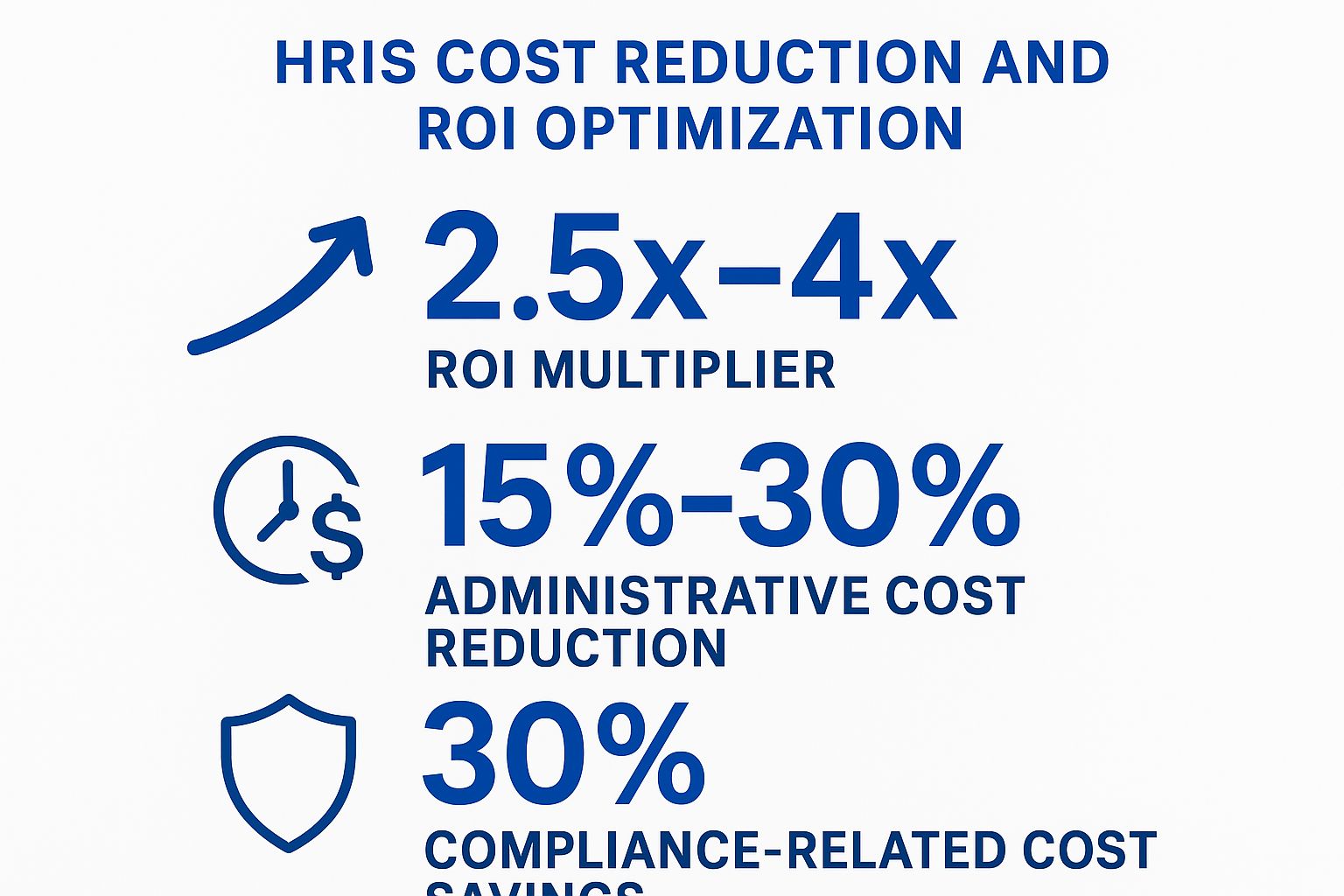
The infographic visually represents key statistics highlighting the potential ROI of HRIS implementation. For instance, it showcases that companies can achieve up to a 20% reduction in HR administrative costs, a 26% decrease in technology expenses through system consolidation, and millions in annual savings through process automation. These figures underscore the significant financial impact a well-implemented HRIS can have on an organization.
Features such as paperless HR processes, automated time and attendance tracking, optimized benefits administration, workforce planning tools, budget forecasting capabilities, and system consolidation opportunities contribute to these cost savings. Specifically, automating time and attendance can drastically reduce errors in payroll processing, saving significant money over time. Benefits administration optimization streamlines enrollment and management, reducing administrative overhead. Furthermore, workforce planning tools empower businesses to strategically allocate resources, optimizing staffing levels and minimizing overtime expenses.
Pros:
- Reduces administrative labor costs: Automation frees up HR staff to focus on strategic initiatives.
- Decreases error-related expenses: Automated systems minimize manual data entry errors, leading to fewer costly corrections.
- Minimizes compliance penalty risks: HRIS helps ensure adherence to regulations, reducing the risk of fines.
- Optimizes workforce scheduling and overtime: Data-driven insights enable better staffing decisions, minimizing unnecessary overtime costs.
- Provides data for strategic resource allocation: Access to real-time workforce data empowers informed decision-making regarding talent management and resource allocation.
Cons:
- Requires significant upfront investment: Implementing an HRIS involves initial costs for software, hardware, and implementation services.
- ROI timeline varies based on implementation complexity: The time it takes to realize a return on investment can vary depending on the size and complexity of the implementation.
- May necessitate process reengineering to maximize returns: Existing HR processes may need to be redesigned to fully leverage the capabilities of the HRIS.
Examples of Successful Implementation:
- Walmart: Implemented Workday HCM, achieving $40 million in annual savings through process automation.
- PepsiCo: Consolidated 70 HR systems into SAP SuccessFactors, reducing technology costs by 26%.
- Nissan: Reduced HR administrative costs by 20% after implementing Oracle HCM Cloud. These examples demonstrate the tangible benefits that organizations in diverse sectors have achieved through strategic HRIS implementation.
Tips for Successful Implementation:
- Conduct a thorough cost-benefit analysis before implementation: This analysis should consider both hard and soft costs, including the cost of software, implementation, training, and ongoing maintenance.
- Track both hard and soft cost savings after launch: Regularly monitor key metrics to measure the impact of the HRIS on cost reduction and ROI.
- Focus initial optimization on high-volume, labor-intensive processes: Prioritize automating tasks that consume significant time and resources to maximize early returns.
- Calculate compliance risk reduction as part of ROI: Factor in the potential cost savings from reduced compliance penalties when evaluating the overall ROI of the HRIS.
- Measure productivity improvements across the organization: Track key productivity indicators to assess the impact of the HRIS on workforce efficiency.
This aspect of HRIS implementation is crucial for organizations looking to improve their bottom line. Whether you’re a startup in the IN region seeking efficient hiring solutions, a large enterprise needing scalable processes, or an HR professional looking to integrate with existing systems, the cost reduction and ROI optimization offered by a well-implemented HRIS deserve a prominent place in your evaluation. Popularized by industry leaders like Sierra-Cedar HR Systems Survey, Deloitte Human Capital Trends, and Josh Bersin, the financial benefits of HRIS are well-documented and represent a compelling reason for adoption.
7 Key HRIS Benefits Comparison
| Benefit | Implementation Complexity | Resource Requirements | Expected Outcomes | Ideal Use Cases | Key Advantages |
|---|---|---|---|---|---|
| Streamlined Employee Data Management | Moderate – requires data migration and training | Moderate – IT support and training needed | High – faster data retrieval, improved integrity | Organizations with disparate HR systems | Centralized data, reduced errors, enhanced security |
| Automated HR Processes and Workflows | High – customization and process reengineering | Moderate to high – workflow design and IT | High – reduced processing times, consistent execution | Organizations seeking efficiency in routine HR tasks | Time savings, error reduction, audit trails |
| Data-Driven Decision Making | Moderate – requires data quality and literacy | High – analytics tools and skilled staff | High – actionable insights, better workforce planning | Companies aiming for strategic HR and forecasting | Improved planning, objective measurement |
| Enhanced Compliance and Risk Management | Moderate – requires updates and customization | Moderate – ongoing maintenance and auditing | High – reduced compliance risks, audit readiness | Regulated industries, multinational enterprises | Automated compliance, risk reduction |
| Improved Employee Experience and Self-Service | Moderate – requires UX design and adoption efforts | Moderate – development and user support | High – increased satisfaction, fewer HR requests | Organizations focused on employee engagement | 24/7 access, transparency, reduces HR burden |
| Strategic Talent Management and Development | High – extensive configuration and change management | High – training and system integration | High – better retention and development | Companies focusing on talent retention and succession | Data-driven talent decisions, career transparency |
| Cost Reduction and ROI Optimization | High – upfront investment and process changes | High – investment and analysis efforts | High – labor cost reduction, ROI improvement | Organizations prioritizing financial efficiency | Significant cost savings, productivity gains |
Embracing the Future of HR with HRIS
The HRIS benefits discussed – from streamlined employee data management and automated workflows to data-driven decision-making and enhanced compliance – showcase the transformative impact these systems can have on organizations of all sizes, especially within the IN region. Whether you’re a startup seeking efficient hiring solutions, an SME needing scalable background check processes, a large enterprise looking to integrate with existing systems, or a company prioritizing data security and compliance, understanding and leveraging these HRIS benefits is crucial for success in today’s competitive market. Mastering these concepts empowers HR professionals to move beyond administrative tasks and become strategic partners, driving significant improvements in employee experience, talent management, and overall ROI optimization. By embracing HRIS, businesses in India can unlock their full potential, fostering growth and innovation in 2025 and beyond.
Ready to experience the power of HRIS and transform your HR processes? SpringVerify, a leading provider of HR solutions including comprehensive background checks, seamlessly integrates with various HRIS platforms, helping you optimize your HR operations and enhance compliance. Visit SpringVerify today to learn more and request a demo.


