

Table of Contents
The Real Impact of HR Process Automation
HR process automation is more than just a trending topic; it’s a significant change in how HR departments function, particularly within India’s evolving business landscape. This shift affects everything from routine administrative work to strategic projects that directly impact a company’s profits. By automating repetitive tasks, HR professionals can finally focus on activities that truly benefit the organization.
This includes concentrating on talent acquisition, employee development, and building a positive company culture.
How Automation Redefines HR’s Role
Think of HR process automation as a tool that removes the burden of recurring tasks, allowing HR to become a true strategic asset. For example, instead of manually processing payroll, HR can focus on workforce planning and talent development. Instead of spending hours on onboarding paperwork, they can design engaging onboarding programs that increase employee retention. This allows HR to shift from a purely administrative role to a more impactful one, actively shaping the organization’s future.
Measurable Outcomes and Tangible Benefits
The advantages of HR process automation are clear and quantifiable. Businesses are witnessing significant cost savings through improved processes and reduced manual errors. Automation also improves compliance, ensuring adherence to rules and minimizing legal risks. To further explore the potential of HR process automation, consider the broader concept of Intelligent Process Automation. Moreover, automation improves the employee experience through faster responses, greater transparency, and more personalized interactions.
The increasing use of HR automation in India also has a wider economic influence. Automation across various sectors could boost India’s GDP by 1.4-2.2% per year by 2035, according to a McKinsey report. This highlights the substantial contribution HR automation can make to overall economic growth. Learn more about how HR automation is impacting digital change.
Real-World Examples of HR Transformation
Many companies are already seeing the benefits of automation. Businesses using automated onboarding systems, for example, have less paperwork and a more consistent experience for new hires. Automated performance management systems allow for regular and productive feedback, leading to better employee performance. These practical examples show how automation helps HR become a key business partner, moving its focus from administrative tasks to strategic initiatives that promote growth and achievement.
High-ROI Processes Ready for Automation Now

Not all HR processes offer the same return on investment when automated. Prioritizing the right areas is key to maximizing the effect of automation. This means focusing on processes where manual work creates slowdowns, takes too much time, or leads to mistakes. Let’s look at some important HR functions and how automation can improve them.
Recruitment and Onboarding
Recruitment often involves sorting through many applications, scheduling interviews, and communicating with candidates. Automating these tasks can significantly speed up hiring. AI-powered tools like Eightfold AI can pre-screen resumes, schedule interviews, and even perform initial candidate assessments. This frees up HR teams to connect with the best candidates. Automated onboarding systems can also simplify paperwork, ensure legal compliance, and create a consistent experience for new hires.
Performance Management
Traditional performance reviews can be time-consuming and biased. Automating HR processes can change performance management by enabling continuous feedback, automating performance tracking, and providing data-driven insights. This allows for more frequent and meaningful performance discussions, improving employee development and engagement. In India, automation’s impact extends beyond recruitment to improve onboarding and performance management, using new technologies like blockchain and analytics to transform HR management systems. Automated onboarding reduces paperwork and improves the new hire experience. Learn more about trends in HR management systems in India.
Payroll Operations and Leave Administration
Payroll and leave management involve complicated calculations and regulatory requirements. Manual processing is time-consuming and prone to errors. Automation can accurately calculate salaries, deductions, and taxes, ensuring payroll is on time and follows the rules. Automated leave management systems simplify leave requests, approvals, and tracking, reducing HR’s administrative work. How to master HR challenges.
Offboarding
When employees leave, offboarding can be just as complex as onboarding. Automation can simplify exit interviews, manage the return of company property, and ensure final payments are made promptly. This lightens the administrative burden on HR and makes the transition easier for departing employees.
The following table summarizes the potential impact of automating these key HR processes.
HR Processes Automation Impact Assessment
Comparison of key HR processes before and after automation implementation
| HR Process | Manual Process Challenges | Automation Benefits | Implementation Complexity | ROI Potential |
|---|---|---|---|---|
| Recruitment & Onboarding | Time-consuming, inconsistent candidate experience, high administrative burden | Reduced time-to-hire, improved candidate experience, increased efficiency | Moderate | High |
| Performance Management | Time-consuming, prone to bias, infrequent feedback | Continuous feedback, data-driven insights, improved employee engagement | Moderate | Medium |
| Payroll & Leave Admin. | Prone to errors, complex calculations, time-consuming | Increased accuracy, reduced processing time, improved compliance | High | High |
| Offboarding | Time-consuming, inconsistent processes, potential for negative employee experience | Streamlined processes, improved compliance, positive employee experience | Low | Medium |
This table highlights how automation can address challenges in various HR processes, offering benefits like increased efficiency and improved compliance. While implementation complexity and ROI potential vary, the overall impact of automation is substantial.
AI-Powered Solutions Transforming HR Teams
HR process automation is changing quickly. It’s moving past simple tasks and embracing the potential of Artificial Intelligence (AI). This shift is fueled by progress in machine learning, natural language processing, and predictive analytics. These technologies are reshaping what HR teams can accomplish, especially in India, where the HR tech sector is booming.
AI in Recruitment and Talent Acquisition
AI is changing how companies find and hire employees. Intelligent resume screening software can analyze thousands of resumes in minutes.
These tools filter unqualified candidates and highlight top prospects, freeing HR from hours of manual work. This allows them to connect with the best candidates. AI-powered platforms also improve candidate matching. They look beyond keywords to evaluate skills, experience, and cultural fit.
Enhancing Employee Engagement With AI
AI isn’t just about efficiency; it’s also about a better employee experience. Sentiment analysis tools analyze employee feedback. They pinpoint concerns, helping HR address potential problems proactively. Personalized communication platforms tailor messages to individual employees. This ensures important information is delivered effectively and engagingly.
AI-Driven Performance Management
Performance management is also being reshaped by AI. Real-time feedback systems provide constant performance data. This helps managers identify strengths, address weaknesses, and support their team members. Predictive performance indicators can even forecast future performance using past data, allowing HR to step in and prevent performance declines. In India, the HR tech world is rapidly developing, with AI playing a major role. AI-powered recruitment and talent acquisition are simplifying hiring. They automate resume screening and candidate analysis. Discover more insights about this trend.
Strategic Workforce Planning With AI
AI is essential for strategic workforce planning. Attrition prediction models can identify employees who might leave. This allows HR to create retention strategies. Skills gap analysis tools show where the workforce lacks skills needed for the future. This informs training and development initiatives. These insights help HR align the workforce with the company’s long-term objectives. These developments are set to improve productivity and employee engagement – key factors for success in the competitive Indian market.
From Plan to Reality: Implementing HR Process Automation
Moving from the theoretical benefits of HR process automation to practical implementation requires a well-defined strategy. This section, based on insights from HR leaders in India, outlines a proven roadmap for successfully integrating automation into your organization. We’ll cover key steps, from initial process evaluation to engaging stakeholders and selecting appropriate vendors.
Building a Solid Foundation: Process Assessment and Stakeholder Engagement
Begin by thoroughly assessing your current HR processes. Identify bottlenecks, pain points, and areas where manual tasks consume significant time and resources. This assessment helps prioritize automation initiatives for maximum impact. For instance, if your onboarding process involves extensive paperwork and delays, automating this area can yield quick wins.
Next, engage stakeholders across the organization. This includes HR staff, department heads, IT, and employees directly impacted by the changes. Communicating the goals and benefits of automation is essential for gaining buy-in and minimizing resistance. You might be interested in: How to master enterprise challenges with our guide.
Choosing the Right Technology: Vendor Evaluation and Implementation Planning
Evaluating HR automation vendors requires a structured approach. Create a framework considering factors like software functionality, integration capabilities with existing systems like BambooHR, vendor reputation, and cost. Don’t just look for features; find solutions that meet your specific needs and company culture.
Once you select a vendor, meticulous implementation planning is vital. This includes setting realistic timelines, allocating resources, and defining clear success metrics. A phased rollout can help manage the transition effectively and minimize disruption.
Making It Work: Critical Success Factors for Implementation
Several factors significantly influence the success of HR process automation. Executive sponsorship is vital, providing resources and authority. Managing resistance to change is key. Address employee concerns, offer training, and emphasize the benefits of automation for everyone.
Seamless data migration minimizes disruption and maintains data integrity. Robust systems integration is essential for smooth data flow between HR functions. Comprehensive training programs empower users to utilize the new technology effectively.
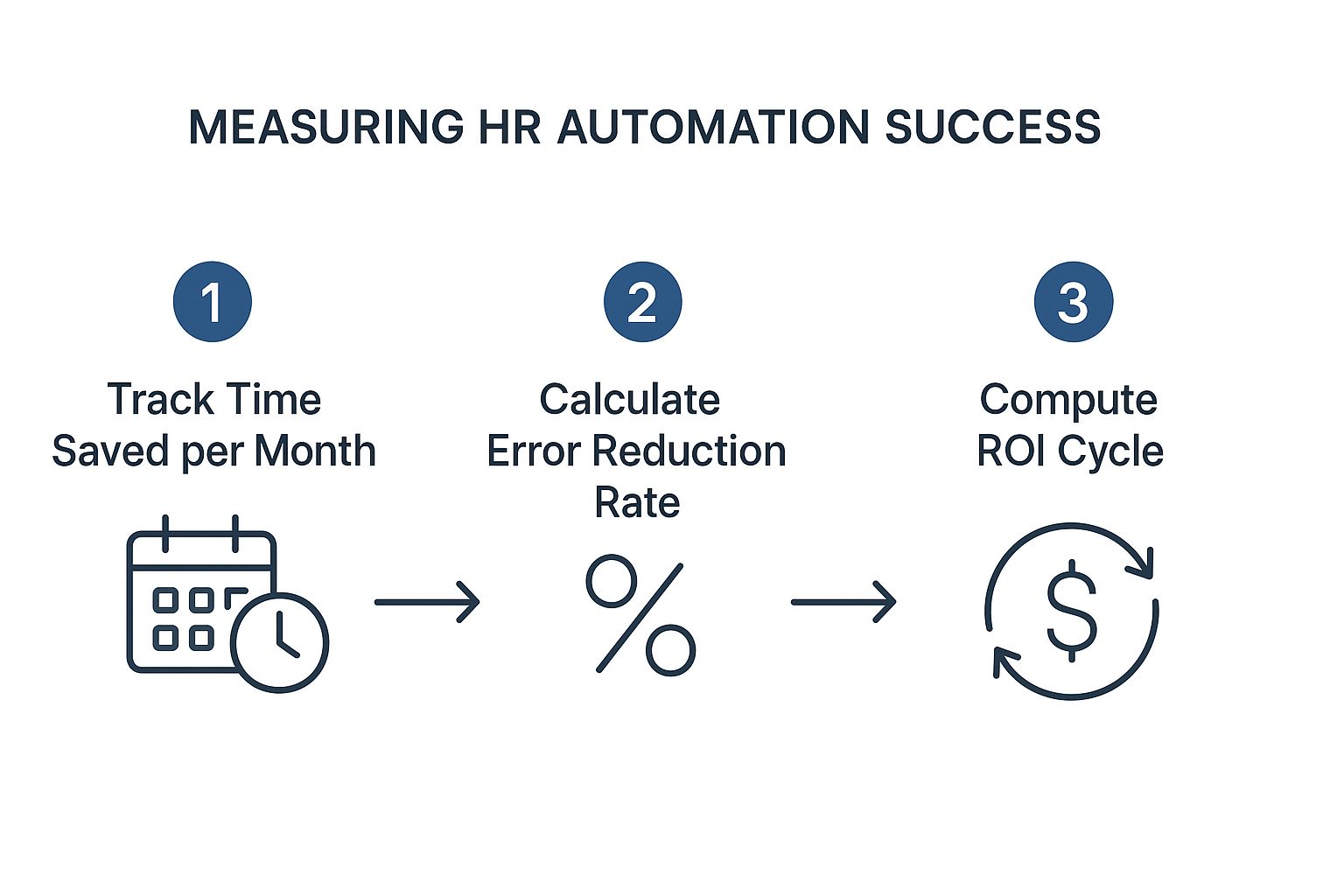
This infographic illustrates three key steps in measuring automation success: tracking time saved, calculating the error reduction rate, and computing ROI. These steps allow organizations to quantify the benefits of their automation investments. The infographic also emphasizes the importance of a cyclical approach to measurement for ongoing evaluation and refinement.
To provide a clear roadmap for implementation, let’s examine a practical framework:
Introducing the “HR Automation Implementation Framework” – a step-by-step approach with key considerations for each stage of implementing HR process automation.
| Implementation Phase | Key Activities | Required Resources | Timeline | Success Indicators |
|---|---|---|---|---|
| Process Assessment | Identify bottlenecks and manual processes | HR team, process owners, process mapping tools | 2-4 weeks | Documented processes, prioritized automation opportunities |
| Vendor Selection | Evaluate vendors based on needs and budget | HR team, IT, procurement | 4-6 weeks | Selected vendor aligned with business requirements |
| Implementation Planning | Develop a detailed project plan with timelines and resources | Project manager, HR team, IT | 2-4 weeks | Approved project plan, resource allocation |
| System Configuration and Data Migration | Configure the new system and migrate existing data | IT, data migration specialists | 4-8 weeks | Successful data migration, system readiness |
| Training and Change Management | Train users and manage the change process | HR team, training specialists | 2-4 weeks | User proficiency, positive feedback |
| Go-Live and Post-Implementation Support | Launch the new system and provide ongoing support | HR team, IT, vendor support | Ongoing | System stability, user adoption, realized benefits |
This framework provides a structured approach to guide organizations through each phase of HR automation, from initial assessment to ongoing support. By following these steps and monitoring success indicators, businesses can ensure a smooth transition and achieve the desired results.
Avoiding Pitfalls: Budgeting, Timelines, and Common Challenges
Implementing HR process automation requires realistic budgeting. Include not only software costs but also implementation, training, and maintenance expenses. Establish practical timelines for each initiative. Automating leave requests might be quick, while overhauling an HRMS may take longer.
Be prepared for common challenges: data migration issues, integration complexities, and user adoption hurdles. Learning from other organizations can help anticipate and mitigate these challenges.
Measuring What Matters in HR Automation

How can you gauge the effectiveness of your HR automation investment? It’s not simply about checking off tasks, but truly understanding the positive influence on your organization, particularly within the ever-changing Indian business landscape. This involves looking beyond initial implementation and focusing on the long-term benefits. Establishing clear metrics and tracking systems is key to showcasing the value. This section provides practical strategies to evaluate your HR automation success.
Operational Efficiency: Time, Errors, and Compliance
One of the most immediate advantages of HR process automation is the boost to operational efficiency. This results in significant time savings. Think about the countless hours previously dedicated to manual data entry, now available for strategic initiatives.
Automation also drastically reduces errors. This translates to fewer corrections, less rework, and improved data accuracy. With more accurate data, your decisions become more informed and strategic.
Further, automated processes bolster compliance. They ensure adherence to regulations, minimize legal risks, and simplify audits. This fosters a more secure and efficient operational environment.
Financial Metrics: Cost Savings and ROI
Beyond operational gains, HR process automation yields tangible financial benefits. The clearest advantage is hard cost savings, primarily from reduced administrative overhead and increased productivity.
However, the true benchmark of success involves calculating the overall ROI. This means considering implementation costs, ongoing maintenance, and the long-term value generated by improved efficiency and fewer errors. This comprehensive financial analysis reveals the true worth of your automation investment.
Experiential Measures: Satisfaction and Adoption
While efficiency and cost savings are paramount, the impact on employees shouldn’t be overlooked. Employee satisfaction rises with streamlined processes, quicker response times, and more personalized interactions. This leads to increased engagement and a more positive workplace.
Gather manager feedback to assess how automation affects their workflows and team management abilities. Also, track system adoption rates. High usage signifies the system’s value and its effectiveness in meeting real needs. Read also: How to master talent acquisition. This comprehensive perspective reveals the full impact on your workforce.
Communicating Success and Planning for the Future
Sharing these successes with stakeholders is crucial for ongoing support and justifying further investment in HR process automation. Tailor your message to each audience, emphasizing the relevant metrics for C-suite executives, HR teams, and individual users. This shared understanding promotes a culture of continuous improvement.
Moreover, use these insights to pinpoint areas for expansion. Optimize existing automation and explore new opportunities to further enhance HR processes and contribute to your organization’s overall success. This proactive strategy ensures your automation approach stays aligned with changing business needs.
The Future of HR Process Automation: What’s Next?
HR process automation is constantly changing. So, what lies ahead for this dynamic field? Emerging technologies hold the promise of reshaping HR automation in the coming years, impacting how organizations in India and globally manage their workforce. These advancements will likely transform various HR functions, from recruitment and onboarding to employee engagement and performance management.
Emerging Technologies Reshaping HR
Several key technologies are on the cusp of revolutionizing HR automation. Blockchain, for instance, provides secure credential verification, simplifying background checks and ensuring data integrity. This is especially important in today’s globalized job market, where verifying credentials across different countries can be a complicated process. Imagine verifying education and employment history in mere minutes, thanks to secure and tamper-proof records on a blockchain.
Voice-activated HR assistants are another exciting development. These tools will empower employees to access information and perform tasks using simple voice commands, much like we use virtual assistants at home. This could include requesting time off, inquiring about company policies, or even accessing payslips, all through voice commands.
Advanced analytics will also play a more significant role in workforce planning. By analyzing large amounts of data, these tools can predict future workforce needs, pinpoint potential skill gaps, and help organizations plan their future talent acquisition strategies. This proactive approach enables businesses to make informed decisions about hiring, training, and development to maintain a competitive edge.
Finally, seamless integration with workplace productivity tools will further enhance HR processes. This integration will eliminate data silos, improving communication and teamwork across the organization. Picture a future where your performance management system automatically connects with your project management software, giving a complete overview of each employee’s contributions.
Addressing Evolving Workforce Expectations
These advancements in HR automation are directly related to changing employee expectations. Today’s workforce increasingly demands instant access to information, personalized experiences, and mobile-first interfaces. Automated HR systems can provide real-time answers to employee questions, customize learning and development paths, and deliver mobile-friendly experiences. This not only boosts employee satisfaction but also leads to greater productivity and engagement. Understanding how automation affects employee attitudes is crucial, so measuring employee engagement after implementing these changes is essential. You can learn more about how to effectively measure employee engagement using various methods.
Adapting to Changing Work Models
The shift towards remote and hybrid work models is also shaping the requirements for HR automation. Companies now require tools that can support dispersed teams, facilitate collaboration across different locations, and effectively manage performance in remote settings. Automation provides solutions to these challenges by offering centralized platforms for communication, performance management, and employee engagement.
Future-Proofing Automation Investments
Organizations that are looking ahead are already future-proofing their HR automation investments. They’re doing this by choosing flexible and scalable solutions and by prioritizing continuous learning and development. This ensures their HR teams possess the skills needed to effectively manage and utilize these ever-evolving technologies. This proactive strategy enables them to readily adapt to changing business needs and maximize the return on their automation investments.
Ready to optimize your HR processes and unleash the full potential of your workforce? Learn how SpringVerify can transform your HR functions with comprehensive background verification services, seamless integrations, and a strong commitment to data security.


