

Let’s be honest, “HR digital transformation” sounds like another piece of corporate jargon. But what it really means is moving your human resources operations out of the era of dusty filing cabinets and clunky spreadsheets and into a world of smart, automated systems that actually make work better for everyone.
It’s about using modern tools, from AI to cloud-based platforms, to handle everything from hiring and onboarding to employee engagement. The end goal? To build an HR function that is efficient, driven by real data, and genuinely focused on its people.
Table of Contents
What Is HR Digital Transformation Really?
Think of it this way: HR digital transformation isn’t just about scanning a paper form to create a PDF. That’s just digitisation. True transformation is about completely rethinking that process from the ground up.
It’s the difference between that scanned form and creating a slick, interactive online portal that guides a new hire through their first day, making them feel welcome and prepared. This is about shifting HR from a reactive, administrative department to a proactive, strategic partner that adds tangible value to the business.
So, what’s pushing this change? A few key things:
- Changing Employee Expectations: People today expect the same seamless, user-friendly digital experiences at work that they get from consumer apps like Swiggy or Amazon. Clunky internal systems just don’t cut it anymore.
- The Rise of AI and Automation: Technology can now take over the repetitive, time-consuming tasks like processing payroll or sifting through hundreds of resumes. This frees up your HR team to focus on what humans do best: strategy, culture, and employee development.
- Demand for Data-Driven Decisions: Gut feelings are no longer enough. Businesses need real-time, accurate data about their workforce to make smart decisions on talent acquisition, retention, and performance management.
Core Components of the Transformation
Embarking on this journey is about much more than just buying the latest software. It’s a fundamental shift that touches your processes, your team’s skills, and your entire company culture. The ultimate aim for many is to make HR operations feel almost invisible—smooth, efficient, and highly effective behind the scenes.
In India, this isn’t a future trend; it’s happening right now. The adoption of HR technology is rapidly changing how companies manage their talent. A 2025 report from ETHRWorld revealed that 69% of Indian organisations have already automated their HR operations, proving that tech is now a business necessity, not an optional extra.
To help you get a clearer picture, let’s break down the key elements involved in this transformation. The table below summarises the main drivers pushing companies to change, the benefits they stand to gain, and the common challenges they might face along the way.
Key Components of HR Digital Transformation
| Drivers | Benefits | Challenges |
|---|---|---|
| Demand for New Skills | Improved Employee Experience | Employee Resistance to Change |
| Rise of Remote/Hybrid Work | Increased HR Efficiency | Data Security & Privacy |
| Need for Data Analytics | Better Talent Acquisition | Integrating New & Old Systems |
| Availability of AI/Cloud Tech | Stronger Employer Branding | Securing Budget & Resources |
As you can see, the path to digital HR is influenced by a mix of technological advancements and evolving workplace needs. While the benefits are compelling—from a happier workforce to a stronger brand—it’s just as important to anticipate and plan for the hurdles, such as ensuring data privacy and managing the change within your teams.
Decoding the Language of Digital HR
To really get your head around HR digital transformation, you first need to speak the language. It’s easy to feel a bit lost when terms like “AI-driven recruitment” or “cloud-based HRIS” are thrown around, but these concepts are much simpler than they sound. Think of this section as your personal translator, turning confusing jargon into practical, everyday ideas.
At its heart, digital HR isn’t about replacing people with robots. It’s about giving your team superpowers. It’s about equipping them with smart tools to take over the repetitive, admin-heavy work, freeing them up to focus on what truly matters: strategic thinking, employee wellbeing, and building a fantastic company culture.

Unpacking Key Digital HR Concepts
Let’s break down some of the most common terms you’ll bump into on your transformation journey. Getting a solid grip on these building blocks is the first real step towards creating a more efficient, people-first HR function.
AI-Driven Recruitment
This doesn’t mean a machine is making the final hiring decision. Instead, picture a tireless, incredibly organised assistant that can sift through thousands of resumes in minutes. This AI assistant can pinpoint candidates whose skills and experience are a perfect match for your job description, handing your hiring managers a top-quality shortlist. This approach helps sidestep unconscious bias and saves countless hours, allowing your team to focus on having meaningful conversations and making human connections.
Cloud-Based HR Platforms
Forget about clunky software installed on a single office computer or servers stashed away in a back room. A cloud-based platform, often called an HRIS (Human Resources Information System), gathers all your HR data into one secure, online hub.
A cloud HRIS is like having a single, perfectly organised digital filing cabinet that’s accessible from anywhere. It holds everything from employee records and payroll data to performance reviews and leave requests, ensuring everyone is always working with the most up-to-date information.
This means your team can manage HR tasks from any location, and employees can access their own information through self-service portals, which dramatically cuts down on administrative queries.
From Raw Data to Strategic Insights
One of the biggest game-changers in any HR digital transformation is the ability to use data to make smarter, more informed decisions. This is where HR analytics and automation really shine, turning plain information into powerful action.
- HR Data Analytics: If a cloud platform is your digital filing cabinet, then analytics is the super-smart search engine that makes sense of everything inside it. Think of it as a GPS for your workforce, showing you where you are and helping you map out the best route forward. You can track crucial metrics like time-to-hire, employee turnover rates, and engagement levels, allowing you to spot trends and tackle potential problems before they escalate.
- Process Automation: This is all about setting up systems to handle routine, rule-based tasks on autopilot. For instance, when a new employee is hired, an automated workflow can kick everything off—from sending the offer letter and initiating background checks with a partner like SpringVerify to scheduling onboarding sessions and granting system access. It ensures consistency and accuracy, every single time.
In India, this shift towards intelligent systems is picking up serious speed. A 2025 Capterra India survey found that 72% of Indian organisations are already using AI features in their HR software, blowing past the global average of 55%. This adoption is fuelled by real needs, with 49% of HR leaders calling upskilling a major challenge. However, it’s not without its bumps, as 56% report struggling with software implementation. You can read more about the AI and upskilling trends shaping India’s HR transformation.
By mastering this language, you’ll be in a much better position to explain the value of these digital tools to your entire organisation. This foundational knowledge is crucial for building a realistic and effective transformation roadmap, which we will dive into next.
Building Your Digital Transformation Roadmap
Jumping into an HR digital transformation without a clear plan is a bit like trying to build a house without a blueprint. You might have the best tools and materials lined up, but without a solid guide, you’re heading for a chaotic, unstable result. A well-thought-out roadmap gives you direction, sets clear milestones, and makes sure every step you take aligns with your bigger business goals.
This isn’t just about plugging in new software; it’s a strategic move for the entire business. Thinking through each stage, from checking what you have now to getting everything working together, is the secret to a smooth transition and getting the most out of your investment.
Phase 1: Assess Your Current HR Processes
Before you can build the future, you need a brutally honest look at the present. The first step is to do a full audit of your current HR operations. Where are the real bottlenecks? What tasks are eating up the most manual hours? The best way to find out is to talk to your HR team and your employees—they’ll tell you exactly where the pain points are.
Maybe your hiring process is drowning in a sea of manual resume screening, or your onboarding feels like a mountain of paperwork. Pinpointing these specific friction points is absolutely essential.
Think of this as a diagnostic check-up for your HR function. You need to identify the symptoms—like a high time-to-hire or low employee engagement—before you can prescribe the right treatment. This assessment is the foundation for your entire strategy.
Once you have a clear picture of what’s broken, you can start setting priorities. Focus first on the problems that are having the biggest negative impact on your efficiency and the experience of your people.
Phase 2: Set Clear Goals and Choose Technology
With your pain points identified, it’s time to set clear, measurable goals. These can’t be vague ambitions like “improve efficiency.” They need to be specific targets you can actually track, such as:
- Reduce time-to-hire by 30% within the next six months.
- Increase new hire satisfaction scores by 15% by automating the onboarding workflow.
- Cut down administrative time spent on payroll queries by 50% through a new self-service portal.
Having concrete goals like these makes choosing the right technology much easier. In India, for instance, the HR tech scene is moving fast, especially with AI in recruitment. As of 2025, AI-powered tools are automating resume screening and candidate profiling to make smarter hiring decisions. This is giving productivity and efficiency a serious boost across the board.
When you’re picking technology partners, look for solutions that solve your specific problems and can integrate smoothly with the systems you already use. Making sure data flows effortlessly between your Applicant Tracking System (ATS), HRIS, and other tools is vital. You can get a better sense of how this works by exploring some valuable API integrations.
The process flow below shows a common integration path, starting with a core system and then building on it with more advanced tools.
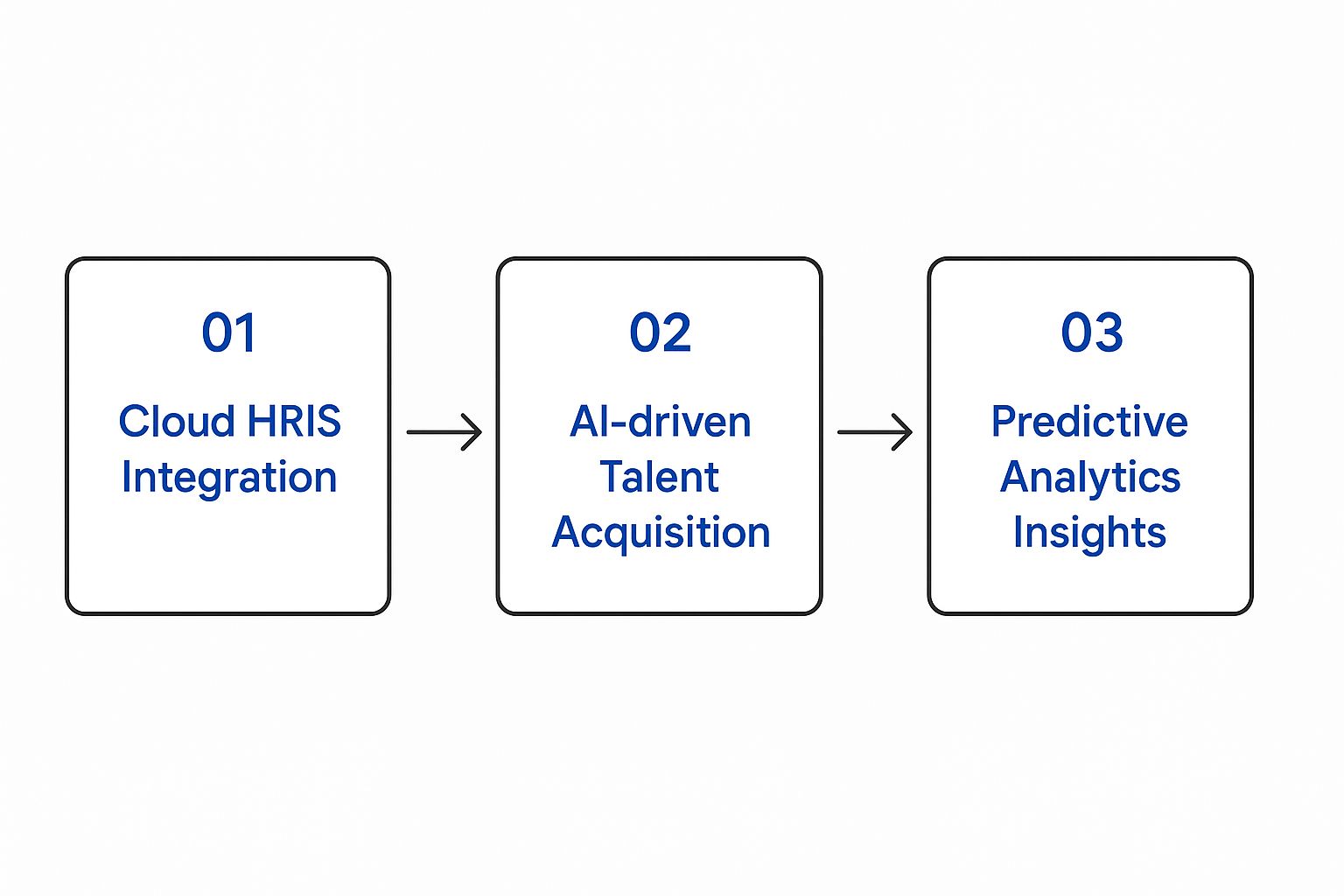
This visual helps show how foundational cloud systems are the launchpad for more sophisticated functions like AI-driven talent acquisition and predictive analytics.
Phase 3: Plan for Integration and Implementation
Finally, it’s time to create a detailed implementation plan. This roadmap should map out timelines, assign who’s responsible for what, and—crucially—include a solid change management strategy. Remember, bringing in new technology isn’t just about the tech; it’s about changing mindsets and daily habits.
To see just how big the shift can be, it helps to compare the old way of doing things with the new.
Comparing Traditional vs Digital HR Processes
This table highlights the stark contrast between manual HR tasks and their modern, digital counterparts.
| Traditional HR | Digital HR |
|---|---|
| Manually sifting through stacks of paper resumes | AI-powered screening inside an Applicant Tracking System (ATS) |
| In-person onboarding sessions with heaps of paperwork | Automated, self-guided digital onboarding journeys |
| Leave requests and approvals managed over email chains | Instant approvals right from an employee self-service app |
| Annual, backward-looking performance reviews | Continuous feedback and real-time performance tracking |
This transformation from cumbersome, paper-based work to streamlined, instant digital processes is at the heart of what HR digital transformation delivers.
A phased rollout can work wonders here. Start with a pilot program for a small, keen group to gather feedback and iron out any issues. This approach creates internal champions who can then help promote the new system when you’re ready to roll it out to the whole company. Clear communication, thorough training, and ongoing support are the keys to making sure your team doesn’t just use the new tools, but truly embraces them.
Navigating Common Transformation Hurdles
Embarking on an HR digital transformation journey is exciting, but it’s rarely a straight line from old processes to new efficiencies. Let’s be honest, every major organisational shift comes with its fair share of obstacles. The secret isn’t avoiding problems, but anticipating them. Proactively identifying and planning for these common challenges is what turns potential setbacks into valuable learning experiences.

It’s about being prepared to solve them when they arise. So, let’s dive into the most common hurdles you’re likely to face and unpack some practical, battle-tested solutions to keep your transformation moving forward.
Overcoming Employee Resistance to Change
Often, the most significant challenge isn’t technical at all—it’s human. People are naturally comfortable with existing routines, and introducing new tools can feel disruptive or even threatening. This resistance usually comes from a fear of the unknown or a worry that new technology will make their roles redundant.
To get ahead of this, your communication strategy is everything. You need to frame the change not as a top-down mandate, but as a collective move toward a better way of working. It’s crucial to focus on the “what’s in it for me?” for every single employee.
For example, instead of just announcing a new HR portal, show them how it lets them book leave from their phones in seconds, killing off the slow, clunky email process they used to hate. A great tactic is to launch pilot programmes with a small group of enthusiastic users. These early adopters can provide feedback, help you iron out the kinks, and become powerful advocates when you roll it out to everyone else.
A successful HR digital transformation is less about forcing new technology on people and more about showing them how it makes their work-life simpler and more rewarding. The goal is to create pull, not just push.
Managing Data Privacy and Security
As you digitise more HR functions, you’ll be collecting and storing a massive amount of sensitive employee data. This immediately puts data privacy and security front and centre. In today’s climate, a single data breach can cause irreparable damage to your company’s reputation and destroy employee trust.
From the very beginning, make data security a core requirement when choosing any new technology partner. Ensure any vendor you work with adheres to strict data protection standards and has a proven track record of keeping data safe.
Here are a few essential steps to lock down your HR data:
- Access Control: Implement role-based access so that employees can only see the information absolutely necessary for their jobs. An HR manager needs different access levels than a line manager or a regular employee.
- Regular Audits: Conduct periodic security audits of your HR systems. This helps you find and patch any potential vulnerabilities before they can be exploited.
- Clear Policies: Develop and clearly communicate data privacy policies to all employees. Everyone in the organisation should understand their responsibility in protecting sensitive information.
By building a robust security framework from day one, you build confidence and ensure your transformation is both efficient and safe.
Integrating Disparate Systems
Very few companies start their HR digital transformation with a completely blank slate. Most are dealing with a patchwork of existing systems—an old payroll software here, a separate recruiting tool there. One of the biggest technical headaches is getting these different systems to talk to each other.
When your systems aren’t integrated, you create data silos. Information gets trapped in one system and has to be manually re-entered into another, which completely defeats the purpose of automation and efficiency. The goal is to create a seamless flow of data across the entire employee lifecycle.
For instance, when a candidate accepts a job offer in your Applicant Tracking System (ATS), that data should automatically flow into your core HRIS to create an employee profile. This, in turn, should trigger onboarding tasks and grant access to other necessary systems without anyone lifting a finger. Achieving this level of integration often requires a modern HR platform with a powerful API that can connect smoothly with your other tools.
See It in Action with SpringVerify
Theory and roadmaps are one thing, but seeing HR digital transformation in a real-world context makes it all click. Let’s move from the blueprint to the build and see how a specialised tool like SpringVerify can become the cornerstone of your digital HR strategy. This is where abstract ideas like ‘efficiency’ and ‘security’ turn into tangible results.
Picture a fast-growing tech company in Bengaluru trying to scale its remote workforce across India. Their old-school hiring process was a huge bottleneck. The HR team was drowning in manual work—coordinating background checks, verifying identities, and chasing down documents. This slow, disjointed process created a frustrating experience for candidates and led to delayed start dates. In a competitive market, they were at risk of losing top talent to companies that could move faster.
This scenario is incredibly common. The administrative burden of manual verification doesn’t just slow down hiring; it opens the door to human error and inconsistent standards. It’s a classic example of a process that’s crying out for a digital upgrade.
Automating Trust and Speed in Hiring
The company’s solution was to integrate a specialised tool directly into their existing HR workflow. Instead of treating background verification as a separate, manual chore, they made it a seamless, automated part of their digital hiring journey. By connecting SpringVerify’s API to their Applicant Tracking System (ATS), they completely changed the game.
Now, the moment a candidate reaches the offer stage in the ATS, the verification process kicks off automatically. No more manual data entry. No more switching between different systems.
This shift isn’t just about digitising paperwork; it’s about embedding trust and security directly into your core HR operations. Automation here means every single candidate goes through a consistent, thorough, and fast verification process, building a foundation of integrity from day one.
The impact was immediate and easy to measure. The company slashed the time spent on administrative tasks for each new hire by several hours. This freed up their HR team to focus on more strategic work, like improving the candidate experience and engaging with new hires.
A Central Hub for Verification
Visualising this new process really shows its power. A centralised dashboard becomes the single source of truth for all verifications, putting an end to confusing email chains and constant status checks.
Here’s a look at how a modern HR dashboard centralises all verification data.
This snapshot shows how HR managers can see the real-time status of every check—from identity verification to employment history—all in one place.
This level of visibility is a game-changer. It lets the HR team proactively manage the hiring pipeline, spot potential delays early, and keep hiring managers in the loop without having to dig through spreadsheets. It transforms a chaotic, opaque process into one that is organised, transparent, and completely under control.
The Broader Impact on HR Digital Transformation
Bringing in a tool like SpringVerify is about much more than just a single feature. It’s a practical step that delivers on the core promises of any successful hr digital transformation initiative. Let’s break down the key benefits we see in this real-world example:
- Enhanced Candidate Experience: The new process is faster and more transparent for candidates. They can complete requirements like instant KYC on familiar platforms like WhatsApp. This modern, professional experience boosts their confidence in the company before they even start.
- Increased HR Efficiency: By automating repetitive tasks, the HR team gets valuable time back. They’re no longer bogged down by administrative work and can shift their focus to higher-value activities that directly impact employee success and retention.
- Improved Data Security and Compliance: Manual processes are ripe for errors and security risks. A dedicated, secure platform ensures that sensitive candidate data is handled correctly, maintaining compliance and protecting the company from potential legal trouble.
- Seamless System Integration: The ability to connect with existing HR systems via an API is critical. This ensures a smooth flow of data, breaks down information silos, and creates a unified tech stack where different tools work together in harmony.
This case study shows that a successful HR digital transformation is often built one smart integration at a time. By identifying a key pain point—like slow and insecure background checks—and implementing a targeted digital solution, organisations can achieve significant improvements. This isn’t just about buying new technology; it’s about fundamentally redesigning processes to be more efficient, secure, and human-centric.
Answering Your Top Transformation Questions
As you start your journey into HR digital transformation, it’s only natural for questions to pop up. Think of this section as a quick reference guide, tackling some of the most common queries we hear. It’s here to give you a bit more confidence as you navigate the path ahead.

How Do We Choose the Right HR Technology?
Forget chasing trendy features for a moment. The best place to start is by mapping out your current pain points and what you want to achieve in the future. Get your team involved—they’re on the front lines and know what would genuinely make their work easier day-to-day.
Once you have a clear picture, create a shortlist of vendors and ask for live demos that speak directly to your specific needs. Prioritise solutions that play well with your existing systems and come with strong customer support. The right tool isn’t the one with the most bells and whistles; it’s the one that solves your real problems and can grow with you.
What Are the Most Important Metrics for Success?
It’s tempting to just look at adoption rates, but you need to go deeper and measure tangible business outcomes. When you can tie your tech investment to core business metrics, you demonstrate its true value.
Focus on metrics that show a clear return on investment and improvements to the employee lifecycle. This shifts the conversation from tech adoption to business impact.
Here are a few key metrics to keep an eye on:
- Time-to-hire and cost-per-hire
- Employee turnover rate, especially within the first year
- Employee engagement scores from pulse surveys
- Time saved by HR staff on administrative tasks
How Can We Ensure Our Team Adopts New Tools?
Successful adoption starts long before launch day—it begins with a clear communication plan. You have to explain the ‘why’ behind the change. Show your team how the new technology will cut down on tedious work and free them up for more strategic, meaningful tasks.
Consider running a pilot programme with a small group of enthusiastic users. This is a great way to iron out any kinks and create internal champions who can get others excited about the new system. Of course, providing ongoing training and support is crucial for making the change stick. For a deeper look into modernising your hiring, you can learn more about optimising talent acquisition.
Ready to take the first step in your HR digital transformation? SpringVerify makes background verification simple, fast, and secure, integrating seamlessly into your hiring workflow. Discover how we can help you build a foundation of trust and efficiency. Get started with a demo at https://in.springverify.com.


