

Table of Contents
Building Your Strategic Hiring Foundation
Hiring can be a risky endeavor. A bad hire can be costly and disruptive. But by developing a strong hiring process checklist and a strategic foundation, you can significantly mitigate these risks and cultivate a thriving team. This involves shifting from reactive hiring to a proactive, strategic approach to talent acquisition. Essentially, it means syncing your hiring process with your overall business objectives. Interested in learning more about talent acquisition? Check out this helpful resource: How to master talent acquisition. Checklists are vital for a strong hiring foundation; this Employee Onboarding Checklist offers a great starting point.
Aligning Hiring With Business Goals
Many companies get stuck in the speed-versus-quality dilemma. The true solution lies in finding the right balance for your specific needs. For instance, a rapidly scaling business needs a hiring process that can keep pace with its growth. This involves careful consideration of long-term talent requirements and developing a hiring process checklist that is both efficient and effective. Furthermore, India’s hiring intent across various industries is projected to rise significantly in 2025. The overall hiring intent rate is estimated at 29 percent, a substantial increase from 17.7 percent in 2024. This data is based on the India Hiring Intent Survey, which collected responses from over 1,000 organizations and corporations across 15 different sectors. Want more detailed statistics? Find them here. This growth necessitates adapting hiring strategies to effectively tap into this expanding talent pool.
Measuring What Matters
Data-driven HR teams are not just filling roles; they are integrating accountability into each stage of the recruitment cycle. They diligently track essential metrics like time-to-hire, cost-per-hire, and quality-of-hire. This data helps pinpoint bottlenecks in the hiring process, allowing for necessary adjustments. The infographic below visualizes the average duration of key hiring phases: Job Posting, Candidate Screening, and Interviews.
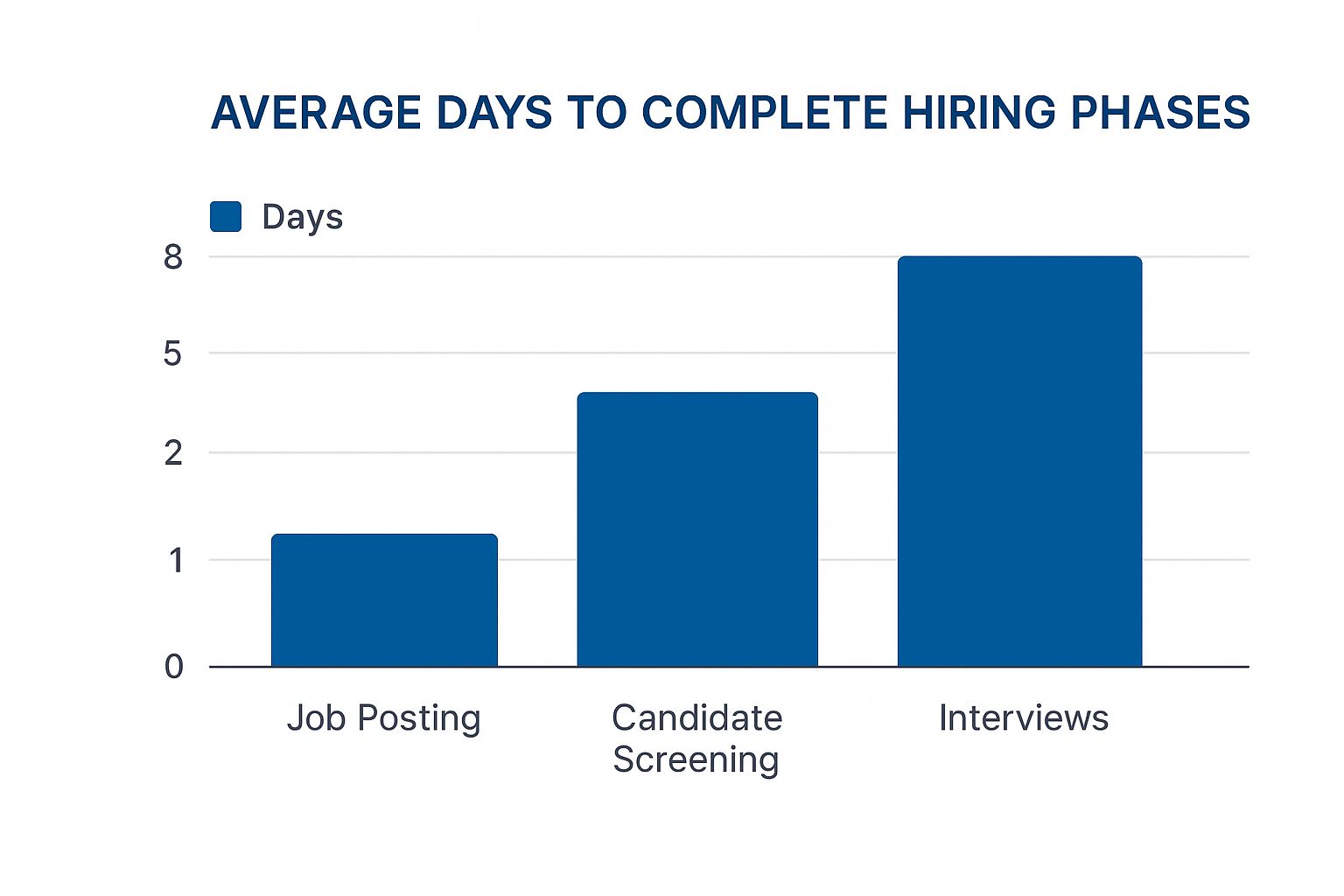
As the infographic reveals, interviews often constitute the lengthiest phase, emphasizing the need for streamlined scheduling and well-structured interviews.
To further understand industry-specific hiring trends, let’s examine the following table:
Hiring Intent by Industry Sector
Comparative analysis of hiring trends across different sectors showing priority areas for recruitment focus
| Industry Sector | Hiring Intent % | Experience Preference | Key Focus Areas |
|---|---|---|---|
| Information Technology | 35% | Mid-Level, Senior Level | Cybersecurity, Data Science, Cloud Computing |
| Manufacturing | 25% | Entry-Level, Mid-Level | Automation, Supply Chain Management |
| Healthcare | 30% | Mid-Level, Senior Level | Specialized Medical Professionals, Nurses |
| Financial Services | 28% | Mid-Level, Senior Level | Risk Management, Fintech |
| Retail | 22% | Entry-Level, Mid-Level | Customer Service, E-commerce |
This table provides a snapshot of hiring intent and priorities across various sectors, informing targeted recruitment strategies. The data highlights the demand for specialized skills in areas like technology and healthcare.
This data emphasizes the importance of a well-defined hiring process checklist to optimize each phase, from initial job posting to final offer. This systematic approach allows for continuous improvement and ultimately contributes to a more effective and strategic hiring foundation.
Getting Job Requirements Right From The Start

A strong hiring process checklist depends heavily on clearly defined job requirements. This is often where hiring processes stumble. The mismatch between a role’s actual needs and what looks impressive on a job description can cause problems. Leading HR teams in India recognize this crucial difference. They actively collaborate with hiring managers to clarify expectations.
For example, these teams might conduct in-depth job analyses. The goal? To pinpoint the skills and experience that genuinely predict success in a role. This often involves using established templates for stakeholder alignment sessions. This ensures that everyone involved in the hiring process is on the same page from the very beginning.
Defining Must-Haves vs. Nice-to-Haves
Distinguishing between must-have qualifications and nice-to-have skills is also essential. This practice streamlines the applicant pool. It prevents potentially qualified candidates from being overlooked simply because they lack a “nice-to-have” skill.
A clear understanding of essential requirements also helps determine a realistic compensation range. This attracts the right talent while respecting budget constraints. This strategic approach avoids costly mis-hires. It provides crucial clarity for everyone involved in the hiring process.
This is especially important in the dynamic Indian job market. The demand for specific experience levels is constantly shifting. A recent survey revealed that candidates with 1 to 5 years of experience make up 47 percent of new hires. Meanwhile, freshers represent only 14 percent. Explore this topic further.
Building a Performance-Based Job Description
Once the essential requirements are identified, HR teams can create a performance-based job description. This type of job description emphasizes the outcomes expected in the role. It goes beyond simply listing daily tasks.
This approach attracts candidates who are results-oriented. It helps them clearly understand the role’s impact on the organization. A well-crafted job description should also outline the company culture and values. This attracts candidates who are not only skilled but also a good cultural fit. This further reduces the risk of mis-hires and leads to a more effective recruitment process.
Modern Sourcing Strategies That Actually Work
Forget passively posting jobs and crossing your fingers. Today’s top HR teams are proactively building talent pipelines. They’re using sourcing strategies that go beyond traditional job boards. This means understanding where top talent hangs out and engaging them directly. These modern strategies are essential for navigating the competitive Indian recruitment landscape. This is especially true given the projected growth in job opportunities. The Indian recruitment landscape in 2025 is projected to have over 500,000 new jobs. Leading sectors are expected to see a 19 percent increase in hiring intent compared to 2024. Find more detailed statistics here.
Leveraging Social Media and Networking
Social media platforms like LinkedIn and even niche industry forums are strong tools for sourcing candidates. HR teams can connect with both active and passive job seekers on these platforms. Attending industry events, both virtual and in-person, also allows for direct engagement with potential candidates.
This networking approach can lead to valuable connections and build a strong employer brand. It provides the opportunity to assess cultural fit and skillset in a more relaxed environment.
Building a Compelling Employer Brand
Attracting top talent takes more than just a competitive salary. A strong employer brand communicates your company culture, values, and what you offer employees. This might include showcasing employee testimonials, company achievements, and professional development opportunities.
A compelling employer brand attracts candidates who are not only qualified but also align with your company’s mission and vision. This alignment leads to higher employee engagement and retention over time.
Creating Effective Referral Programs
Referrals are a great source of quality candidates. A structured employee referral program encourages your current team to recommend qualified people in their networks. This taps into a pre-vetted talent pool and makes hiring faster.
Referrals often result in better cultural fit. They come recommended by someone already familiar with the company. Referral programs also often improve retention rates.
Measuring Sourcing Effectiveness
Tracking key metrics is important. Metrics like time-to-fill, source-of-hire, and cost-per-hire provide insights into which sourcing strategies are working. This data helps you fine-tune your efforts and put resources into the most successful channels.
By continuously analyzing and refining your sourcing strategies based on data, you can maintain a steady flow of high-quality candidates. This data-driven approach ensures you’re always adapting to the changing talent market and getting the best return on your investment.
Screening That Identifies Real Talent

Effective screening forms the foundation of a robust hiring process checklist. It’s all about efficiently identifying promising candidates while ensuring a positive experience for everyone involved. This requires a multi-stage approach, systematically narrowing the field without creating unnecessary hurdles. For more information on verifying employment history, check out this helpful resource: How to master employment verification.
Designing Effective Screening Questions
The first step is developing screening questions that uncover true qualifications and potential. These questions should explore a candidate’s experience, skills, and motivations, providing a clearer understanding of their suitability.
Instead of simply asking about years of experience, focus on specific accomplishments and problem-solving skills. This approach helps assess the quality of a candidate’s experience, not just the quantity.
Conducting Efficient Phone Screenings
Phone screenings provide an efficient method for refining your candidate pool. A well-structured phone screen quickly identifies potential issues and helps you focus on candidates who truly align with your needs.
This is particularly important given the anticipated growth in the Indian tech recruitment sector. By FY 2025, the sector is projected to see a 40 percent increase in fresh graduate hiring, with salaries up to 30 percent higher than industry standards, particularly within Global Capability Centers. Learn more about this trend here. This growth underscores the need for efficient screening to manage the anticipated influx of applications.
Implementing Skills Assessments That Matter
Beyond phone screenings, targeted skills assessments offer an objective way to evaluate a candidate’s abilities. These assessments could include aptitude tests, coding challenges, or simulations tailored to the specific role. The aim is to move beyond the resume and assess real-world skills.
After defining your hiring needs, it’s crucial to proactively source candidates. Consider strategies to recruit affiliates and attract top-tier talent.
Best Practices for Resume Evaluation and Reference Checking
Evaluating resumes requires careful attention, focusing on tangible accomplishments and relevant experience rather than just keywords. Thorough reference checks are also essential. This involves not only confirming provided information but also asking strategic questions to gauge work habits and performance.
Structured Scoring for Objective Evaluations
Finally, implementing a structured scoring system minimizes unconscious bias and promotes consistent evaluation across the hiring team. A well-defined scoring system ensures objectivity and avoids subjective judgments. This data also provides valuable insights for continuously refining your hiring process checklist.
The following table summarizes various assessment methods and their suitability for different roles.
Assessment Methods by Role Type
Comparison of different assessment techniques and their effectiveness for various position levels and functions
| Assessment Type | Best For | Time Required | Effectiveness Rating | Implementation Cost |
|---|---|---|---|---|
| Screening Questions | Initial Candidate Filtering | Low | Medium | Low |
| Phone Screenings | Narrowing Down Candidates | Low | Medium-High | Low |
| Skills Assessments | Evaluating Technical Abilities | Medium | High | Medium |
| Resume Evaluation | Assessing Experience and Qualifications | Medium | Medium | Low |
| Reference Checks | Validating Information and Gathering Insights | High | High | Medium |
This table illustrates how different assessment methods can be combined for a comprehensive evaluation process. While some methods are quick and cost-effective for initial screening, others, like reference checks, offer valuable insights but require more time and resources. Using a combination of these methods, tailored to the specific role, leads to more informed hiring decisions.
Interview Excellence That Predicts Success
The interview stage of your hiring process checklist is crucial. It goes beyond simply screening candidates. It’s about using structured evaluation to predict their potential for success. Think of it like constructing a bridge. Careful planning and assessment of each component are essential for stability. Similarly, structured interviews ensure you evaluate candidates based on job-relevant criteria.
Behavioral Interview Frameworks: Unveiling True Potential
Effective HR professionals go beyond gut feelings. They use behavioral interview frameworks to assess both technical skills and cultural fit. These frameworks employ targeted questions to understand a candidate’s past behavior. For instance, instead of asking “Are you a team player?”, try asking, “Tell me about a time you navigated a challenging team dynamic. What approach did you take?”. This encourages candidates to share specific examples, offering insights into their actual work style. You might be interested in: How to master education verification.
Designing Panel Interview Structures
Panel interviews, when well-structured, provide diverse perspectives. They harness the collective insights of multiple interviewers, mitigating individual biases. However, clear roles for each panelist are vital. Questions should align with the overall evaluation criteria. A panel interview is like a well-coordinated orchestra, each instrument playing a distinct part to create a harmonious whole. This coordinated approach offers a comprehensive view of a candidate’s abilities and potential fit.
Establishing Scoring Systems and Reducing Bias
A defined scoring system is fundamental for fair comparisons. It promotes objectivity and reduces interviewer bias. Much like standardized tests offer fair student evaluations, structured scoring systems in interviews ensure objective candidate assessments. All candidates are evaluated using the same criteria. Depending on the role’s complexity, this system can range from a simple rubric to a more complex weighted scoring approach.
Mastering Interview Preparation and Note-Taking
Thorough interview preparation is essential. This involves crafting targeted questions aligned with the role and anticipating follow-up questions. Just as you would prepare for a presentation, practice and anticipation are key for successful interviews. This preparation ensures you gather the necessary information for informed decisions. Effective note-taking during the interview is also crucial. Detailed notes capture key insights, enabling objective post-interview evaluations and providing a clear record of responses.
Post-Interview Evaluation: Reaching Team Consensus
The post-interview evaluation process solidifies the hiring team’s consensus. It typically involves discussing each candidate, reviewing notes, and comparing scores. This collaborative approach ensures the final decision is well-informed and reflects the team’s collective assessment. This promotes transparency and builds confidence in the hiring decision. Integrating this rigorous process into your hiring process checklist ensures decisions are based on evidence and team consensus. It transforms interviews from subjective conversations into valuable predictors of candidate success.
Securing Top Talent Through Strategic Closing

Even with a perfect sourcing and interview process, your hiring process checklist needs a strong closing strategy. This is how you secure the best candidates and lay the groundwork for a successful working relationship. This final stage demands careful planning and a proactive approach.
Comprehensive Reference Checking: Beyond the Basics
Reference checking should go beyond simply confirming employment dates. It’s a chance to gain valuable insights into a candidate’s work habits and performance. Ask pointed questions, such as, “Describe a time the candidate showed leadership” or “How did the candidate respond to constructive feedback?”.
These types of questions can reveal important information that a resume won’t tell you. This deeper look provides a more complete understanding of the candidate’s potential.
Structuring Competitive Job Offers
A competitive job offer balances the candidate’s expectations with the organization’s needs. This requires research into current market salaries for similar positions in India. A competitive offer isn’t just about salary.
Benefits, flexible work options, and professional development opportunities are also key parts of an attractive package. Think of it as creating a balanced meal where each element contributes to overall satisfaction.
Negotiation Strategies for Positive Outcomes
Negotiation is often a natural part of the closing process. Treat it as a collaborative discussion, not a competition. Be open about your budget limitations and listen carefully to the candidate’s priorities.
This open communication builds mutual respect, no matter the outcome. Even if your initial offer isn’t accepted, a positive relationship can open doors for future opportunities.
Background Verification and Legal Compliance
Thorough background checks confirm the accuracy of the information provided by the candidate. Complying with legal requirements, especially given India’s evolving employment laws, is essential.
Proper documentation throughout the process protects both the organization and the candidate. This careful approach prevents future problems and ensures a smooth onboarding process.
Pre-Boarding Activities: Engaging New Hires
Pre-boarding fills the time between offer acceptance and the first day of work. Engage new hires with welcome emails, introductory team calls, and access to company resources.
This engagement minimizes early turnover and sets a positive tone. Pre-boarding acts as a welcome mat, preparing the way for successful onboarding. A well-designed pre-boarding program reinforces the candidate’s decision to join your team.
It also paves the way for a smoother and more efficient onboarding process. By adding these strategic closing practices to your hiring process checklist, you can significantly improve your recruiting efforts. These techniques help secure top talent, reduce risks, and create a positive candidate experience.
Key Takeaways
This section summarizes the essential components of an effective hiring process checklist, offering a practical guide to achieving hiring success. These key insights are designed to be actionable and easily integrated into your existing HR practices.
Building a Strong Foundation
A successful hiring process begins with a solid foundation. Just as a building requires a stable base, your hiring strategies must align with your broader business objectives. This ensures your recruitment efforts directly support company goals. Data-driven decisions are also key. Tracking metrics like time-to-hire and cost-per-hire reveals areas for improvement and optimization.
Defining Job Requirements and Sourcing Effectively
Clearly defined job requirements are crucial. Like a precise recipe, a well-written job description attracts the right candidates. Think of it as providing a clear roadmap of the skills and experience needed. Equally important are modern sourcing strategies. Platforms like LinkedIn enable targeted outreach, while employee referral programs can yield high-quality candidates.
Screening, Interviewing, and Closing with Confidence
A multi-stage screening process helps efficiently identify top talent. This might involve skills assessments and structured interviews to evaluate both technical abilities and cultural fit. A structured interview process, like a conductor guiding an orchestra, ensures consistent and fair evaluation. The closing process should be strategic, offering competitive compensation and a positive candidate experience. This sets the stage for a successful onboarding.
Continuous Improvement and Troubleshooting
- Regularly review your hiring process checklist and adjust based on data and feedback. This keeps your process relevant and effective.
- Create a troubleshooting guide for common hiring challenges. This could include strategies for managing difficult salary negotiations or improving candidate retention rates.
- Invest in training for your hiring team, ensuring they are equipped with the latest best practices and industry knowledge.
By implementing these key takeaways, you can transform your hiring process into a consistently effective system for attracting and retaining top-tier talent.
Ready to optimize your hiring process and improve your recruitment results? SpringVerify offers comprehensive background verification services designed to empower businesses of all sizes to make informed hiring decisions quickly and confidently. Visit SpringVerify today to learn more and request a demo.


