

Table of Contents
Staying Ahead of the GDPR Game in 2026
This GDPR compliance checklist provides eight crucial steps to ensure your organization adheres to data protection regulations. By following these points, you’ll learn how to map your data, implement privacy notices, establish lawful processing bases, manage data subject requests, conduct DPIAs, strengthen data security, oversee third-party vendors, and prepare for data breaches. This checklist empowers your organization to build a robust data protection framework and minimize risks related to non-compliance. Staying GDPR compliant is not just a legal necessity; it builds trust with your customers.
1. Data Mapping and Inventory
Data Mapping and Inventory is a crucial first step in any GDPR compliance checklist. It’s a comprehensive process of identifying, documenting, and categorizing all personal data processed by your organization. This involves creating a record of what personal data is collected, where it’s stored, how it’s processed, who it’s shared with, and how long it’s retained. This methodical approach allows organizations in the IN region, and globally, to gain full visibility into their data processing activities, which is fundamental for meeting the requirements of the GDPR. This process is resource-intensive initially, but it lays the groundwork for long-term compliance and efficient data management.
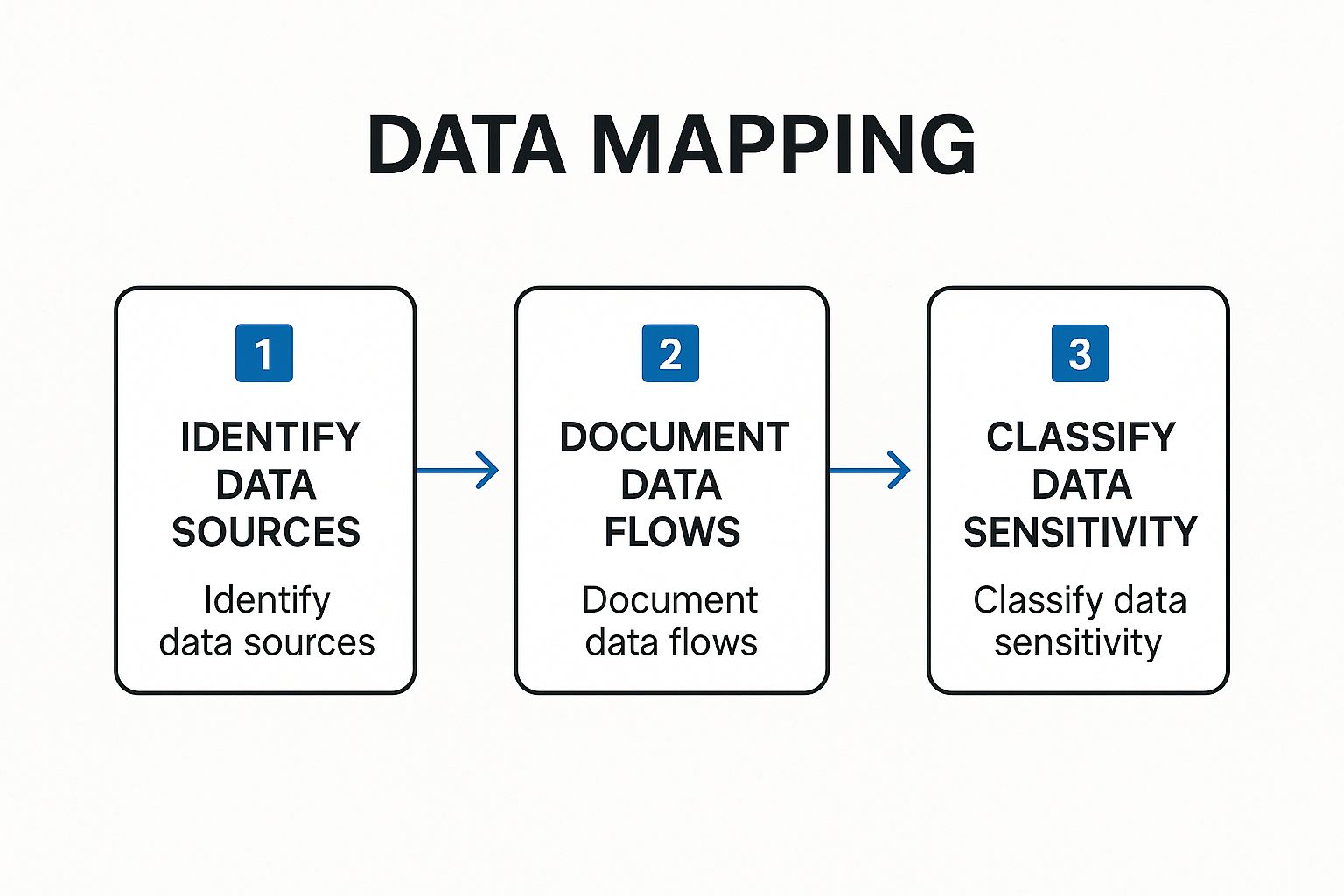
The infographic above illustrates the cyclical process of Data Mapping and Inventory. It highlights the key steps involved: Identifying data, mapping data flows, classifying data by sensitivity, determining the legal basis for processing, and implementing appropriate security measures. This cyclical nature emphasizes the need for continuous review and updates to ensure ongoing compliance as your business evolves.
This item deserves its place at the top of the GDPR compliance checklist because it addresses Article 30, which mandates maintaining Records of Processing Activities (ROPA). Without a clear understanding of your data landscape, complying with other GDPR principles like data minimization, purpose limitation, and storage limitation becomes incredibly challenging.
Features of a Robust Data Mapping and Inventory Process:
- Identification of all data processing activities: Pinpoint every instance where personal data is collected, used, stored, or shared.
- Documentation of data flows across systems and third parties: Track the journey of data within your organization and externally.
- Classification of data according to sensitivity: Categorize data based on its risk level (e.g., highly sensitive, low risk).
- Retention period tracking: Establish appropriate data retention periods and implement deletion or anonymization procedures.
- Legal basis documentation for each processing activity: Document the lawful basis for each processing activity (e.g., consent, contract, legal obligation).
Pros:
- Provides clear visibility into data processing activities.
- Facilitates compliance with Article 30 (Records of Processing Activities).
- Helps identify data protection risks and vulnerabilities.
- Supports data subject rights management (e.g., access, rectification, erasure).
Cons:
- Can be resource-intensive to create and maintain, especially for larger organizations.
- Requires regular updates as processing activities change.
- May require specialized tools for larger or more complex organizations.
Examples of Successful Implementation:
- Microsoft created comprehensive data maps for all their customer-facing products, showcasing their commitment to GDPR compliance.
- Airbnb developed a personal data inventory system that tracks data across its global platform, demonstrating how a large, complex organization can successfully manage data mapping and inventory.
Actionable Tips:
- Start with high-risk processing activities: Focus on areas where sensitive data is handled to prioritize efforts.
- Use data flow diagrams to visualize processing: This helps understand the complexities of data journeys.
- Consider automated discovery tools for large organizations: These tools can help automate the process of identifying and mapping data.
- Involve stakeholders from all departments: Collaboration ensures a comprehensive and accurate inventory.
- Review and update the inventory at least annually: Data processing activities change, so regular reviews are vital for ongoing accuracy.
By following these guidelines, organizations of all sizes, from startups to large enterprises in the IN region, can effectively establish a comprehensive Data Mapping and Inventory process, forming a solid foundation for GDPR compliance. This process is not merely a checklist item; it’s a dynamic, ongoing activity crucial for maintaining data protection standards and building trust with your customers.
2. Privacy Notice Implementation
A crucial aspect of GDPR compliance, and a key item on any GDPR compliance checklist, is the implementation of comprehensive and accessible privacy notices. These notices serve as the primary communication channel between your organization and data subjects (individuals whose data you process) regarding how their personal data is handled. This process involves creating and maintaining transparent, concise, and easily accessible privacy notices that inform data subjects about how their personal data is collected, processed, and protected, in compliance with Articles 12-14 of the GDPR. Effective privacy notices are essential for building trust and demonstrating accountability.

A well-crafted privacy notice should clearly explain several key elements: the purposes for which data is collected, the legal basis for processing the data, a list of recipients with whom the data may be shared (including any international transfers), information on data subject rights (such as access, rectification, and erasure), the data retention period, and contact details for data protection inquiries. This transparency is fundamental to empowering individuals to understand and control their personal information.
Features of a compliant Privacy Notice:
- Clear explanation of data collection purposes: Why are you collecting this data? Be specific and transparent.
- Details on the legal basis for processing: Under which of the six lawful bases (e.g., consent, contract, legal obligation) are you processing the data?
- Listing of data recipients and transfers: Who will have access to the data, including any third-party processors or international data transfers? For IN region businesses, this is particularly important given the cross-border nature of many operations.
- Information on data subject rights: Clearly outline the rights individuals have under GDPR, including the right to access, rectify, erase, restrict processing, object to processing, and data portability.
- Retention period information: How long will you keep the data? Specify the retention period and criteria.
- Contact details for data protection inquiries: Provide a clear point of contact for individuals to ask questions or raise concerns about their data.
Pros:
- Builds trust with customers and users: Transparency builds confidence in your organization’s data handling practices.
- Fulfills legal transparency requirements: Compliance with Articles 12-14 of the GDPR is mandatory.
- Reduces risk of complaints and enforcement actions: Proactive transparency mitigates the likelihood of regulatory scrutiny.
- Creates organizational awareness about data use: Developing privacy notices encourages internal awareness and adherence to data protection principles.
Cons:
- Challenging to keep updated with changing practices: Regular reviews and updates are essential to reflect evolving data processing activities.
- Difficult to balance legal completeness with readability: Presenting complex legal information in a user-friendly manner can be challenging.
- Different notices may be needed for different services or user groups: A one-size-fits-all approach may not be suitable for all situations.
Examples of Successful Implementation:
- Spotify: Uses a layered privacy notice with user-friendly summaries and detailed explanations.
- BBC: Provides a privacy notice with clear categorization and visual elements.
Tips for Implementation:
- Use layered notices: Offer a concise summary and a more detailed version for those who require more information.
- Implement just-in-time notices: Provide concise and relevant information at the point of data collection.
- Use plain language and avoid legal jargon: Ensure the notice is accessible to everyone.
- Include a “last updated” date: Demonstrate ongoing maintenance and transparency.
- Test readability with actual users: Gather feedback to ensure the notice is clear and understandable.
- Create a process for regular review and updates: Regularly review and update your notices to reflect changes in your data processing activities.
This item deserves a prominent place on any GDPR compliance checklist because it directly addresses the core principle of transparency and empowers data subjects. For startups, SMEs, and large enterprises alike in the IN region, adhering to these principles is not only legally required but also vital for fostering trust with customers and maintaining a positive reputation. By following the tips outlined above, organizations can effectively implement privacy notices that meet the requirements of the GDPR and build stronger relationships with their users. While no specific websites for these resources are linked here, the UK Information Commissioner’s Office (ICO), the European Data Protection Board (EDPB), and the Future of Privacy Forum are valuable resources for further information.
3. Lawful Basis for Processing
A crucial aspect of GDPR compliance, and a vital item on your GDPR compliance checklist, is establishing a lawful basis for processing personal data. Article 6 of the GDPR mandates that organizations identify and document the legal grounds justifying their data processing activities. Without a valid lawful basis, any processing of personal data is unlawful. This is particularly relevant for businesses operating in the IN region, as non-compliance can lead to significant penalties.
This means you must have at least one lawful basis for every instance of data processing, from collecting email addresses for a newsletter to storing employee records. Furthermore, processing special category data (e.g., health, biometric, or religious information) necessitates meeting additional conditions under Article 9 of the GDPR.
How it Works:
The GDPR outlines six lawful bases for processing:
- Consent: The individual has freely given specific, informed, and unambiguous consent to the processing of their personal data for a particular purpose.
- Contract: The processing is necessary for the performance of a contract to which the data subject is party or in order to take steps at the request of the data subject prior to entering into a contract.
- Legal Obligation: The processing is necessary for compliance with a legal obligation to which the controller is subject.
- Vital Interests: The processing is necessary to protect the vital interests of the data subject or of another natural person.
- Public Task: The processing is necessary for the performance of a task carried out in the public interest or in the exercise of official authority vested in the controller.
- Legitimate Interests: The processing is necessary for the purposes of the legitimate interests pursued by the controller or by a third party, except where such interests are overridden by the interests or fundamental rights and freedoms of the data subject which require protection of personal data, in particular where the data subject is a child.
Features:
- Six available lawful bases to choose from.
- Requires documenting the rationale behind the chosen legal basis for each processing activity.
- Special considerations and conditions apply for sensitive data (Article 9).
- Requires periodic reassessment of the chosen lawful basis, especially after business process changes.
Pros:
- Provides a clear legal justification for all data processing activities.
- Helps limit data processing to what is necessary and proportionate.
- Strengthens organizational data governance and accountability.
- Significantly reduces the risk of non-compliance penalties.
Cons:
- Requires ongoing assessment and review as business processes evolve.
- Managing consent, particularly withdrawals and changes, can be operationally complex.
- Relying on legitimate interests requires conducting and documenting balancing tests to ensure individual rights are not overridden.
- Interpretation and application of legal bases may vary by jurisdiction, even within the GDPR framework.
Examples of Successful Implementation:
- Unilever publishes Legitimate Interest Assessments (LIAs) to transparently document their reasoning for using legitimate interests as a basis for customer analytics.
- Mailchimp clearly separates data processing purposes, using contract as the lawful basis for service provision and consent for marketing communications.
Actionable Tips for GDPR Compliance Checklist Item #3:
- Don’t default to consent: Explore whether another lawful basis is more appropriate before relying on consent.
- Document everything: Maintain thorough records of your decision-making process for selecting each legal basis.
- Implement robust consent management: Use systems that record when and how consent was obtained, and facilitate easy withdrawal or modification of consent.
- Conduct and document legitimate interest assessments: Clearly demonstrate how you’ve balanced organizational interests against individual rights.
- Establish response processes: Develop procedures to address challenges to your chosen legal basis.
- Regularly review legal bases: Periodically reassess your chosen legal bases, particularly after business changes or new processing activities are introduced.
Why This Item Deserves Its Place in the List:
Establishing a lawful basis for processing is fundamental to GDPR compliance. Without a valid legal ground, any data processing is unlawful and exposes your organization to significant penalties. This step ensures data protection is embedded within your organization’s practices, fostering trust with customers and demonstrating a commitment to data privacy. This is essential for all businesses, from startups and SMEs to large enterprises, operating in the IN region. It is crucial for HR professionals handling employee data, companies prioritizing data security and compliance, and those seeking efficient and scalable solutions for data processing.
4. Data Subject Rights Procedures
This crucial element of GDPR compliance focuses on empowering individuals (data subjects) to exercise their rights regarding their personal data, as outlined in Articles 15-22 of the GDPR. These rights include:
- Access: The right to obtain confirmation that their data is being processed and to access that data.
- Rectification: The right to have inaccurate personal data corrected.
- Erasure (“Right to be Forgotten”): The right to have their personal data erased under certain circumstances.
- Restriction of Processing: The right to restrict the processing of their personal data under specific conditions.
- Data Portability: The right to receive their personal data in a structured, commonly used, and machine-readable format and to transmit that data to another controller.
- Objection: The right to object to the processing of their personal data, particularly for direct marketing purposes.
Establishing robust Data Subject Rights (DSR) procedures is essential for any organization handling personal data and forms a key component of any comprehensive GDPR compliance checklist. Organizations must respond to DSR requests within one month and generally cannot charge fees for fulfilling these requests.
How it Works:
Effective DSR procedures involve implementing clear, documented processes for handling each type of request. This includes:
- Standardized Procedures: Developing step-by-step workflows for each right request type ensures consistency and efficiency.
- Identity Verification Mechanisms: Securely verifying the identity of the requestor is critical to prevent unauthorized access to personal data. This could involve two-factor authentication, document verification, or other appropriate methods.
- Response Tracking and Timeframe Management: Tracking requests from receipt to completion helps ensure timely responses within the one-month deadline.
- Templates for Responses: Using pre-defined templates for acknowledging requests and providing responses ensures consistency and saves time.
- Coordination Processes Across Departments: DSR requests often involve multiple departments (e.g., IT, legal, marketing). Clear communication and coordination are crucial.
- Documentation of Decisions and Actions Taken: Maintaining a detailed audit trail of all requests, responses, and related actions demonstrates accountability and helps in case of audits or disputes.
Examples of Successful Implementation:
- Google’s Account Dashboard allows users to access and manage their personal data, including downloading a copy of their data or deleting their account.
- Microsoft provides a dedicated DSAR portal that automates request submission and tracking, facilitating efficient handling of DSR requests.
Tips for Implementation:
- Create a dedicated email address (e.g., [email protected]) or web form for DSR requests.
- Develop standardized workflows for each right type.
- Train customer service and other relevant staff to recognize and handle DSR requests.
- Implement appropriate identity verification protocols, balancing security with user experience.
- Document any exemptions or limitations that may apply to specific requests.
- Consider using automation tools, like those offered by OneTrust and TrustArc, for high-volume environments.
- Maintain a comprehensive audit trail of all requests and responses.
Pros and Cons:
Pros:
- Demonstrates accountability and respect for individual rights.
- Reduces the risk of complaints and regulatory actions.
- Streamlines the handling of requests through standardization.
- Builds trust with customers and employees.
Cons:
- Can be resource-intensive for complex or numerous requests.
- May require coordination across multiple systems and departments.
- Technical challenges can arise with data portability and erasure.
- Balancing verification requirements with accessibility can be difficult.
Why this Item Deserves its Place in the GDPR Compliance Checklist:
Data Subject Rights Procedures are fundamental to GDPR compliance. They ensure that individuals in the IN region can exercise their rights regarding their personal data, promoting transparency and accountability in data processing practices. Failing to adequately address DSRs can lead to significant fines and reputational damage. Therefore, this item is a non-negotiable part of any GDPR compliance strategy. Organizations prioritizing data security and compliance, especially startups, SMEs, and large enterprises, must incorporate robust DSR procedures into their operations. HR professionals seeking integration with existing systems will also find implementing these procedures vital for managing employee data efficiently and compliantly.
5. Data Protection Impact Assessments (DPIAs)
Data Protection Impact Assessments (DPIAs) are a crucial component of any GDPR compliance checklist. As mandated by Article 35 of the GDPR, DPIAs are a systematic process used to identify and minimize data protection risks associated with processing activities that are likely to result in a high risk to individuals. Essentially, they force organizations to think about privacy before implementing new technologies or changing how they handle personal data, rather than trying to fix problems after they arise. This proactive approach is essential for demonstrating accountability, a core principle of the GDPR.
How DPIAs Work:
A DPIA involves a structured approach to evaluating privacy risks. This includes:
- Systematic description of processing operations: Clearly documenting what data is being collected, how it’s being used, who has access to it, and where it’s being stored.
- Assessment of necessity and proportionality: Justifying why the data processing is necessary and demonstrating that the processing is proportionate to the intended purpose. Are you collecting more data than you need? Could you achieve the same objective with less intrusive methods?
- Risk assessment methodology: Identifying potential risks to individuals, such as unauthorized access, data breaches, or discriminatory practices.
- Measures to address identified risks: Developing and implementing mitigation measures to reduce or eliminate the identified risks, such as encryption, access controls, or anonymization techniques.
- Consultation with stakeholders: Engaging with relevant stakeholders, including IT, legal, business units, and potentially the data subjects themselves, to gain different perspectives and ensure comprehensive risk assessment.
- Documentation of decision-making: Maintaining a clear record of the DPIA process, including the identified risks, chosen mitigation measures, and justifications for decisions.
When to Conduct a DPIA:
While the GDPR doesn’t provide an exhaustive list, DPIAs are generally required when processing activities involve:
- New technologies, particularly those using innovative or untested methods.
- Large-scale processing of special categories of data (e.g., health, biometric, genetic data).
- Systematic monitoring of individuals (e.g., CCTV, location tracking).
- Profiling or automated decision-making with legal or significant effects on individuals.
The thresholds for when a DPIA is required can be complex, so it’s advisable to err on the side of caution. Learn more about Data Protection Impact Assessments (DPIAs) for detailed guidance.
Examples of DPIA Implementation:
- The UK’s National Health Service (NHS) conducted DPIAs for COVID-19 contact tracing apps to address concerns about location tracking and data security.
- Facebook’s assessment of facial recognition technology in Europe demonstrates the application of DPIAs to emerging technologies.
Pros and Cons of DPIAs:
Pros:
- Identifies and mitigates privacy risks early in project development, saving time and resources in the long run.
- Demonstrates accountability and compliance with the GDPR.
- Helps avoid costly redesigns after implementation.
- Creates awareness of privacy considerations across teams.
Cons:
- Can be time-consuming for complex processing activities.
- Requires expertise in both privacy and the relevant technology.
- May delay project timelines if not planned appropriately.
- Thresholds for when DPIAs are required can be unclear.
Tips for Effective DPIAs:
- Develop a DPIA threshold assessment questionnaire to help determine when a DPIA is required.
- Integrate DPIAs into project management workflows.
- Involve diverse stakeholders, including IT, legal, and business units.
- Create templates for different types of processing activities.
- Document mitigation measures and implementation plans.
- Review DPIAs periodically, especially after significant changes to processing activities.
- Consider consulting your Data Protection Authority (DPA) for high-risk processing.
Why DPIAs Deserve a Place on Your GDPR Compliance Checklist:
For organizations operating in the IN region, particularly startups, SMEs, and large enterprises handling personal data, DPIAs are not just a legal requirement; they are a valuable tool for building trust with customers, protecting your reputation, and avoiding hefty fines. By proactively addressing privacy risks, you demonstrate a commitment to data protection and build a stronger foundation for sustainable growth. This is especially important for businesses focusing on efficient hiring solutions, scalable background check processes, and data security compliance. DPIAs are vital for HR professionals seeking integration with existing systems while maintaining GDPR compliance.
6. Data Security Measures
Data security is a crucial aspect of GDPR compliance, impacting every organization that handles personal data of EU residents. Article 32 of the GDPR mandates the implementation of appropriate technical and organizational measures to ensure a level of security appropriate to the risk. This encompasses protecting personal data against unauthorized processing, accidental loss, destruction, or damage. This requirement makes data security a fundamental component of any GDPR compliance checklist and essential for building trust with customers and partners in the IN region and globally.

A robust data security posture under the GDPR necessitates a risk-based approach. This involves identifying potential threats and vulnerabilities, assessing the likelihood and impact of data breaches, and implementing proportionate security measures. Features of a robust data security framework include:
- Risk-based security approach: Analyzing specific threats and vulnerabilities to prioritize security efforts.
- Encryption and pseudonymization capabilities: Protecting data by making it unreadable without the decryption key or by replacing identifying information with pseudonyms.
- Access controls and authentication systems: Limiting access to personal data based on the principle of least privilege and using strong authentication methods like multi-factor authentication.
- Regular security testing and assessments: Conducting penetration testing, vulnerability scans, and security audits to identify and address weaknesses.
- Business continuity and disaster recovery planning: Ensuring the availability and integrity of personal data in the event of a disruption.
- Incident detection and response processes: Establishing procedures to detect, investigate, and respond to security incidents, including data breaches.
Implementing these measures offers significant advantages:
- Pros: Protects against data breaches and associated penalties, builds customer and partner trust, reduces the likelihood of security incidents, and supports overall data governance objectives.
However, maintaining a strong security posture also presents challenges:
- Cons: Requires ongoing investment and resources, security measures may impact system performance or user experience, constantly evolving threats require regular updates, and balancing security with usability can be challenging.
Examples of Successful Implementation: Salesforce’s implementation of end-to-end encryption for sensitive customer data demonstrates a commitment to data protection. Siemens’ comprehensive information security management system, certified to ISO 27001, showcases a holistic approach to security governance. These examples demonstrate the practical application of GDPR data security principles in large organizations, providing valuable benchmarks for startups and SMEs alike.
Actionable Tips for GDPR Compliance:
- Implement the principle of least privilege for access rights. Only authorized personnel should have access to personal data, and their access should be limited to what is necessary for their specific roles.
- Use multi-factor authentication for systems containing personal data to add an extra layer of security.
- Regularly test security controls through penetration testing and audits to identify vulnerabilities before they can be exploited.
- Train employees on security awareness and best practices to foster a culture of security within the organization.
- Document security measures and their implementation to demonstrate compliance with GDPR requirements.
- Develop data breach response procedures to manage security incidents effectively and minimize their impact.
- Consider security certification frameworks like ISO 27001 to guide your security program and demonstrate a commitment to best practices. Learn more about Data Security Measures
When and Why to Use This Approach:
Data security measures are not a one-time implementation but an ongoing process. The threat landscape is constantly evolving, so your security measures must adapt accordingly. Continuous monitoring, regular updates, and ongoing training are crucial for maintaining a robust security posture and ensuring ongoing GDPR compliance. This is especially relevant for businesses in the IN region experiencing rapid digital transformation and increased data processing. By prioritizing data security, organizations can minimize the risk of costly data breaches, build trust with their customers, and contribute to a safer online environment. Frameworks popularized by organizations like the European Union Agency for Cybersecurity (ENISA), International Organization for Standardization (ISO 27001), and the National Institute of Standards and Technology (NIST) offer valuable guidance in implementing effective data security measures.
7. Vendor and Third-Party Management
Vendor and third-party management is a crucial aspect of GDPR compliance, especially for organizations in the IN region. This checklist item focuses on ensuring that all third parties who process personal data on your behalf (known as processors) adhere to the strict requirements of the GDPR, specifically Articles 28-29. This deserves a prominent place in your GDPR compliance checklist because failing to manage vendor compliance can expose your organization to significant legal and reputational risks.
This process involves a multi-faceted approach that encompasses due diligence, contractual safeguards, and ongoing oversight of your vendors’ data processing activities. In essence, you’re extending your GDPR compliance obligations throughout your entire data processing ecosystem. This means you’re responsible for ensuring not just your own compliance, but also the compliance of any vendor handling personal data you’ve collected.
How it Works:
Vendor and third-party management for GDPR compliance begins with identifying all vendors that process personal data for your organization. This includes cloud storage providers, marketing automation platforms, payroll processors, and any other entity that accesses or handles personal data on your behalf.
Once identified, a thorough vendor privacy risk assessment is necessary. This involves evaluating the vendor’s security measures, data protection policies, and overall GDPR readiness. The next step involves establishing robust contractual safeguards through Data Processing Agreements (DPAs). These agreements, containing mandatory clauses as outlined in the GDPR, define the responsibilities and liabilities of both parties regarding data processing. Ongoing monitoring and auditing mechanisms are then implemented to ensure continued compliance.
Features of Effective Vendor Management:
- Vendor privacy risk assessment process: A structured process for evaluating the privacy and security practices of vendors.
- Data processing agreements with mandatory clauses: Legally binding contracts that outline data processing responsibilities and liabilities.
- Documented instructions for processors: Clear instructions on how personal data should be processed, including purpose limitations and security measures.
- Auditing and monitoring mechanisms: Regular audits and ongoing monitoring to ensure vendor compliance.
- Sub-processor management: Ensuring that any sub-processors engaged by your vendors also comply with GDPR.
- International data transfer safeguards: Implementing appropriate safeguards when transferring data to third countries outside the EEA.
Pros:
- Extends compliance throughout the data processing ecosystem, minimizing overall risk.
- Clarifies responsibilities and liabilities between your organization and the vendor.
- Provides legal recourse in case of processor non-compliance.
- Helps identify and mitigate third-party risks proactively.
Cons:
- Can be challenging with vendors with strong negotiating positions.
- Ongoing monitoring requires significant resources.
- Complex vendor ecosystems are difficult to map and manage.
- International transfers add additional compliance complexity.
Examples of Successful Implementation:
- Nestlé has implemented a global vendor assessment program to ensure privacy compliance across its supply chain.
- Vodafone has standardized its processor due diligence and contracting process for consistent GDPR compliance.
Actionable Tips:
- Develop a tiered approach based on data sensitivity and processing volume.
- Create standard data processing agreement templates to streamline the contracting process.
- Implement a vendor privacy assessment questionnaire to evaluate vendors consistently.
- Maintain a register of all data processors for easy tracking and management.
- Include audit rights in contracts and exercise them periodically.
- Establish clear procedures for processor data breach notification.
- Review and update agreements when processing activities change.
When and Why to Use this Approach:
This approach is essential for any organization that engages third-party vendors to process personal data, regardless of size or industry. This is particularly relevant for startups and SMEs looking for efficient hiring solutions, large enterprises needing scalable background check processes, HR professionals seeking integration with existing systems, and companies prioritizing data security and compliance. Ignoring vendor management can lead to hefty fines, reputational damage, and legal complications.
Learn more about Vendor and Third-Party Management This resource can provide additional insights and practical guidance on managing your third-party vendors in the context of background checks and other HR operations.
Popularized By:
The importance of vendor management for GDPR compliance has been highlighted by organizations like the International Association of Privacy Professionals (IAPP), the European Data Protection Board, and various procurement and vendor management associations.
8. Data Breach Response Plan
A robust Data Breach Response Plan is a critical component of any GDPR compliance checklist. This documented framework outlines the procedures your organization must follow to effectively detect, respond to, and report personal data breaches, as mandated by Articles 33-34 of the GDPR. Without a plan, your organization risks hefty fines, reputational damage, and legal complications in the event of a breach. This is especially important in the IN region, where data privacy regulations are becoming increasingly stringent.
Why is a Data Breach Response Plan Essential for GDPR Compliance?
The GDPR requires organizations to notify the supervisory authority within 72 hours of becoming aware of a breach that poses risks to individuals. In cases involving a high risk to the rights and freedoms of data subjects, affected individuals must also be informed. A well-defined plan enables you to meet these tight deadlines and demonstrate a commitment to data protection, mitigating potential penalties and maintaining trust with your customers.
Features of an Effective Data Breach Response Plan:
- Breach Detection and Investigation Procedures: This includes mechanisms for identifying and assessing suspected breaches, such as intrusion detection systems and regular security audits.
- Risk Assessment Methodology for Breaches: A defined process to evaluate the likelihood and severity of harm to individuals following a breach. This helps determine whether notification is required.
- Decision-Making Framework for Notification Requirements: Clear criteria and procedures for determining when and how to notify the supervisory authority and affected data subjects.
- 72-Hour Notification Process and Templates: Pre-prepared templates and communication channels to facilitate timely notification to authorities.
- Data Subject Communication Protocols: Guidelines for communicating with affected individuals in a clear and concise manner, explaining the nature of the breach and steps taken to mitigate the impact.
- Documentation and Evidence Preservation Guidelines: Procedures for documenting all aspects of the breach and preserving evidence for potential legal proceedings.
- Post-Incident Review Process: A framework for analyzing the breach, identifying vulnerabilities, and implementing improvements to prevent future incidents.
Pros:
- Enables timely compliance with GDPR notification obligations.
- Reduces potential penalties through proper handling of breaches.
- Minimizes reputational damage through effective communication.
- Improves organizational response capabilities over time.
Cons:
- The 72-hour notification window can be challenging to meet.
- Conducting a risk assessment under pressure can be difficult.
- Cross-border breaches may involve multiple supervisory authorities.
- Communication must balance transparency with security considerations.
Examples of Data Breach Responses:
- British Airways (2018): While criticized for some aspects of their handling, BA promptly notified authorities and affected customers of a data breach, offering support and compensation.
- Marriott (2018): Marriott’s response to the Starwood reservation database breach highlighted the complexities of dealing with large-scale breaches and the importance of thorough investigations.
Actionable Tips for Developing Your Plan:
- Form a Cross-Functional Incident Response Team: Designate specific roles and responsibilities for different team members, including legal, IT, PR, and management.
- Create Breach Notification Templates in Advance: Prepare templates for notifying authorities and data subjects, ensuring consistency and efficiency.
- Conduct Regular Tabletop Exercises: Test your response plan through simulated breach scenarios to identify weaknesses and improve preparedness.
- Establish Relationships with Relevant Supervisory Authorities: Build communication channels with relevant data protection authorities in the IN region.
- Document All Breaches: Maintain records of all security incidents, even those not requiring notification, to identify trends and vulnerabilities.
- Develop Clear Criteria for Assessing Risk to Individuals: Define specific criteria for determining the level of risk posed by a breach, aiding decision-making.
- Include Data Processors in Breach Response Planning: If your organization uses data processors, ensure they are integrated into your breach response plan.
- Review Insurance Coverage for Data Breach Scenarios: Ensure your insurance policies adequately cover the costs associated with data breaches, including legal fees and compensation.
By proactively developing and implementing a comprehensive Data Breach Response Plan, your organization can demonstrate its commitment to GDPR compliance, mitigate potential risks, and protect the personal data of its customers in the IN region. This plan is not merely a checkbox on a compliance list; it’s a vital tool for navigating the complex landscape of data security and maintaining trust in today’s digital age.
GDPR Compliance Checklist Comparison
| Checklist Item | Implementation Complexity | Resource Requirements | Expected Outcomes | Ideal Use Cases | Key Advantages |
|---|---|---|---|---|---|
| Data Mapping and Inventory | Medium to High – requires ongoing updates and specialized tools for large orgs | Medium to High – cross-departmental involvement and possible tooling | Improved data visibility and risk identification | Organizations seeking comprehensive data control and compliance | Facilitates compliance & risk management |
| Privacy Notice Implementation | Low to Medium – balancing completeness and readability can be challenging | Low to Medium – content creation and user testing | Enhanced transparency and user trust | Services with direct user data collection | Builds trust and fulfills legal transparency |
| Lawful Basis for Processing | Medium – requires ongoing legal review and consent management | Medium – legal expertise and operational consent systems | Clear legal justification, reduced compliance risk | Any organization processing personal data | Strengthens data governance and legal compliance |
| Data Subject Rights Procedures | Medium to High – coordination across systems and departments needed | Medium to High – staff training, automation tools, and workflow setups | Demonstrated accountability and efficient request handling | Environments with frequent DSARs (Data Subject Access Requests) | Builds trust and reduces regulatory complaints |
| Data Protection Impact Assessments (DPIAs) | High – requires expertise and integration with project management | Medium to High – stakeholder involvement and privacy risk assessments | Early risk mitigation and project compliance | Projects with high-risk data processing or new technologies | Prevents costly redesigns, demonstrates accountability |
| Data Security Measures | High – ongoing updates and implementation of technical controls | High – investment in tools, training, testing | Reduced breaches and stronger data protection | Any organization holding sensitive personal data | Protects data, builds customer confidence |
| Vendor and Third-Party Management | Medium to High – continuous monitoring and complex contract management | Medium to High – due diligence, audits, legal support | Expanded compliance through third parties | Organizations with extensive third-party data processors | Clarifies responsibilities and mitigates external risks |
| Data Breach Response Plan | Medium – requires preparation and coordination under time pressure | Medium – incident response team, training, communication tools | Timely breach notification and minimized reputational damage | All organizations needing rapid response to data breaches | Reduces penalties and improves response effectiveness |
Level Up Your Data Protection with SpringVerify
Navigating the complexities of GDPR compliance can feel overwhelming, but breaking it down into key areas like data mapping, privacy notices, lawful processing, data subject rights, DPIAs, data security, vendor management, and breach response makes the process manageable. Mastering these elements isn’t just about checking boxes on a GDPR compliance checklist; it’s about building a culture of data protection that fosters trust with your customers and safeguards your business. This proactive approach minimizes the risk of hefty fines and reputational damage, allowing you to focus on growth and innovation. Centralizing information about your GDPR compliance processes can streamline operations and ensure everyone on your team is on the same page. Consider using a dedicated platform for this purpose, such as knowledge base software highlighted in FlowGent AI’s review of top solutions for 2025.
Successfully implementing these strategies empowers your organization to handle data responsibly and ethically, demonstrating your commitment to data privacy in the IN region. This not only strengthens your brand reputation but also lays the groundwork for sustainable business practices in an increasingly data-driven world.
Ready to simplify your GDPR compliance journey and strengthen your data protection efforts? SpringVerify provides secure and compliant background verification services that align perfectly with your GDPR checklist requirements. Visit SpringVerify to discover how we can help you build a robust data protection framework and ensure peace of mind.


