

Table of Contents
Mastering Employment Background Verification Fundamentals
Employment background verification in India is no longer optional, but a critical part of hiring. It protects organizations from the risks of negligent hiring and helps create a secure work environment. This process goes beyond simply confirming a resume. It offers a complete view of a candidate’s history, enabling companies to build teams of qualified and trustworthy individuals.
Understanding the Core Components of Effective Verification
Effective employment background verification involves several key components:
- Identity Verification: Confirms the candidate’s true identity to prevent identity theft and fraud.
- Education Verification: Ensures claimed qualifications are genuine, protecting against discrepancies.
- Employment History Verification: Validates past work experience, providing insight into a candidate’s performance and career path.
- Address Verification: Helps establish residential stability and confirm location.
Together, these checks create a comprehensive picture of the candidate.
Sector-Specific Verification Approaches in India
Different industries require specific verification strategies. The BFSI sector (Banking, Financial Services, and Insurance), for example, requires strict checks due to the sensitive nature of financial transactions and data. These checks often include credit checks, fraud checks, and thorough criminal record screenings. Healthcare organizations prioritize verifying medical licenses and certifications to maintain patient safety and regulatory compliance. The IT sector emphasizes checks related to data security clearances and intellectual property protection. Understanding these industry-specific nuances is essential for effective background verification.
In India, background verification is particularly vital in sectors like BFSI, where fraud risks are high. During the 2023-24 financial year, discrepancies in BFSI background checks reached 10.4%, an 18.1% increase from the previous year. These discrepancies included education verification at 9.1%, address verification at 6.4%, and a significant rise in criminal record check inconsistencies. Identity verification issues made up 73.4% of all reported inconsistencies, highlighting the need for robust screening procedures. For more detailed statistics, see this report: Background Check Discrepancies Surge in BFSI Sector. For more information on hiring practices generally, see the: Docuwriter AI Blog.
Navigating Verification Timelines and Expectations
Understanding verification timelines and managing expectations is crucial. Standard background checks in India can take a few days to a couple of weeks, depending on the complexity of the checks and responsiveness of previous employers and institutions. Employers should factor these timelines into their hiring process. Transparent and clear communication with candidates about the process and expected duration can significantly improve the candidate experience, contributing to a positive first impression of the organization.
Navigating the Legal Landscape of Verification Confidently

Understanding the legal side of employment background checks is essential for organizations operating in India. This goes beyond simply knowing the laws; it involves creating practical strategies to ensure you’re following them. Doing so builds trust with candidates and reduces potential legal risks. For a deeper dive into compliance, check out this helpful resource: How to master compliance.
Key Regulations Governing Background Checks in India
India’s legal framework prioritizes data privacy and candidate rights. The Information Technology Act, 2000, and related rules like the SPDI Rules of 2011, are particularly important. These rules define what constitutes sensitive personal data and dictate how organizations should collect, store, and use it.
For instance, gathering information like financial details or medical records requires explicit written consent from the candidate. This transparency protects individual privacy. These regulations significantly shape how background checks are conducted in India. The IT Act 2000, specifically the SPDI Rules of 2011, guides the collection and use of personal and sensitive data. These rules mandate prior written consent for collecting sensitive personal data, such as financial details, medical records, biometric data, and mental health information. This safeguards candidate privacy throughout the verification process. Want to learn more? Explore this detailed guide: Background Checks in India.
Maintaining Compliance While Respecting Candidate Rights
Finding the balance between thorough verification and respecting candidate rights can be a challenge. Organizations need clear data handling policies that comply with all regulations. Open communication with candidates throughout the process is also vital. This transparency builds trust and creates a positive candidate experience, even during sensitive background inquiries.
Practical Approaches to Handling Adverse Findings
When background checks uncover issues, careful handling is crucial. Organizations should have established procedures for addressing such findings fairly and legally. Candidates should always have the opportunity to respond to any discrepancies. Applying these procedures consistently prevents discrimination and strengthens your legal standing. Consistency in this process is as important as maintaining consistency in your interview process, ensuring fairness for all candidates.
Implementing Effective Compliance Frameworks
Building effective compliance frameworks is more than just a checklist exercise. It’s about integrating best practices into every step of your verification process. Here’s what that looks like:
- Developing comprehensive background check policies
- Providing thorough training for HR staff on laws and procedures
- Regularly auditing verification practices
- Staying up-to-date on legal and regulatory changes
These steps help build a strong, compliant background check program that protects both the organization and individual rights. This proactive approach establishes a solid foundation for ethical and legally sound hiring.
Transforming Verification Through Strategic Technology
Technology is reshaping employment background verification in India, moving beyond simple database searches. This shift is driven by the need for faster, more accurate, and more cost-effective solutions. The infographic below illustrates the typical steps involved in a modern, technology-driven verification process.
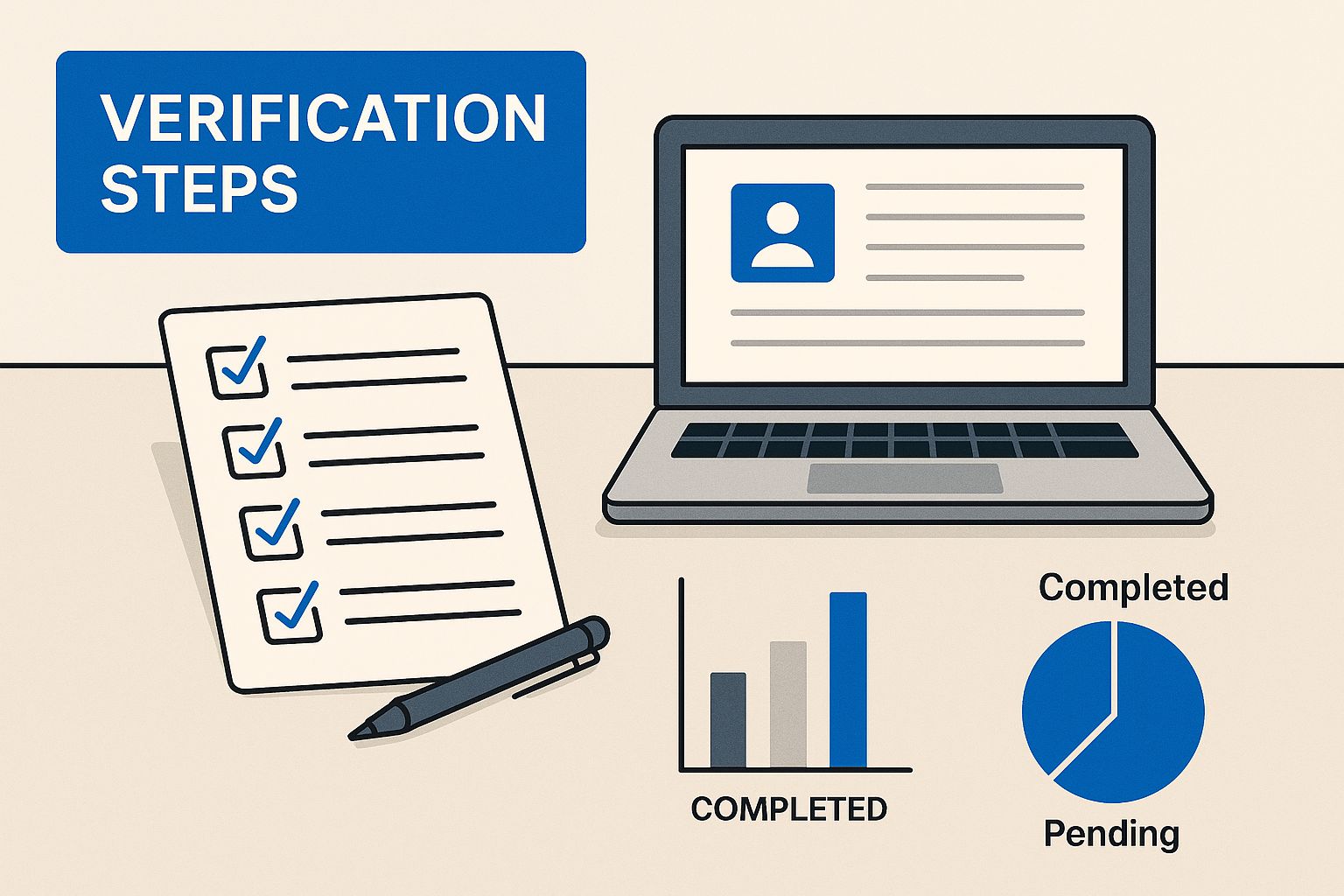
The image highlights how technology streamlines verification, integrating checklists, online forms, and automated processes. This integrated approach reduces manual effort and improves overall efficiency. Read also: Exploring technology’s impact on background verification.
The Rise of AI, Blockchain, and Automation
Artificial Intelligence (AI) and machine learning are automating time-consuming tasks like data entry and cross-referencing, minimizing human error. This automation significantly speeds up the verification process, enabling quicker hiring decisions. Furthermore, AI can analyze large datasets to identify patterns and anomalies that could indicate fraud.
Blockchain technology adds another layer of security and transparency to employment background verification. It creates tamper-proof records of verification data, increasing trust and accountability. Blockchain also simplifies data sharing between authorized parties, like employers and educational institutions, while maintaining data integrity.
To understand the key differences between traditional and technology-driven approaches, let’s look at a comparison:
Traditional vs. Technology-Driven Background Verification
This table compares conventional background verification methods with modern technology-enabled approaches across various parameters.
| Verification Parameter | Traditional Method | Technology-Driven Approach | Benefits of Technology |
|---|---|---|---|
| Data Collection | Manual forms, physical document submission | Online forms, digital document uploads | Reduced paperwork, faster processing |
| Verification Process | Phone calls, physical visits, manual checks | Automated checks, AI-powered analysis, database integration | Increased speed and accuracy, reduced manual effort |
| Data Security | Physical storage, prone to loss or damage | Secure digital storage, blockchain-based records | Enhanced data security, tamper-proof records |
| Turnaround Time | Weeks or months | Days or even hours | Significantly faster hiring decisions |
| Cost | High due to manual processes | Lower due to automation | Cost savings for businesses |
This table clearly shows the advantages of adopting a technology-driven approach. From faster turnaround times to increased security, the benefits are substantial.
This technological transformation is not just a trend; it’s becoming the standard. The background verification sector in India is rapidly embracing advanced technology. By 2025, an estimated 80% of Indian companies are projected to integrate solutions like AI and machine learning into their employment background verification processes. This shift is fueled by the need to manage diverse workforces, including white-collar, blue-collar, and gig workers, with verification strategies specific to their unique needs. Learn more about future trends in background verification.
Real-World Impact: Case Studies and ROI
Several companies in India have successfully implemented these technologies, demonstrating tangible benefits. Some organizations have reduced verification turnaround times by 50% or more, while also improving accuracy and reducing costs. This efficiency translates to significant ROI, freeing HR teams to focus on strategic initiatives.
Integrating Technology into Talent Acquisition Strategies
Companies are strategically integrating these tools into their broader talent acquisition strategies. This integration allows for a more seamless and efficient hiring process, improving the candidate experience and helping organizations make informed, timely hiring decisions. By using technology, companies can build stronger, more trustworthy teams, ultimately leading to improved business outcomes. This focus on robust verification cultivates a secure and productive work environment.
Crafting Industry-Specific Verification Strategies
Employment background verification isn’t a one-size-fits-all solution. Different industries in India have unique requirements and risk profiles, demanding specific verification strategies. What’s crucial for a financial institution might not be as important for a manufacturing company. Let’s explore how these needs differ across key sectors.
Tailoring Verification for Key Sectors
BFSI (Banking, Financial Services, and Insurance): This sector handles sensitive financial data and transactions, making it a prime target for fraud. Robust verification is essential. Crucial checks include credit history verification, fraud checks, and meticulous criminal record screenings. These specialized checks mitigate financial crime risks.
IT/ITES: Data security and intellectual property protection are paramount. Background checks should focus on validating data security clearances, verifying technical certifications, and potentially assessing past projects for compliance and ethical practices. This protects valuable company assets and ensures data integrity.
Healthcare: Patient safety and regulatory compliance are of utmost importance. Verification focuses on confirming medical licenses, checking disciplinary records, and verifying certifications. This rigorous process maintains high patient care standards and upholds medical ethics.
Manufacturing: This sector may prioritize verifying employment history, checking for criminal records related to theft or workplace violence, and confirming technical skills and qualifications. This focus helps maintain a safe and productive work environment.
Scaling Verification Intensity Across Job Levels
Verification intensity should also be based on job level and responsibilities. Basic checks may suffice for entry-level positions, but executive roles typically warrant more comprehensive screenings due to increased responsibility and access to sensitive information. This balances thoroughness with efficiency and cost-effectiveness.
For example, a cashier might only require basic identity and employment verification. However, a Chief Financial Officer (CFO) would need more rigorous checks, including credit history, criminal record screenings, and potentially international background checks if applicable.
Implementing Decision Matrices Based on Risk Profiles
Creating decision matrices helps determine the appropriate verification scope based on specific risk profiles and compliance requirements. These matrices offer a structured approach to decision-making, ensuring consistency and fairness. Clear criteria streamline the verification process and align strategies with overall risk management.
Consider this table example (adjust as needed):
| Job Level | Risk Level | Verification Scope |
|---|---|---|
| Entry-Level | Low | Basic identity and employment verification |
| Mid-Level | Medium | Criminal record check, address verification, education verification |
| Executive | High | Credit check, fraud check, international background check (if applicable), in-depth reference checks |
This framework tailors verification efforts to the specific risks of each role, ensuring effectiveness and efficiency in managing risk. By combining industry-specific checks with scaled verification intensity, organizations can build robust employment background verification programs. These proactive measures create a more secure and productive work environment.
Spotting Red Flags: Verification Discrepancies That Matter

Not all discrepancies found in background checks carry the same weight. Some are serious red flags, while others are simply minor inconsistencies. Understanding the difference is key for making smart hiring choices. This section explores the most important red flags HR professionals should watch for during employment background verification.
Identifying Significant Discrepancies
Seasoned HR professionals know which discrepancies are truly predictive of future issues. For example, a significant, unexplained gap in employment history is definitely cause for concern. Inconsistencies between a resume and the reported job titles or responsibilities also warrant further investigation.
A small difference in employment dates, however, might be easily clarified and isn’t necessarily a red flag. For more information on one type of verification, see How to master education verification.
Evaluating Verification Results Objectively
A practical framework for evaluating verification results is essential for objective decision-making. This framework should offer clear guidelines for handling different types of discrepancies. This allows HR teams to make consistent and fair decisions.
For instance, the framework could specify how to address discrepancies found in education verification, such as differences in degree names or graduation dates. This ensures a standardized approach across the board.
Intentional Misrepresentation vs. Honest Mistakes
Being able to tell the difference between intentional misrepresentation and an honest mistake is a key skill in background verification. Leading organizations have protocols in place to help make this determination. This protects the company while ensuring candidates are treated fairly.
A candidate who accidentally leaves off a short-term job is different from someone intentionally falsifying credentials. Recognizing this nuance is crucial for a just and effective process.
Decision Protocols for Common Scenarios
Having clear decision protocols for frequently encountered scenarios streamlines the verification process. This helps HR teams handle discrepancies efficiently and consistently. These protocols should outline the necessary steps, including who to contact for clarification and the required documentation. This systematic approach minimizes delays and keeps the process running smoothly.
Balancing Risk Management with Fair Candidate Treatment
Effective background verification balances risk management with fair candidate treatment. Clear guidelines for consistent decision-making are essential. This approach protects the organization while ensuring fair and ethical candidate evaluation.
By implementing these strategies, organizations create a robust and ethical background verification process that strengthens hiring decisions. This ultimately helps build a skilled and trustworthy workforce.
Let’s look at some common discrepancy types encountered in India:
The following table offers a statistical overview of common issues found during background checks in India, along with their potential risk level. This data highlights the importance of a thorough verification process.
| Verification Type | Discrepancy Rate | Common Issues | Risk Level |
|---|---|---|---|
| Employment Verification | 25% | Inaccurate job titles, inflated salaries, discrepancies in employment dates | Medium |
| Education Verification | 15% | Fake degrees, inflated grades, discrepancies in graduation dates | High |
| Address Verification | 10% | False addresses, temporary addresses not matching permanent ones | Low |
| Criminal Record Check | 5% | Undisclosed criminal records, pending cases | High |
| Reference Check | 20% | Unfavorable feedback, inability to contact references | Medium |
This table illustrates that discrepancies occur across various verification types, highlighting the need for careful scrutiny and established protocols. Understanding the typical discrepancy rates and associated risks allows HR teams to prioritize their efforts and allocate resources effectively.
Building a Verification Program That Actually Works
Creating a truly effective employment background verification program requires a practical, step-by-step approach. This section offers actionable advice to build a program that balances thoroughness, efficiency, and a positive candidate experience.
Selecting the Right Verification Partners
Choosing the right verification partner is a critical first step. Look for partners with a proven track record in the Indian market, especially those familiar with local regulations like the IT Act and SPDI Rules. Data security should be a top priority. A reliable partner can greatly improve both the speed and accuracy of your background checks.
Alternatively, some companies choose to develop in-house verification capabilities. This approach demands a substantial investment in resources, technology, and trained personnel. Weigh the advantages and disadvantages of each approach based on your company’s size, resources, and specific requirements.
Integrating Verification into Your Hiring Workflow
Successfully integrating background verification into your hiring process requires more than just adding a checklist item. Consider where verification fits best within your overall workflow.
For example, starting the verification process after successful interviews, but before extending a final offer, can prevent delays and create a smoother transition to onboarding. This strategic timing streamlines the hiring process.
Communicating Requirements to Candidates
Transparency and clear communication are essential. Explain the verification requirements to candidates upfront, including the process, the types of checks involved, and the estimated timeframe. Open communication fosters a positive candidate experience and demonstrates professionalism.
Reducing Turnaround Times Without Compromising Quality
Long turnaround times can significantly slow down the hiring process. Strategies like implementing technology-driven solutions, prioritizing essential checks, and maintaining open communication with your verification partners can help expedite the process without sacrificing accuracy.
Faster turnaround times enable you to make timely hiring decisions and secure top candidates quickly.
Managing Costs Effectively
Thorough background checks are important, but staying within budget is also critical. Explore various pricing models offered by providers, negotiate favorable terms, and use technology to automate processes and reduce manual work.
Careful cost management ensures you get the most out of your verification program.
Handling Special Cases: International Candidates
International candidates typically involve extra verification steps, such as verifying international education credentials and navigating varying legal frameworks. A verification provider with experience in international checks can simplify this process, preventing delays and ensuring compliance with global regulations.
Implementation Checklists, Timelines, and Continuous Improvement
Use implementation checklists to track progress and ensure you’ve addressed all the necessary steps. Set realistic timeline benchmarks for each phase of implementation. Finally, create a continuous improvement framework to regularly review and refine your program. Ongoing evaluation keeps your program effective and adaptable to changing needs.
A robust employment background verification program strengthens hiring decisions, mitigates risks, and elevates the overall quality of your workforce. This proactive approach contributes to a more secure and successful organization.
Ready to improve your hiring process with reliable and efficient background verification? Learn more about SpringVerify at SpringVerify and see how their services can help you make informed hiring decisions with confidence.


