

Table of Contents
Understanding India’s Employee Verification Process
Protecting your business and building a strong team goes hand-in-hand with a robust employee verification process. This isn’t simply a matter of checking off boxes; it’s about making well-informed hiring decisions that create a secure and successful workplace. Savvy Indian employers understand the importance of comprehensive verification and are increasingly incorporating it into their hiring strategies. This involves going beyond basic document checks and using advanced screening methods that provide thoroughness while ensuring a positive experience for candidates.
Why Verification Matters in India
In today’s competitive job market, verifying candidate information is more crucial than ever. It reduces risks associated with identity fraud, falsified credentials, and potential security breaches. A thorough employee verification process also helps maintain compliance with Indian regulatory requirements, fostering trust and transparency within the organization. This proactive approach protects your business and builds a more reliable and reputable workforce.
For example, imagine hiring for a sensitive financial role. Without the right verification procedures, you risk bringing on board someone with a history of financial misconduct. This could severely jeopardize your company’s reputation and financial well-being. Thorough background checks can prevent such situations. You might also find this helpful: How to master employment verification.
The Evolving Landscape of Employee Verification
Traditionally, employee verification involved manually reviewing documents and contacting references. This method is often time-consuming and prone to human error. The emergence of digital platforms like OnGrid has changed the game, offering faster, more accurate, and efficient solutions. These platforms automate many verification tasks, allowing HR teams to focus on strategic initiatives.
Several factors are driving this shift towards digital verification, including increasingly complex regulations, the need for faster hiring cycles, and the demand for improved security. The growth of remote work also requires strong online verification systems. The importance of employee verification in India has been highlighted by a significant increase in employment fraud. A 2023 EY survey revealed that approximately 10% of background checks in India uncovered discrepancies, with employment history being the most frequent source of inaccuracies. This underscores the need for robust verification procedures to ensure candidate honesty about their past roles and responsibilities. OnGrid, which offers over 150 different types of background checks, is becoming increasingly popular. These platforms provide a fast and accurate way to check candidate information, ensuring regulatory compliance and improving workplace security. Find out more about employee background verification in India.
Key Stages in the Employee Verification Process
A typical employee verification process in India involves several key stages:
- Pre-Employment Screening: This initial step verifies basic candidate information, such as identity, education, and employment history.
- Address Verification: Confirming a candidate’s current and permanent addresses helps establish their stability and authenticity.
- Criminal Background Checks: These checks are vital for workplace safety and minimizing potential risks related to criminal activity.
- Reference Checks: Contacting previous employers and references provides insights into the candidate’s work ethic, skills, and overall job performance.
- Ongoing Compliance Checks: Certain industries require ongoing monitoring and verification for continued compliance with regulatory standards.
These stages, while distinct, are interconnected and provide a complete picture of the candidate’s background and suitability for the position. This detailed approach ensures that organizations make informed hiring decisions, mitigating risks and maximizing the chances of success.
Essential Components That Actually Matter
Beyond the standard checklist, what truly bolsters your organization’s security and elevates the candidate experience during employee verification? This section delves into the crucial elements that industry leaders prioritize, specifically within the Indian context.
Identity Verification: Aadhaar, PAN, and Passport Authentication
Identity verification is the bedrock of a robust employee verification process. In India, this commonly involves authenticating documents like Aadhaar cards, PAN cards, and passports. The goal isn’t simply checking document validity; it’s confirming the candidate’s identity to mitigate the risk of identity fraud. Streamlining this process is essential for a positive candidate experience. Integrating with digital identity platforms, for example, can expedite verification, minimizing delays and boosting efficiency.
Educational Qualification Verification
Verifying educational credentials is critical, particularly in India’s competitive job market, where some candidates might exaggerate their qualifications. Efficiently confirming degrees, certifications, and professional licenses with Indian institutions is paramount. This necessitates direct communication with universities and professional bodies, often via secure digital platforms. This not only validates the authenticity of credentials but also ensures alignment between candidate-provided information and official records.
Employment History Verification: Validating Experience
Validating a candidate’s employment history goes beyond confirming dates of employment. It entails verifying previous roles, responsibilities, and reasons for leaving. This necessitates tactful communication with former employers to gather insights without jeopardizing candidate relationships. Prioritizing confidentiality and professionalism is key to obtaining accurate information while maintaining a positive candidate experience and protecting your organization from potential misrepresentations.
Employers in India increasingly rely on background verification to protect their businesses. A crucial aspect is verifying IDs like Aadhaar, PAN, and passports to prevent identity fraud. Verifying education and work history is also essential for identifying falsified credentials, a concern in India’s competitive job market. Criminal background checks are vital for workplace safety. Learn more about the importance of background verification while hiring in India.
Reference Checks: Gaining Valuable Insights
Reference checks offer valuable insights into a candidate’s work ethic, skills, and personality. Structuring these checks with targeted questions is essential for eliciting meaningful feedback. Going beyond generic inquiries and exploring specific examples of the candidate’s performance provides a more comprehensive understanding of their capabilities and suitability for the role.
Address Verification: Balancing Security and Privacy
Verifying a candidate’s address is crucial for confirming their location and stability. However, this must be done respectfully. Employing reliable methods that prioritize data security and comply with data privacy regulations is vital. This ensures that necessary information is gathered without compromising the candidate’s personal data.
Criminal Background Screening: Ensuring Workplace Safety
Criminal background screening is essential for workplace safety and risk mitigation. Adhering to Indian legal requirements and obtaining necessary consents is crucial. This protects your organization while respecting candidate rights. Understanding specific regulations governing background checks in India and ensuring ethical and transparent processes are key.
Implementation Timelines, Costs, and Quality Indicators
Each component of employee verification has specific timelines, costs, and quality indicators. Understanding these factors helps build a system tailored to your needs. For example, identity verification is typically faster and less expensive than educational verification, which might involve contacting multiple institutions. Defining clear quality indicators, such as accuracy and speed, helps assess the effectiveness of your verification system, ensuring a thorough, cost-effective, and efficient process. Aligning your verification system with industry requirements and budget ensures a smooth and effective process.
Navigating Legal Compliance Without The Headaches
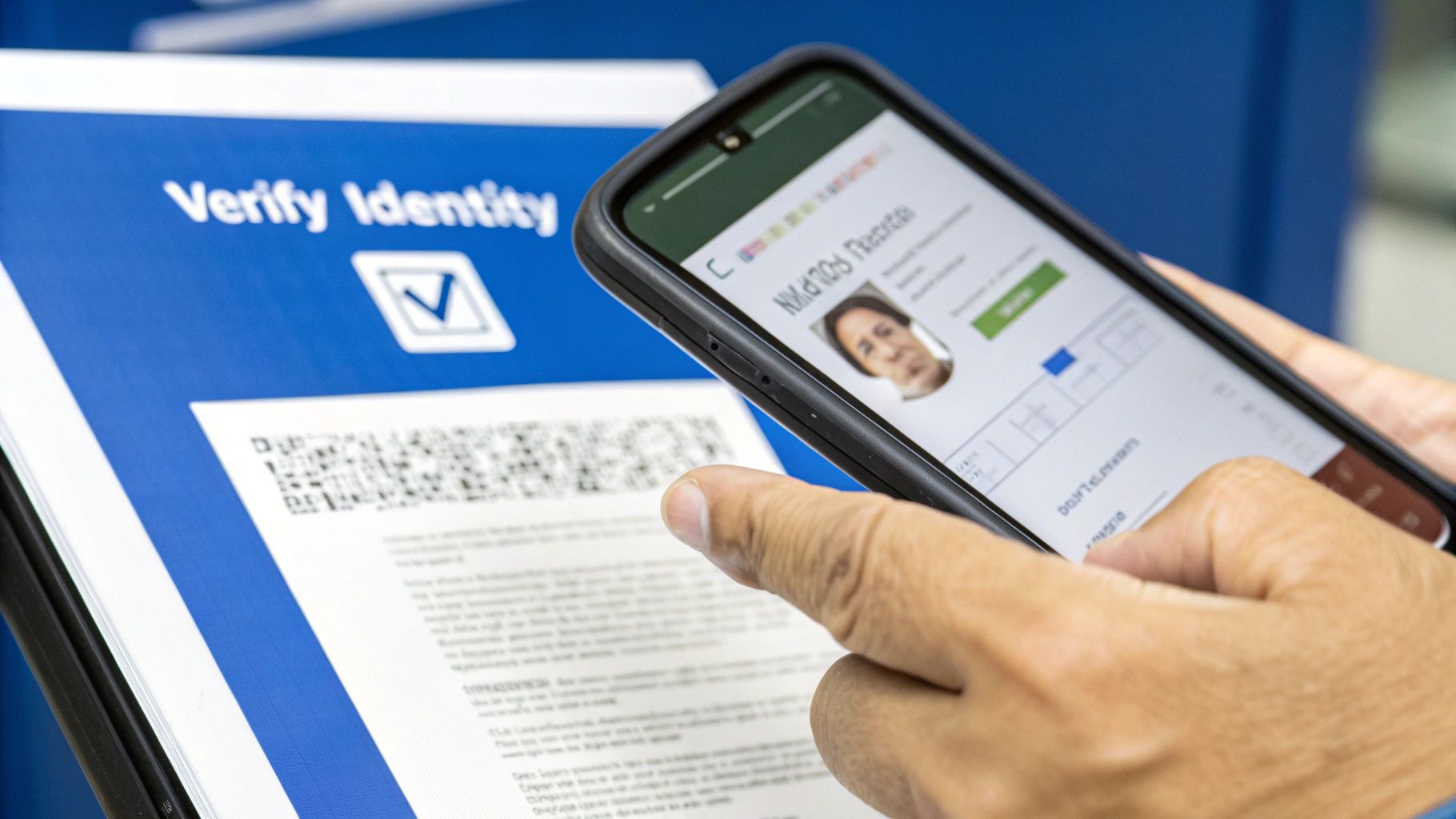
The Indian legal system regarding employee verification can appear daunting. However, it doesn’t have to be a constant burden. This section provides practical guidance on meeting legal requirements while streamlining your hiring process.
The Personal Data Protection Bill and Its Impact
The Personal Data Protection Bill significantly impacts background checks. This legislation balances candidate privacy with business needs. For example, employers must obtain explicit consent before conducting background checks.
The collected data must also be relevant to the job role and securely stored. These measures protect individual privacy while still allowing for effective screening.
Sector-Specific Compliance: A Closer Look
Compliance needs differ across industries. The banking, IT, and healthcare sectors face stringent rules due to the sensitive data they manage. Banking sector checks often involve verifying financial history and regulatory compliance.
IT companies may prioritize security clearances and intellectual property protection. Meanwhile, healthcare organizations focus on patient safety and ethical standards. Understanding these sector-specific nuances is essential for effective verification.
Documentation, Consent, and Record-Keeping
Proper documentation is vital for legal compliance. This includes obtaining signed consent forms, keeping detailed records of verification activities, and adhering to data retention policies.
This meticulous approach not only protects your company from legal issues but also builds trust and demonstrates ethical practices.
Read also: How to master compliance.
Candidate Rights and the Importance of Transparency
Candidates have rights throughout the verification process. They have the right to know what information is collected, how it’s used, and who can access it.
Transparency builds trust and enhances the candidate experience. Open communication about the process creates a positive impression of your organization.
Emerging Regulatory Trends and Adaptability
Regulations are constantly evolving. Staying informed about new trends and adapting your processes is crucial for ongoing compliance. This proactive approach enables you to adjust smoothly to new rules.
This flexibility is essential for navigating the changing legal landscape in India. By using these strategies, your employee verification process will be both legally sound and candidate-friendly, creating a more secure and productive work environment.
Technology Solutions That Actually Work
The employee verification process in India is evolving. It’s moving away from traditional manual checks and embracing technology-based solutions. This change helps employers verify candidate information with greater efficiency and accuracy.
AI-Powered Platforms and Document Fraud Detection
Artificial intelligence (AI) plays a crucial role in detecting document fraud, a rising concern in employee verification. AI-powered platforms use machine learning to examine documents, looking for inconsistencies and signs of manipulation.
For example, AI can identify discrepancies in font styles, image compression, or digital signatures, which may indicate fraudulent activity. This thorough analysis improves accuracy and protects businesses from risks.
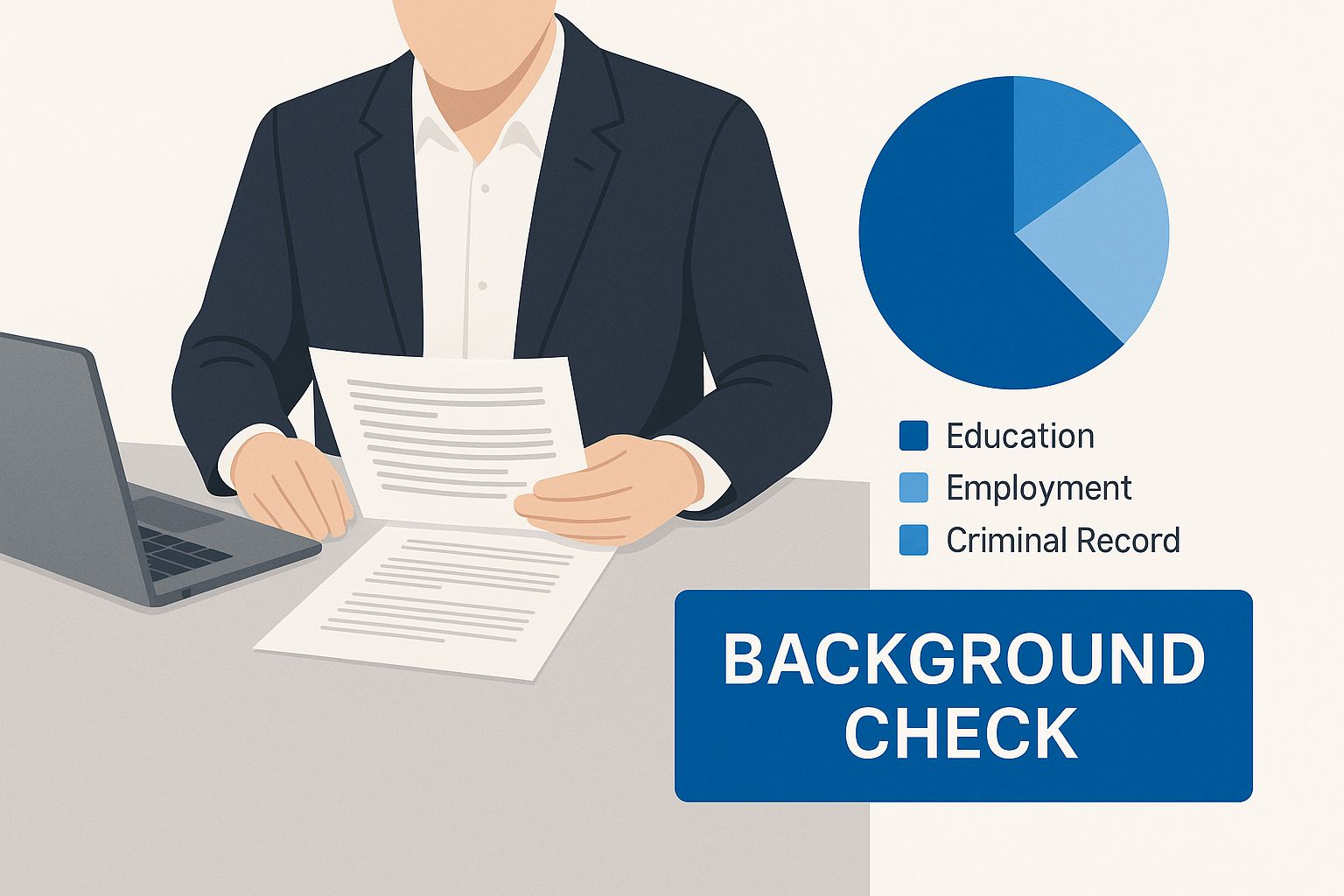
The infographic above illustrates the importance of background checks in hiring. It represents the shift from manual reviews to a more technology-focused approach, emphasizing the value of technology for reliable employee verification.
Automated Systems and HR Technology Integration
Automated systems improve the employee verification process by optimizing workflows and reducing manual work. These systems integrate with existing Human Resource Information Systems (HRIS) and Applicant Tracking Systems (ATS).
This integration triggers automatic background checks, removing the need for manual data entry and significantly cutting down processing time. Consequently, HR teams can concentrate on strategic tasks, boosting overall efficiency. Interested in learning more about integrations? Check out this resource: How to master API Integrations.
API Integrations and Real-Time Validation
Application Programming Interface (API) integrations connect verification platforms with key databases. These include government records, educational institutions, and previous employers. This connection allows for real-time validation of candidate information, ensuring accuracy and speed.
For example, educational degrees can be instantly verified with universities through APIs. This eliminates the delays associated with manual inquiries. Legal aspects of verification are also important. Be sure to consider legal requirements specific to your industry.
Mobile-First Solutions for India’s Smartphone Landscape
Given India’s high smartphone usage, mobile-first verification solutions are crucial. These solutions provide a convenient and user-friendly experience for candidates, allowing them to complete the process on their mobile devices.
Features like mobile document uploads and e-signatures simplify the process and improve candidate engagement. Mobile-first solutions cater to the Indian market’s unique needs, ensuring accessibility across diverse regions and demographics.
Emerging Technologies: Blockchain and Beyond
Emerging technologies, such as blockchain credential verification, hold great potential for the future of employee verification. Blockchain offers enhanced security and makes it difficult to alter records.
While widespread adoption is still developing, this technology can significantly enhance trust and transparency in verification. Staying informed about these advancements is vital for organizations seeking to improve their hiring processes. By adopting these technologies, businesses in India can create more secure and efficient hiring practices.
The following table provides a comparison of various employee verification technologies available in India. It highlights their features, processing times, and compliance capabilities.
Employee Verification Technology Comparison
| Technology Type | Verification Speed | Accuracy Rate | Compliance Features | Cost Range |
|---|---|---|---|---|
| Manual Verification | Slow (Weeks) | Moderate | Limited | Low |
| AI-Powered Platforms | Fast (Days) | High | Advanced Fraud Detection, Data Encryption | Moderate to High |
| Database Checks | Moderate (Days) | Moderate | Depends on Database | Moderate |
| API Integrations | Real-time | High | Secure Data Transfer, Audit Trails | Moderate |
| Blockchain Verification | Moderate (Days) | Very High | Immutable Records, Enhanced Security | High |
This table summarizes the key characteristics of different verification technologies, ranging from traditional manual methods to cutting-edge blockchain solutions. The information emphasizes the advantages of newer technologies in terms of speed, accuracy, and compliance.
Building Workflows That Scale With Your Growth
Creating a robust employee verification process is essential for any company, from small startups to large corporations. It requires careful planning to balance efficiency with a positive candidate experience. This section outlines practical steps to design verification workflows that achieve this balance.
Sequencing Verification Checks for Maximum Efficiency
Optimizing your workflow begins with strategic sequencing. Some checks, like identity verification using Aadhaar, can be initiated immediately after receiving an application. Others, like employment history verification, are best conducted after initial screenings.
Parallel processing can significantly reduce the overall verification timeline. For example, you can initiate educational qualification checks while address verification is underway. This saves valuable time and keeps the hiring process moving. However, some checks, like criminal background checks, may need to be sequential. Defining these dependencies upfront is crucial for an efficient workflow.
Setting Realistic Timelines
Each verification check has its own processing time. Digital identity verification can often be completed within hours. Educational verification, involving contact with universities, may take several days or weeks. Employment history verification, which includes contacting previous employers and processing references, can also take several days to a couple of weeks.
Factor these timelines into your overall process, setting realistic expectations for both hiring managers and candidates. Transparency in timelines helps manage candidate expectations and avoids unnecessary delays.
Managing Candidate Expectations
Regular communication is key to a positive candidate experience. Updates build trust and show respect for their time. Provide estimated timelines for each stage and send notifications when checks are completed. This keeps candidates engaged and reduces anxiety.
Clear instructions on required documents and access to the verification portal simplifies the process for candidates. Proactive communication improves their overall experience.
Escalation Procedures for Discrepancies
Even with careful planning, discrepancies can occur. A clear escalation procedure is essential. It should outline who to contact, what information to gather, and how to communicate with candidates about potential issues.
For example, if a candidate’s stated job title doesn’t match information received from their previous employer, an HR representative should follow a defined process. This includes contacting the candidate, reviewing documentation, and escalating to a senior manager if needed. A standardized approach ensures fair and consistent handling of discrepancies.
Quality Assurance and Continuous Improvement
Regular review and refinement of your verification workflow is vital. Establish quality assurance measures, like periodic audits, to identify areas for improvement. Gather feedback from candidates and hiring managers to pinpoint pain points and potential enhancements. This continuous improvement process ensures your employee verification process remains effective and adapts to your company’s growth and evolving hiring needs.
Handling Challenges And Red Flags Like A Pro

Even with the best-laid plans, employee verification in India can be tricky. This section helps you tackle these challenges head-on.
Common Verification Challenges in India
Several roadblocks can pop up during the process. Incomplete candidate documentation is a common hurdle. Tracking down previous employers can be difficult, especially if they’ve gone out of business or are simply unresponsive. Educational institutions can also be slow to respond or have outdated systems.
Another challenge arises with candidates who have gaps in their employment history. These gaps often have legitimate explanations, but verifying them requires careful investigation.
Identifying and Addressing Red Flags
Not all discrepancies are cause for alarm. It’s important to distinguish between genuine red flags and minor inconsistencies. A significant difference between a candidate’s stated and verified salary could be a major red flag. A slight variation in a job title, however, is usually less of a concern.
Minor inconsistencies can often be cleared up with a quick follow-up question to the candidate or a bit more verification. This gives candidates a chance to explain and showcases your commitment to fairness. Serious red flags, however, require a deeper dive and may impact the hiring decision.
Navigating Inconclusive Verification Results
Sometimes, despite your best efforts, verification results are inconclusive. This can be frustrating. Having a clear decision-making framework is key. This framework should outline how to handle incomplete or conflicting information.
It should also guide your next steps, whether that’s additional verification, consulting legal counsel, or making a hiring decision based on the available information. As your company grows, consider the impact on your workforce and potential hiring needs by exploring Career Opportunities.
Communicating with Candidates About Verification Concerns
Talking to candidates about verification concerns requires sensitivity and professionalism. Open communication is essential. Clearly explain any discrepancies and give candidates a chance to provide further documentation or clarification.
Having prepared scripts ensures your communication is both legally sound and respectful. For example, you could say, “We noticed a difference between the job title on your resume and the information provided by your previous employer. Could you please clarify this for us?” This protects your company while respecting the candidate.
Practical Protocols for Candidate Clarification
Give candidates a reasonable timeframe to address concerns. For instance, allowing a few business days to submit documents ensures fairness. Document all communication about verification issues. This creates a clear record and protects your company in case of disputes.
Balancing thoroughness with respect for the candidate is vital for ethical and legal hiring practices. This protects your organization while promoting fairness and transparency.
Maintaining Fair and Consistent Evaluation Standards
Develop clear standards for evaluating verification results. A rubric outlining how different discrepancies are weighted in hiring decisions is helpful. This rubric should be applied consistently to ensure fairness and objectivity.
Regular training for hiring managers on these standards also promotes consistency and reduces bias. This structured approach creates a more equitable and dependable employee verification process.
To help illustrate the balance between cost and risk mitigation in employee verification, the table below provides a helpful breakdown.
Verification Cost vs Risk Analysis: A breakdown of verification costs by check type and the associated risk mitigation value for Indian employers.
| Verification Type | Average Cost | Processing Time | Risk Level Mitigated | ROI Score |
|---|---|---|---|---|
| Identity Verification | ₹100-₹200 | 1-2 days | High (prevents identity fraud) | High |
| Criminal Background Check | ₹500-₹1000 | 3-5 days | Medium-High (protects against security risks) | Medium |
| Employment Verification | ₹300-₹500 | 2-4 days | Medium (ensures accurate work history) | Medium |
| Education Verification | ₹200-₹400 | 5-7 days | Low-Medium (confirms qualifications) | Low-Medium |
| Address Verification | ₹150-₹300 | 1-3 days | Low-Medium (confirms location) | Low-Medium |
This table demonstrates how different verification checks offer varying levels of risk mitigation at different costs. Employers should consider their specific needs and risk tolerance when deciding which checks to perform. Prioritizing high-ROI checks like identity verification can be a cost-effective way to significantly reduce risk.
Key Takeaways
Building a robust employee verification process is essential for any business in India. This section offers practical advice to help you develop a system that protects your company and attracts high-quality candidates.
Prioritize Verification Checks Based on Risk and Budget
Not all verification checks carry the same weight. Some, like identity verification, are fundamental and should be included in every process. Others, like criminal background checks, may be more applicable to certain roles or industries.
For startups with limited budgets, focusing on identity, education, and employment history verification provides a solid foundation. Larger companies with more resources can implement more comprehensive checks, such as address and criminal background verification. Adapt your approach based on your specific risk assessment and available funds.
Set Clear Benchmarks and Track Key Metrics
How can you tell if your verification process is effective? Establishing clear benchmarks and tracking key performance indicators is vital. Consider metrics like:
- Turnaround Time: What’s the average time to complete the entire verification process?
- Accuracy Rate: What percentage of verifications are finalized without discrepancies?
- Candidate Satisfaction: How would candidates rate their overall experience with the process?
Tracking these metrics helps pinpoint areas for improvement and ensures the process remains efficient and effective.
Identify Warning Signs and Implement Prompt Solutions
Even well-designed systems require periodic adjustments. Watch for warning signs that your verification process may need attention:
- Increased Discrepancies: A sudden rise in inconsistencies could indicate a problem with the process itself.
- Longer Turnaround Times: Unusually long processing times can frustrate candidates and create hiring delays.
- Negative Candidate Feedback: Pay close attention to any candidate complaints about the process.
Address these issues promptly with both short-term fixes and long-term improvements. This proactive approach prevents minor issues from escalating into major problems. For instance, if turnaround times are lengthening, consider automating parts of the process or increasing staffing for verification tasks. These adjustments will help you maintain a streamlined and effective process.
Learn From Others and Overcome Implementation Hurdles
Implementing a new process can be challenging. Learning from the successes and challenges of other Indian employers can offer valuable lessons. Networking with HR professionals and researching best practices provides practical guidance.
For example, many companies in India have successfully implemented digital verification platforms to improve speed and efficiency. Understanding their implementation strategies, including the obstacles they faced, can help you avoid common pitfalls.
Checklists for Companies of Different Sizes and Industries
To further simplify your implementation, consider these tailored checklists:
Startup Checklist:
- Identity Verification (Aadhaar, PAN)
- Education Verification
- Employment History Verification
SME Checklist:
- All items from Startup Checklist
- Address Verification
- Reference Checks
Enterprise Checklist:
- All items from SME Checklist
- Criminal Background Checks
- Ongoing Compliance Checks
By following these key takeaways, you can establish a robust employee verification process that benefits your business, protects your interests, and provides a positive experience for candidates. Ready to improve your employee verification process? SpringVerify offers reliable and comprehensive background verification services designed for growing companies in India. Streamline your hiring process with our automated solutions and ensure a smooth, secure, and efficient candidate screening process.


