

Employee lifecycle management is the strategic way of looking at an employee’s entire time with a company—from the moment they first hear about a job opening to their last day and even after they’ve left. It’s about seeing employment not as a series of separate HR tasks, but as one continuous, connected journey. This approach is key to creating a cohesive and positive experience at every single touchpoint.
Table of Contents
Understanding the Employee Journey
Think of employee lifecycle management (ELM) as crafting a unique story for every person on your team. This story has several chapters: attraction, recruitment, onboarding, development, retention, and finally, separation. Each chapter builds on the one before it. If you mess up one chapter—say, a clumsy onboarding process—it can throw off the whole narrative, leading to disengaged employees, poor morale, and gaps in your talent pool. But when you get it right, you create a workforce that’s resilient, committed, and performs at its best.
This structured approach transforms human resources from a reactive, administrative function into a proactive driver of the business. It’s all about aligning an individual’s career path with the company’s bigger goals, making sure every people-related decision helps the company succeed in the long run.
From Checklist to Strategy
Too many organisations still handle HR tasks in silos. The recruitment team worries about filling open positions, the onboarding team focuses on paperwork, and managers are left to deal with performance reviews on their own. This fragmented method almost always results in a disjointed and impersonal experience for the employee. ELM flips this model on its head by integrating every single stage.
The core idea behind employee lifecycle management is simple but incredibly powerful: A positive employee experience at one stage directly fuels success in the next. A great recruitment process, for instance, makes a new hire far more receptive and excited during their onboarding.
This infographic breaks down how a comprehensive recruitment strategy, a critical first step, should be structured.
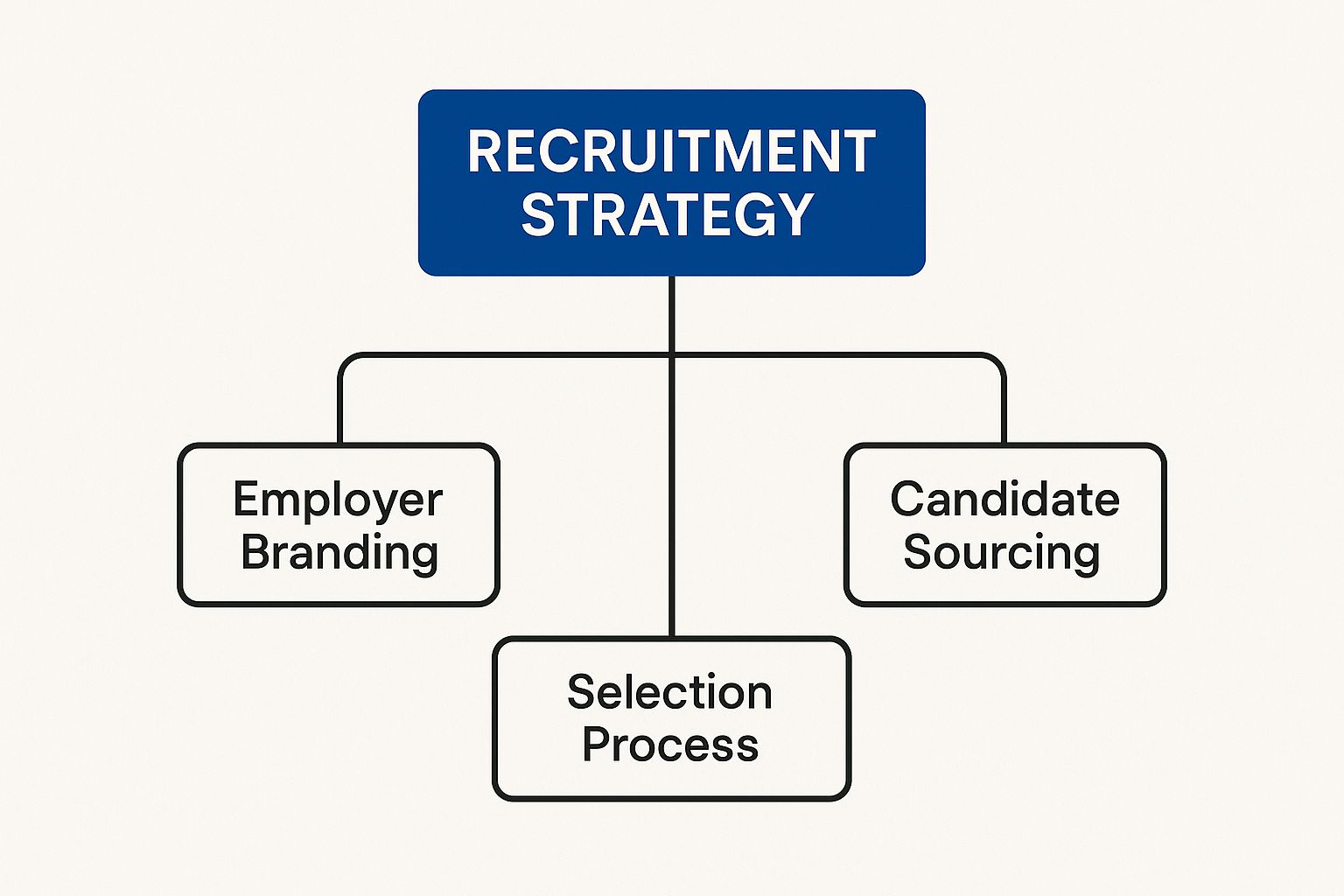
As the diagram shows, a successful hire doesn’t just happen at the interview. It starts much earlier, with building a strong employer brand. This holistic perspective is the foundation of effective employee lifecycle management.
Here in India, the evolution of ELM is being increasingly shaped by AI and data analytics, giving companies a 360-degree view of the employee journey. Modern HR systems now allow businesses to use real-time data to spot potential issues and introduce tailored solutions, moving beyond gut feelings to make smart, evidence-based decisions.
Attracting and Recruiting Top Talent

The journey of employee lifecycle management doesn’t start on a new hire’s first day. It actually begins much earlier, long before anyone even clicks “apply.” This first phase is all about building an employer brand so compelling that top candidates actively want to work with you. It’s your first impression, and you only get one shot to make it count.
A powerful employer brand isn’t built on buzzwords; it’s built on being genuine. It’s about being upfront and clear about your company’s mission, its core values, and the real, day-to-day culture. This goes way beyond a static careers page—think social media, real stories from your current team, and blog posts that show, not just tell, what you’re all about. When you’re authentic, the right people will naturally find their way to you.
Crafting a Compelling Candidate Experience
The recruitment process itself is your brand in action. Nothing turns off a great candidate faster than a clunky, confusing, or ridiculously long application. Every single touchpoint, from the job post to the final offer, needs to be designed with the person on the other end in mind.
Think of your job descriptions less like a list of demands and more like an invitation. Use clear, inclusive language that gets people excited about the impact they could make and the growth they could achieve. The goal is simple: make them feel thrilled about the possibility of joining your team.
A seamless recruitment process doesn’t just fill a role; it reinforces your company’s reputation as an organised, respectful, and desirable place to work. It’s a powerful signal that you value people’s time and effort from the very first interaction.
Integrating Trust from the Start
Building trust has to start from day one of the recruitment journey. This is precisely why bringing background verification into the process early on is so important. It’s not just a box-ticking exercise for compliance; it shows you’re serious about creating a safe, secure work environment for everyone.
Embedding a trusted service like SpringVerify into your hiring workflow ensures you’re making decisions based on solid information. This builds confidence on both sides of the table and sets a professional, respectful tone for the entire employment relationship. To dig deeper into refining this crucial function, you can explore detailed insights on modern talent acquisition strategies.
Optimising your recruitment is key to bringing the right people on board efficiently. For more hands-on advice, check out these practical tips on How to Improve the Recruitment Process. When you get the attraction and recruitment phase right, you’re not just hiring staff—you’re welcoming your company’s future leaders and champions.
Building Loyalty Through Strategic Onboarding

You’ve successfully recruited a top candidate, but the journey has just begun. The next stage is where you truly earn their long-term loyalty. This is where strategic onboarding comes in.
Onboarding is so much more than just handling paperwork and handing over a laptop. It’s the structured process of weaving a new employee into the company’s culture, its mission, and its day-to-day rhythm. Think of it as the crucial first chapter in an employee’s story with your company.
A brilliant onboarding experience makes new team members feel welcomed, prepared, and confident from day one. In contrast, a disorganised or impersonal process can create doubt and disengagement before they’ve even really started, completely undermining all your recruitment efforts.
The 30-60-90 Day Framework
To turn onboarding from a simple checklist into a genuine strategic advantage, many organisations lean on the 30-60-90 day plan. This framework provides clear, achievable milestones for a new hire’s first three months, helping them ramp up effectively while feeling fully supported. It offers a clear path from learning to contributing.
This structured approach is incredibly effective because it breaks down what can be an overwhelming initial period into manageable, focused phases.
- First 30 Days (Learning and Immersion): The primary focus here is purely on learning. This means understanding the company culture, meeting key team members, and getting comfortable with core tools and processes. The goal is assimilation, not immediate high performance.
- Next 30 Days (Training and Contribution): In this phase, the employee starts putting their training into action on initial projects. They begin to contribute more actively, take on more responsibility, and collaborate with their team on specific tasks.
- Final 30 Days (Initiative and Autonomy): By now, the employee should be operating with much greater independence. The expectation is that they’ll take more initiative, manage their workload confidently, and start making substantial contributions to the team’s goals.
Creating a Supportive Environment
A world-class onboarding experience is a blend of smart technology and genuine human connection. One of the best ways to foster this connection is by assigning a mentor or a “buddy.” This gives a new hire an informal guide for navigating office norms and asking those small questions they might feel hesitant to ask their manager.
This personal touch creates a sense of belonging right from the very start.
A well-executed onboarding process is a direct investment in retention. Companies with a strong onboarding process improve new hire retention by 82% and productivity by over 70%. It’s the single most effective way to ensure your new talent becomes engaged, long-term contributors.
Right, so you’ve successfully onboarded your new hire. What’s next? The real work begins. This is where we shift from a one-time event to the most critical, long-term phase of the employee lifecycle: development and engagement. This is the heart of the journey, the part where you have the biggest chance to build loyalty, boost performance, and create a place where people don’t just clock in and out—they actually grow and thrive.
It’s not enough to just keep someone on the payroll. The real goal is to keep them motivated, challenged, and invested. Think of it as a continuous loop of growth, feedback, and recognition. You invest in their skills, you genuinely listen to what they have to say, and you celebrate their wins. A job that never changes leads to an employee who feels stuck. But when you offer clear paths for them to learn and advance, you keep your team energised and committed for the long haul.
The Power of Personalised Development
The old way of doing things—those one-size-fits-all training programs—is quickly becoming obsolete. Smart companies today know that unlocking an employee’s true potential comes down to personalised development. This means taking the time to understand what each person wants out of their career and offering learning opportunities that align with their goals and your company’s needs.
So, how do you make this happen? It comes down to a few proven strategies:
- Continuous Feedback: Ditch the dreaded annual review. Instead, move towards regular, constructive check-ins that help employees know where they stand in real-time. This simple shift builds a culture of open conversation and constant improvement.
- Personalised Learning Journeys: Give your people options. A mix of online courses, mentorship from seasoned pros, and hands-on projects allows them to build new skills in a way that actually works for them and their career path.
- A Culture of Recognition: Make it a habit to celebrate wins, big and small, and do it publicly. A simple shout-out in a team meeting or a more structured rewards program reinforces great work and makes people feel genuinely valued.
Addressing the Engagement Crisis
Keeping your team engaged is more important now than ever, especially when you look at the recent numbers. Employee engagement in India has dropped to a concerning low of 19%, a sharp fall from 24% just a year prior. This five-point drop is the steepest seen anywhere in the world, flagging major risks for both productivity and retaining your best people. You can dig into the full workforce engagement report from ADP to get a better sense of this challenge.
To turn this tide, leading organisations are creating a more holistic employee experience. It’s not just about professional growth anymore; it’s about looking after the team’s overall well-being.
An engaged employee is someone who is emotionally invested in and focused on creating value for their organisation. They don’t just show up for a pay cheque; they are dedicated to the company’s mission and actively contribute to its success.
Strategies that truly move the needle include offering flexible work arrangements, promoting wellness initiatives, and ensuring leadership communicates openly and transparently. Ultimately, building an environment where your team feels supported, heard, and challenged is the most powerful way to foster growth and drive engagement throughout their entire journey with you.
Improving Retention and Managing Separation

We’ve now arrived at what are often the most emotionally charged and tricky phases of the entire employee lifecycle: retention and separation. How you navigate these moments speaks volumes about your company culture and leaves a lasting mark on your employer brand.
Simply throwing money at people when they’re about to leave is a losing game. True, proactive retention is your best defence against the constant drain of talent. It’s about building an environment that people genuinely don’t want to leave.
This means investing in clear, structured career paths and nurturing a positive, supportive workplace where your team feels valued and can actually see a future for themselves.
Proactive Strategies to Boost Retention
Attrition is a massive headache in India’s talent market. Across different industries, the average turnover rate has climbed to 17%. In fiercely competitive sectors like technology and e-commerce, that number skyrockets to as high as 28%. That’s a lot of institutional knowledge walking out the door.
But here’s the good news: companies that get serious about career development see incredible results. For example, offering solid upskilling programmes can lift employee retention by a staggering 63%. Similarly, giving access to personalised digital learning platforms helps build loyalty. You can dig deeper into how to manage attrition in India on Wisemonk.io.
To start building a culture that keeps people around, here are a few high-impact actions you can take:
- Implement Stay Interviews: Why wait for the exit interview? Make it a habit to check in with your top performers. Ask them what keeps them here and, just as importantly, what might tempt them to look elsewhere.
- Invest in Meaningful Growth: Don’t just talk about growth; show them the way. Lay out clear pathways for promotions and even lateral moves. When people see a future, they’re far more likely to stick around and grow with you.
- Foster a Culture of Recognition: Make a point to consistently and publicly acknowledge great work. Feeling seen and appreciated is a powerful motivator that cements commitment.
Effective retention isn’t about trapping employees; it’s about creating an environment so compelling that they choose to stay. It transforms the employee-employer relationship from a transaction into a genuine partnership.
Managing Separation with Empathy and Professionalism
Even with the world’s best retention plan, people will eventually leave. It’s a natural part of business. When it happens, the focus has to shift to managing the separation process with respect and professionalism. A botched offboarding can poison team morale and seriously tarnish your company’s reputation.
A thoughtful offboarding process is your final chance to make a positive impression. It’s so much more than just collecting a laptop and revoking system access. This is your opportunity to get invaluable, brutally honest feedback through a well-structured exit interview. For larger teams or fast-growing companies, making sure this process is secure and efficient is crucial. This is where having the right systems in place can be a lifesaver. You might be interested in our guide on how SpringVerify for enterprises helps manage workforce transitions securely.
When you handle goodbyes with genuine empathy, you’re not just protecting your employer brand. You might even be turning a departing employee into a future advocate, a source for great referrals, or—you never know—a boomerang hire down the road.
Frequently Asked Questions
As more organisations across India get serious about their human resources strategy, some common questions pop up about how to get employee lifecycle management right. This section is all about giving clear, practical answers to help HR leaders and business owners nail this crucial framework.
What Is the Most Critical Stage of the Employee Lifecycle?
This is a tough one, as every stage feeds into the next. But if you had to pick just one, many experts (myself included) would point to Onboarding. Think of it as the foundation for the employee’s entire journey with your company.
A well-planned, strategic onboarding process has a massive impact on future engagement, productivity, and most importantly, retention. If that initial experience is chaotic, impersonal, or confusing, you’re setting the stage for early disengagement. It’s a surefire way to increase turnover and waste all the effort you put into recruitment.
On the flip side, great onboarding makes new hires feel genuinely welcome and part of the team from day one. It clarifies their role, sets clear expectations, and immerses them in your company culture. This positive start doesn’t just make them feel good—it empowers them for long-term success and cements their decision to join you.
How Can Small Businesses Implement ELM Without a Large HR Team?
Small businesses can absolutely pull off effective employee lifecycle management, even without a massive HR department. It’s not about doing everything at once; it’s about being smart, focusing on the basics that deliver the biggest bang for your buck, and using the right tools.
First, just map out your current employee journey, warts and all. From there, pick one or two areas where you can get the biggest win. Maybe that’s creating a simple, standard onboarding checklist to ensure consistency. Or perhaps it’s scheduling regular, informal check-ins to keep communication lines open.
The goal for a small business isn’t to perfect all seven stages overnight. It’s about making consistent, intentional improvements. Even a single focused action, like conducting thoughtful exit interviews and actually using that feedback, can dramatically improve retention and strengthen your reputation as an employer.
Tapping into affordable HR software can also be a total game-changer. These platforms automate many of the repetitive, administrative tasks, freeing you up to focus on the human side of management. It’s proof that a solid ELM strategy is within reach for any size of organisation.
How Do You Measure the Success of Your ELM Strategy?
Measuring the success of your employee lifecycle management strategy is all about tracking the right numbers—or key performance indicators (KPIs)—at each stage. This data-driven approach shows you exactly what’s working and where you need to focus, turning your HR efforts into a clear business advantage.
Here’s a quick breakdown of what to keep an eye on:
- Attraction & Recruitment: You’ll want to track your Time to Hire, Cost per Hire, and the big one: Quality of Hire. This is often measured by how well the new employee is performing after their first 90 days.
- Onboarding: Check in with New Hire Satisfaction Scores using simple surveys, and monitor their Time to Productivity—how long it takes them to get up to speed.
- Development & Engagement: Regularly measure Employee Engagement Scores and track your Internal Promotion Rate. This shows if you’re successfully growing your own talent.
- Retention & Separation: The most obvious metric here is your Employee Turnover Rate, both voluntary and involuntary. It’s also vital to analyse feedback from exit interviews to spot any recurring issues.
When you consistently track these metrics, ELM stops being a theoretical concept and becomes a powerful, evidence-based strategy for your business.
How Does Background Verification Fit into the Employee Lifecycle?
Background verification is a critical piece of the puzzle, primarily anchoring the Recruitment and Onboarding stages. Think of it as the bedrock of trust and safety upon which you build your entire team.
By integrating a reliable verification process early on, you’re not just ticking a compliance box. You’re actively managing risk. Using a service like SpringVerify at this stage confirms that a candidate’s credentials, work history, and other key details are accurate before they become fully integrated into your team. This simple step protects your company, your current employees, and your customers.
Ultimately, proper background verification strengthens the integrity of the whole lifecycle from the very beginning. It sends a powerful message that your organisation is professional, thorough, and deeply committed to creating a secure and trustworthy environment for everyone.
Ready to build your team on a foundation of trust? With SpringVerify, you can streamline your background verification process, ensuring every hire is a secure and confident one. Discover how SpringVerify can protect and grow your business today.


