

Employee background verification companies are essentially third-party specialists that businesses bring in to confirm a job applicant’s claims are true. Think of them as a crucial quality check on your most important investment—your people. They make sure the talent you’re about to welcome onboard is credible, trustworthy, and safe.
Table of Contents
Why Smart Hiring Starts with Background Verification
Putting together a great team is a lot like building a house; everything rests on the foundation. In the world of hiring, that foundation is built on trust. Partnering with a background verification company isn’t just another box to tick on an onboarding checklist—it’s a core business strategy. It’s an investment in your company’s stability and future success.
A single bad hire can cause a surprising amount of damage, and the fallout goes way beyond the money spent on recruitment. The negative impact can ripple through the entire business, creating one problem after another.
The True Cost of a Bad Hire
Hiring the wrong person opens your company up to serious risks that can threaten its health. In a competitive market like India, these costs are very real and can hit hard, affecting everything from your finances to your team’s spirit.
Let’s start with the direct financial hit. A bad hire can cost a company up to 30% of that employee’s first-year salary. That number accounts for recruitment fees, training hours, and the salary paid out for work that just wasn’t up to scratch. But the damage doesn’t stop there.
- Productivity Losses: An employee who can’t do the job or simply isn’t motivated will inevitably slow the whole team down. Good employees often have to step in and pick up the slack, which quickly leads to burnout and less work getting done overall.
- Damaged Team Morale: Nothing kills a team’s spirit faster than having to work alongside someone who is disruptive or simply not pulling their weight. It breeds resentment, and that kind of toxic environment can push your best people to start looking for the door.
- Reputational Harm: An employee who acts unethically or delivers poor customer service can tarnish your company’s name in an instant, destroying the client trust you spent years building.
When you verify a candidate’s background, you aren’t just checking boxes. You’re actively protecting your company culture, your bottom line, and your brand’s integrity. It’s a simple, proactive defence against preventable risks.
Ultimately, professional verification services act as your strategic partners in managing risk. They deliver an objective, third-party assessment that confirms the information a candidate gives you is accurate. You can think of it as an insurance policy for your hiring decisions. By confirming details like past jobs, education, and any criminal history, these companies help you build a workforce based on verified facts, not just wishful thinking. This straightforward approach ensures your company is built on a foundation of trustworthy, qualified people who are ready to help you grow.
What Verification Companies Actually Investigate
Partnering with an employee background verification company can feel a bit like ordering from a massive menu. You don’t need every single item, but each one serves a very specific purpose. The key is to understand what these firms actually look into so you can build a screening package that addresses the risks relevant to your company and the roles you’re trying to fill.
Think about it this way: you wouldn’t run the same checks for a senior software developer as you would for a delivery driver. For the developer, making sure their university degree is legitimate is crucial—it confirms they have the foundational knowledge needed for complex projects. For the driver, a thorough check of their driving record is completely non-negotiable.
Let’s break down the core services you can typically choose from.
Confirming Professional History
One of the most fundamental checks is employment verification. This goes way beyond just confirming a candidate worked where they said they did. A professional verification company will get in touch with past employers to validate crucial details like job titles, dates of employment, and sometimes even the specific roles and responsibilities they held.
This isn’t just about catching a lie; it’s about confirming competence. A candidate might claim five years of project management experience, but a quick verification could reveal they were in a junior support role for three of those years. That kind of discrepancy is a massive clue for predicting their actual on-the-job performance.
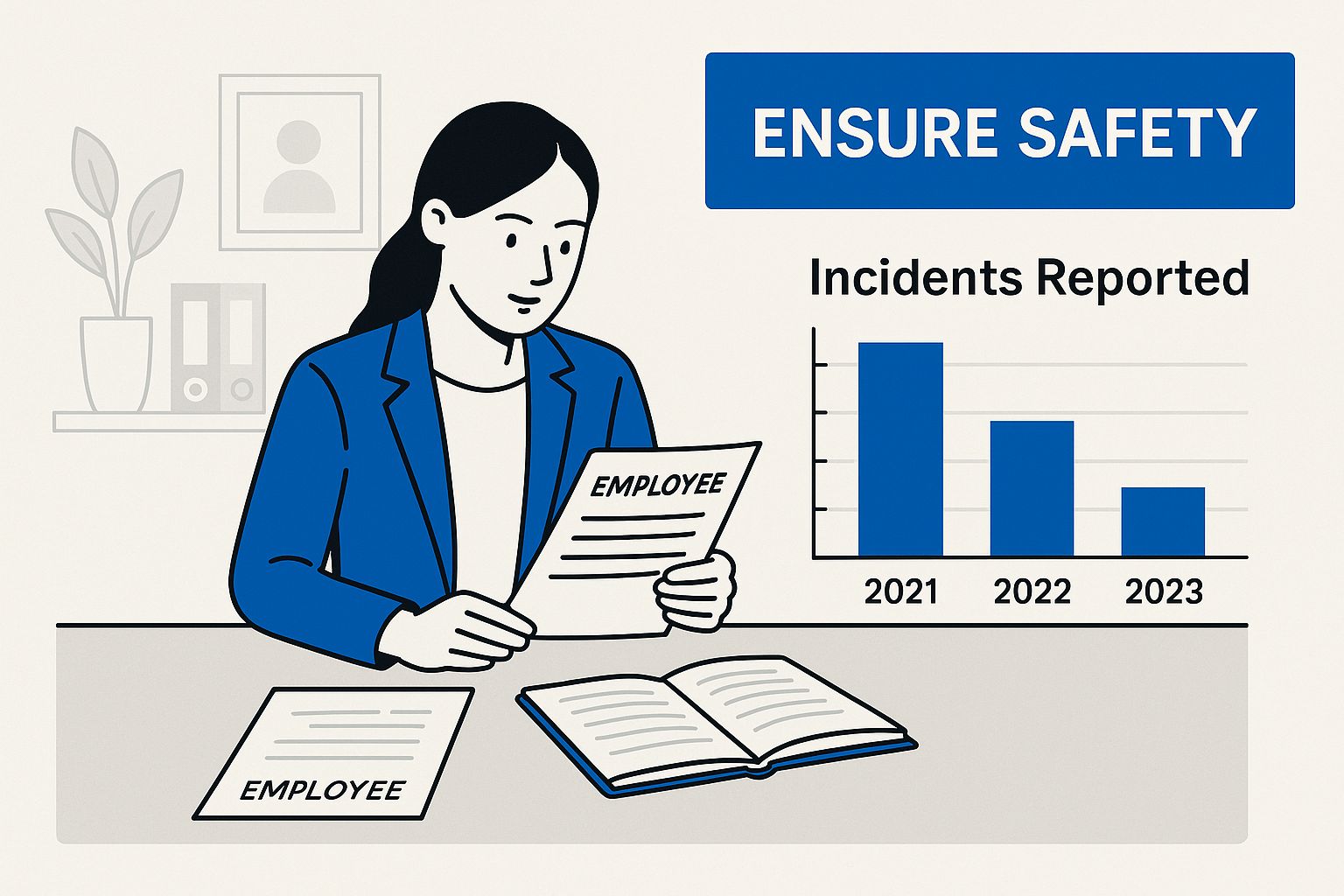
This image really drives home the point that one of the main goals of these checks is to create a secure and trustworthy environment for everyone on your team.
In the Indian market, this service is especially important. Employment history verification is the single largest segment, making up over 60% of all background screening services. This is mainly because of a highly mobile workforce, with employees frequently moving between states, making a thorough, multi-jurisdictional screening essential for getting the full picture. On top of that, about 70% of Indian employers now conduct background checks on all new hires, showing a clear focus on preventing fraud and negligent hiring.
To really get a handle on what this entails, it helps to understand the essentials of employment verification and how it fits into a broader strategy.
Validating Educational Credentials
Next on the list is education verification. For many roles, a specific degree or certification isn’t just a “nice-to-have”—it’s an absolute must. This check involves contacting universities, colleges, and other institutions to confirm that a candidate’s claimed qualifications are the real deal.
Imagine hiring a lead engineer for a critical infrastructure project based on a degree from a top-tier university. If that degree turns out to be fake, the entire project could be put at risk, potentially leading to huge financial losses and serious safety concerns. Education verification stops this from happening by making sure your team has the genuine expertise you hired them for.
A candidate’s resume is their marketing document. A background check is your due diligence. It separates polished claims from verifiable facts, ensuring you hire based on reality, not just presentation.
Assessing Criminal and Civil Records
Criminal record checks are a cornerstone of ensuring workplace safety. These searches scan police and court databases for any history of criminal convictions. The scope can be tailored to your needs, from local district-level checks to broader national database searches.
This isn’t about unfairly judging someone for a minor mistake from long ago. It’s all about managing risk. For example, a candidate applying for a finance role who has a history of fraud convictions presents an obvious and unacceptable risk. Likewise, a history of violent offences would be a major red flag for any role that involves teamwork or interacting with the public.
To build a comprehensive picture, many companies also run checks for:
- Civil Litigation Records: These can uncover a history of lawsuits, which might be relevant for senior leadership or roles with fiduciary duties.
- Global Sanctions Lists: This check ensures a candidate isn’t listed on any national or international watchlists for terrorism, financial crimes, or other serious offences.
Verifying Personal Information
Finally, there are address and identity verification services. These foundational checks confirm a candidate’s basic personal details, like their current and past addresses, to make sure they are who they claim to be. This simple step helps prevent identity fraud and is often the starting point for a more detailed screening process.
Each of these checks acts as a building block. By selecting the right combination for each role, you create a robust screening programme that protects your assets, secures your workplace, and helps you build a team founded on trust and integrity.
Navigating Background Check Laws in India

Tackling the legal side of employee background checks in India might feel a bit daunting, but it really boils down to one fundamental principle. Following the law is like obeying traffic rules—it keeps the journey safe and predictable for everyone. Without them, hiring would be a chaotic free-for-all, putting both companies and candidates at risk.
The single most important rule on this road is candidate consent. Before you even dream of verifying a single detail on a CV, you must get the candidate’s clear, written permission. This isn’t just a friendly suggestion; it’s a non-negotiable legal and ethical line in the sand that underpins any compliant screening programme.
This isn’t just arbitrary red tape. It’s grounded in Indian laws designed to protect personal information. While India doesn’t have one giant, all-in-one law for background checks, several acts come into play, including the Indian Contract Act and key rules within the Information Technology Act, 2000, which set the standards for data privacy and security.
The Golden Rule of Consent
Think of consent as the green light for your entire verification process. Without it, you’re legally at a dead stop. Getting this consent can’t be an afterthought; it needs to be a transparent and deliberate step in your hiring workflow.
A candidate’s consent is not a mere formality; it is a legal prerequisite. It demonstrates respect for their privacy and protects your organisation from significant legal and reputational damage. An ethical screening process always begins with permission.
To make sure your consent process is airtight, just follow these simple steps:
- Be Explicit: Your consent form needs to state in plain English that you’ll be conducting a background check. No confusing jargon.
- Be Specific: It should also spell out exactly which types of checks you’ll be running (e.g., employment history, criminal records, education verification).
- Get It in Writing: A verbal “okay” won’t cut it. You need a documented, signed authorisation from the candidate before you or your partner can move forward.
This kind of clear communication builds trust right from the get-go. It signals to candidates that you’re a professional organisation that respects their rights, which immediately helps create a more positive experience for them.
Partnering with Compliant Verification Companies
This is where choosing the right partner becomes absolutely critical. A professional background verification company will have compliance baked into its very DNA. They live and breathe the nuances of data protection laws and will manage the entire consent process for you, ensuring every check is above board.
When you’re sizing up potential employee background verification companies, you have to ask how they handle data privacy and consent. Their platform should make candidate authorisation a mandatory first step before any checks can even be started. This not only lifts the administrative weight off your HR team but also adds a vital layer of legal insulation for your business.
Staying on the right side of the law is an ongoing effort. For a deeper dive, you can explore more about the essentials of background check compliance in India to keep up with the latest best practices.
At the end of the day, navigating these laws isn’t about memorising dense legal texts. It’s about committing to a process that is fair, transparent, and respectful. By putting candidate consent first and working with a partner who champions the highest data protection standards, you can run an ethical and effective screening programme with total peace of mind.
How to Choose the Right Verification Partner

Choosing from a list of employee background verification companies isn’t just about comparing prices. Think of it as bringing on a new partner, one that becomes a crucial extension of your HR team. The right firm doesn’t just hand you data; they provide reliability, speed, and genuine peace of mind.
To make a smart choice, you’ve got to look beyond the slick sales pitch. A methodical approach, focused on the core pillars of their service, will help you find a partner that truly aligns with how you operate and manage risk.
Speed and Turnaround Time
In today’s hiring market, speed is everything. A background check that drags on for weeks could mean losing your top candidate to a competitor who moves faster. That’s why turnaround time (TAT) is one of the most critical factors to consider.
Ask potential partners for their average TAT across different checks—employment, education, criminal records, you name it. A company that has invested in modern tech and streamlined processes will deliver reports quickly without cutting corners on quality. This keeps your hiring pipeline flowing smoothly.
This need for speed is a huge factor in the growing global background check market. Cloud-based platforms, which now dominate the market, allow for much faster integration with HR systems, especially in large Indian companies. It’s all part of a bigger trend where Indian firms are getting serious about comprehensive pre-employment screening to manage hiring risks.
Accuracy and Reliability
Let’s be honest, the whole point of a background check is to get accurate information. An unreliable report is worse than no report at all, as it can lead you to make bad hiring decisions based on faulty data. The accuracy of a partner’s work comes down to their methods.
Choosing a verification partner based solely on the lowest price is a false economy. The real value lies in the accuracy of their reports, the efficiency of their platform, and the reliability of their support—factors that protect your business long-term.
When you’re vetting employee background verification companies, ask them to walk you through their process. How exactly do they verify information? Do they just run automated database searches, or do they make direct contact with universities and past employers? A trustworthy partner will be completely transparent about their methods and have solid quality checks in place.
Technology and Platform Usability
The day-to-day experience of using a provider’s platform can make or break your HR team’s workflow. A clunky, confusing dashboard is a recipe for frustration and wasted time. The best partners offer a clean, intuitive platform that makes ordering and tracking checks a breeze.
So, when you’re evaluating potential verification partners, it pays to dig into the details of their platform. A feature comparison can help you see past the marketing and focus on what will actually make your team’s life easier.
Feature Comparison for Verification Companies
| Feature | Why It Matters | What to Look For |
|---|---|---|
| Easy Ordering | A simple, multi-step process for initiating a check wastes time and creates friction for your HR team. | A clean, intuitive interface that requires minimal clicks and data entry to get a verification started. |
| Real-Time Tracking | Without a clear status dashboard, you’re left guessing where each check stands, leading to delays. | A live dashboard that shows the status of every check in real-time, so you can manage expectations effectively. |
| Simple Reporting | Overly dense or confusing reports make it hard to spot the key takeaways, defeating the purpose of the check. | Final reports that are easy to read, with clear highlights and summaries of important findings. |
| API Integrations | Manually transferring data between your ATS and the verification platform is inefficient and prone to errors. | The ability to seamlessly integrate with your existing ATS or HRIS to automate the entire screening process. |
Ultimately, a well-designed platform with thoughtful features isn’t just a nice-to-have; it’s a critical tool that directly impacts your hiring efficiency.
Customer Support and Partnership
Even with the slickest technology, things can go wrong. Questions will pop up. That’s when you’ll be glad you chose a partner with responsive, knowledgeable customer support. A good provider doesn’t just sell you a service; they offer genuine support.
Before you sign any contracts, give their support a test run. Are they easy to get hold of? Do they give you clear, helpful answers? Having a dedicated account manager or a responsive team shows the company truly values your business. This is what separates a mere vendor from a true partner—one who helps you build a safer, more trustworthy workforce.
Why Background Checks Are More Critical Than Ever
The world of work in India is changing faster than ever. Along with it, the risks that come with hiring have gotten a lot more complicated. What used to be a simple hiring process is now riddled with new challenges. This shift has turned professional background verification from a nice-to-have formality into an absolutely essential part of hiring today.
Think about the massive shift to remote and hybrid work. Traditional office walls have disappeared. While that’s brought amazing flexibility, it also means employers have far less direct oversight of their teams. How do you build trust when you might never meet your new hire in person? That’s where verification comes in. Confirming a candidate’s identity, address, and professional history is the first, most fundamental step in building that trust.
The Rise of Sophisticated Resume Fraud
It’s not just about new ways of working. The age-old problem of resume fraud has become incredibly advanced. We’re not just talking about someone slightly exaggerating their job title anymore. Today, hiring managers are up against everything from completely fabricated work histories to fake degrees from universities that don’t even exist. Trying to tell the difference between a genuine expert and a cleverly packaged lie has become a massive challenge without professional help.
A resume is a candidate’s best-case scenario on paper. A professional background check provides the objective reality, ensuring your hiring decisions are based on verified facts, not just compelling stories. This crucial step separates credible talent from potential liabilities.
This is exactly where specialised employee background verification companies make a difference. They have the technology and the processes to cut through the noise, confirming that what you see on a CV is the real deal.
Industry-Specific Risks and Regulatory Pressure
For some sectors in India, the pressure to screen candidates thoroughly is even higher because of the sensitive nature of their work. In these industries, solid background checks aren’t just a good idea—they’re non-negotiable.
- Information Technology (IT): Employees in IT often have the keys to the kingdom: sensitive company data, intellectual property, and confidential client information. Vetting them properly is critical to prevent data breaches and corporate espionage.
- Finance and Banking: When a role involves handling money and client assets, you need to be sure of who you’re hiring. A deep dive into a candidate’s financial and criminal history is vital to prevent fraud.
- Healthcare: Healthcare professionals are responsible for patient well-being and have access to private medical data. Criminal and credential checks are an absolute must to ensure patient safety and maintain compliance.
The growing need for verification in these key sectors is a huge reason the Indian employee background screening market is booming. It’s on track to grow to over USD 1 billion in the coming years, driven by companies needing to prevent fraud and stick to legal standards. This growth isn’t just a statistic; it shows a fundamental shift in how businesses are prioritising trust and safety. To dig deeper, you can explore the background screening market trends on cognitivemarketresearch.com. It’s clear that changing work models and market demands have made professional verification an indispensable pillar of modern hiring.
Building Your Background Check Programme
Putting a background verification process in place is about more than just running checks. It’s about creating a structured, fair, and repeatable programme. Think of it as the blueprint for your hiring integrity. This framework ensures you’re consistent, keeps you on the right side of the law, and builds trust with candidates from the very first interaction. A well-defined programme elevates verification from a simple box-ticking exercise to a strategic part of your talent acquisition plan.
The first step is to establish a formal background check policy. This document is your internal rulebook, clearly defining which checks are required for which roles. After all, not every position needs the same level of scrutiny.
A role in finance with access to company funds, for instance, will naturally require a thorough criminal and credit history check. On the other hand, an entry-level marketing position might only need employment and education verification. Your policy should map out these different tiers to ensure every check is fair, relevant, and necessary.
Communicating Transparently with Candidates
Once your policy is set, transparent communication becomes your most important tool. A background check should never come as a surprise to a candidate. Let them know early in the hiring process that verification is a standard part of your procedure.
This upfront approach does more than just meet legal requirements; it lays a foundation of trust. By explaining what you check and why, you show respect for the candidate’s privacy and position your company as a professional, ethical employer.
A background check programme is only as strong as its weakest link. A clear policy, consistent application, and fair handling of discrepancies are the pillars that ensure your programme is effective, compliant, and supportive of a positive candidate experience.
Integrating this process smoothly into your existing workflow is key. A complete programme should also consider what comes before verification. For example, understanding Applicant Tracking Systems (ATS) is crucial for optimising your candidate pipeline long before the check begins. For companies looking to create a truly seamless experience, exploring API integrations for background checks can connect your ATS directly with your verification provider, automating the entire process.
Handling Red Flags and Discrepancies
Inevitably, some reports will come back with a discrepancy or a “red flag.” How you handle these situations says everything about the integrity of your programme. An immediate rejection isn’t just unfair—it can also land you in legal hot water.
A fair process always gives the candidate a chance to respond. Discrepancies often come from simple clerical errors or misunderstandings. The right move is to present the finding to the candidate and give them an opportunity to provide clarification or context.
Follow these steps for a fair and defensible assessment:
- Review the Discrepancy: First, analyse the finding in the context of the specific job role. Is it even relevant to the candidate’s ability to perform their duties?
- Notify the Candidate: Clearly inform the candidate about the specific information that was flagged in their report.
- Allow for a Response: Give them a reasonable amount of time to explain the situation or provide documents that correct the record.
- Make an Individualised Decision: Base your final hiring decision on the nature of the discrepancy, its relevance to the job, and the candidate’s explanation.
By building a programme with clear policies, transparent communication, and a fair review process, you transform background verification. It becomes a powerful tool that strengthens your hiring strategy, protects your organisation, and upholds your reputation as a great place to work.
Frequently Asked Questions
When you’re getting into background verification, a lot of questions can pop up. Let’s tackle some of the most common ones that employers in India ask, so you can handle the process with confidence.
How Long Does a Background Check Take in India?
This is the classic “how long is a piece of string?” question. The truth is, the timeline for a background check isn’t fixed; it really depends on what you’re asking to be verified. Think of it as a mix of high-speed digital checks and old-fashioned legwork.
For example, verifying an ID or a digital address can be almost instant, thanks to technology. But the more in-depth checks, the ones that often matter most, need a human touch and rely on outside organisations.
You’re always balancing speed with thoroughness. While digital checks give you quick wins, verifying something like a criminal record or an educational degree depends entirely on how fast courts or universities respond. This can take anywhere from a few days to a couple of weeks.
Contacting a university to confirm a degree or a court for criminal records takes time. The speed of your final report often comes down to the response time of these third-party institutions. So, a realistic window for a comprehensive check is usually somewhere between a few days and two weeks.
Is It Legal to Check a Background Without Consent?
Let’s be crystal clear on this: absolutely not. Running a background check on a candidate in India without getting their clear, written consent first is illegal. Full stop. It’s the golden rule of this entire process.
Getting consent isn’t just a polite thing to do; it’s a legal must-have under India’s data privacy laws. This protects the candidate’s privacy, and just as importantly, it protects your company from landing in serious legal trouble. Any professional employee background verification company will tell you that a signed consent form is the non-negotiable first step before anything else happens.
What Should We Do If a Check Reveals Negative Information?
Finding a red flag or a discrepancy in a background report can be jarring, but it’s important not to make any snap judgements. The key is to have a fair, consistent process already in place, based on your official company policy.
Jumping straight to a rejection is rarely the right move. The first thing you should always do is share the report with the candidate and give them a chance to explain what’s going on. It could be a simple clerical error or a misunderstanding that’s easily cleared up.
After you’ve heard their side, take a step back and look at the issue in the context of the job. A minor issue from a decade ago might have zero impact on their ability to perform the role today. A fair process that allows for a response and considers relevance is the only way to make an informed, legally sound hiring decision.
Ready to build a foundation of trust with every hire? SpringVerify offers fast, accurate, and compliant background verification services designed for Indian companies. Get started today and make your next hire your best hire.


