

Table of Contents
The Critical Role of Education Verification in Modern Hiring
In today’s competitive job market, verifying a candidate’s educational credentials is essential. This process, commonly called a background check education, ensures potential hires have the qualifications they claim. It confirms degrees earned, attendance dates, and certifications, enabling informed hiring decisions and the development of a skilled, reliable workforce.
Why Is Education Verification So Important?
Education verification ensures candidate qualifications meet industry standards. Recent initiatives, like Philips Education expanding their training, emphasize the increasing importance of skills development. The high volume of applicants in many sectors also necessitates thorough screening.
In India, the significance of education verification has grown considerably. This growth is driven by the increasing number of graduates – between 2 and 2.5 million annually – entering the workforce. This creates a competitive landscape and, unfortunately, may lead some candidates to misrepresent their qualifications. You can learn more about the importance of education checks in India.
The Consequences of Skipping Education Verification
Neglecting education verification can have serious consequences. Hiring individuals with false credentials can decrease productivity, impact project quality, and damage a company’s reputation. In regulated industries like healthcare and finance, failure to verify education can lead to legal and financial penalties, making robust verification processes essential. Learn more about mastering education verification.
Best Practices for Effective Education Verification
A thorough education verification process involves several key steps:
- Directly contacting educational institutions
- Verifying degrees and certifications
- Confirming attendance dates
- Checking for discrepancies
Traditional methods can be time-consuming and error-prone. Technology-driven solutions offer significant advantages in streamlining this process.
Behind The Scenes: How Effective Education Verification Works
A background check for education isn’t a simple process. It’s a detailed investigation confirming the authenticity of a candidate’s educational claims. This section unveils the steps involved, from document submission to final authentication, highlighting the techniques professionals use to spot inconsistencies.
Understanding The Verification Process
The process begins with the candidate providing necessary information. This includes their full name used during their studies, the institution’s name and address, attendance dates, and the degree earned. This information is crucial for initiating the verification process. A signed authorization release from the applicant is also essential to comply with privacy regulations. This initial step sets the foundation for a thorough and legally sound verification.
Direct Verification With Institutions
The next stage involves contacting the educational institution directly. This often requires navigating various departments and procedures, which can sometimes be complex. Verification professionals are skilled at communicating with institutions efficiently to obtain the required information accurately and quickly.
Utilizing Third-Party Verification Services
For added efficiency, many organizations use third-party verification services. These services specialize in navigating the complexities of education verification. They often have established relationships with institutions and access to databases. This allows them to streamline the process and handle large volumes of requests, freeing up internal HR teams. Employee education verification in India is a multifaceted process. It encompasses document review, direct contact with institutions, and leveraging third-party services. This approach is crucial given India’s diverse educational landscape. Robust verification safeguards employers against fraud and ensures a qualified workforce, especially important in regulated sectors. Learn more about how employee education verification is done in India.
Addressing Common Challenges
Verification often encounters hurdles. Name changes, closed institutions, or international credentials require additional investigation. For example, verifying credentials from a closed institution might involve contacting archives or regulatory bodies. Understanding career paths in investigation can provide context. For those considering roles related to verification, read about how to become a Private Investigator in the U.K.. Similarly, international verifications necessitate navigating different educational systems and language barriers.
The Importance of Timelines and Accuracy
Verification timelines vary depending on the institution and the complexity of the request. While some institutions respond quickly, others may have longer processing times. Verification professionals understand these nuances and work to manage expectations while ensuring the accuracy of the information received. This commitment to accuracy is paramount for making informed hiring decisions and protecting organizations from the risks associated with fraudulent credentials.
The Alarming Rise in Education Credential Fraud
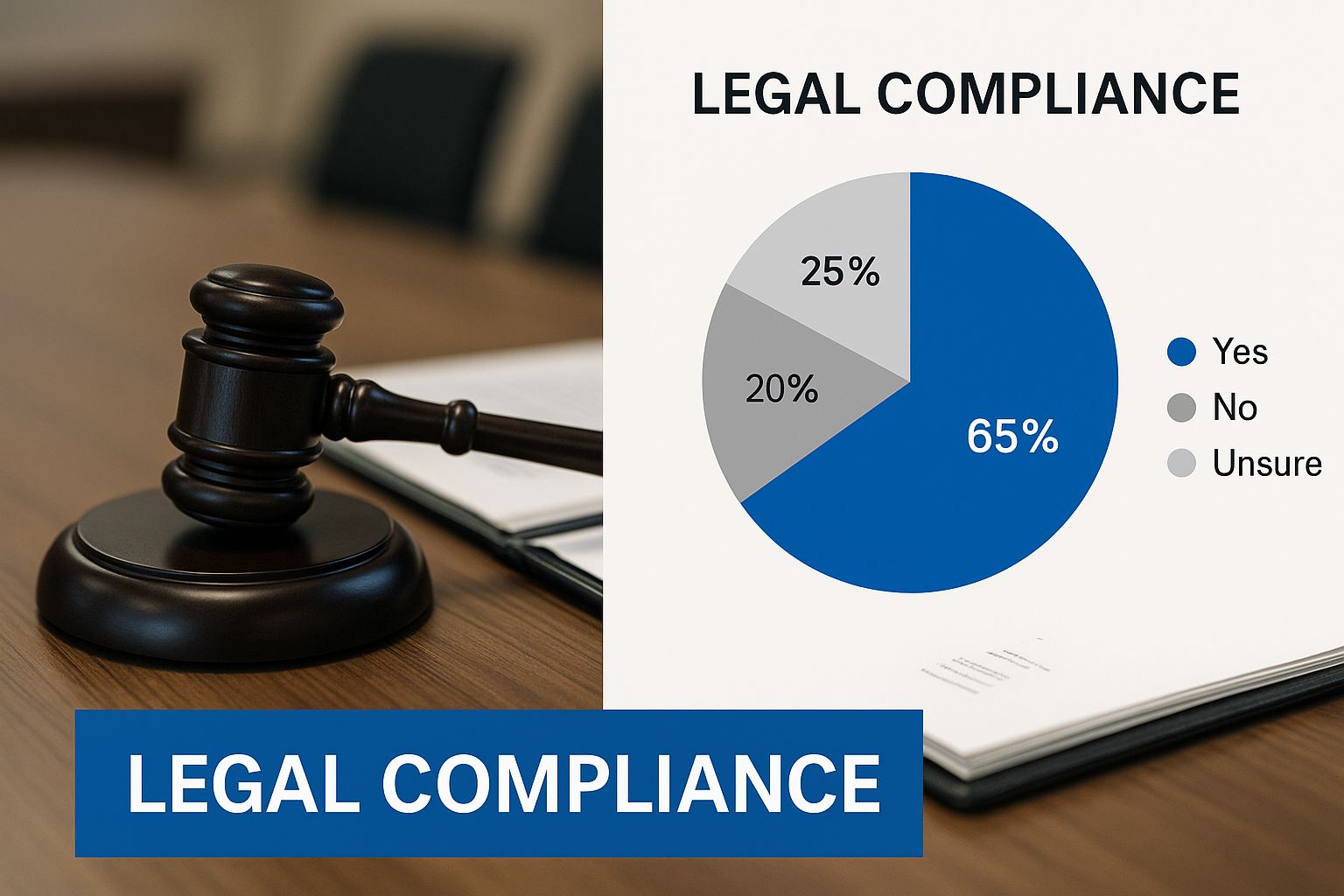
The infographic above illustrates the growing importance of legal compliance in background checks. It highlights the increasing need for strong verification processes, particularly for education credentials. This heightened scrutiny is a direct result of the increasing complexity and frequency of education fraud.
Education fraud is a dynamic and ever-changing challenge. This requires organizations in India to remain vigilant. The increasing use of diploma mills, which are illegitimate institutions selling fake degrees, is a significant concern.
In addition, transcript manipulation and degree embellishment, where individuals misrepresent their qualifications, are becoming more prevalent. These dishonest practices represent a substantial risk to organizations in various industries.
Industries Most Vulnerable to Education Fraud
Some industries are more susceptible to education fraud than others. The BFSI (Banking, Financial Services, and Insurance) sector in India has experienced a significant rise in discrepancies. During the financial year 2023-24, discrepancies reached 10.4%, representing an 18.1% year-over-year increase.
Of these inconsistencies, 9.1% were specifically related to education verification. More detailed statistics can be found here. This underscores the critical need for accurate background check education processes within the BFSI sector. Other sectors, like healthcare and education, also face increased risks because of the sensitive nature of the work and the potential impact on public safety.
The following table provides further insights into the prevalence of education verification discrepancies across various sectors. It highlights the industries facing the most significant challenges and the types of discrepancies commonly encountered.
Education Verification Discrepancy Rates Across Industries
| Industry Sector | Discrepancy Rate (%) | Year-over-Year Change (%) | Most Common Type of Discrepancy |
|---|---|---|---|
| BFSI | 9.1 | 18.1 | Fake Degrees |
| IT | 7.2 | 12.5 | Inflated Credentials |
| Healthcare | 6.5 | 9.8 | Diploma Mill Degrees |
| Education | 5.8 | 7.3 | Altered Transcripts |
| Manufacturing | 4.2 | 5.1 | Misrepresented Certifications |
As the data demonstrates, BFSI experiences the highest discrepancy rate, closely followed by IT and Healthcare. Fake degrees and inflated credentials are among the most prevalent issues. These findings reinforce the necessity for robust verification procedures.
The Consequences of Unverified Credentials
Failing to verify credentials can have serious consequences. Organizations face both financial and reputational damage. Hiring an individual with falsified education can result in reduced productivity, subpar work quality, and damage to the organization’s reputation.
Beyond these immediate consequences, legal ramifications can arise, particularly in regulated industries. Thorough background checks are essential to minimize these risks.
Identifying Red Flags in Applications
Several red flags may indicate a potentially fraudulent application. These include inconsistencies in employment history, vague job descriptions, and a reluctance to provide detailed educational information.
For example, an applicant might avoid providing transcripts or contact information for previous institutions. Such red flags warrant further investigation to verify the applicant’s claims. By recognizing these warning signs and implementing thorough verification processes, organizations can protect themselves from the harmful effects of education fraud.
Navigating the Legal Maze of Education Verification
The legal framework around education verification during background checks is a complex landscape. Every organization needs to understand this intricate web of regulations, including data privacy requirements, consent protocols, and documentation standards. These considerations are critical for maintaining compliance throughout the entire verification process.
Key Legal Considerations for Education Verification
Organizations performing education verifications as part of their background checks must be fully aware of all applicable laws and regulations. This begins with obtaining informed consent from candidates before starting any verification activities. This practice ensures transparency and respects individual privacy rights. Furthermore, organizations must adhere to data privacy laws. This means the collection, storage, and use of candidate information needs to comply with relevant regulations, such as the General Data Protection Regulation (GDPR) and other regional data protection acts.
Sector-Specific Regulations
Regulations for background checks, particularly for education verification, frequently differ between industries. For example, healthcare, education, and financial services often have stricter requirements because of the sensitive nature of the positions involved. In healthcare, verifying medical licenses and credentials is paramount for patient safety. You might be interested in: How to master compliance in India. In education, verifying teaching credentials safeguards students and upholds the institution’s integrity. The financial services sector also mandates stringent background checks to prevent fraud and maintain public trust. Understanding these sector-specific regulations is key to building compliant verification procedures.
Balancing Thoroughness with Compliance
Verification professionals face the ongoing challenge of conducting thorough background checks while strictly adhering to legal guidelines. While it’s crucial to gather comprehensive information about a candidate’s education, the methods employed must be lawful and ethical. Requesting unnecessary or irrelevant information can lead to privacy concerns. Using deceptive practices to obtain information is not only illegal but can also seriously damage an organization’s reputation.
Documentation and Protection in Disputed Cases
Meticulous documentation is vital for protecting organizations if disputes arise. This documentation needs to include all communication with the candidate, educational institutions, and any third-party verification services used. A clear record of the verification process, including consent forms and verification results, can efficiently resolve discrepancies and shield the organization from potential legal issues. This documentation serves as evidence of the due diligence taken to verify a candidate’s education and demonstrates a commitment to compliance.
Developing Compliant Verification Policies
Organizations should establish comprehensive verification policies that satisfy both legal requirements and practical hiring needs. This involves creating clear guidelines for obtaining consent, handling sensitive data, and managing discrepancies. These policies should be regularly reviewed and updated to remain aligned with current regulations and best practices. For example, policies should include data retention periods and robust data security measures to protect candidate information. Implementing strong verification policies helps streamline the hiring process while effectively mitigating legal risks.
Breakthrough Technologies Transforming Credential Verification

Technology is reshaping how we verify education credentials, bringing significant improvements in speed, accuracy, and fraud detection. This evolution is especially important given the increasing difficulty of verifying education in today’s world. These advancements empower organizations to make smarter hiring decisions and minimize the risks tied to fraudulent qualifications.
AI-Powered Document Analysis: A New Era of Efficiency
A major step forward is the use of AI-powered document analysis. This technology automates the time-consuming review of educational documents like transcripts and diplomas. AI can swiftly scan documents, identify inconsistencies, flag potential forgeries, and extract important data for verification.
This automation frees up HR professionals, allowing them to concentrate on other essential duties. Furthermore, AI’s ability to detect subtle anomalies often missed in manual reviews leads to more accurate verification results.
Blockchain Verification: Ensuring Authenticity
Blockchain technology offers a secure and transparent method for verifying credentials. Educational institutions can issue tamper-proof digital certificates stored on a blockchain, enabling instant verification. This eliminates the need for drawn-out communication with institutions, making the entire process more efficient. It also gives candidates greater control over their educational records and simplifies sharing them with prospective employers.
Integrated Verification Platforms: Streamlining The Process
Integrated verification platforms, such as SpringVerify, consolidate various verification tools and services into a single system. These platforms automate the entire background check workflow for education, from gathering candidate information to generating comprehensive reports.
This integration creates a smoother, more efficient hiring process. These platforms can also connect with existing HR systems, like Applicant Tracking Systems (ATS), further simplifying administrative work.
To illustrate the advantages of these modern approaches, let’s look at a comparison of traditional and technology-driven verification methods. The table below summarizes key differences in processing time, accuracy, cost, and fraud detection capabilities.
Comparison of Education Verification Methods
This table compares traditional vs. technology-enabled verification methods, highlighting differences in accuracy, time, cost, and effectiveness.
| Verification Method | Average Processing Time | Accuracy Rate (%) | Cost Factor | Fraud Detection Capability |
|---|---|---|---|---|
| Traditional (Manual) | Weeks | 90-95 | Moderate to High | Limited |
| Tech-Enabled (AI, Blockchain) | Days | 98-99 | Moderate | High |
As the table clearly shows, tech-enabled solutions offer substantial improvements in speed and accuracy, while also providing stronger fraud detection capabilities. This shift marks a significant advancement in the field of credential verification.
The Human Element: Still Essential
While technology is vital in modern background checks for education, human expertise remains indispensable. Experts are essential for interpreting complex scenarios, investigating red flags highlighted by AI, and making sound judgments based on the data gathered.
The most effective verification systems combine the strength of technology with human oversight. This combined approach ensures thoroughness and accuracy while maintaining compliance. This blend instills confidence in hiring decisions and contributes to greater workforce integrity.
Building Your Education Verification Masterplan
Transforming your organization’s approach to education verification during background checks requires a strategic and comprehensive plan. This involves creating verification processes that are both thorough and efficient, while simultaneously delivering a positive candidate experience. This section provides actionable strategies for achieving these goals and building a verification system that truly protects your organization.
Selecting the Right Verification Partner
Choosing the right verification partner is a crucial first step. The ideal partner understands your specific needs and offers solutions tailored to your industry and organization size. For example, a startup might prioritize a quick and easy integration with their existing HR software, while a large enterprise might require a more robust system capable of handling high volumes of verifications. Check out our guide on talent acquisition and recruitment for more detailed insights into streamlining your hiring process. Look for a partner with a strong track record of accuracy, reliability, and compliance with data privacy regulations. Consider the partner’s technology and their ability to provide timely and efficient service.
Integrating Verification into Your Hiring Workflow
Seamless integration of education verification into your current hiring process is essential for efficiency. This involves automating steps like requesting information from candidates, submitting verification requests, and receiving results. Automating these steps minimizes manual work, reduces delays, and improves the overall candidate experience. Consider using a platform that integrates directly with your existing Applicant Tracking System (ATS) or HR Information System (HRIS). This further streamlines the process, ensuring all candidate information is centralized and easily accessible.
Handling Discrepancies: A Critical Protocol
Establish clear protocols for handling discrepancies uncovered during the verification process. These protocols should outline the steps to take when information provided by a candidate doesn’t match the information received from the educational institution.
- For minor discrepancies, like a slight variation in the candidate’s name, the protocol might involve contacting the candidate for clarification.
- For more significant discrepancies, a more in-depth investigation may be necessary.
Having predefined steps ensures consistency and fairness in handling these situations and protects your organization from legal risks.
Special Verification Challenges: International Qualifications and Certifications
International qualifications, professional certifications, and continuing education credentials present unique verification challenges. These often involve navigating different educational systems, varying documentation standards, and potential language barriers. A robust verification masterplan should include specific strategies for addressing these challenges. Partnering with a verification provider experienced in handling international credentials can significantly simplify this process, leveraging their expertise and resources.
Building a Scalable Verification System
As your organization grows, your verification system must scale accordingly. This means choosing a solution adaptable to increasing verification volumes, expanding industry requirements, and evolving regulations. Flexibility is key to ensuring your verification process remains effective and efficient. This might involve working with a verification provider offering a range of solutions to meet the needs of businesses of all sizes.
Building a robust education verification masterplan requires careful planning and the right partner. By following these strategies, your organization can create a thorough, efficient, and compliant verification system that protects against fraud, ensures workforce quality, and enhances the candidate experience. Ready to transform your background check process? Visit SpringVerify to learn how we can help you build a verification system that meets your unique needs.


