

When you need a drug screen test near me, it’s usually something that can’t wait. Whether it’s for a new job offer or another pressing reason, you need to find a place, and you need to find it fast.
Table of Contents
Your Guide to Finding a Drug Screening Centre in Indiana
Getting that pre-employment offer or facing a legal requirement for a drug test can send you scrambling. Suddenly, you’re searching for a nearby facility, and it can feel a little overwhelming. The trick isn’t just to find the closest place, but to find the right one.
You need a reputable, certified location that’s going to handle your test properly. This means looking beyond a quick map search and understanding the different types of facilities available. For example, a big national lab offers standardised procedures, while a local health clinic might give you the flexibility of walk-in hours.
Differentiating Between Facility Types
Not all screening centres are built the same, and the best choice really depends on your specific situation.
- National Laboratory Collection Sites: Think of the big names like Quest Diagnostics or Concentra. These centres are known for their strict adherence to federal guidelines, which makes them the go-to for DOT (Department of Transportation) tests and other regulated screenings. You’ll likely need to book an appointment.
- Urgent Care and Walk-in Clinics: Many local urgent care centres now offer drug screening. They are a fantastic option for standard, non-regulated pre-employment tests where convenience is your top priority. Most of them will accept walk-ins.
- Mobile Collection Services: This one is more for employers who need to test a whole team at once. Mobile services will come directly to the workplace, a common sight in Indiana’s industrial and manufacturing sectors. It’s not really for individual use, but it’s good to know it exists.
A quick way to weigh your options is to see which method fits your needs best.
Quick Guide to Locating a Drug Testing Centre
| Method | Key Benefit | What to Look For |
|---|---|---|
| National Lab Directories | Guaranteed compliance for regulated tests | Locations for Quest Diagnostics, Labcorp, etc. |
| Local Clinic Search | Convenience and walk-in availability | “Occupational health” or “urgent care” clinics |
| Employer Recommendation | The exact facility they work with | A specific lab name in your onboarding paperwork |
Ultimately, choosing the right type of facility from the start saves you time and ensures the process goes smoothly.
Locating Accredited and Certified Centres
Here’s something you can’t overlook: accreditation. To make sure your test results are accurate and legally sound, you absolutely must choose an accredited facility. The gold standard for this is SAMHSA (Substance Abuse and Mental Health Services Administration).
A SAMHSA-certified lab follows the strictest protocols for everything—from collection and chain of custody to the final analysis.
When you’re searching online, try adding terms like “certified,” “accredited,” or “DOT-approved” to your search for a “drug screen test near me.” This simple tweak helps filter out the noise and points you toward facilities that meet high professional standards. It’s a small step that can prevent major headaches later.
Most national labs like Quest are certified, and their online location finders will only point you to approved collection sites. If you’re considering an independent clinic, it’s always a good idea to check their website or give them a quick call to confirm their certifications before you head over. This gives you peace of mind that everything will be handled correctly from start to finish.
Common Reasons for Drug Testing in Indiana
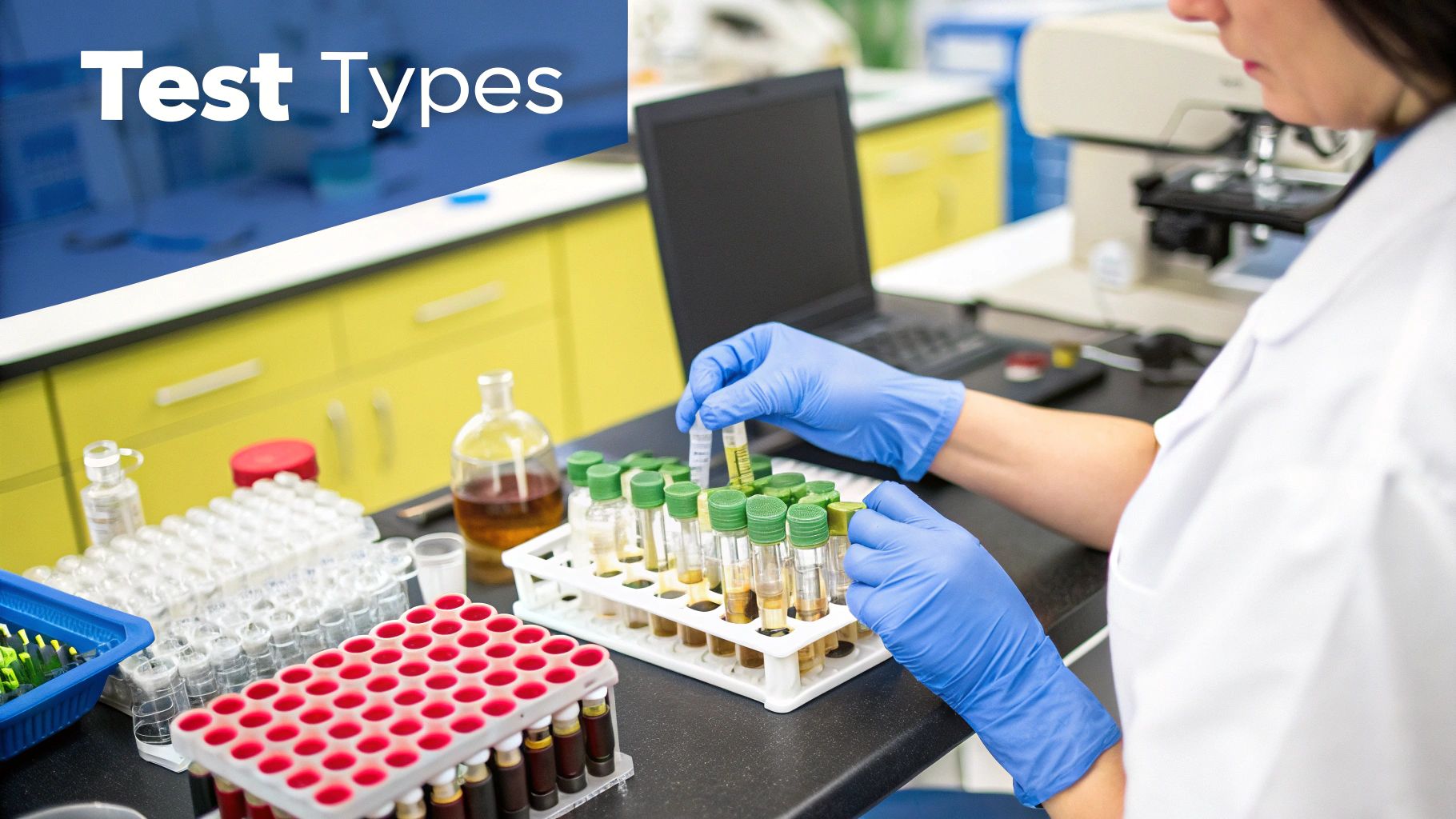
If you’ve been asked to take a drug test, it helps to understand why. Knowing the context can make the whole process feel a lot less intimidating. In Indiana, the search for a “drug screen test near me” usually kicks off for a handful of common reasons, each with its own set of rules and expectations.
By far, the most frequent reason is for a job. Countless Indiana businesses, from manufacturing plants in Fort Wayne to tech companies in Indianapolis, include drug screening as a standard part of their hiring process. It’s a practical step they take to keep the workplace safe and productive for everyone.
Pre-Employment Screening
For most people hunting for a new job, the pre-employment drug test is one of the final hurdles to clear before getting that formal offer. It’s simply a way for the company to confirm that a candidate aligns with their substance use policies.
Some companies, especially those with safety-sensitive roles where impairment could cause a serious accident, might have a zero-tolerance policy. It’s a routine step, but a crucial one. Your potential employer will give you all the details, including where to go and the deadline for getting it done. You can find a great breakdown of what this involves in our guide to drug test verification services in Indiana.
Federally Mandated and Random Testing
Then there are the industries that operate under strict federal regulations. Think transportation, aviation, and logistics—all major players in Indiana’s economy. For these sectors, ongoing drug and alcohol testing isn’t just a company preference; it’s the law.
These programmes typically involve a few different types of tests:
- Random Testing: Employees in specific safety-focused jobs are put into a testing pool, and names are pulled at random throughout the year. It’s a way to deter substance use on an ongoing basis.
- Post-Accident Testing: If a major incident happens on the job, a drug and alcohol screen is usually required to see if substance use played a role.
- Reasonable Suspicion: A supervisor can require an immediate test if they observe and document specific signs of impairment.
Federal agencies set the rules here, including how often random tests must happen. For example, the Department of Transportation (DOT) requires the Federal Motor Carrier Safety Administration (FMCSA) to maintain a 50% random drug testing rate for its drivers. For the Federal Aviation Administration (FAA), it’s 25%. These mandates are a big reason why accessible drug screening centres are so vital across the state.
Court-Ordered and Legal Requirements
Outside of work, legal situations are another common trigger for drug screening. A court might mandate these tests as part of a legal case, probation, or a custody agreement.
A court-ordered drug test is non-negotiable and plays a critical role in legal compliance. Failing to appear for a scheduled test or producing a positive result can have serious consequences, potentially affecting the outcome of a case, custody arrangements, or probation status.
In these cases, following the rules to the letter is essential. The results are sent straight to the court or your probation officer, which is why you must use a certified lab. They follow strict chain-of-custody procedures to make sure the results are accurate and legally defensible.
What Happens During Your Drug Screening Appointment
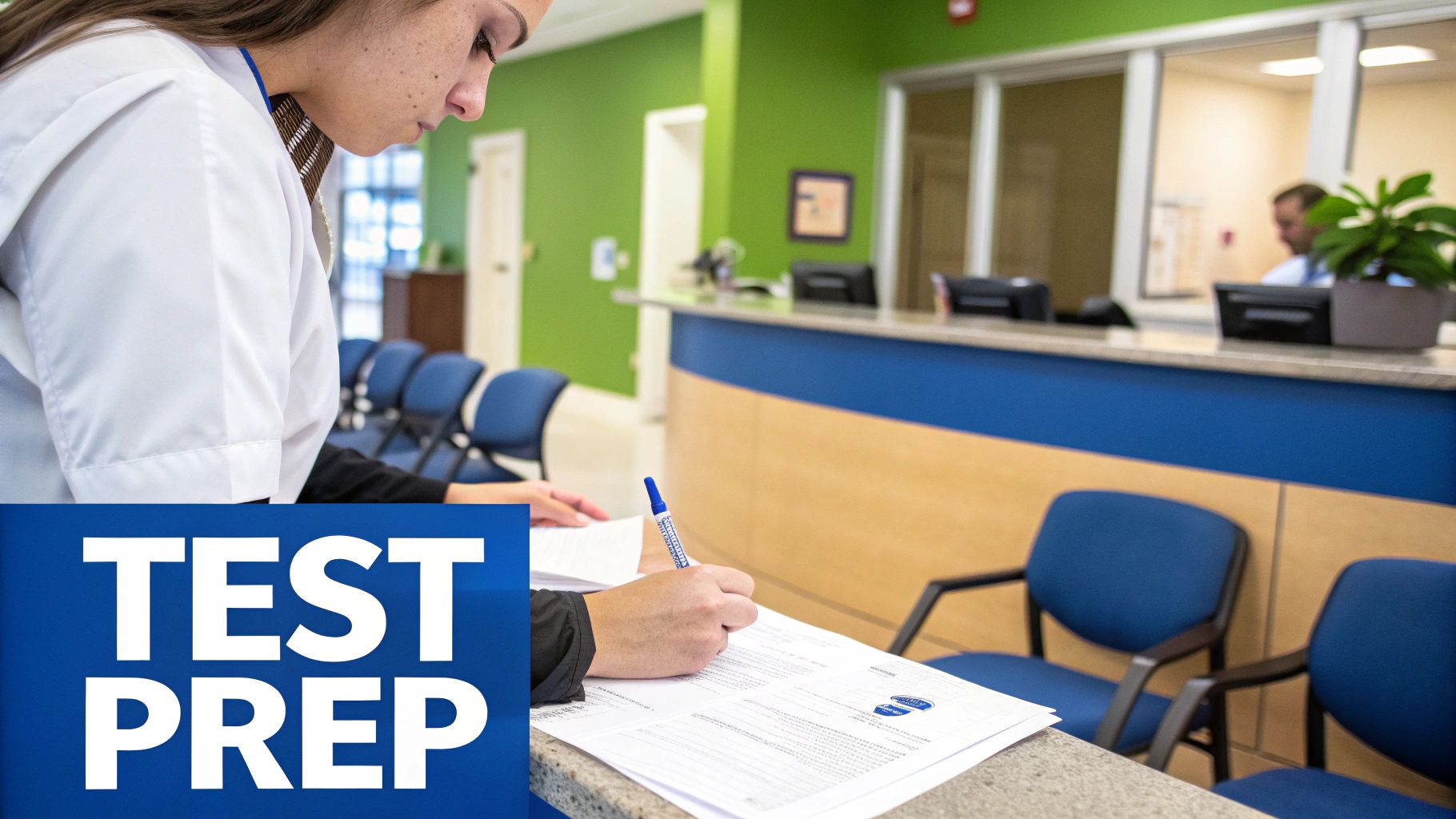
Walking into a testing facility can feel a bit clinical, maybe even intimidating, especially if it’s your first time. The good news is that the whole procedure is highly standardised. Knowing what to expect can take the edge off and make the experience much smoother.
The entire process is built around two things: protecting your privacy and guaranteeing the accuracy of the results. It all starts the moment you walk through the door.
Arrival and Check-In Procedures
When you arrive, your first stop is the front desk. You’ll need to present a valid, government-issued photo ID, like a driver’s licence or passport. This is a non-negotiable step to confirm you are who you say you are.
You should also have the authorisation form from your employer or whoever requested the test. This piece of paper has all the important details, like what kind of test they’re running and where to send the results. Don’t forget it at home.
Once they’ve verified your identity, you’ll be asked to store your personal items.
- Things like bags, jackets, purses, and hats will need to be left in a designated locker or with the staff.
- You’ll also have to empty your pockets. This is all done to make sure no outside substances are brought into the collection area.
This entire protocol is part of what’s known as the “chain of custody”—a strict set of procedures that tracks your sample from the moment it’s collected until it’s tested. This ensures it’s never tampered with.
The chain of custody is the legal backbone of the drug testing process. Every single person who handles the sample signs off on a form, creating an unbroken, documented trail. It’s how they guarantee the sample you provide is the exact one that gets tested and reported.
The Sample Collection Process
After you’re checked in, a trained collector will guide you to a private collection area. Since a urine screen is the most common type of test, the process is designed with specific privacy measures in mind. The restroom is secured, and things like taps might be sealed to prevent anyone from diluting a sample.
You’ll be handed a sealed collection cup. The collector will give you clear instructions, which usually involve filling the cup to a specific line. While you’ll have privacy to provide the sample, the collector will be waiting just outside to receive it from you immediately.
Right away, they will check the sample’s temperature. It has to be within a very specific range (90-100°F or 32-38°C) to be considered a valid, unadulterated sample.
Handling Different Sample Types
While urine tests are the most common, your screening might use a different method. The process is just as meticulous.
- Hair Test: For this, a collector will snip a tiny sample of hair, about the width of a pencil, from close to your scalp.
- Saliva Test: You’ll use a special collection swab to gather saliva from inside your mouth, usually for a minute or two.
- Blood Test: Just like a routine medical exam, a phlebotomist will draw a small vial of blood from your arm.
No matter the sample type, the collector will seal it in a tamper-evident package right in front of you. You will then be asked to initial the seal, confirming that it is your sample inside. From there, it’s sent off to a certified laboratory for analysis, which is the final step in ensuring the results are accurate and legally defensible.
Understanding Different Types of Drug Tests
When you’re told you need a drug test, it’s easy to assume they are all the same. But the reality is quite different. The kind of test an employer or another authority requests depends entirely on what they need to find out. The most common starting point is the 5-panel test, which has become the standard for many pre-employment screenings.
This test looks for five of the most commonly misused substances: marijuana (THC), cocaine, amphetamines, opiates, and phencyclidine (PCP). It’s a straightforward and effective way for companies to maintain a safe workplace. Sometimes, though, a more thorough look is necessary.
Standard Panels Versus Expanded Screening
Beyond the basic 5-panel, you might be asked to take a 10-panel or 12-panel test. These more extensive screenings check for additional substances like barbiturates, benzodiazepines (think Xanax or Valium), methadone, and synthetic opioids. You’ll often see these required in industries with higher safety concerns or for specific legal and medical monitoring.
The choice of panel is never random; it’s carefully matched to the job’s requirements. A role in healthcare, for instance, might demand a broader panel because of the potential access to prescription medications.
The most crucial difference between tests isn’t just what they detect, but for how long. The sample type—urine, hair, saliva, or blood—determines the detection window, providing a completely different snapshot of a person’s substance use history.
Comparing Detection Windows Across Sample Types
The sample collected for your drug test is the single biggest factor in how far back it can “see.” A urine test, for example, is great for identifying recent use, usually within the last few days to a week. It’s the go-to method for most pre-employment screens because it’s quick, non-invasive, and cost-effective.
But other methods can tell a very different story.
- Hair Follicle Test: This one offers a much longer look back. A standard hair test can detect a pattern of substance use for up to 90 days. This makes it a popular choice for roles where a long-term history of abstinence is critical.
- Saliva Test: A saliva or oral fluid test has the shortest detection window, typically just 24 to 48 hours. It’s perfect for finding out about very recent use, which is why it’s often used in post-accident or reasonable suspicion scenarios.
- Blood Test: As the most invasive method, a blood test also has a very short window—often only a matter of hours. It’s usually reserved for specific situations, like law enforcement investigations, where determining current impairment is the main goal.
The chart below shows just how much detection times can vary, even for the same common substances.
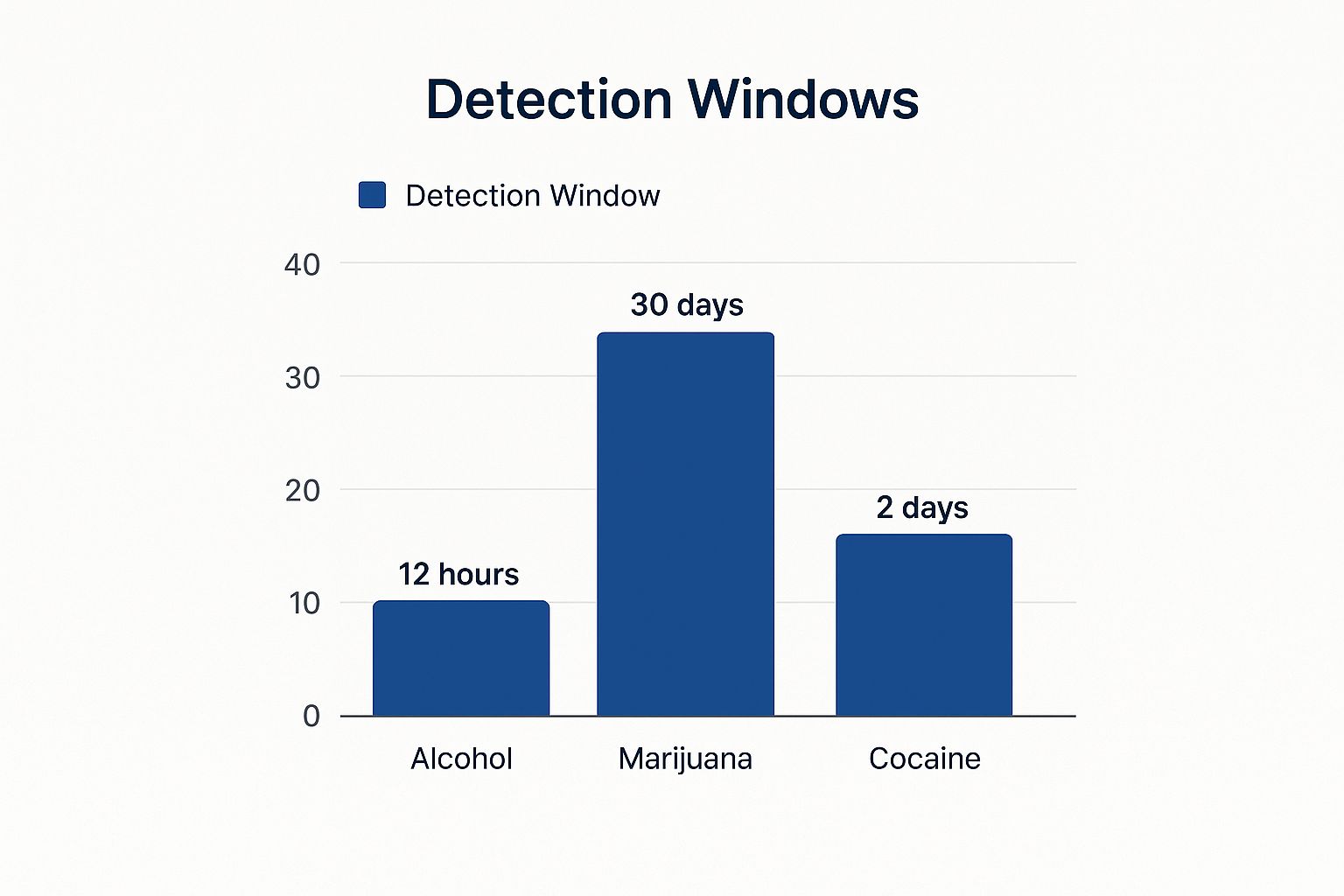
As you can see, alcohol might only be detectable for a few hours, while substances like marijuana can show up in urine for up to a month in frequent users. Knowing these differences makes it clearer why an employer might choose one type of test over another.
How to Handle Drug Test Results and Concerns
The wait after a drug test can be nerve-wracking. Your sample goes off to a lab, and you’re left wondering about the outcome. Knowing what happens next, especially if there’s an unexpected finding, can help you navigate this period with a bit more confidence.
It’s important to understand that a preliminary positive—often called a “non-negative” result—isn’t the final word. It’s simply the first step in a careful, multi-stage process designed to be both accurate and fair.
The Role of the Medical Review Officer
If your initial screen comes back non-negative, your sample is automatically sent for a second, more precise analysis known as gas chromatography/mass spectrometry (GC/MS). This is the gold standard in drug testing, highly accurate at identifying the exact substance and its concentration.
If the GC/MS confirms something is there, the result is forwarded to a Medical Review Officer (MRO). An MRO is a licensed physician who has specialised training in substance abuse and acts as an impartial gatekeeper between the lab and your potential employer.
The MRO will then contact you directly and confidentially to talk about the results. This is your chance to explain things. For instance, if you have a valid prescription for a medication that could have triggered the positive result, this is the time to share that information.
What to Do If You Receive a Positive Result
Getting a call from an MRO might feel alarming, but it’s a standard and necessary part of the procedure. The best thing you can do is be prepared to discuss any medications you’re taking.
- Provide Prescription Information: Have your prescription details handy, including the name of the doctor who prescribed it and the pharmacy you use. The MRO will need to verify this.
- Explain Potential False Positives: Some over-the-counter medicines or even foods (like poppy seeds) can occasionally cause a false positive on an initial screen. MROs are trained to tell the difference between these and illicit drug use.
- Understand Your Rights: Your conversation with the MRO is confidential. Your private medical information is protected and isn’t shared with the employer beyond the final, verified test result.
This verification process is a critical safeguard. A notable case from the Equal Employment Opportunity Commission (EEOC) involved a massive verdict for an applicant who was denied a job because of a positive test from legally prescribed medication. The employer’s critical mistake was not giving the applicant a chance to explain the result.
Navigating Concerns and Compliance
Anxiety around drug testing is completely normal. In fact, Indiana ranks seventh in the nation for online searches on how to pass a drug test, with search rates 47% higher than the national average. This suggests a lot of people are worried about the process, whether it’s due to prescribed medications or other concerns. You can read the full breakdown of these Indiana drug test search trends.
If the MRO confirms that your prescription is the reason for the positive result, they will report the test as “negative” to the employer. Your personal medical details are kept confidential.
At the end of the day, being honest and cooperative is your best strategy. Knowing your rights and understanding the procedures can provide significant peace of mind. For employers, it’s all about maintaining fair and consistent policies. A clear understanding of workplace compliance laws in Indiana ensures the process is handled correctly and respectfully for everyone involved.
Your Drug Screening Questions, Answered
Going through a drug screening can feel a bit daunting, and it’s natural to have questions. Whether it’s about the cost, what you need to bring, or what happens with your results, getting some clarity beforehand makes the whole process smoother. Here are the answers to the most common queries we hear about getting a drug screen in Indiana.
How Much Does a Drug Test Cost?
The price really depends on what kind of test is being run. A standard 5-panel urine screen is usually the most affordable, typically falling between $30 and $60.
If the test is more comprehensive, like a 10-panel analysis or a hair follicle screen, the cost can jump to $100 or more. The good news? If this is for a job, the employer almost always foots the bill.
What Should I Bring to My Appointment?
To keep things moving quickly at check-in, you’ll want to have a couple of key items ready. First and foremost, you must have a valid, government-issued photo ID. Think of your driver’s licence or passport – they need it to confirm you are who you say you are.
You should also bring any paperwork given to you by your potential employer or whoever ordered the test. This is usually an authorisation form or a “chain of custody” document, which gives the centre specific instructions. For anyone working in healthcare, keeping documentation organised is second nature and just as crucial for compliance here. You can find more details on the unique requirements for background screening in the healthcare industry right here on our blog.
Your privacy is taken seriously at accredited testing facilities. Results are kept confidential and are only shared with the person or entity that was authorised to receive them, like the employer or court that ordered the test.
Can I Refuse to Take a Drug Test?
While you technically have the right to refuse a drug test, it almost always comes with consequences. If it’s for a pre-employment screen, expect the company to withdraw the job offer on the spot. For current employees, saying no could be grounds for termination, especially in roles where safety is a major concern.
Drug screening is a vital part of keeping the public safe, particularly within the legal and correctional systems. To put it in perspective, the Indiana Department of Correction’s data shows a large part of the offender population, which includes 23,779 males and 2,637 females, is tied to drug-related offences. This highlights why testing is often non-negotiable in legal and probationary contexts. You can see more details in these correctional population statistics in Indiana.
How Long Does It Take to Get Results?
The turnaround time really hinges on the type of test and how busy the lab is. For a standard urine screen, negative results often come back quite quickly, usually within 24 to 48 hours.
However, if a sample flags something and needs more detailed confirmatory testing (like a Gas Chromatography/Mass Spectrometry analysis), it can add a few more business days to the timeline. The collection centre can usually give you a rough estimate, but the best person to follow up with is whoever requested the test in the first place.
At SpringVerify, we take the complexity out of the entire background check process, including drug screening, so you can make hiring decisions with complete confidence. Our reliable and quick verification services are built for businesses of all sizes, ensuring you get accurate information without the wait. Learn how SpringVerify can simplify your hiring workflow.


