

To breeze through your passport police verification, you’ll need to have your documents in order. Think of it in three simple categories: Proof of Identity (like an Aadhaar or PAN card), Proof of Address (a recent utility bill or bank statement works great), and Proof of Date of Birth (usually your birth certificate).
Getting these originals and a full set of self-attested photocopies ready beforehand is the secret to a hassle-free visit from the police officer.
Table of Contents
Your Essential Passport Police Verification Document Checklist
Sorting out the paperwork for your passport police verification can feel like a mission, but it’s actually straightforward once you know what’s needed. This check is a non-negotiable security step to confirm your identity, where you live, and your background are all legitimate.
In India, this verification is often the longest part of the passport process, typically stretching the timeline to between 30 and 45 days for regular applications. You can learn more about how police verification affects passport timelines.
To cut through the confusion, we’ve laid out all the required documents in a simple table. This isn’t just a list; it’s packed with practical tips drawn from common slip-ups people make.
Breaking Down the Document Requirements
The police officer just wants to confirm that the person, address, and age on your application all line up perfectly. So, it helps to think of your documents in three distinct groups.
- Proof of Identity (POI): This is all about proving you are who you say you are. Your Aadhaar Card, Voter ID, or PAN Card are the usual go-to’s. The most important thing here is consistency—the name on your ID must be an exact match to the name on your passport application. No nicknames or abbreviations!
- Proof of Address (POA): This confirms you actually live where you claim to. Recent utility bills (electricity, water, landline phone), your bank passbook, or a registered rent agreement are perfect. A classic mistake is providing a document that’s too old; always use something issued within the last three months to be safe.
- Proof of Date of Birth (DOB): This one’s simple—it validates your age. The best document by far is a birth certificate issued by a Municipal Authority. If you don’t have that, a School Leaving Certificate or Secondary School Certificate that clearly shows your date of birth is also perfectly acceptable.
To make this even easier, here’s a quick checklist you can use to gather everything.
Mandatory Documents Checklist for Police Verification
This table breaks down exactly what you need, what works as a valid example, and what you absolutely need to double-check to avoid any hiccups.
| Document Category | Acceptable Examples | Key Consideration |
|---|---|---|
| Proof of Identity (POI) | Aadhaar Card, Voter ID Card, PAN Card, Driving Licence | The name must match your passport application exactly. Check for spelling errors. |
| Proof of Address (POA) | Recent Utility Bill (Electricity, Water, Telephone), Bank Passbook, Rent Agreement (Registered) | Must be recent (ideally within the last 3 months). The address must be your current one. |
| Proof of Date of Birth (DOB) | Birth Certificate (from Municipal Authority), School Leaving Certificate, Secondary School Certificate (Class 10) | Must clearly state your full date of birth. School certificates are a great alternative. |
Once you have these documents sorted, you’re pretty much set. The key is being prepared before the officer arrives.
Key Takeaway: Always carry the original documents along with one complete set of self-attested photocopies. The verification officer will compare the copies against the originals on the spot. Having everything organised makes the process quicker and leaves a positive impression. Understanding the specifics of the passport verification process can also provide valuable context.
How the Police Verification Process Actually Works
Once you’ve submitted your passport application and documents, the next stage moves out of your hands and over to the local police station. This is where the on-the-ground verification kicks off, a crucial step to confirm your identity and that you live where you say you do.
An officer from your local station gets assigned your file and will typically schedule a visit to the address you provided. Their main job? To check that you actually reside there. They’ll ask to see your original documents—the same ones you gathered for your application—and compare them against the photocopies. It’s a long-standing security protocol designed to keep the system accurate and prevent fraud.
This visual guide breaks down the essential documents you’ll need to have ready for the officer’s visit.
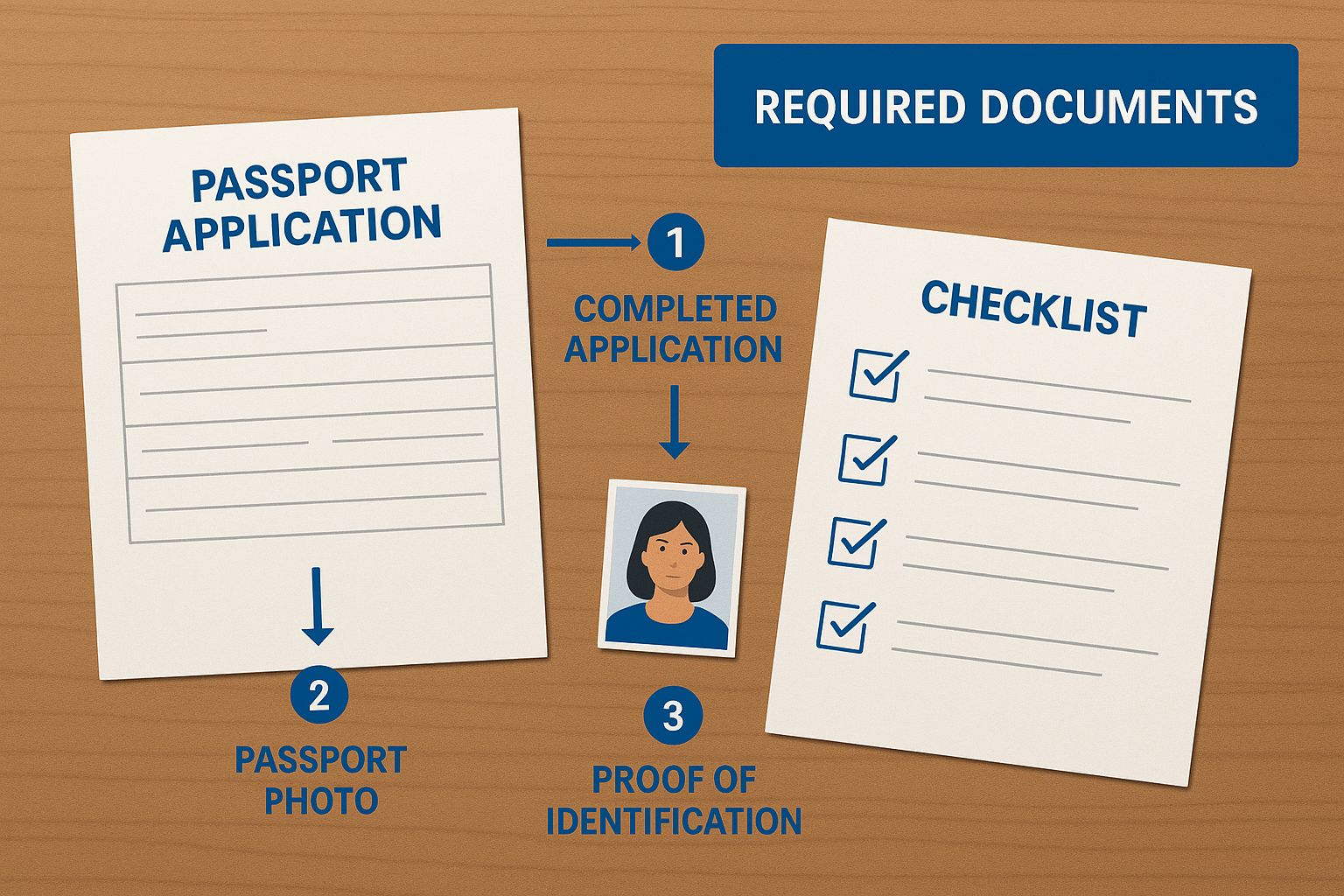
Keeping your Proof of Identity, Address, and Date of Birth organised is the secret to a quick, smooth interaction.
How Technology Is Speeding Things Up
Thankfully, the days of waiting weeks on end for this visit are becoming a thing of the past. The introduction of the mPassport Police App has seriously accelerated the entire procedure.
This app lets police officers submit their verification reports digitally, in real-time, right from your doorstep. It has been a total game-changer, cutting the average verification timeline down to just 5-7 days in many areas by streamlining communication between the local police and the passport office.
Real-World Tip: Don’t panic if you miss the officer’s visit. They often leave a contact number. If not, you can be proactive and visit the local police station with your file number and original documents. A cooperative attitude goes a long way in getting things sorted out quickly.
The verification doesn’t just stop at your doorstep, though. It’s part of a much larger security check, which can involve cross-referencing your information against other government databases. To get a better sense of how these systems work, you can explore the core principles of identity verification. This thorough background check is what maintains the integrity of the Indian passport system.
Getting Ahead of Common Document Problems
A tiny mismatch in your paperwork can, unfortunately, bring your passport police verification to a grinding halt. But if you know what the most common snags are, you can get your solutions ready beforehand and sail through the process.
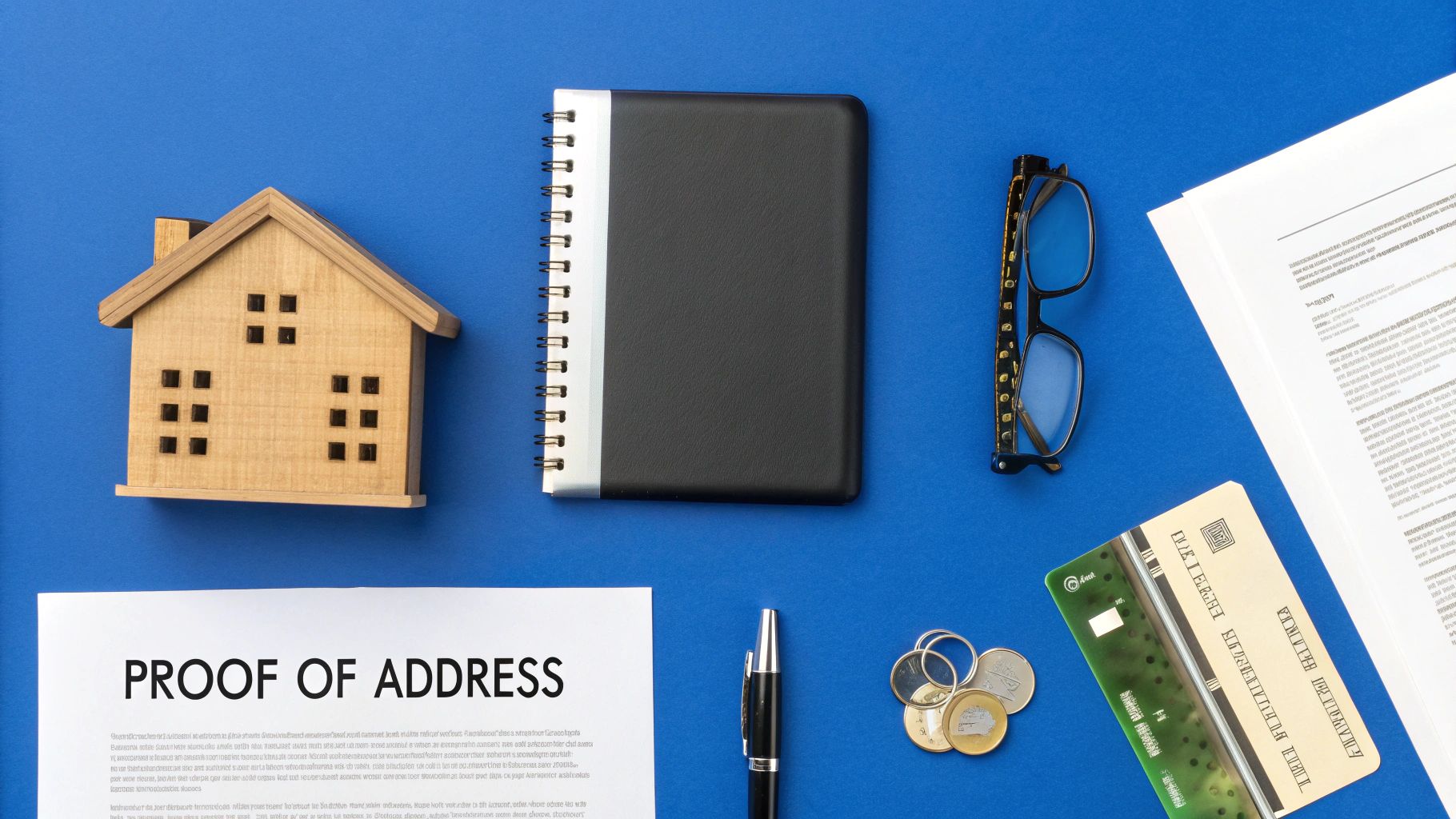
It’s a classic worry for many applicants: “My Aadhaar Card says ‘Sunil Kumar Sharma’, but my PAN Card just has ‘Sunil K. Sharma’.” Sound familiar? This is an incredibly common scenario, and thankfully, it’s easy to sort out.
Handling Name Mismatches
If you’ve got slight differences in your name—or even your parents’ names—across your various documents for passport police verification, don’t panic. The go-to solution is a notarised affidavit.
This is a straightforward legal document drawn up by a notary. It officially declares that all the different name variations belong to the same person. Getting this done is a proactive move. It shows the verification officer you’ve already spotted the inconsistency and have a formal explanation ready to go.
Proving Your Address in a Rented Home
Living in a rented place is another situation that frequently trips people up when it comes to valid address proof. Having utility bills in your name is the gold standard, but that’s not always possible for tenants.
In this situation, a registered rent agreement is your single most powerful piece of evidence. An unregistered, informal agreement just won’t cut it. Make absolutely sure your agreement is properly registered with the sub-registrar’s office and that it’s valid for the time you’ve been living there.
Expert Tip: Want to make your address proof bulletproof as a tenant? Back up your registered rent agreement with a copy of your landlord’s latest electricity bill and a No Objection Certificate (NOC) from them. The NOC simply states they have no problem with you using their property’s address for your passport application.
By tackling these potential issues before they even come up, you’re clearing the most common hurdles that lead to an “adverse” or “incomplete” verification report. When you show up with the right supporting documents in hand, like that affidavit or a solid rent agreement, you’re not just being thorough. You’re making the officer’s job easier, which ultimately makes your own journey to getting a passport that much smoother.
Navigating Verification for Special Circumstances
Not every passport application follows the same script. If you’re applying for a minor, or if you’re a government employee, your document checklist will look a little different. Getting these specifics right from the start is the key to avoiding unnecessary back-and-forth.
For instance, getting a passport for a minor absolutely requires both parents’ consent. This is officially handled through Annexure D, a declaration that both parents must sign. What if one parent isn’t available? In that case, you’ll need to submit Annexure C, which is a declaration explaining the situation.
Students and Government Employees
Students living in hostels or dorms often stumble when it comes to address proof. This is a common hiccup. The solution is a bonafide letter from the head of your college or institution, written on their official letterhead, confirming you live there. This letter is accepted as valid proof of your current address for the police verification.
Government employees, on the other hand, can often get on a faster track. By submitting an Identity Certificate (IC) in the format of Annexure A from your employer, you might qualify for post-verification or, in some cases, no police verification at all. It’s a huge advantage, as it serves as a direct confirmation of your credentials from a trusted source.
A Word of Caution: Even with a powerful document like an Identity Certificate, the final call on whether to modify or skip the verification rests entirely with the Passport Office. Don’t leave anything to chance—always be prepared for a standard police visit.
To make things clearer, let’s look at the extra documents for passport police verification you’ll need for these specific situations.
Document Requirements for Special Cases
Here’s a quick comparison of the additional documents needed for different types of applicants. Think of it as your cheat sheet to make sure you have everything in order before the police officer arrives.
| Applicant Category | Additional Document(s) Required | Key Tip |
|---|---|---|
| Minors | Annexure D (Parents’ Declaration) or Annexure C (if one parent is absent) | Make sure both parents’ signatures on the form perfectly match their passports or other government IDs. Mismatches are a common reason for delays. |
| Government Employees | Identity Certificate (Annexure A) from the employer | This single document can drastically speed up the process, sometimes even allowing you to bypass the physical police check altogether. |
| Students in Hostels | Bonafide Letter from the head of the institution on official letterhead | This letter is your golden ticket for address proof. Ensure it clearly states your name and residential details at the hostel. |
Having the right annexure or letter ready isn’t just about ticking a box; it’s about showing the authorities that you’ve done your homework. This proactive approach can make a world of difference in how smoothly your verification process goes.
Insider Tips for a Hassle-Free Verification Experience
Having the right documents for passport police verification is half the battle. The other half is making the officer’s visit as smooth and straightforward as possible. A few simple habits can dramatically speed things up, removing any potential friction before it even starts.
Get ahead of the game by creating a dedicated verification file. Seriously, this little bit of prep work pays off. Keep all your original documents in one folder and a complete set of self-attested photocopies in another. This prevents that last-minute scramble when the officer is at your door. If you want to get really organised, check out these top document management best practices.
Prepare for the Human Element
Remember, the visiting officer is just doing their job. A cooperative and respectful attitude goes a long way and can make a significant difference in how smoothly the visit goes.
If you have a demanding job or aren’t always home, it’s a good idea to let a family member or a trusted neighbour know to expect a visit. A little heads-up ensures someone is there to assist if you’re not around.
Pro Tip: Keep a close eye on your application status through the Passport Seva portal. This is the best way to know when your file has been dispatched to the local police station, giving you a much clearer idea of when to expect their visit.
Stay Proactive and Informed
The efficiency of this process can vary quite a bit by region. Some police departments have set impressive benchmarks. For instance, the Jammu & Kashmir Police finalised 134,219 passport application verifications in just under a year.
Being prepared also means being reachable. Here are a few final pointers that people often overlook:
- Answer Unknown Numbers: The officer will almost certainly call from their personal mobile to schedule the visit. Don’t ignore calls from numbers you don’t recognise.
- Inform Your Neighbours: It’s common for the officer to ask a neighbour or two to confirm how long you’ve lived at the address. Give them a heads-up so they aren’t caught off guard.
- Keep Your Phone Charged: The one time your battery dies will be the one time the officer tries to call. Keep it charged and handy.
These small, practical steps often have the biggest impact, turning what can be a stressful step into a simple formality. Just as thorough documentation is vital here, it’s also a cornerstone of professional screening—a topic we cover in detail in our guide on https://in.springverify.com/screenings/employment-verification/.
Got Questions About Your Verification Documents? We’ve Got Answers.
Even when you think you’ve got everything lined up, the final stages of the passport verification process can throw a few curveballs. It’s totally normal to have some last-minute questions. Getting clear answers now will save you a lot of stress when the officer shows up. Let’s tackle the most common queries we see from applicants about their documents for passport police verification.
One of the most common heart-stopping moments is seeing an ‘Adverse’ status on your application. Before you panic, understand what it means. It simply signals that the visiting officer found a discrepancy—it’s often something small related to your address or a mismatch in the documents.
If this happens, your first move should be to get in touch with your Regional Passport Office (RPO). They can tell you exactly what the issue is and what steps you need to take to clear it up.
On-Site Verification: What to Expect
A question that comes up all the time is, “Do I really need to show my original documents?” The answer is a firm yes. You’ve already submitted photocopies with your application, but the whole point of the officer’s visit is to physically see and confirm that those copies match the genuine articles.
Crucial Reminder: Think of the police visit like an open-book exam. The officer’s job is to match your photocopies to the originals. Having all your documents neatly organised in a file makes their job easier and gets them on their way faster.
Another frequent point of confusion is address proof for those living on rent.
- Is my rent agreement enough? Yes, but only if it’s a registered rent agreement. An informal, unregistered agreement is almost certain to be rejected.
- How can I make my case stronger? Absolutely. Back up your registered rent agreement with a recent utility bill (even if it’s in the landlord’s name) and a simple No Objection Certificate (NOC) signed by your landlord. This combination is practically bulletproof.
Finally, everyone wants to know about the timeline. With the rollout of the mPassport Police App, the process has become surprisingly quick in most cities. You can often expect the verification to be wrapped up in just 5-7 days. That said, things can sometimes take longer depending on the workload at your local police station, so a little bit of patience goes a long way.
For businesses needing reliable and fast identity checks, SpringVerify offers comprehensive background verification solutions to help you hire with confidence. Learn more at https://in.springverify.com.


