

When people talk about digital transformation in HR, they’re really talking about a massive upgrade. It’s about moving HR away from being a department buried in paperwork and administrative tasks, and turning it into a tech-savvy, strategic powerhouse. This evolution uses automation, data, and smart systems to completely change how HR works, making it a key player in driving business performance and creating a better employee experience. It’s a fundamental shift in both mindset and operations.
Table of Contents
What Is Digital Transformation in HR?
Let’s cut through the jargon. At its heart, the digital transformation in HR is about elevating HR from an administrative support centre to a genuine strategic partner for the business.
Think of it this way: imagine a local corner shop that used to run everything with a paper ledger and a simple cash register. Now, picture that same shop with a fully integrated online store, real-time inventory management, customer analytics, and automated marketing. That leap is exactly what digital transformation does for HR.
This isn’t just about scanning documents or swapping paper memos for emails. It’s a total rethink of the entire employee lifecycle, with technology at its core. It means using digital tools to build more efficient, insightful, and genuinely human-focused experiences for everyone in the company.
The main goals are pretty straightforward:
- Automate the boring stuff: Free up HR professionals from repetitive work like data entry and payroll processing so they can focus on what matters.
- Improve the employee experience: Give staff self-service tools, personalised development plans, and easy access to the information they need.
- Make smarter, data-driven decisions: Use analytics to spot workforce trends, predict hiring needs, and actually measure the impact of HR programmes.
- Boost business agility: Help the organisation adapt quickly to market shifts by building a flexible and digitally confident workforce.
From Administrative to Strategic
The biggest change here is the role HR plays. Instead of being bogged down by paperwork and answering the same routine questions over and over, the team can finally concentrate on high-value work that directly impacts the company’s success. We’re talking about things like shaping the company culture, developing leaders, planning for future talent needs, and managing the workforce strategically. To get a better handle on these evolving duties, it’s worth exploring the latest trends in human resources.
This infographic neatly captures that fundamental shift from manual processes to a strategic, automated HR function.
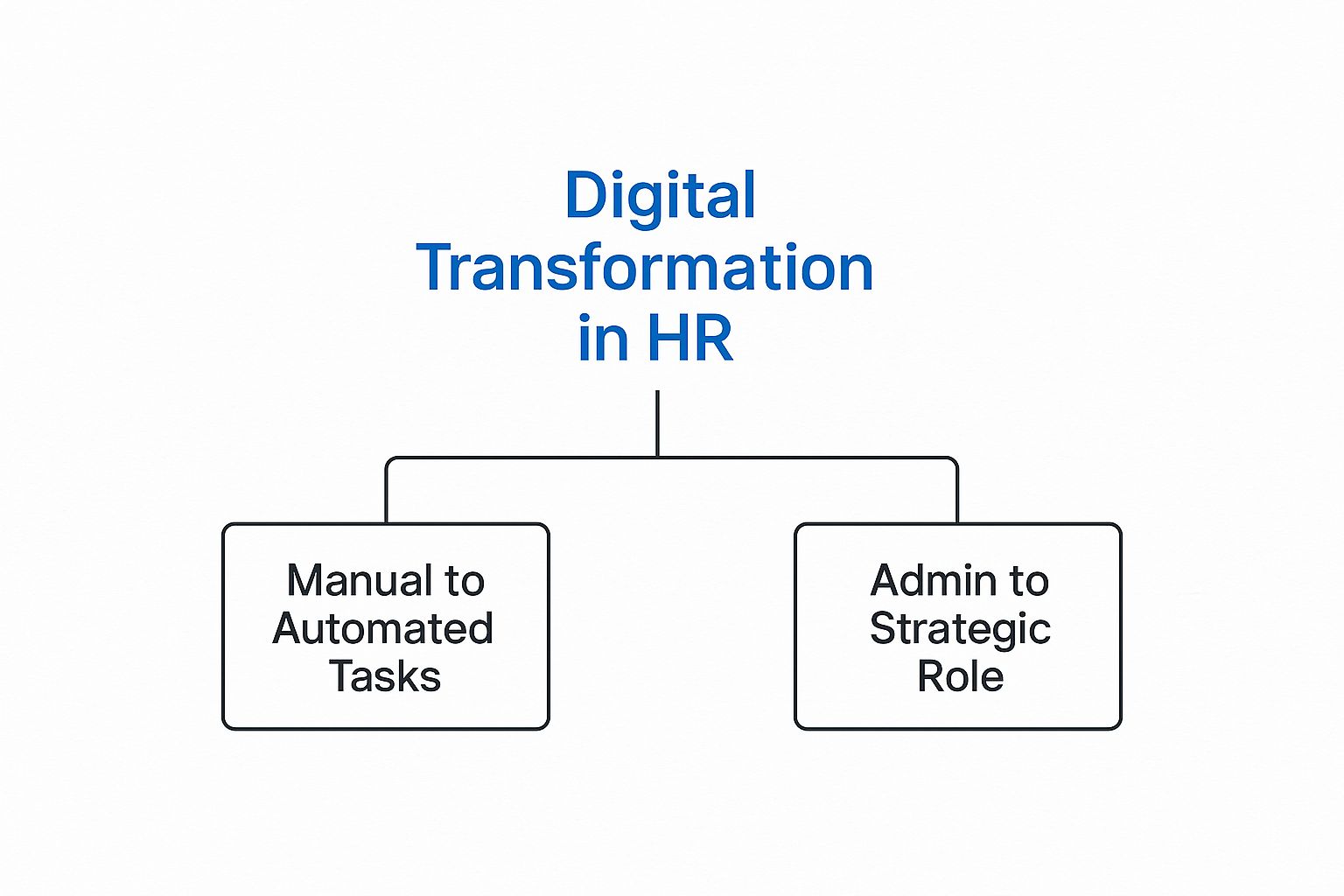
As the diagram shows, technology allows HR to break out of its traditional administrative box and step into a much more influential role.
By embracing this transformation, HR stops being a cost centre and becomes a value creator. It’s the difference between simply managing personnel files and actively shaping the future of the company’s talent.
This evolution isn’t just a “nice-to-have” anymore; it’s a necessity. Companies that get this right can attract top talent, boost retention, and build a more resilient and engaged workforce. The journey starts with understanding that technology isn’t the end goal—it’s the vehicle for creating a more effective and people-focused organisation.
The Core Technologies Driving HR Modernisation

To get under the hood of digital transformation in HR, we need to look at the engine making it all run. This isn’t some abstract concept; it’s powered by very real, potent technologies that are completely changing how HR teams operate, make decisions, and contribute to the business.
Think of these technologies less like standalone gadgets and more like an interconnected toolkit for the modern HR professional. A mechanic uses different instruments to diagnose and fix a car; in the same way, HR leaders use these digital solutions to build a smarter, faster, and more data-savvy organisation.
Artificial Intelligence and Machine Learning
Artificial intelligence (AI) is the technology everyone’s talking about, and for good reason. It pushes HR tasks beyond simple automation into the realm of intelligent action. Instead of just following a set of pre-programmed rules, AI can actually learn from data, spot patterns, and even make predictions.
In recruitment, for example, AI can sift through thousands of resumes in minutes to find the best candidates based on skills and experience, not just keywords. This slashes manual screening time and can also help reduce unconscious bias early on. The adoption of tools like AI-powered recruitment tools is changing the game for how companies source and screen talent.
The uptake of these intelligent systems is happening fast. In India, between 40% and 60% of organisations are already using AI-based solutions for talent acquisition. This shift is fundamentally reshaping how companies find and attract the right people.
Cloud-Based HR Management Systems
Cloud-based Human Resource Management Systems (HRMS) act as the central nervous system for a modern HR department. Forget the old, clunky on-premise software that was locked away on a server in the office. A cloud HRMS is accessible anywhere, from any device.
This accessibility empowers employees with self-service options. They can book leave, check their payslips, or update their personal details without having to file a request with HR. This simple change frees up the HR team’s time and gives employees a welcome sense of control over their own information.
More importantly, cloud systems create a single, reliable source of truth for all employee data, from performance reviews to payroll history. This centralised data is the bedrock for accurate reporting and analytics.
A cloud HRMS turns HR from a gatekeeper of information into a facilitator of access. It democratises data, putting it directly into the hands of the managers and employees who need it most.
People Analytics and Data Visualisation
If a cloud HRMS is the nervous system, then people analytics is the brain. This is all about collecting, analysing, and interpreting workforce data to make smarter strategic decisions. It’s about moving past basic metrics like headcount and digging for the real story.
With good analytics, HR leaders can finally answer tough business questions like:
- What’s really driving turnover in our highest-performing teams?
- What skills will our people need five years from now?
- Are our diversity initiatives actually making a difference in leadership roles?
Data visualisation tools then take all this complex data and turn it into easy-to-read dashboards and charts. This means leaders across the business can spot trends and make informed choices without needing a statistics degree. The best systems use API integrations for seamless data flow between platforms, ensuring the analytics tools always have the latest information. For a deeper dive into API integration capabilities, you can explore platforms like SpringVerify’s API integrations.
To help break it down, here’s a look at how these core technologies function and where they make the biggest impact.
Key Technologies in HR Transformation
| Technology | Core Function | Primary Application in HR |
|---|---|---|
| Artificial Intelligence (AI) & Machine Learning (ML) | Automating cognitive tasks, learning from data, and making predictions. | Talent acquisition, personalised employee experiences, and predictive turnover analysis. |
| Cloud-Based HRMS | Centralising all employee data in a secure, accessible online platform. | Employee self-service, streamlined payroll and benefits, and creating a single source of data truth. |
| People Analytics & Data Visualisation | Analysing workforce data to uncover insights and inform strategic decisions. | Identifying skill gaps, improving retention rates, and measuring the impact of HR initiatives. |
These technologies don’t work in isolation; they’re most powerful when they work together. AI algorithms need the clean, centralised data from a cloud HRMS to function, and the insights they produce are made useful through analytics platforms. This powerful trio is the foundation of a truly modern, strategic HR function.
Why Automating Core HR Processes Is Essential
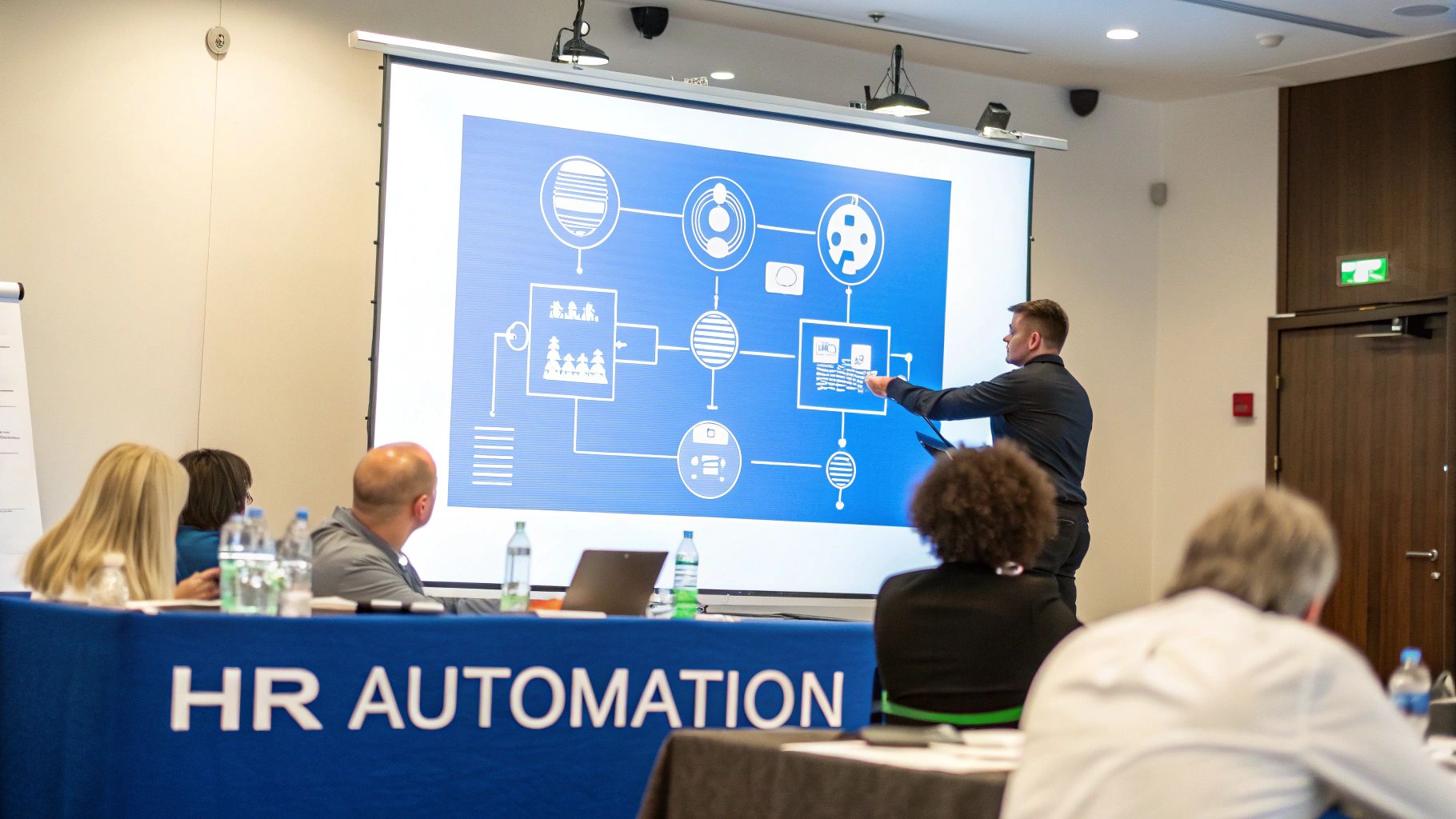
True digital transformation in HR isn’t just about scanning paper files and calling it a day. It’s about building smart, automated workflows that practically run themselves, becoming the real operational backbone of a modern company. This shift has moved from a “nice-to-have” to a fundamental business need.
When you automate core processes like recruitment, onboarding, and payroll, you free up your HR team from the daily grind of administrative busywork. This isn’t just about saving time; it’s about shifting their focus from putting out fires to strategic, high-impact planning.
Think about an automated onboarding system. The moment a candidate accepts an offer, the system can kick off a whole chain of events without anyone lifting a finger—provisioning IT access, scheduling orientation, and even assigning the first training modules.
Unlocking Efficiency and Accuracy
Manual processes aren’t just slow; they’re a breeding ground for human error. One misplaced decimal in a payroll calculation or a forgotten compliance step can snowball into major headaches for both the employee and the business.
Automation brings a level of precision that manual work just can’t compete with. By setting up rules-based workflows, you ensure every task is done right and on time, every single time. This drastically cuts down the risk of costly mistakes and compliance slip-ups.
Automation transforms HR operations from a series of disjointed manual tasks into a cohesive, self-managing system. This shift doesn’t just improve efficiency; it builds a foundation of reliability and trust across the entire organisation.
The time saved is just as crucial. Instead of chasing signatures or double-checking spreadsheets, HR professionals can put their expertise where it truly matters—developing leaders, strengthening company culture, or mapping out succession plans.
Creating a Seamless Employee Journey
Automation has a direct impact on the employee experience by smoothing out the bumps in key interactions. Take the recruitment process. An automated system can keep candidates in the loop at every step, from application acknowledgement to interview scheduling, creating a great first impression.
That seamless feeling continues once they’re hired. New joiners feel welcomed and set up for success when their laptop is ready on day one and their initial meetings are already booked. These small, automated details send a powerful message of organisation and care.
A critical piece of this journey is verifying a candidate’s background. Weaving in automated checks ensures this step is both thorough and fast. For example, a solid system for employment history verification can be integrated right into the onboarding workflow, confirming credentials without slowing things down. It helps build a trustworthy workforce from the get-go.
Staying Competitive in a Digital-First World
The move to automation is picking up speed. India’s HR tech scene, in particular, is undergoing a massive change, with 69% of organisations now automating their core HR functions. This shows a clear shift away from old-school paperwork towards smarter, AI-driven platforms that are now essential for staying in the game. You can read more about the Indian HR tech boom and what’s next for workforce strategy.
By automating core processes, companies build a more agile and resilient foundation. It allows them to scale more effectively, react faster to market shifts, and ultimately, pull in and keep top talent. The strategic advantage is undeniable.
Putting Employee Experience at The Centre
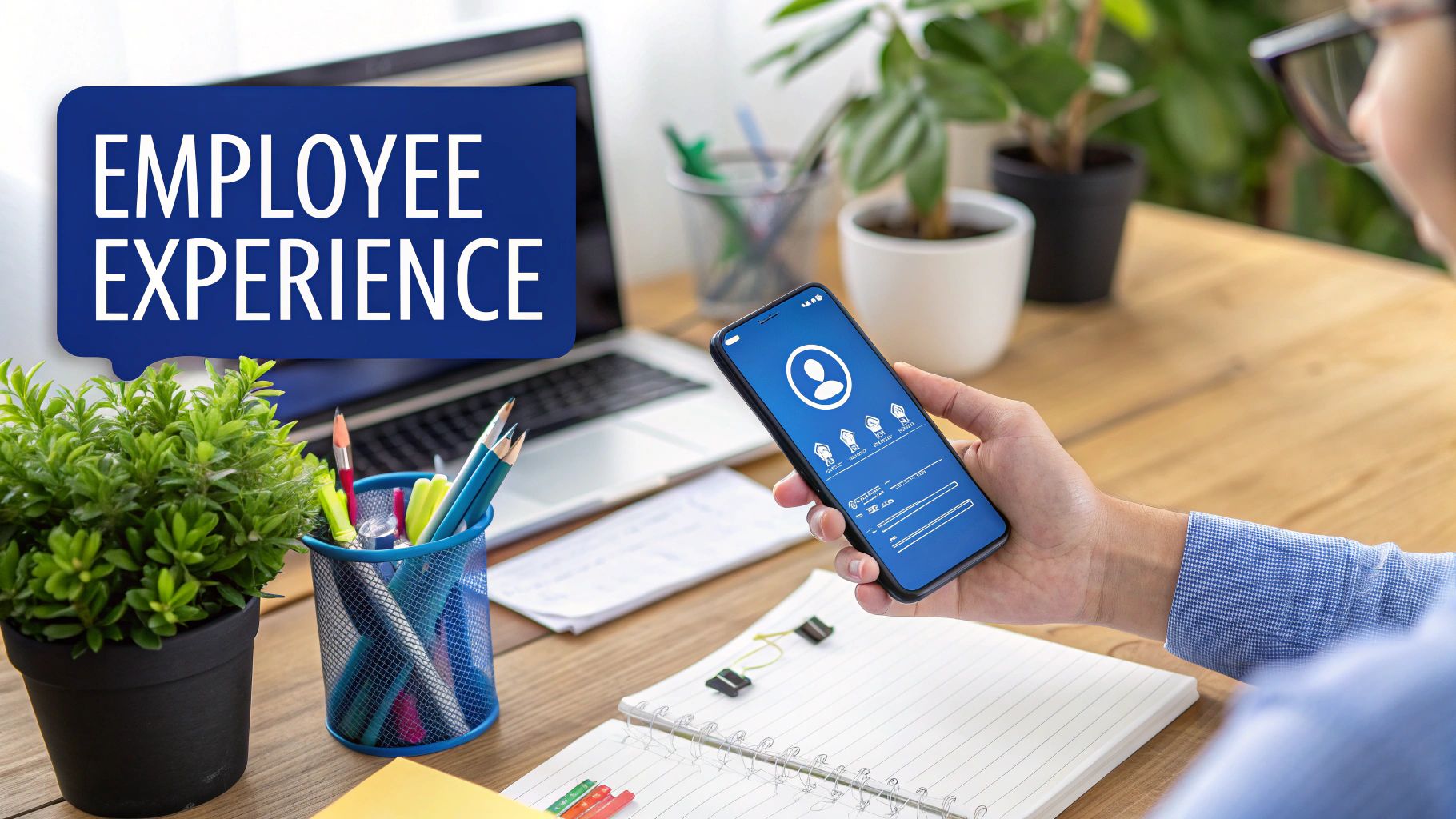
Let’s be honest. The real test of any digital transformation in HR isn’t how fancy the tech is. It’s how good the employee experience (EX) feels. If your new tools are clunky, impersonal, or just plain confusing, the whole project can fall flat on its face. The goal is to make every digital touchpoint feel human, intuitive, and genuinely helpful.
Technology should be a bridge, not a barrier. It’s there to strengthen the bond between your people and the organisation, creating a workplace where tech actually empowers them and makes their lives easier. When you get it right, the digital tools almost disappear, blending seamlessly into the daily flow of work.
This human-centric mindset is what separates simply digitising old processes from truly transforming your work environment.
Making Technology Feel Personal and Accessible
One of the biggest shifts we’re seeing in HR is the demand for consumer-grade tech. Your employees expect their work apps to be as simple and slick as the ones on their smartphones. This means giving them easy, on-demand access to everything they need, whenever they need it.
Mobile-first HR apps are the perfect example. They let someone check their payslip on the commute, request time off from the sofa, or look up benefits information in a few taps. This kind of convenience removes friction and gives people a real sense of control over their work life.
In India, this isn’t just a trend; it’s a core strategy. Employee experience has moved to the centre of digital HR, with companies adopting a whole suite of tools to keep their teams engaged. In fact, between 70% to 85% of Indian companies are now rolling out mobile-first HR solutions to meet the expectations of a workforce that wants everything on the go.
Fuelling Engagement and Growth
A positive, tech-enabled employee experience directly fuels higher engagement and retention. It’s simple: when your team feels supported by the systems around them, they feel more connected to the company.
Think about these real-world applications:
- Personalised Learning Platforms: Modern Learning Management Systems (LMS) use AI to suggest courses based on an employee’s role, skills, and career goals. Suddenly, training isn’t a one-size-fits-all chore; it’s a personal development journey.
- Instant Feedback Tools: Digital platforms for real-time feedback help people feel heard and valued. Instead of waiting for a stuffy annual review, managers and colleagues can share praise and useful advice right away.
- Wellness and Support Systems: Many forward-thinking organisations now offer digital wellness apps with resources for mental and physical health. This shows a genuine commitment to people beyond just their output at work.
Weaving in top employee engagement best practices is the bedrock of a thriving workplace that gets the most out of digital HR. When powered by the right tech, these practices create a virtuous cycle.
Technology should not replace human connection; it should amplify it. The best digital HR tools automate the transactional, freeing up time for the meaningful conversations and strategic thinking that only people can provide.
The Business Case for a Strong EX
At the end of the day, focusing on the employee experience isn’t just a “nice-to-have.” It’s a hard-nosed business decision. A great EX, powered by smart technology, delivers results you can actually measure.
Engaged employees are more productive, more innovative, and more invested in the company’s mission. They turn into brand ambassadors who help you attract other great people, building a powerful employer brand that shines in a crowded talent market.
By putting your employees at the very centre of your digital strategy, you build a workforce that is resilient, motivated, and high-performing. The technology is the enabler, but the human experience is always the goal.
Your Roadmap for Implementing Digital HR
Jumping into a digital transformation in HR can feel like a massive undertaking. But with a solid plan, what looks like a mountain becomes a series of manageable hills. A clear roadmap is your compass, making sure every new tool, process tweak, and decision actually serves your bigger business goals. It stops you from getting distracted by shiny new tech and keeps everyone focused on creating real value.
This isn’t a one-and-done project. Think of it as a continuous cycle of improvement. To get it right, you need to tackle it in phases, starting with a hard look at where you are now before methodically building towards where you need to be.
Phase 1: Assess Your Current State
Before you can build a better future, you have to get brutally honest about the present. This first phase is all about discovery and diagnosis—painting a detailed picture of your current HR processes, tools, and frustrations.
Start by mapping out how things get done today. Where are the biggest bottlenecks? Are your hiring managers drowning in manual CV screening? Is your onboarding process a chaotic mess of paperwork that leaves new hires confused? Pinpointing these friction points shows you exactly where a digital solution will have the biggest and most immediate impact.
Next, it’s time for a tech audit. Make a list of every single piece of HR software you use, from payroll to any applicant tracking systems. Figure out which systems talk to each other and, more importantly, which ones don’t. This exercise will quickly expose the glaring gaps and inefficiencies in your current setup.
Prioritise your fix-it list by weighing impact against effort. Go for the “quick wins” first—those high-impact, low-effort changes that build momentum and show everyone the value of digital HR right from the start.
Phase 2: Secure Buy-In and Define Your Goals
With a clear picture of your challenges, the next step is to get your key stakeholders on board. A true transformation needs champions at every level, from the C-suite to department heads. Share what you’ve learned from your assessment with senior leaders, IT, and managers across the business.
This is your chance to define what success actually looks like, together. Your goals can’t be fuzzy wishes like “improve recruitment.” They need to be specific, measurable, and tied directly to business results. For instance:
- Reduce time-to-hire by 25% within the next six months.
- Increase the candidate Net Promoter Score (cNPS) by 15 points in one year.
- Lower first-year employee turnover by 10% by automating the onboarding experience.
These concrete metrics become the bedrock of your roadmap and give you a powerful way to prove your return on investment down the line.
Phase 3: Develop a Phased Implementation Plan
Now it’s time to build the actual roadmap. This plan should break the entire project down into logical phases, each with its own timeline, milestones, and owners. A phased approach is essential. It lets you start small, test your ideas, learn from what works (and what doesn’t), and then scale up with confidence.
Your roadmap should cover these key areas:
- Technology Selection: Choose software and partners that fit your goals, not the other way around. Make sure any new tools can integrate cleanly with what you already have to avoid creating more silos.
- Process Redesign: Think through how the new tech will change your day-to-day workflows. This is about more than just plugging in software; it’s about streamlining processes, cutting out redundant steps, and automating the grunt work.
- Team Upskilling: Your own HR team needs the digital skills to drive this change. Figure out where the knowledge gaps are—like HRIS management or data analysis—and create training plans to get them ready.
Phase 4: Execute and Manage Change
With your plan locked in, it’s time to execute. But remember, installing new technology is only half the job. The other, more important half is guiding your people through the change. A rock-solid change management plan is absolutely critical for getting everyone to actually use and embrace the new systems.
Be open and communicate constantly with all employees about what’s changing. Explain the “why” behind it all—how this will make their jobs easier and the company stronger. Provide excellent training and ongoing support so nobody feels left behind or confused by the new tools.
Finally, keep a close eye on the metrics you set back in Phase 2. Use that data to make smart adjustments to your strategy along the way. This cycle of implementing, getting feedback, and refining your approach is what separates a successful, lasting transformation from a failed tech project.
Navigating Challenges and Proving ROI
Let’s be honest: embarking on a digital transformation in HR is a big commitment, and the path isn’t always a straight line. Real transformation means facing real challenges, from technical headaches to the very human tendency to resist change. Getting ahead of these issues is the secret to keeping your project on track and actually delivering the value you promised.
Often, the biggest hurdle isn’t the technology itself, but the people who have to use it every day. Employee resistance is a classic roadblock. When you roll out a new system, it’s natural for people to feel overwhelmed, worry about their roles changing, or just miss the old, familiar way of doing things.
At the same time, data privacy has become a non-negotiable part of the conversation. As HR systems gather more sensitive employee data, keeping it secure and using it ethically is paramount. A single breach can shatter trust and land you in serious compliance trouble.
Overcoming Common Obstacles
Successfully navigating these challenges is less about technical wizardry and more about a thoughtful, human-first approach. You can’t just install new software and hope everyone figures it out.
To tackle resistance, communication is your best tool. Be relentless in explaining the “why” behind the changes. Show your teams how these new tools will make their jobs easier, not harder, and help them make a bigger impact. Better yet, involve them directly through feedback sessions and user testing to create a sense of shared ownership.
When it comes to data privacy, transparency is everything.
- Establish Clear Governance: Write down exactly how employee data will be collected, stored, and used. No grey areas.
- Communicate Policies: Make sure every single employee understands their data rights and the protections you have in place.
- Prioritise Secure Systems: Partner with technology providers who have a rock-solid reputation for security and compliance.
Finally, don’t forget the technical snags that come with plugging new systems into old ones. A phased rollout, starting with a few pilot groups, is a smart move. It allows you to find and fix those tricky integration bugs before you go live for the whole organisation, saving you from widespread chaos.
Measuring What Truly Matters
Proving the return on investment (ROI) for digital HR isn’t just about counting the hours saved on admin tasks. While efficiency is a nice perk, the real win is connecting your HR tech investment to bottom-line business outcomes. You need to show the leadership team how these tools are helping to hit strategic goals.
The most powerful way to demonstrate ROI is to shift the conversation from cost-saving to value creation. Frame your metrics around talent, engagement, and business performance—areas that executives care deeply about.
Instead of just reporting that you’ve saved admin time, tell a strategic story with your data. For example, show how your new Applicant Tracking System (ATS) led to a 20% reduction in time-to-hire for critical roles. Connect your new onboarding platform to a tangible 15% decrease in first-year employee turnover. Use the data from digital feedback tools to show a measurable jump in employee engagement scores.
When you present data this way, you’re not just justifying an expense. You’re building a powerful case for your digital transformation in HR as a strategic investment in the company’s future.
Frequently Asked Questions About HR Transformation
Making a major shift like moving to a digital HR model always brings up a few questions. It’s completely natural. Here are some straightforward answers to the things leaders often ask when they’re just starting out.
What Is the Best First Step to Take?
The best place to start is always by diagnosing your biggest pain points. Before you even think about technology, figure out which one or two HR processes are causing the most headaches for your people or your HR team.
Is it a recruitment process that drags on forever? Maybe it’s a clunky, paper-based onboarding system that leaves new hires confused. By focusing on a high-impact area that doesn’t require a monumental effort, you can build momentum and show some quick wins. That makes it much easier to get buy-in for bigger changes later on.
How Can Smaller Businesses Afford to Modernise HR?
Modernising HR isn’t just for large corporations with deep pockets. You don’t have to buy a massive, all-in-one system. Many cloud-based HR software providers now offer flexible, subscription-based models designed specifically for smaller businesses.
These platforms let you pay for what you need today and add more features as your company grows. You could start with something simple, like automating leave management or streamlining your onboarding workflow. This approach gives you a significant return without a huge upfront investment.
The goal isn’t to buy everything at once. It’s to strategically invest in tools that solve your most pressing problems, delivering measurable results without breaking the budget.
What Are the Most Important Metrics for Measuring Success?
Every business is unique, but a few key metrics are fantastic for showing the real-world impact of your digital HR efforts. The trick is to focus on data that clearly connects what HR is doing to what the business is achieving.
Here are the essential metrics you should be tracking:
- Time-to-Hire: This shows you how efficient your recruitment process is, from posting the job to getting an offer accepted.
- First-Year Employee Turnover: A great indicator of how well your onboarding and early employee experience are working.
- Employee Engagement Scores: This gives you a pulse on overall satisfaction and how connected people feel to the company culture.
- HR Process Efficiency: This tracks the time and money you’re saving by automating all those routine admin tasks.
Making informed hiring decisions starts with reliable background verification. SpringVerify provides fast, accurate, and seamless screening solutions that integrate directly into your workflows, helping you build a trustworthy team with confidence. Learn more at https://in.springverify.com.


