

Table of Contents
The Digital HR Revolution Reshaping Indian Workplaces
The HR landscape in India is changing. Digital HR transformation is becoming essential for businesses. This goes beyond simply using new software. It’s about completely rethinking how organizations manage their employees. Companies across India, from new startups to established businesses, are using digital HR to stay competitive. This includes automating routine tasks, using data-driven insights, and creating a better employee experience.
The Impact of Digitization on HR in India
The use of automation is a key part of digital HR transformation in India. Studies show that 69% of organizations in India are now automating their HR operations. This demonstrates the shift towards using technology for core HR functions. Businesses are realizing that HR technology is a necessary investment. Integrating AI and automation into HR processes has been a major factor in increasing productivity and enhancing employee experiences in Indian organizations. For example, AI-powered hiring tools are changing the way companies recruit. These tools automate resume screening and predict the best candidates, reducing hiring time and improving decisions. This highlights how India is embracing digital HR to stay competitive. Learn more: The Economic Times. More resources are available on Human Resources.
The following infographic shows the positive impact of digital HR across three key areas: percentage of HR processes automated, average hours saved per employee per week, and percentage increase in employee satisfaction.
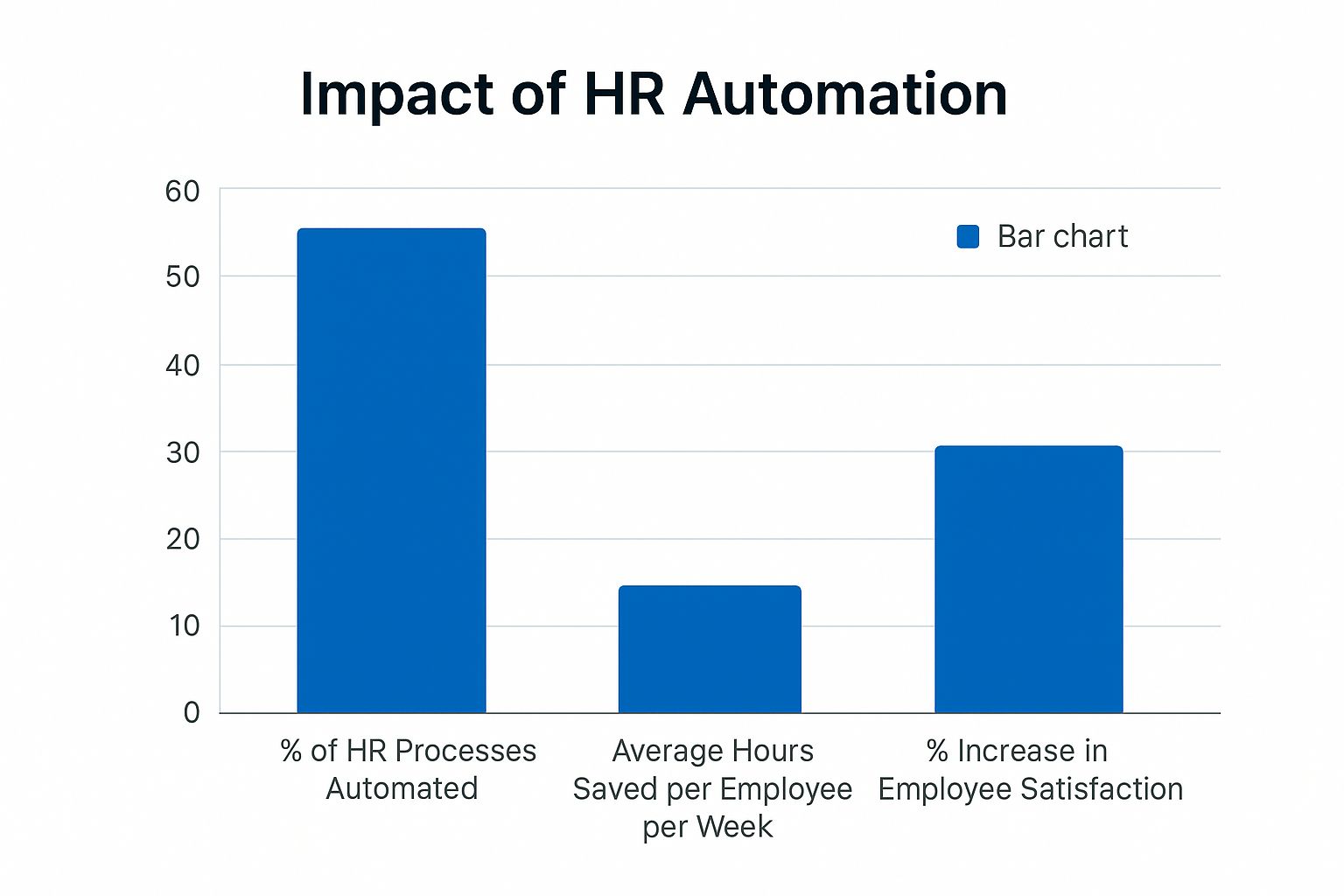
The data clearly shows that companies using digital HR are seeing significant improvements. Increased automation leads to less time spent on administrative tasks and happier employees. This proves the importance of technology in improving efficiency and the overall employee experience.
A Closer Look at the Benefits
These positive results are real. They show a clear change in how Indian businesses operate. Automating tasks like leave requests and payroll frees up HR professionals. This gives them more time for strategic work, such as talent development and employee engagement. Digital HR platforms also provide real-time data and analytics. This empowers HR leaders to make better decisions about workforce planning and performance management.
To better understand the sector-specific adoption, let’s examine the following table:
Digital HR Adoption Rates Across Indian Industries
This table shows the adoption rates of digital HR technologies across different industry sectors in India, highlighting which sectors are leading the transformation.
| Industry Sector | Adoption Rate (%) | Primary Technologies | Maturity Level |
|---|---|---|---|
| IT | 85 | Cloud HR, AI-powered recruitment, Performance Management Systems | High |
| BFSI | 78 | Talent Analytics, Employee Engagement Platforms, HR Automation | High |
| Retail | 65 | Workforce Management Systems, Payroll Automation, Learning Management Systems | Medium |
| Manufacturing | 55 | HRMS, Recruitment Automation, Basic Analytics | Medium |
| Healthcare | 62 | Talent Acquisition platforms, Performance Management, HRIS | Medium |
Key Insights:
- The IT and BFSI sectors have the highest adoption rates, reflecting their tech-savvy nature.
- Retail, Manufacturing, and Healthcare show moderate adoption, with room for significant growth.
- The primary technologies vary based on sector-specific needs and priorities.
Navigating the Challenges of Digital HR Transformation
The shift to digital HR does have challenges. Many organizations, especially small and medium-sized enterprises (SMEs), face difficulties. These include limited resources, technology integration issues, and managing change. Overcoming these challenges requires a strategic approach. This includes getting support from leadership, investing in training for HR staff, and creating a culture of adaptability among employees. Companies must address the human side of this change. They need to ensure their employees feel supported during this process. Investing in employees is crucial for realizing the full potential of digital HR and achieving lasting growth.
Game-Changing Technologies Powering HR Transformation

Digital HR transformation is now a reality for many Indian organizations. This shift is fueled by powerful technologies that are changing how HR departments function and contribute to business success. These technologies move beyond basic automation, empowering HR professionals to become strategic partners.
AI-Powered Talent Acquisition: Finding the Best Fit
Talent acquisition is one area undergoing significant change. AI-powered platforms are automating many recruitment tasks, from sourcing candidates to initial screenings. This not only saves time but also improves the effectiveness of identifying the best candidates.
AI algorithms can analyze resumes and assess candidate fit based on a wider set of criteria than traditional methods. This helps reduce bias and build more diverse teams. It also frees recruiters to focus on building relationships with top candidates and developing strong employee value propositions. Retaining talent is a key challenge, and strategies to reduce turnover rate are invaluable.
Analytics Dashboards: Data-Driven HR Decisions
HR analytics is another game-changing technology. Analytics dashboards give HR leaders real-time insights into workforce trends, employee performance, and engagement levels. This data enables informed decisions about workforce planning, talent development, and other strategic initiatives.
Analytics can also identify areas for improvement in HR processes. This leads to greater efficiency and cost savings. For example, analytics can pinpoint bottlenecks in onboarding or reveal training programs that aren’t delivering expected results.
Employee Self-Service Portals: Empowering the Workforce
Employee self-service portals play a vital role in digital HR transformation. These portals allow employees to access information and resources whenever they need them.
Employees can manage their own leave requests, update personal information, access payslips, and enroll in benefits programs. This empowers employees and frees HR professionals from administrative tasks. Increased efficiency allows HR to focus on more strategic initiatives like fostering a strong company culture and boosting employee engagement. How to master API Integrations can further enhance these portals.
Integration and the HR Tech Ecosystem
The real strength of these technologies lies in their integration. Successful organizations create integrated HR tech ecosystems where different platforms work seamlessly together.
This means data flows smoothly between systems, eliminating data silos and providing a complete view of the workforce. This integrated approach maximizes the value of each technology and creates a more efficient HR department. For example, integrating a learning management system with a performance management system lets HR track employee development and its impact on performance.
To illustrate the impact of these technologies, let’s examine the following comparison table:
Impact of Digital HR Technologies on Key Metrics
This comparison table shows how different digital HR technologies impact important business and HR metrics like time-to-hire, employee satisfaction, and operational costs.
| Technology | Time Savings | Cost Reduction | Employee Satisfaction Impact | Implementation Complexity |
|---|---|---|---|---|
| AI-Powered Talent Acquisition | Significant (e.g., 20-30% reduction in time-to-hire) | Moderate to High (depending on platform and usage) | Positive (improved candidate experience, reduced bias) | Moderate |
| Analytics Dashboards | Moderate (faster reporting and analysis) | Moderate to High (improved process efficiency) | Positive (data-driven decisions benefitting employees) | Low to Moderate |
| Employee Self-Service Portals | Significant (reduces HR administrative burden) | Moderate (lower administrative costs) | Positive (increased employee empowerment and convenience) | Low to Moderate |
As shown in the table, digital HR technologies offer substantial time and cost savings, while also positively impacting employee satisfaction. While implementation complexity varies, the benefits often outweigh the challenges.
Selecting the Right Technologies for Your Organization
Choosing the right technologies depends on several factors, including company size, industry, and specific needs. Prioritize solutions that align with your business goals and support your overall HR strategy.
This might involve investing in AI-powered recruitment tools if your focus is on talent acquisition or implementing analytics dashboards if data-driven decision-making is a priority. By carefully selecting and integrating the right technologies, Indian organizations can unlock the full potential of digital HR transformation and gain a real competitive advantage.
Leveraging Government Support for HR Innovation

Many Indian organizations are unaware of the government resources designed to bolster digital HR transformation. These resources, especially beneficial for SMEs, can unlock access to technologies and expertise, greatly improving HR functions.
Government Programs and Incentives
Several government initiatives encourage digital adoption across various sectors, including HR. These programs often provide tax incentives, grants, and subsidized training. Some offer financial aid for implementing new HR technologies. Others connect businesses with expert consultants to guide them through the transformation. Tax breaks can also make investing in digital HR solutions more appealing financially.
This support is vital for Indian businesses facing increasing competition, complex regulations, and evolving employee expectations. The 2025 Union Budget is expected to significantly benefit the Indian HR landscape, accelerating digital transformation and automation. Government financial incentives can be particularly helpful for smaller businesses, providing access to advanced HR technologies previously out of reach due to budget limitations. For more detailed statistics, check out People Matters.
Public-Private Partnerships: Driving Innovation
Progressive organizations are exploring public-private partnerships to further propel HR innovation. These collaborations can unlock access to government funding, research expertise, and shared resources. They also allow businesses to contribute to shaping future HR policies and best practices.
For instance, a partnership might focus on developing AI-powered recruitment tools. Another potential area of focus could be using blockchain technology for secure employee data management. Technologies like AI are making a considerable impact on HR. To delve deeper into this topic, learn more about AI document processing.
Accessing Government Support: A Step-by-Step Guide
Applying for government support can sometimes seem daunting. Understanding the steps involved can significantly increase your chances of a successful application.
- Identify Relevant Programs: Research programs aligned with your organization’s needs and objectives.
- Meet Eligibility Criteria: Carefully review the eligibility requirements for each program.
- Gather Required Documentation: Compile necessary documents, such as financial statements and business plans.
- Submit a Compelling Application: Clearly articulate the potential impact of digital HR transformation on your business.
- Follow Up and Stay Informed: Monitor your application status and communicate with the relevant authorities.
Compliance and Documentation: Ensuring Eligibility
Meeting compliance requirements and submitting accurate documentation are essential. Maintain thorough records of HR processes, finances, and legal obligations. This ensures eligibility for various programs and builds trust with government agencies. Consulting with legal and financial professionals is also advisable.
By leveraging these resources, Indian organizations can fast-track their digital HR transformation. Planning your funding strategy now can significantly improve your ability to adopt new HR technologies, ultimately cultivating a more engaged and productive workforce.
Mastering Hybrid Work Through Digital HR Solutions
The shift to hybrid work in India presents exciting opportunities and unique challenges. Digital HR transformation has become essential for organizations navigating this new landscape. This goes beyond simply implementing new software; it’s about fundamentally reshaping how we manage and engage a distributed team.
Building a Connected Workforce: Technology’s Role
Managing a hybrid workforce effectively requires new tools. These technologies empower organizations to connect with employees regardless of location. Collaboration platforms like Microsoft Teams and Slack facilitate communication and project management for distributed teams. Performance management systems can track progress and offer real-time feedback, ensuring everyone stays aligned with company objectives.
This digital transformation cultivates a more connected and engaged workforce, fostering a sense of belonging even when employees are physically separated. However, thoughtful implementation and continuous evaluation are essential. This ensures the technology serves its purpose and truly benefits the organization.
Addressing the Indian Context: Unique Challenges and Solutions
The Indian context presents specific challenges for hybrid work. Factors like varying levels of digital literacy and infrastructure limitations can complicate the shift. Organizations must adopt a nuanced approach tailored to their specific needs. For example, providing training and support for new technologies is crucial for successful adoption.
Shifting traditional management mindsets is also vital. Hybrid work often requires a change in leadership, emphasizing trust and flexibility. Digital HR solutions can support this shift by providing data-driven insights into employee performance and engagement. This empowers managers to make informed decisions and adapt their approach. The HR tech ecosystem in India is evolving with trends like hybrid work and AI-driven engagement platforms. As companies adapt, digital tools are streamlining hiring, onboarding, and benefits management. This is expected to improve employee experiences and overall productivity. For example, AI-driven analytics and pulse surveys integrated into HR platforms offer personalized feedback and boost engagement. The focus on skills intelligence and simplified technology will be key for HR digital transformation in 2025. Learn more: OneSpan.
Choosing the Right Technology Mix: A Strategic Framework
Selecting the right technology mix is crucial for maximizing the benefits of digital HR transformation. This involves carefully assessing your organization’s specific needs and aligning them with available solutions. Consider the following:
| HR Function | Technology Solutions | Key Considerations |
|---|---|---|
| Communication & Collaboration | Video Conferencing, Instant Messaging, Project Management Software | Ease of use, integration with existing systems, security features |
| Performance Management | Performance Management Systems, Goal Tracking Software, Feedback Platforms | Alignment with organizational goals, employee accessibility, data analytics capabilities |
| Learning & Development | Learning Management Systems, Online Training Platforms, Microlearning Platforms | Content relevance, accessibility for diverse learning styles, integration with performance management |
| Employee Engagement | Pulse Surveys, Employee Recognition Platforms, Social Intranet Platforms | Data privacy, user-friendliness, ability to measure impact |
Thoughtful selection and implementation of these tools can effectively support a hybrid workforce.
Measuring Success: Key Metrics for Hybrid Work
Implementing new technologies is only the first step. Tracking their effectiveness through clearly defined metrics and regular monitoring is essential. Key metrics for hybrid work include:
- Employee engagement: Measured through surveys, feedback, and participation in company activities.
- Productivity: Tracked using project management tools and performance management systems.
- Retention: Monitored through employee turnover rates and exit interview feedback.
- Collaboration: Assessed through team performance, communication patterns, and employee feedback.
Continuously monitoring these metrics provides valuable insights into the impact of your digital HR transformation. This data allows for adjustments and ensures the long-term success of your hybrid work model. Digital HR transformation ultimately empowers organizations to thrive in this new era of hybrid work, fostering a more connected, engaged, and productive workforce.
Breaking Through Implementation Barriers
Even with meticulous planning, digital HR transformation initiatives can stumble without a robust change management strategy. This section explores common roadblocks faced by organizations in India and offers practical solutions for navigating these challenges.
Understanding the Challenges
Implementing new HR technologies often encounters resistance. Employees may be hesitant to embrace new systems or processes. This hesitation can arise from a lack of clarity regarding the advantages of the digital HR transformation, anxieties about job security, or simply a natural aversion to change.
Furthermore, technical integration difficulties can emerge when linking new platforms with existing infrastructure. These integration hurdles can create data silos, process inefficiencies, and frustration among HR personnel.
Securing Buy-In at All Levels
Successfully addressing these obstacles necessitates building support across the organization. It’s essential to obtain buy-in from the C-suite by clearly demonstrating the business value of the digital HR transformation. This involves showcasing how digital HR can contribute to crucial business goals like improved productivity, cost reduction, and enhanced employee engagement.
Equally vital is engaging middle management and frontline employees. This requires providing comprehensive training and support, addressing their concerns, and highlighting the advantages of the new systems for their daily tasks. Catering to the specific needs of a diverse workforce is particularly crucial in India, where cultural nuances can significantly influence adoption rates. Open communication and consistent feedback mechanisms are essential throughout this process.
Building a Realistic Roadmap
A pragmatic implementation roadmap acknowledges organizational limitations. This includes recognizing constraints related to resources, budget, and technical expertise. Phased implementation is often a more effective strategy, allowing organizations to test and refine new systems incrementally before a complete rollout.
This approach fosters opportunities for learning and adaptation. For example, initiating a pilot project within a single department can provide invaluable insights before deploying the technology company-wide. This allows for necessary adjustments and facilitates a smoother, organization-wide transition.
Developing Digital Capabilities
Cultivating digital proficiency within the existing team is paramount. This involves upskilling current HR professionals through targeted training programs focused on new technologies and data analytics. It also necessitates fostering a culture of continuous learning where employees are encouraged to explore new tools and adapt to evolving technologies.
For instance, training programs on data analysis can empower HR professionals with the skills to decipher workforce dynamics and inform strategic decisions. Another key aspect is developing change management expertise within the HR team. This prepares them to guide employees through the transformation, address their concerns, and ensure a smooth shift.
Measuring Progress Beyond Technical Metrics
Evaluating the success of digital HR transformation requires looking beyond purely technical indicators. While implementation milestones and system performance are important, the focus should also encompass the broader organizational impact.
This means tracking metrics such as employee satisfaction, productivity gains, and improvements in talent retention. These aspects offer a more comprehensive view of the transformation’s influence on the business. For example, measuring employee satisfaction through pulse surveys can provide valuable feedback on the effectiveness of the new systems and allow for continuous improvement.
By proactively addressing these implementation hurdles, organizations in India can fully realize the potential of digital HR transformation. This contributes to building a more efficient, engaged, and productive workforce. Moreover, a strategic approach to change management will lead to higher adoption rates and maximize the long-term benefits of digital HR investments.
Measuring What Matters: Digital HR Success Metrics

While implementing new HR technologies is important, understanding the true impact of digital HR transformation relies on measuring the right things. This means going beyond surface-level metrics and focusing on Key Performance Indicators (KPIs) that demonstrate real business value.
Defining Success: KPIs for Different Stages
The KPIs you track should evolve with your organization’s progress in its digital HR journey. Early on, you might concentrate on operational metrics like time saved through automation.
For instance, if you’ve automated leave requests, track the time HR saves compared to the old manual process. This immediate impact showcases the transformation’s value.
As your organization progresses, shift to strategic metrics like employee engagement and retention. Measure employee satisfaction changes through surveys. Track turnover rates to see if the digital tools are fostering a more positive work environment.
Building a Balanced Scorecard: Operational and Strategic Impact
A balanced scorecard offers a comprehensive view of your digital HR transformation. It combines operational and strategic metrics for a complete impact assessment.
- Operational Metrics: These assess efficiency and cost savings. Examples include time-to-hire, cost-per-hire, and HR administrative costs.
- Strategic Metrics: These reflect the broader business impact. Examples include employee engagement, retention rates, and employee productivity.
Tracking both provides insight into the immediate automation benefits and long-term organizational effects. For example, a reduced time-to-hire (operational) might correlate with increased new hire quality (strategic).
HR Analytics: Demonstrating Business Value
HR analytics is crucial for demonstrating the value of your digital HR transformation to leadership. Data-driven insights concretely show how these changes affect the bottom line.
Track productivity gains linked to new performance management tools. Quantify cost savings from reduced employee turnover through improved engagement initiatives powered by digital platforms.
Effective Reporting: Dashboards and Frameworks
Clear, concise reporting is essential. Use dashboards to visualize your progress. Create reporting frameworks that clearly communicate the transformation’s value to leadership.
Tailor these frameworks to your industry and organizational size. A large manufacturing firm might emphasize workforce productivity, while a small startup might prioritize employee engagement and retention.
Building Your Measurement Model
Start by establishing a baseline for your chosen KPIs. This creates a starting point for measuring progress. Set realistic improvement targets.
For example, aim to reduce time-to-hire by 15% within six months of implementing a new Applicant Tracking System (ATS). This provides a measurable, realistic target. Regularly monitor progress and adjust your approach as needed. This ensures your digital HR transformation continues delivering value.
The Future of Digital HR: Preparing for What’s Next
Digital HR transformation is a continuous evolution, not a finite goal. Forward-thinking HR leaders in India must anticipate and adapt to the ever-changing technological landscape. This involves understanding emerging trends and preparing for their impact on the future of work.
Emerging Technologies Reshaping Indian Workplaces
Several key technologies are transforming HR in India. Predictive analytics is going beyond simple reporting, enabling HR to anticipate future workforce needs and proactively address potential issues. For instance, predictive analytics can identify employees who might be considering leaving, allowing HR to implement retention strategies.
Blockchain technology offers increased security and transparency for various HR processes, including background verification and payroll management. This is particularly important in India, where data security and compliance are paramount. You might be interested in: How to master talent acquisition. Furthermore, extended reality (XR), including virtual and augmented reality, is creating immersive training experiences and changing onboarding processes.
Future-Proofing Your HR Strategy
To prepare for these advancements, HR leaders should focus on building adaptable systems. This involves investing in technologies that integrate with existing platforms and scale as the organization expands. A modular approach to HR technology allows for flexibility and customization, ensuring your systems can adapt to your evolving needs.
Developing essential digital skills within your HR team is equally important. This includes training on data analysis, AI, and other emerging technologies. By empowering your team with these skills, you can maximize the value of your technology investments and drive innovation within HR.
Prioritizing Investments: Technology Readiness and Timelines
Not all new technologies are equally developed or relevant to every organization. It’s crucial to assess the technology readiness level (TRL) of each technology and its potential impact on your business needs. This helps prioritize investments and avoid costly errors.
Consider the implementation timelines for each technology. Some solutions, like AI-powered chatbots for employee support, can be implemented quickly. Others, such as integrating blockchain for payroll, require more extensive planning and development. A realistic assessment of timelines and resources helps create a practical roadmap for your digital HR transformation.
Building a Culture of Continuous Learning
Finally, fostering a culture of continuous learning is essential for long-term success. Encourage your HR team to explore new technologies, experiment with pilot projects, and stay informed about industry best practices. This continuous learning process ensures your organization remains agile and responsive to constant change.
Ready to transform your HR processes and make data-driven decisions? SpringVerify offers reliable and comprehensive background verification services, seamlessly integrating with your existing HR tech stack to streamline your hiring process and enhance data security.


