

Table of Contents
Understanding Data Transfer Compliance Without the Headaches

Imagine you’re a courier entrusted with valuable packages. These packages, however, are filled with sensitive digital information, and every stop on the route has its own set of rules. That’s essentially what data transfer compliance is like. Moving customer data between systems, partners, or across borders means navigating a complex web of regulations. Something as seemingly simple as sharing data with an international vendor becomes a process that demands both security and legality, far beyond a simple email attachment.
Beyond the very real threat of fines, data transfer compliance builds trust with your customers. Sharing personal information is an act of faith, and responsible handling is paramount. This trust cultivates customer loyalty and a strong brand reputation. Demonstrating solid compliance also smooths the way for stronger relationships with regulators and partners.
Key Players in Data Transfer Compliance
Understanding this landscape starts with knowing the key players. The data controller sets the purpose and methods for processing personal data. Think of them as the architect, designing the data’s journey and ultimately responsible for compliance, even if the actual handling is outsourced. The data processor is the construction crew, processing the data according to the controller’s blueprint. They too carry specific compliance responsibilities, particularly around security and accountability.
India’s commitment to data protection solidified in 2018 when the Supreme Court declared privacy a fundamental right. This paved the way for the Digital Personal Data Protection Act, 2023 (DPDPA), now the cornerstone of cross-border data transfer regulations. Discover more insights on the DPDPA’s impact here. This highlights the growing global emphasis on data privacy.
Balancing Compliance and Operations
One of the trickiest aspects of compliance is balancing strict security with the need for smooth business operations. Excessive complexity can stifle efficiency, while lax security invites significant risks. The solution lies in a strategic approach: safeguards implemented thoughtfully, not just ticked off a checklist.
- Secure file transfer protocols, for instance, protect data in transit without impacting project timelines.
- Robust access controls limit who can see sensitive information, minimizing unauthorized access.
Understanding each regulation’s specific requirements and tailoring your approach is crucial. This means considering the type of data being transferred, the countries involved, and the applicable regulations. Careful consideration of these factors allows businesses to develop compliant data transfer processes that support their operational needs.
Navigating India’s DPDPA: What Actually Matters for Business

India’s data protection landscape is constantly evolving. The goal? A system that safeguards citizen data while allowing businesses to flourish. The Digital Personal Data Protection Act (DPDPA) has a significant impact on how companies handle Indian customer data. It’s more than just checking boxes; it’s about weaving data protection into the very fabric of your business strategy.
Real-World DPDPA Scenarios
Imagine a Bengaluru-based fintech startup processing loan applications. They need to send applicant data to a credit scoring agency in Singapore. A key question arises: does this comply with the DPDPA? Now, picture a Mumbai-based e-commerce platform fulfilling customer orders. They must guarantee their data transfers to a Delhi-based logistics partner adhere to the rules. Even a multinational with offices across India faces the same challenge: navigating DPDPA compliance for internal data sharing.
The DPDPA’s blacklisting mechanism plays a crucial role. The Indian government identifies specific countries where data transfers are restricted. Knowing this list is essential for any business operating in India. The Digital Personal Data Protection Act, 2023, introduces important changes to data transfer compliance. Data fiduciaries can transfer personal data for processing to any country except those blacklisted by the Indian government. Discover more about data transfers in India here.
Government Approval and Strategic Decisions
When is explicit government approval necessary for data transfers? The DPDPA outlines specific cases where it’s mandatory. Transfers to blacklisted countries or those involving sensitive personal data often require prior government consent.
Forward-thinking companies are proactively adapting. They’re not merely reacting to regulations, they’re anticipating them. This includes:
- Developing strong data transfer policies
- Implementing secure transfer methods
- Cultivating a culture of data protection within their organization
A well-defined privacy policy is crucial for data transfer compliance. Take a look at prodshot’s approach to their privacy policy, for example. You can explore further compliance resources on our website.
Learning From Successes and Failures
Real-world case studies offer invaluable lessons. Some organizations have successfully navigated the complexities of the DPDPA, while others have faced challenges. Learning from both successes and failures allows you to anticipate potential roadblocks and implement best practices. This proactive approach not only ensures compliance but also builds trust with your customers. Understanding the DPDPA and its practical implications empowers your business to thrive in this dynamic landscape. It’s not just about legal compliance; it’s about building a sustainable and responsible business for the future.
Building Bulletproof Transfer Processes That Actually Work
Creating compliant data transfers isn’t about checking off boxes on a list. It’s about building a solid, reliable system – think of it as constructing a bridge. Every part needs to work together seamlessly. The difference between simply meeting minimum requirements and having truly robust processes is understanding the why behind each step. This section goes beyond simple checklists and dives into the core of secure and compliant transfers. We’ll explore practical frameworks used by organizations that handle massive data transfers every day, showing you how to assess real risks, implement effective safeguards without slowing down your operations, and create audit trails that will satisfy any regulator.
Data Mapping and Impact Assessments
Data mapping isn’t just a technical exercise. It’s like creating a detailed map of your data’s journey. This process involves identifying what data you possess, where it’s stored, and where it needs to go. Combining this with impact assessments, which evaluate the potential risks associated with each transfer, makes data mapping the crucial first step in building compliant processes. It’s like planning a road trip: you need to know the route, the potential hazards, and the best way to get to your destination.
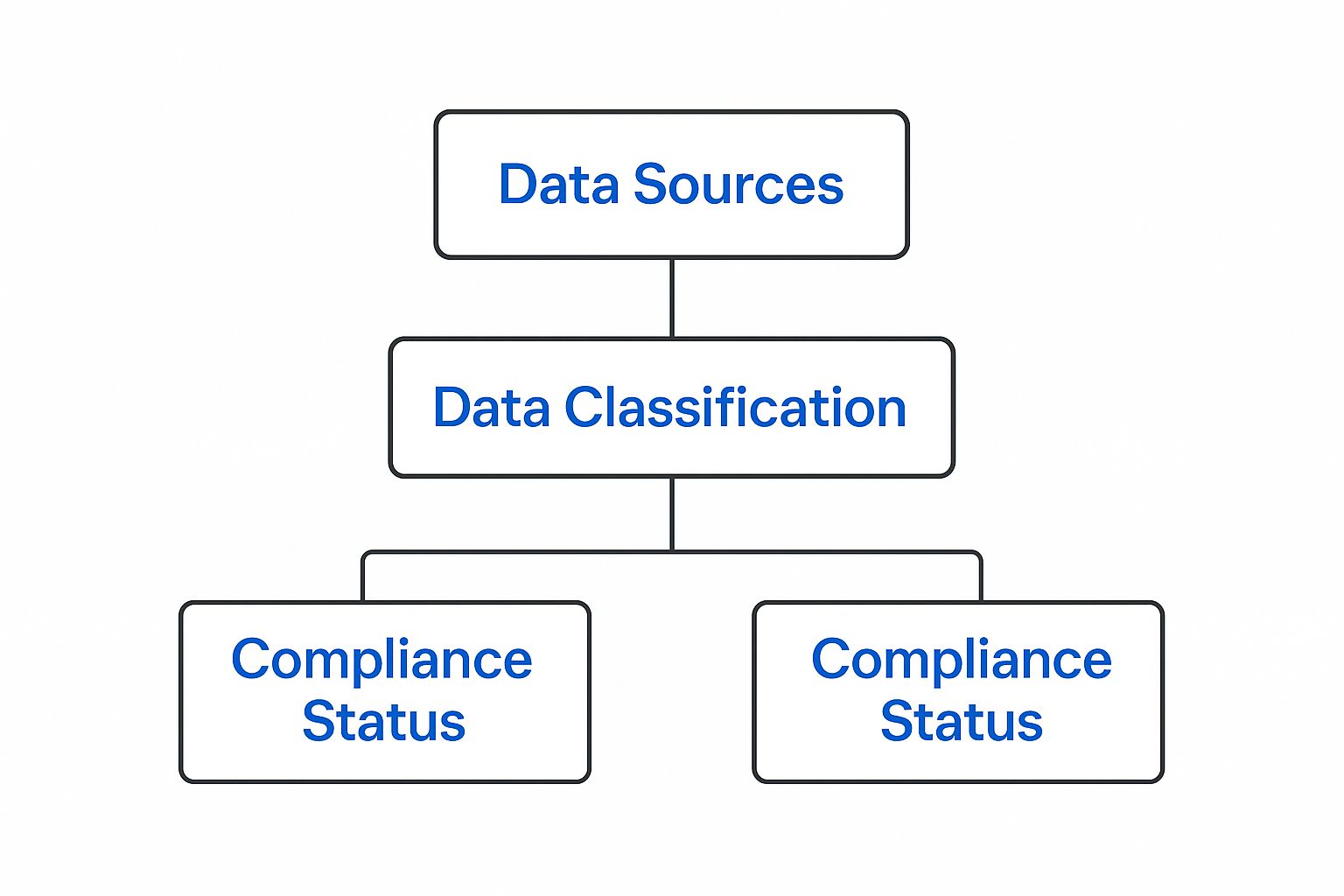
This infographic illustrates the path from data sources to compliance, highlighting the important role of data classification. It shows how understanding your data sources is key to achieving compliance. By classifying your data effectively, you can tailor your security measures and ensure your data transfers are compliant.
Monitoring and Risk Mitigation
Setting up strong monitoring systems is like installing security cameras in your data warehouse. These systems constantly watch for unusual activity, alerting you to potential breaches or compliance violations before they become major problems. Real-time monitoring lets you quickly address issues and prevent them from escalating. For example, a sudden increase in data access requests from an unfamiliar location might trigger an alert, allowing for quick investigation and action.
Successful organizations don’t just react to risks; they actively work to minimize them. This involves:
- Implementing strong access controls: Limiting data access based on roles and a need-to-know basis.
- Encrypting data in transit and at rest: Protecting data from unauthorized access even if intercepted.
- Regularly reviewing and updating security protocols: Ensuring your defenses are strong against new threats.
These measures, combined with a clear understanding of the relevant regulations, create a robust framework for data transfer compliance. For more practical solutions, take a look at our resources on API integrations.
Handling Complex Scenarios
Data transfers aren’t always simple. Consider emergency data transfers, data flowing across multiple countries, or situations where business needs seem to conflict with compliance requirements. These scenarios require a flexible yet compliant approach.
To illustrate this, let’s look at some real-world examples. One company created a clear protocol for emergency transfers, balancing the urgent need to transfer data with the necessary security measures. Another organization implemented a tiered approach to data access, ensuring employees in different locations could access the data they needed while still complying with local regulations.
By anticipating potential challenges and creating flexible solutions, these organizations successfully navigate complex scenarios while maintaining data transfer compliance. These examples show how practical frameworks and a deep understanding of regulations can help businesses manage even the most challenging data transfers. This proactive approach allows organizations to balance business needs with compliance obligations, building trust with customers and stakeholders while avoiding legal problems. It’s not just about following the rules; it’s about building a resilient, adaptable system that can handle challenges and ensure the safe and compliant transfer of data.
Data Transfer Compliance Framework Comparison
The table below compares various data transfer compliance frameworks, highlighting their key requirements and differences. Understanding these frameworks is essential for building robust data transfer processes.
| Framework | Geographic Scope | Key Requirements | Transfer Mechanisms | Penalties |
|---|---|---|---|---|
| GDPR | European Union | Data subject consent, Standard Contractual Clauses (SCCs), Binding Corporate Rules (BCRs) | SCCs, BCRs, Adequacy Decisions | Up to €20 million or 4% of annual global turnover |
| CCPA | California, USA | Right to know, right to delete, right to opt-out | Data processing agreements, de-identification | Up to $7,500 per violation |
| HIPAA | USA | Protected Health Information (PHI) confidentiality, integrity, and availability | Business Associate Agreements (BAAs) | Up to $50,000 per violation, criminal penalties for willful neglect |
This table provides a simplified overview. Each framework has its own nuances and complexities. Consulting legal experts is crucial for ensuring full compliance. By understanding the key differences and similarities between these frameworks, organizations can develop a comprehensive strategy for data transfer compliance. This proactive approach is essential for building trust, mitigating risks, and ensuring the long-term success of any business operating in today’s interconnected world.
Security Measures That Protect Without Paralyzing Operations
Security for data transfers isn’t about building an impenetrable fortress around your data. Think of it more like designing a secure, yet functional office building. You need layers of protection that keep unauthorized people out while still allowing authorized personnel to move freely and do their work efficiently. This section explores how leading organizations strike that balance, ensuring strong security without sacrificing operational efficiency.
This diagram visualizes data encryption, the process of turning readable data into an unreadable format for secure transmission. Imagine it like sending a confidential letter in a locked box. Only the recipient with the correct key can unlock it and read the contents. This ensures confidentiality during both transit and storage.
Choosing the Right Encryption
Choosing the right encryption is like choosing the right lock for your office door. A simple lock might suffice for a low-security area, but a high-security vault requires something far more robust. Leading organizations choose encryption protocols based on the sensitivity of the data. For extremely sensitive information, they might use a powerful algorithm like Advanced Encryption Standard (AES)-256. For less critical data, a simpler, faster method is often sufficient. This balanced approach maximizes security without unnecessarily slowing things down.
Access Controls That Work
Think of access controls as the security guards of your data. They ensure that only authorized personnel can access specific information. Leading organizations often use role-based access control (RBAC). This means access is granted based on a person’s role within the organization. It’s like giving different keycard access to different departments in a building. Some organizations also utilize multi-factor authentication (MFA), adding extra layers of verification, like a PIN code in addition to a keycard. The key is to make these controls practical and user-friendly. Overly complicated systems can frustrate employees and lead to workarounds that actually weaken security.
Monitoring That Catches Real Threats
Effective monitoring is like a smart security system that alerts you to real break-in attempts, not just a cat triggering a motion sensor. Leading organizations invest in monitoring systems that provide valuable insights. These systems track data access, identify unusual activity, and send alerts for suspicious behavior. It’s not about being flooded with notifications, it’s about having a system that accurately identifies genuine threats, enabling a swift response and preventing data breaches.
Common Vulnerabilities and Practical Solutions
Even with robust security measures, vulnerabilities can exist. These weaknesses are often seemingly small oversights, like a forgotten open window in a secure building. Let’s look at some common security gaps that can trip up even experienced teams:
- Weak Passwords: Imagine using “password123” to protect your most valuable data. Weak or reused passwords are a major vulnerability.
- Unpatched Software: Software updates often include crucial security patches. Failing to update leaves systems open to known exploits, like leaving a known vulnerability unfixed.
- Lack of Encryption: Transferring sensitive data without encryption is like sending a confidential letter on a postcard – anyone can read it.
The good news is that addressing these issues doesn’t require incredibly complex solutions. Practical steps, like enforcing strong password policies, automating software updates, and requiring encryption for all data transfers, drastically improve security without demanding extensive technical expertise.
By focusing on practical solutions and integrating security measures that fit seamlessly into daily operations, organizations can achieve robust data transfer compliance without slowing down their workflow. This proactive approach builds trust with customers, protects valuable data, and sets the stage for long-term success.
How SpringVerify Solves Real Data Transfer Compliance Challenges
Think of data transfer compliance as a complicated road trip. You need a GPS, not just a paper map, to navigate all the twists and turns. SpringVerify built their compliance platform to be that GPS, guiding you through the regulatory maze and automatically rerouting you around obstacles. It’s not just about checking boxes; it’s about solving the real-world headaches that keep compliance teams up at night.
Automating the Tedious, Adapting to the Inevitable
Data transfer compliance isn’t static. Regulations change constantly, and staying up-to-date can feel like a never-ending chase. SpringVerify’s platform tackles this by automating those tedious audit tasks and seamlessly adapting to the latest regulatory shifts. This allows compliance teams to focus on strategy and planning instead of just scrambling to keep up.
Let’s say your organization regularly runs background checks. SpringVerify streamlines this entire process, making sure each check adheres to all data transfer compliance rules, from minimizing data collection to ensuring data is used only for its intended purpose. The platform handles this automatically, freeing up your team for other important work.
Handling Real-World Transfer Scenarios
Every data transfer is different. A routine background check is very different from a complex international investigation or a time-sensitive request that can’t wait for lengthy approvals. SpringVerify’s platform handles these diverse scenarios with flexibility and efficiency.
Imagine a critical international hire needs to start immediately. SpringVerify can expedite the background check while still maintaining full data transfer compliance. This ensures a smooth onboarding process without compromising security.
Data Minimization, Purpose Limitation, and Retention Management
The platform’s technical architecture simplifies compliance. SpringVerify takes a practical approach to data minimization, gathering only the essential information. Purpose limitation is baked into the system, ensuring data is used only as intended. And retention management is designed for real-world needs, automatically handling data disposal according to relevant regulations.
For enhancing security around your data transfers, consider bringing in Cybersecurity Professionals. Their expertise is invaluable in meeting the highest security standards.
Transforming Compliance from Reactive to Proactive
Real-world examples illustrate the platform’s impact. Organizations using SpringVerify have moved from constantly reacting to problems to proactively managing risks. They’ve seen real improvements in both their compliance confidence and operational efficiency.
One company, for example, reduced their compliance audit preparation time by a whopping 75% after implementing SpringVerify. Another saw a 20% reduction in data breach incidents. These results demonstrate the tangible benefits of a well-designed data transfer compliance platform. For organizations seeking robust solutions, you can explore SpringVerify’s enterprise offerings here.
SpringVerify Platform Compliance Features
To give you a clearer picture of the platform’s capabilities, the table below summarizes its key compliance features:
SpringVerify Platform Compliance Features
Overview of key compliance features and capabilities in SpringVerify’s data transfer platform
| Feature | Capability | Compliance Benefit | Use Case |
|---|---|---|---|
| Automated Audit Trails | Tracks all data transfers and access | Simplifies audits and demonstrates compliance | Regulatory reporting, internal investigations |
| Real-Time Compliance Monitoring | Identifies potential compliance violations | Prevents breaches and ensures proactive risk management | Ongoing compliance checks, incident response |
| Customizable Data Retention Policies | Automates data disposal according to regulations | Reduces storage costs and minimizes compliance risks | Data lifecycle management, data privacy compliance |
| Secure Data Transfer Protocols | Encrypts data in transit and at rest | Protects sensitive information from unauthorized access | Secure file sharing, cross-border data transfers |
SpringVerify empowers organizations to approach data transfer compliance strategically. It’s not just about checking off requirements; it’s about building a solid foundation of trust, security, and efficient operations.
Avoiding the Traps That Catch Even Smart Organizations

Even the most careful compliance teams can stumble when it comes to data transfers. Think of it like driving a route you know by heart – you might still hit that pothole you’ve dodged countless times. This section explores common data transfer compliance mistakes, even among well-meaning organizations, and how to avoid them. We’ll look at real-world scenarios where compliance programs have failed, analyzing what went wrong and how those failures could have been avoided.
Organizational Blind Spots and Communication Breakdowns
One frequent source of compliance issues? Organizational blind spots. Imagine a disconnect between the legal and technical teams. Legal might grasp the regulations perfectly, but if that knowledge isn’t clearly communicated to the tech team actually implementing security, vulnerabilities can appear.
Another blind spot: training that looks great on paper but doesn’t translate to real-world practices. If employees aren’t properly trained or don’t understand the why behind the rules, even the best policies won’t work. Regular, practical training and open communication are vital for strong data transfer compliance.
Recognizing Warning Signs and Implementing Monitoring
How can you tell if your compliance processes are more fragile than they seem? Look for subtle warning signs. A sudden surge in data access requests from odd locations could hint at a breach. Unexpected data transfer delays might point to a broken process. Catching these red flags early is key.
Putting practical monitoring in place is like having a smoke alarm for your data. You want to detect problems early, before they become major incidents. Regular audits, automated alerts for unusual activity, and constantly checking data transfer logs can help you spot and address weaknesses before they turn into compliance violations.
Failure Patterns and Recovery Strategies
Looking at failure patterns across different industries offers valuable lessons. One common pattern: the domino effect of seemingly small oversights. A tiny misconfiguration in a security setting, for instance, can create a vulnerability that leads to a massive data breach. Another pattern: failing to keep up with changing regulations. Data transfer compliance isn’t a one-and-done task. It requires ongoing attention and updates as rules evolve.
When things do go wrong, having strong recovery strategies is essential. Successful organizations have clear incident response plans. These plans detail the steps to take if a breach or violation occurs, ensuring a quick, organized response to limit damage and prevent future issues. The goal isn’t perfect compliance – that’s unrealistic. It’s about building resilient processes that can handle everyday operations and the unexpected challenges that inevitably test every system. By learning from past mistakes and implementing robust monitoring and recovery strategies, organizations can create strong, adaptable compliance programs that protect their data and their reputation.
Your Step-by-Step Path to Data Transfer Compliance Success
Think of building a robust data transfer compliance strategy like planning a cross-country road trip. You need a good map, a well-maintained car, and the ability to adapt to unexpected detours. This section breaks down the journey into manageable steps you can implement right away. We’ll guide you through building your compliance program from the initial assessment to ongoing monitoring, ensuring you reach your destination safely and efficiently.
Assessing Your Current State
Before hitting the road, you need to know where you’re starting. A thorough assessment of your current data transfer practices is essential. This involves:
- Identifying all data transfers: Where does your data go, and why? This includes transfers to third-party vendors like Salesforce, international partners, and even between your own internal systems.
- Mapping data flows: Visualize how data moves within your organization. Imagine tracing the route on your road trip map. Understanding this flow is key to spotting potential potholes and hazards.
- Analyzing existing policies and procedures: Do your current practices align with the DPDPA and other relevant regulations? Identifying gaps is the first step to bridging them.
This initial assessment provides a clear snapshot of your current compliance posture, highlighting areas for improvement and laying the groundwork for a solid data transfer compliance program.
Building Your Compliance Roadmap
Once you know your starting point, it’s time to plan your route. Developing a comprehensive compliance roadmap involves:
- Prioritizing compliance tasks: Not all compliance issues are created equal. Focus on the most critical areas first, like addressing the biggest roadblocks on your trip.
- Setting realistic timelines: Compliance takes time. Don’t try to cover too much ground at once. Create a phased approach with achievable milestones, like planning your overnight stops.
- Allocating resources effectively: Compliance requires investment. Allocate budget, personnel, and technology to support your program – just like budgeting for gas, food, and lodging on your road trip.
This roadmap gives you a clear navigation plan for achieving data transfer compliance, outlining specific steps, timelines, and resources.
Implementing and Monitoring Your Program
Now it’s time to start the engine. Effective implementation involves:
- Developing clear policies and procedures: Document your data transfer processes, making sure they comply with regulations and best practices. Think of this as your road trip rulebook.
- Training your team: Compliance is everyone’s responsibility. Train your staff on data transfer policies, emphasizing practical application. Make sure everyone in the car knows the rules of the road.
- Setting up monitoring systems: Constant vigilance is crucial. Implement systems to track data transfers, identify unusual activity, and trigger alerts for potential violations – like checking your gauges and mirrors regularly on your drive.
Ongoing monitoring and regular reviews are vital for maintaining compliance. Regulations change, just like road conditions, and your processes need to adapt. Continuous monitoring ensures your data transfer compliance program stays effective and resilient.
Measuring Success and Adapting Your Strategy
How do you know if your compliance program is working? You need to define clear success metrics. These might include:
- Reduction in compliance violations: Fewer violations mean your program is effectively mitigating risks – fewer wrong turns on your trip.
- Improved audit scores: Strong audit results demonstrate your compliance program’s effectiveness – like getting a passing grade on a driving test.
- Increased employee awareness: A knowledgeable team is more likely to follow compliance procedures – like having passengers who understand and follow traffic laws.
Regularly review your metrics and adapt your strategy as needed. Data transfer compliance is an ongoing journey, not a one-time destination. Continuous improvement is key to staying ahead of the curve and maintaining a strong compliance posture.
Ready to simplify your data transfer compliance? SpringVerify offers a comprehensive platform to automate your processes, manage risks, and ensure secure data transfers. Explore SpringVerify’s solutions today.


