

A criminal record check isn’t just a simple pass/fail test. Think of it as a deep dive into a person’s history with law enforcement, bringing to light everything from convictions and acquittals to any court cases that are still pending. It’s a fundamental tool for employers to gauge risk and build a solid foundation of trust before bringing someone new onto the team.
Table of Contents
What a Criminal Record Check Really Reveals
It helps to think of a criminal record check less like a final exam and more like a service history report for a car. Just as a vehicle’s history shows you its maintenance records, repairs, and any past accidents, a criminal record check gives you a factual log of specific legal events. It’s an essential part of your hiring due diligence, offering a much clearer picture of a candidate’s background.
This process is a key piece of a much larger puzzle when it comes to managing risk. To really get the full context, it’s worth understanding what pre-employment screening entails in a broader sense. These checks are all about helping organisations protect their assets, their people, and their reputation by making sure new hires meet the necessary standards of integrity.
The Anatomy of a Report
When you get a criminal record check report in India, you’re looking at a snapshot pieced together from various judicial and law enforcement databases. The information isn’t random; it’s a set of specific data points that help build a complete profile.
A typical report will break down the following information:
- Criminal Convictions: This covers finalised court cases where the individual was found guilty. The report will detail the nature of the crime, the conviction date, and the sentence or penalty that was handed down.
- Pending Court Cases: It will also flag any ongoing criminal cases that haven’t reached a verdict yet. This is incredibly important, as it points to potential risks that are still working their way through the judicial system.
- Acquittals or Dismissals: You might also see information on cases where the person was found not guilty or the charges were dropped. This helps provide a more complete and balanced legal history.
Key Components of a Criminal Record Check Report
To make sense of it all, here’s a breakdown of the typical components you’ll find in a standard criminal record check report and why each piece of information matters.
| Component | What It Includes | Why It Matters for Employers |
|---|---|---|
| Personal Identifiers | Full name, date of birth, current and past addresses. | Confirms you are checking the right person and helps prevent identity fraud. |
| Criminal Convictions | Details of crimes for which the candidate was found guilty, including the offence, court, conviction date, and sentence. | Crucial for assessing risk, especially for roles involving trust, finance, or vulnerable populations. |
| Pending Cases (Arrests/Charges) | Information on any ongoing criminal cases that have not yet been resolved in court. | Highlights potential risks that are still active and may impact the candidate’s suitability or availability. |
| Acquittals and Dismissals | Records of cases where the candidate was found not guilty or the charges were dropped. | Provides a complete legal picture, showing outcomes that were favourable to the candidate. |
Understanding these components allows you to interpret the report accurately and make fair, informed decisions based on the complete picture, not just one part of it.
One common myth is that a criminal check unearths every tiny infraction from someone’s past. The reality is that the scope is usually focused on more significant offences that are relevant to the job, ensuring the information is both pertinent and actionable.
Why This Is a Cornerstone of Trust
At the end of the day, a criminal record check is all about establishing trust. For any role that involves handling money, working with vulnerable people, or accessing sensitive company data, this kind of verification is simply non-negotiable. It gives you an objective basis for your hiring decisions, taking you beyond what you can learn from a resume and interview alone.
By understanding what a check reveals—and what it doesn’t—you can build a screening process that is both powerful and fair. It’s about creating a safe, secure work environment built on verified information, and that’s always the first step toward building a strong, reliable team.
Navigating India’s Legal Framework for Screening

Running a criminal record check in India isn’t as simple as just pulling up a database. It’s a delicate dance with a complex legal landscape. You’re balancing the need for thorough due diligence against a deep respect for individual privacy—and getting it right isn’t just good practice, it’s a legal must.
For any company, getting a handle on these rules is the first step toward building a hiring programme that’s both ethical and defensible. The whole process is governed by a web of laws, from the Indian Penal Code (IPC) to evolving data privacy regulations.
Think of it like navigating a chaotic city intersection. You can’t just floor it and hope for the best. You have to watch the signals, yield to others, and follow the rules of the road to get where you’re going safely. Screening is no different. Overlook these legal requirements, and you risk serious compliance issues, a damaged brand, and even legal battles. A structured, informed approach isn’t just a good idea; it’s non-negotiable.
The Cornerstone of Consent
If there’s one golden rule in this entire process, it’s this: you must get explicit consent from the candidate. Before you even think about starting a criminal record check, you need clear, written permission from the individual. This isn’t just a box to tick on a form; it’s a fundamental legal and ethical line you cannot cross.
The consent form itself needs to be crystal clear and easy to understand. It should spell out exactly:
- What information you plan on collecting.
- Why you need this information.
- How it will be used to make a hiring decision.
Without this upfront agreement, any check you perform is a direct violation of the candidate’s privacy rights. This simple step ensures the individual is an active participant in the process, fully aware of and agreeable to what’s happening.
Data Privacy and Your Responsibility as an Employer
Once you have that consent and the data starts coming in, your job isn’t over. In fact, it’s just beginning. The Information Technology Rules, 2011, classify information like criminal records as “sensitive personal data.” That label comes with some very strict obligations for you as an employer.
You are now legally on the hook to protect this data from being accessed, shared, or misused. This means having solid security measures in place, limiting access to only those who absolutely need it for hiring, and having a clear policy for how long you’ll keep the data and how you’ll get rid of it.
The legal principle at the heart of this is purpose limitation. The data you collect from a criminal check can only be used for evaluating a candidate’s suitability for that specific role. Nothing else.
This whole framework is designed to build trust. When candidates see that you handle their sensitive information with genuine care and professionalism, it speaks volumes about your organisation. For a deeper dive, you can learn more about maintaining robust hiring compliance standards in India.
Sticking to Due Process
Finally, the law demands fairness in how you act on the information you find. A criminal record isn’t an automatic “no.” You have to weigh the context. The nature of the offence, how long ago it happened, and whether it has any direct relevance to the job are all crucial considerations.
For instance, a minor traffic violation from five years ago is probably irrelevant for an accountant. But a conviction for financial fraud? That’s a different story entirely. Making these smart, fair distinctions is what makes a process legally sound.
By understanding and sticking to India’s legal requirements, you create a screening process that’s not just effective but also equitable. This commitment protects your organisation while treating every candidate with the respect they deserve—and that’s what helps you stand out as an employer of choice.
How Criminal Records Are Managed and Accessed
So, when you run a criminal record check, where does that information actually come from? It’s not just pulled from a simple Google search or out of thin air. The data is sourced from a massive, interconnected digital framework that pulls together records from thousands of sources all across the country.
Getting your head around this infrastructure is the key to understanding just how reliable and accurate modern background checks have become. The old days of relying on manual visits to local police stations are quickly fading. Today, the whole process is driven by a sophisticated national database that centralises criminal data on a scale we’ve never seen before, making checks faster and far more comprehensive.
The Engine Behind the Check: CCTNS
At the very heart of India’s criminal record system is the Crime and Criminal Tracking Network & Systems (CCTNS). The easiest way to think of CCTNS is as the central nervous system for all of the country’s law enforcement data. It’s a huge government project that connects thousands upon thousands of police stations into one single, unified network.
This ambitious project kicked off back in 2009 with the goal of digitising and integrating crime and criminal data from every corner of the nation. The scale is just immense. By July 2021, the CCTNS application was up and running in 100% of India’s 16,276 police stations, with almost all of them connected to the network. This system now holds roughly 28 crore (280 million) criminal records, completely changing how law enforcement and verification partners like us can get our hands on critical information.
This infographic gives you a snapshot of how a simple online request for a criminal background check taps into this sprawling national database.
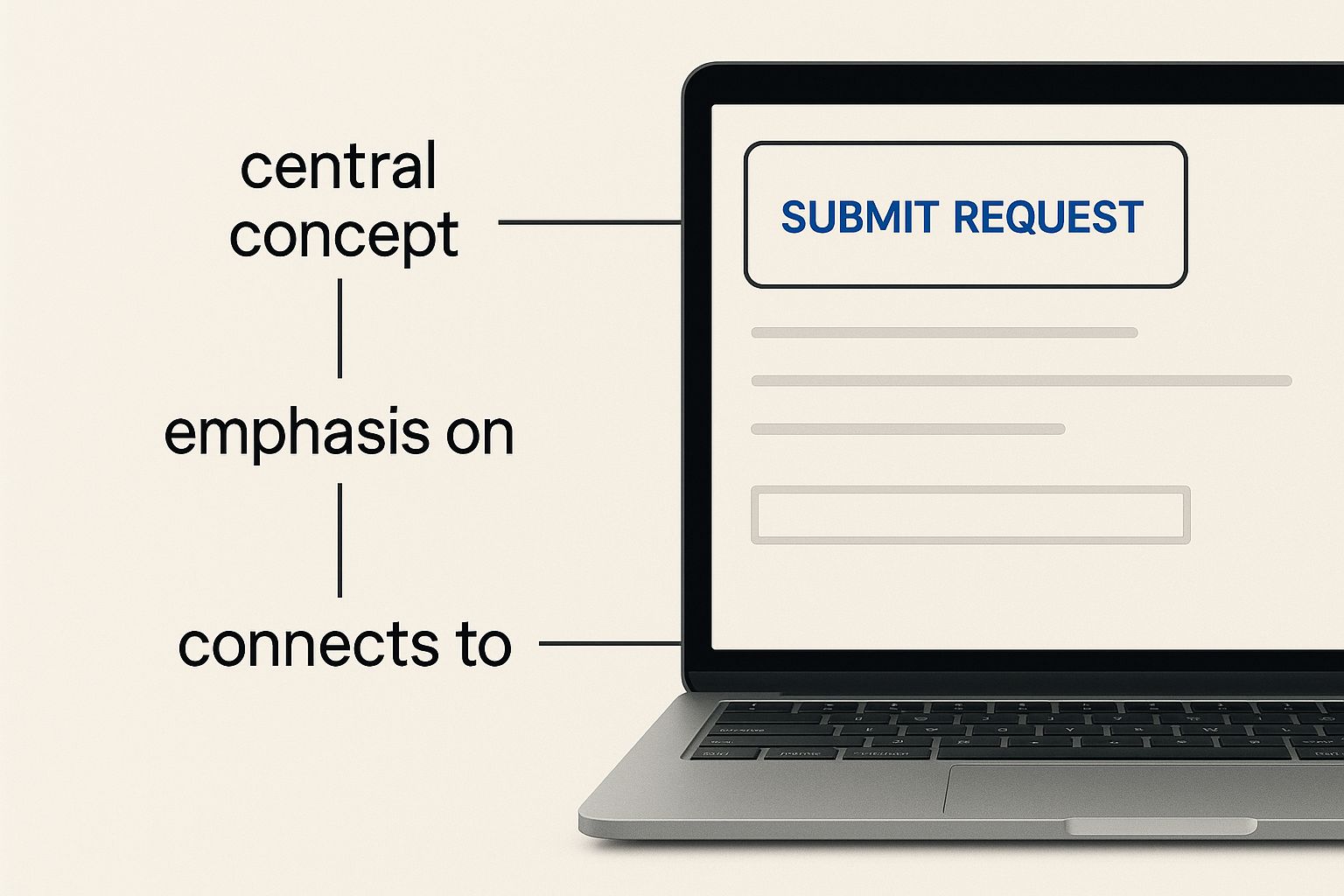
As you can see, a single digital query can efficiently sift through millions of records from different jurisdictions, pulling everything together into one consolidated report.
From Local FIR to National Database
Okay, so how does an incident reported in a small town become part of this massive national system? It all starts at the ground level with a First Information Report (FIR).
- Filing the FIR: When a crime is reported, an FIR is lodged at the local police station. This document is the very first, foundational record of what happened.
- Digital Entry: Under the CCTNS framework, this FIR is immediately entered into the local police station’s computer system. All the case details—names of the accused, the laws that apply, investigation updates—are digitised.
- Centralised Syncing: This local data is then automatically synced with the state and national CCTNS databases. This is what ensures that a record created in one city is instantly accessible to law enforcement and authorised verification agencies right across the country.
This seamless flow of information is what makes a truly comprehensive criminal record check possible. It means a background check isn’t just limited to a person’s current address; it can scan for records across multiple states.
The key takeaway here is that the CCTNS system standardises how criminal data is recorded and stored. This uniformity is absolutely crucial for ensuring that a check done in one part of the country is just as reliable as one performed anywhere else.
Accessing the Data for Verification
So how do we get access? Authorised background verification companies, like SpringVerify, are given access to these databases through official, regulated channels. The entire process is strictly controlled to protect data privacy and stop any misuse. When an employer asks for a check, the verification partner queries the CCTNS and other judicial databases using the details the candidate has provided.
For companies that hire internationally or have candidates with a global footprint, the process can be expanded. You can learn more about how verification partners perform a global database verification to check against international watchlists and crime databases. This approach guarantees a thorough screening, no matter where a candidate has lived or worked.
By understanding this digital backbone, employers can feel much more confident in the results of a criminal record check. It’s not some mysterious black box; it’s a structured, government-managed system built for accuracy and scale.
Right, so you’ve got the criminal record check report back. What now? Many people think that’s the end of the process, but really, it’s just the beginning. The report is just data. The real work is in making a fair, consistent, and legally sound hiring decision based on what you see.
This is a big deal in India, where the judicial system has its own layers of complexity. A “record” doesn’t always tell you the full story. To make a smart call, you have to understand the subtle differences between the types of records you might see and, crucially, how they actually relate to the job you’re trying to fill.
Pending Cases vs. Convictions: A Crucial Distinction
One of the first things that trips up hiring managers is the difference between a pending case and a conviction. It’s a simple distinction, but getting it right is the foundation of a fair screening process. They represent two completely different points in a person’s legal journey.
- Pending Case: This just means someone has been accused of a crime, and the case is still working its way through the courts. It could be brand new or have been going on for a while. A pending case is not a finding of guilt. It’s an allegation, nothing more.
- Conviction: This is the opposite. A conviction is a formal judgment from a court stating that the person is guilty. The trial is over, and a verdict has been reached.
This difference is especially important in the Indian context. According to the National Crime Records Bureau (NCRB) data for 2023, the overall charge-sheet rate for crimes under the Indian Penal Code was 72.7%, but the conviction rate was just 54%. Think about that for a second. That data shows that a huge number of cases where charges are officially filed never end in a guilty verdict. You can dig into more crime statistics in India to see just how complex things are.
This gap between accusations and actual convictions is precisely why automatically disqualifying a candidate over a pending case is a deeply flawed—and unfair—approach.
Before we go further, it helps to see the different types of records side-by-side. Each one tells a different story and needs to be considered differently.
Understanding Different Types of Criminal Records
| Record Type | Definition | Consideration for Hiring |
|---|---|---|
| Arrest Record | Shows an individual was taken into custody but doesn’t mean charges were filed or they were found guilty. | Generally, this should carry very little weight. An arrest is not proof of wrongdoing. |
| Pending Case | An active criminal case that is currently going through the judicial process. | This is an allegation, not a conviction. The person is innocent until proven guilty. Disqualifying someone based on this alone is risky and often unfair. |
| Conviction | A formal court judgment declaring the individual guilty of a crime. | This is the most significant type of record and requires careful assessment based on the nature, timing, and relevance of the offence to the job. |
| Acquittal | A court judgment finding the individual not guilty of the crime they were charged with. | This record means the person was cleared. It should have no negative impact on a hiring decision. |
Seeing it laid out like this makes it clear: not all “records” are created equal. A conviction is the only one that confirms guilt, and even then, context is everything.
The Context-Driven Assessment Framework
Once you understand what the report is telling you, the next step is to apply a consistent framework to assess it. This isn’t about setting up rigid, black-and-white rules. It’s about having a set of principles to guide your thinking so you evaluate a record based on its actual relevance to the job, not just a gut reaction.
This method, often called an “individualised assessment,” moves you away from a simple pass/fail mindset. It pushes you to look at the whole person and make a decision that’s both fair to them and smart for your business.
A fair screening programme doesn’t just ask, “Does this candidate have a record?” It asks, “Does this record present a tangible, job-related risk to our organisation?” This subtle shift in perspective is the key to making equitable and defensible hiring decisions.
Here’s a practical, three-step framework you can put to use immediately:
- Assess the Nature of the Offence: What was the actual crime? A conviction for financial fraud is obviously a major red flag for an accounting role, but it might be far less critical for a job in a warehouse. You need to be able to draw a direct, logical line between the offence and the duties of the job.
- Consider the Timing: When did this happen? A minor issue from ten years ago carries a lot less weight than a serious, recent conviction. People grow and change. An old mistake might have absolutely no bearing on who a candidate is today and their ability to do the job well.
- Evaluate the Role’s Specific Requirements: Think about the job itself. Does it involve working with vulnerable people, like children or the elderly? Will the person handle large amounts of cash or have access to sensitive company data? The more trust and responsibility the role demands, the more carefully you need to look at a relevant criminal record.
By using a framework like this, you standardise your process for every single candidate. That consistency is your best defence against claims of discrimination and proves that every applicant gets a fair shot, based on factors that actually matter for the job.
Overcoming Common Verification Challenges
Even with the best digital tools at your disposal, running a criminal record check in India is rarely a straightforward, one-click affair. The journey from making a request to getting a clear result can be surprisingly bumpy, throwing up practical hurdles that stretch timelines and leave you in a state of uncertainty. Getting a handle on these real-world challenges is the first step to building a screening process that’s both resilient and effective.
The biggest obstacle is often the sheer scale and complexity of India’s judicial system. Each state operates with its own distinct legal procedures and record-keeping methods, which creates a patchwork of inconsistencies across the country. Navigating this fragmented landscape requires deep local knowledge; a process that’s smooth sailing in one jurisdiction might hit a complete wall in another. This variability makes it incredibly difficult to execute standardised, nationwide checks without the right expertise on the ground.
The Impact of Judicial Backlogs
A massive factor complicating any criminal record check is the immense backlog of cases clogging up the Indian judiciary. We’re not talking about a minor delay here. This is a systemic issue that can leave a candidate’s legal status in limbo for years. When a case is stuck in the “pending” pile, it shows up on their record without a final verdict, making it tough for any employer to make a clear, fair, and informed decision.
This backlog has a direct and very real impact on how quickly and accurately you can get verifications done. According to the National Judicial Data Grid (NJDG), India has over 4.69 crore (46.9 million) pending court cases. Criminal cases make up a huge chunk of that, at about 3.58 crore (35.8 million). What’s really critical to understand is that over 63% of these criminal cases have been pending for more than a year. This creates a vast ocean of unresolved records that can complicate any background check you run.
You can dive deeper into the numbers on India’s pending court cases on the NJDG portal.
The judicial backlog means a candidate’s record might show an ongoing case that’s years old with no end in sight. This really underscores why you need to assess pending cases with caution, rather than treating them as automatic red flags.
Navigating the System’s Complexities
So, how can you cut through these hurdles to keep your screening process thorough but also efficient? After all, putting hiring on hold indefinitely while the court systems catch up isn’t exactly a viable business strategy. The key is to be proactive and build a process that anticipates and sidesteps these common roadblocks.
Here are a few practical strategies to help you navigate the complexities:
- Partner with Verification Experts: This is where the pros come in. Professional verification services live and breathe these fragmented systems. They have teams on the ground who know how to follow up on records, make sense of local nuances, and push the process forward wherever possible.
- Establish Clear Internal Policies: Don’t leave things to chance. Create a crystal-clear policy on how your company handles pending cases. This ensures everyone is treated consistently and fairly, and it stops you from making ad-hoc decisions that could be seen as discriminatory.
- Focus on Continuous Monitoring: For roles that are particularly sensitive or critical, you can’t just check once and forget about it. Periodic re-verification or continuous monitoring can give you updates as cases progress through the system, offering a much more current picture of an employee’s status.
By accepting that delays and inconsistencies are just part of the landscape, you can build a much more realistic and effective verification strategy. Instead of seeing these challenges as dead ends, they become manageable variables in a well-planned screening programme. The goal is to get the most accurate picture you can within a reasonable timeframe, and frankly, partnering with a service that truly understands the system’s quirks is the most reliable way to get there.
Building a Fair and Compliant Screening Programme
Alright, let’s pull all these threads together. Moving from the complexities of background verification to a coherent, real-world strategy is the final, crucial step. Creating a fair and compliant screening programme isn’t about setting rigid, unbreakable rules. It’s about building a thoughtful, consistent, and ethical framework. This playbook ensures your criminal record check process protects your organisation while treating every candidate with the respect they deserve.
The absolute cornerstone of this framework is standardisation. Every applicant for a similar role should go through the exact same screening process. This consistency is your strongest defence against claims of bias or unfair hiring practices, ensuring every decision is made on a level playing field.
Establishing Your Screening Policy
A well-defined policy is your organisation’s single source of truth for background checks. It needs to be documented and easily accessible, leaving no room for guesswork or interpretation. Think of it as your company’s constitution for hiring; it clarifies rights, responsibilities, and procedures for everyone involved.
For your policy to be truly effective, it must clearly outline a few key components:
- Transparency First: Let candidates know about your screening policy right from the start, usually during the initial application stage. This kind of upfront communication builds trust and manages expectations from day one.
- Role-Specific Requirements: Define which checks are actually necessary for different roles. A position handling company finances will naturally require a different level of scrutiny than an entry-level creative role.
- Adverse Action Process: Detail the exact steps you will take if a criminal record check brings up something concerning. This has to include giving the candidate a chance to see the report, provide some context, or dispute any inaccuracies they find.
A strong screening policy does more than just keep you compliant. It shows a real commitment to fairness and doing things the right way, which is a powerful way to boost your employer brand and attract top talent.
Automating for Consistency and Fairness
Trying to manage this whole process manually is just asking for human error and inconsistency. This is where modern verification platforms become so valuable. By automating the screening workflow, you ensure every step of your policy is followed for every single candidate, every single time. Automation helps strip away unintentional bias and guarantees that your decisions are based on predefined, job-relevant criteria. It also takes a huge administrative load off your human resources team, streamlining everything from getting consent to delivering the final reports.
For organisations juggling large properties or multiple tenants, using the right property management apps can boost efficiency even further. Many of these tools come with integrated screening features, helping you stay compliant while managing checks at scale. Ultimately, building a robust programme is all about combining a clear, fair policy with the right technology to execute it flawlessly.
Your Questions, Answered
Let’s be honest, the world of background screening can feel a bit like a maze. For both employers and candidates, it’s natural to have questions. Here, we tackle some of the most common queries we hear about criminal record checks in India, giving you clear, straightforward answers.
How Long Does a Criminal Record Check Take?
This is the classic “it depends” answer, but I’ll break it down for you. The timeline for a criminal record check really varies. If we’re talking about a fully digital check pulling from centralised databases, you might get results back in just a few days. Easy peasy.
But, if the check requires someone to physically go to local police stations or courthouses—especially in areas that haven’t fully digitised their records—it can stretch out to a week or even longer.
A few things can speed up or slow down the process:
- How complete and accurate the candidate’s information is.
- How quickly local police and courts respond to requests.
- Whether the check needs to cover multiple states or jurisdictions.
What Shows Up on a Criminal Record Check in India?
A standard check gives you a look into a person’s history with the criminal justice system. It’s not just about convictions; it paints a fuller picture.
You can typically expect to see:
- Criminal Convictions: Final court judgments where the person was found guilty.
- Pending Cases: Active criminal cases that are still making their way through the court system.
- Acquittals: Cases where the court found the individual not guilty.
One important note: an arrest that didn’t lead to formal charges being filed usually won’t pop up on a formal criminal record report.
Can an Employee Refuse a Background Check?
Yes, absolutely. A candidate has every right to refuse a background check. In fact, getting their explicit, written consent is a non-negotiable legal step before you can even start a criminal record check.
If a candidate says no, you simply cannot proceed. For most companies, pre-employment screening is a standard part of the hiring process, so refusing a check usually means the job offer is withdrawn.
How Far Back Do Criminal Record Checks Go?
This is a great question. In India, there isn’t a specific law that puts a time limit on how far back a criminal record check can search. In theory, this means a check could uncover records from any point in a person’s adult life.
Ultimately, what’s available depends entirely on what has been recorded and digitised in court and police databases over the years.
Ready to build a screening process that’s fair, fast, and compliant? SpringVerify provides reliable background verification services that help you make informed hiring decisions with complete confidence. Learn more at https://in.springverify.com.


