

Think of HR compliance as the essential ‘rulebook’ for managing your workforce in India. It’s the entire framework of labour laws and regulations that governs everything from hiring to retirement, ensuring that how you run your business is fair, legal, and safe for everyone involved.
Table of Contents
What HR Compliance Really Means in India

This isn’t just about ticking boxes to avoid legal trouble; it’s about building an ethical, structured, and secure workplace from the ground up. This rulebook kicks in the moment you post a job opening and stays relevant right through to an employee’s last day.
In India, getting this right is especially tricky because of our complex legal landscape. The real meaning of HR compliance here is learning to navigate a massive web of both central and state-level laws. It’s a staggering task—companies have to juggle over 1,500 acts and a mind-boggling 69,000 compliance requirements. This number alone shows why you can’t just wing it; you need a proper strategy.
To make sense of it all, it helps to break the framework down into its core components.
The HR Compliance Framework at a Glance
This table breaks down the main pillars of HR compliance in the Indian context, giving you a clearer picture of what each area covers and why it’s so critical.
| Compliance Pillar | What It Covers | Why It Matters |
|---|---|---|
| Statutory Compliance | Mandatory filings and contributions like Provident Fund (PF), Employees’ State Insurance (ESI), and Gratuity. | Ensures employees receive their rightful social security benefits and protects the company from legal penalties. |
| Workplace Safety | Adherence to regulations like the Prevention of Sexual Harassment (POSH) Act and other health and safety standards. | Creates a secure and respectful environment, which is crucial for employee morale, productivity, and retention. |
| Labour Laws | Rules governing everything from minimum wages, working hours, and leave policies to fair termination procedures. | Guarantees fair treatment for all employees, preventing disputes and fostering a positive employer-employee relationship. |
Ultimately, understanding what compliance truly means is the first step toward building a resilient and trustworthy organisation. Getting a handle on these key areas is non-negotiable for any business operating in India.
For a deeper dive into managing these moving parts, our guide to comprehensive compliance services can provide more detail on these essential components.
Why HR Compliance Is a Business Necessity
Understanding what HR compliance means is the first step. But truly grasping why it’s a non-negotiable part of your business is what separates a thriving company from one living on borrowed time.
Ignoring compliance is a bit like driving without insurance. You might get away with it for a while, but one wrong turn can lead to a crash with consequences that could wreck your entire business. And these aren’t just hypotheticals—they are real, painful, and often expensive.
The risks are much bigger than simple paperwork mistakes. Non-compliance can lead to crippling financial penalties, long and draining legal battles, and permanent damage to your brand’s reputation. Just imagine a small tech startup in Bengaluru that misclassified a few of its freelance developers. It seemed like a tiny oversight until a government audit uncovered the mistake. The result? Hefty back-payments, fines, and a formal investigation that sucked up both their cash and their leadership’s focus.
From Defence to Advantage
This is where you need to shift your thinking. Stop seeing compliance as a defensive chore—a list of rules just waiting to trip you up. Instead, view it as a powerful strategic advantage.
A solid compliance framework is the very foundation of a healthy, ethical workplace. This has a direct, positive impact on your most important asset: your people. When your employees know their rights are protected and the company’s processes are fair, it builds an incredible amount of trust.
That trust pays off in real, measurable ways:
- Enhanced Employee Morale: A fair and safe workplace naturally leads to happier, more engaged employees.
- Improved Talent Attraction: A strong reputation for doing things the right way makes your company a magnet for top talent.
- Increased Retention Rates: People want to stay where they feel valued and secure, which cuts down on the high cost of employee turnover.
Ultimately, a proactive approach to HR compliance isn’t just about dodging penalties. It’s about building a resilient, trustworthy, and successful organisation from the inside out. It sends a clear signal to your team, and to the market, that you’re committed to doing business the right way.
The Core Pillars of HR Compliance in India
Getting your head around the general idea of HR compliance is one thing, but navigating the specific legal maze in India is a whole different ball game. At first glance, the landscape can feel like a tangled mess of rules.
But here’s the secret: it becomes a lot less intimidating when you break it down into distinct pillars. Think of these as the fundamental supports holding your business up, keeping it legally sound and operationally stable.
Each pillar covers a critical area of responsibility that touches every part of an employee’s journey with your company, from hiring to retirement. Understanding these is non-negotiable for any business that wants to operate ethically and steer clear of hefty legal penalties in India.
This image really drives home the tangible benefits you get from a well-oiled compliance framework.
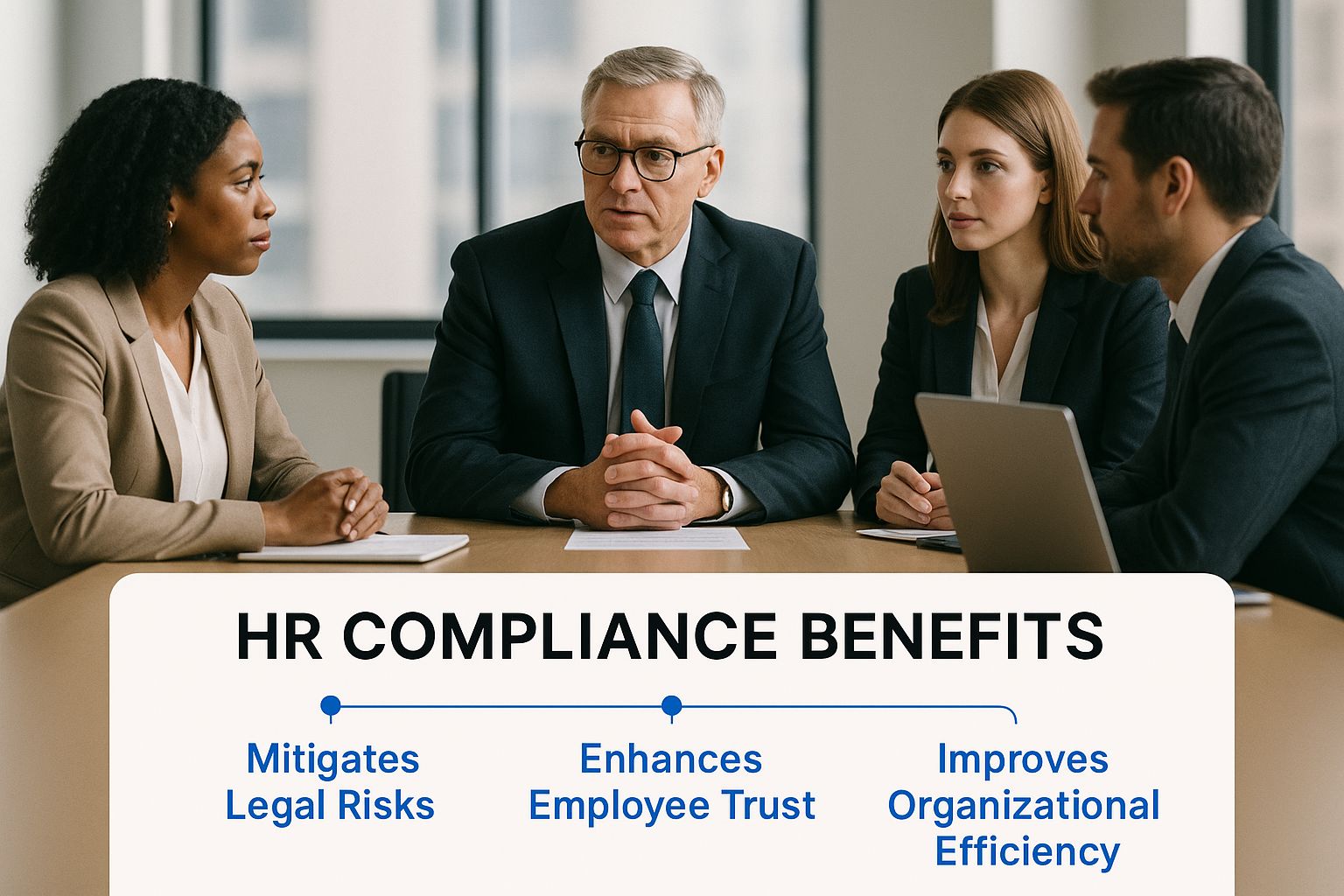
As you can see, solid HR compliance isn’t just about playing defence. It’s a strategic move that fuels business success and cultivates a much healthier workplace culture.
Statutory and Financial Obligations
This is the pillar most people think of first. It covers all the mandatory financial contributions and social security schemes you’re legally required to manage. These aren’t suggestions; they’re absolute duties that ensure your employees get crucial long-term benefits.
The big ones you absolutely have to get right include:
- Provident Fund (PF): A mandatory retirement savings scheme where both you and your employee contribute.
- Employees’ State Insurance (ESI): A health insurance scheme that provides medical cover for employees and their families.
- Gratuity: A lump-sum payment given to long-serving employees as a thank-you for their loyalty and service.
- Bonus Payments: Required under the Payment of Bonus Act, ensuring eligible employees get an annual bonus.
Getting these contributions right is fundamental. It not only secures your workforce’s future but also protects your company’s legal standing.
Workplace Safety and Employee Welfare
Compliance goes way beyond just the numbers. It’s also about creating a work environment that is genuinely safe and respectful. This pillar is all about protecting your team’s physical and psychological well-being—something that’s absolutely vital for morale and productivity.
The most critical piece of legislation here is the Prevention of Sexual Harassment (POSH) Act. This law requires you to set up an Internal Committee (IC) and run regular awareness training for everyone. A thorough employment verification process also contributes to this by helping ensure you’re making a safe hire in the first place.
Ultimately, these pillars provide a clear roadmap. If you tackle each one systematically, you can build a rock-solid compliance framework that not only supports sustainable growth but also fosters a positive, thriving work culture.
How Compliance Shapes Your Company Culture
Let’s be honest, “HR compliance” doesn’t exactly scream “fun and engaging workplace.” For many, it brings to mind dusty rulebooks and endless paperwork. But looking at it that way is missing the bigger picture. Strong HR compliance is actually the bedrock of a healthy and productive company culture.
When you shift your focus from simply ticking legal boxes to truly embedding fairness in your operations, something powerful happens.
Think about it from your employees’ perspective. When they know their pay will be accurate and on time, that safety isn’t just a poster on the wall but a real priority, and that company policies apply to everyone equally, it creates a deep sense of trust. This isn’t some fluffy, nice-to-have feeling; it’s the psychological safety that allows people to do their best work.
The connection between feeling valued and performing well is incredibly direct. People who feel secure and respected are naturally more engaged, more productive, and more willing to go that extra mile for the team. On the flip side, a disengaged workforce isn’t just a drag on productivity—it’s a massive compliance risk waiting to happen.
The Engagement and Compliance Connection
Disengaged employees are often the ones who start cutting corners or ignoring important protocols, opening up serious vulnerabilities for the business. This link is especially stark in the Indian context. A recent ADP Research report found that workforce engagement in India has plummeted to just 19%. That’s a worrying number.
Engaged employees are far more likely to buy into company policies and follow them, while their disengaged colleagues are where the risks lie. As experts point out, employees who feel connected and valued don’t just show up for a pay cheque; they actively uphold the standards of the workplace. You can dive into the full report about Indian workforce engagement on adp.com.
Ultimately, understanding what compliance HR meaning truly entails is about recognising its human impact. It’s about building an environment where fairness isn’t just a policy written down somewhere, but a real, lived experience for every single person on your team.
When you get this right, compliance stops being a chore. It becomes a strategic tool for building a workplace where your best people feel they belong and are inspired to contribute, stay, and grow.
Building Your HR Compliance Strategy

Knowing what HR compliance means is one thing, but actually building a solid strategy is where the real work begins. It’s far better to be proactive than reactive; the goal is to create a framework that stops problems before they start, instead of just cleaning up messes later. Your strategy doesn’t need to be overly complicated, but it absolutely must be deliberate and consistent.
Think of it like regular maintenance on your car. You wouldn’t wait for the engine to seize up before changing the oil, right? In the same way, routine checks and updates to your HR processes keep the business running smoothly and protect it from a very expensive breakdown. This all boils down to a few core practices that will form the pillars of a strong compliance foundation.
Essential Best Practices
The very first step is to get an honest look at where you stand right now. Conducting regular internal audits helps you spot potential compliance gaps, whether it’s small payroll errors or seriously outdated policies. This isn’t about pointing fingers; it’s about finding opportunities to get better.
Next, you have to get your rules down on paper in a comprehensive employee handbook. This document needs to be the single source of truth for all company policies, procedures, and expectations. It makes the rules on leave, conduct, and safety crystal clear, ensuring every single employee is on the same page and that you apply policies consistently across the board.
A well-crafted employee handbook does more than just state rules; it communicates your company’s commitment to fairness and transparency, which is a cornerstone of a healthy work culture.
Leveraging Technology for Automation
Finally, ongoing training is completely non-negotiable. Labour laws in India are constantly changing, and your managers and employees need to be kept in the loop. Regular sessions on critical topics like the POSH Act or data privacy ensure everyone understands their role and responsibilities.
This is where modern technology can be a huge help. Human Resource Management Systems (HRMS) can automate many of the tedious compliance tasks, like tracking leave, managing payroll deductions, and keeping employee records secure. When you automate these processes, you dramatically cut down the risk of human error—which is where most compliance violations come from.
To learn more about how technology fits into the bigger picture, you can explore our guides on essential human resources practices. This kind of automation frees up your HR team to focus on more strategic work, helping you build a compliance framework that is truly proactive and resilient.
Common HR Compliance Questions Answered
Even when you’ve got the core concepts down, practical questions about HR compliance always pop up. This is especially true for growing businesses in India. Getting clear, direct answers is what turns theory into confident action and makes sure you’re on the right legal footing from day one.
These frequently asked questions tackle some of the most common hurdles that business owners and HR managers face. Think of the answers as actionable advice to reinforce what HR compliance really means in a real-world setting.
First Steps For a New Startup
For a new business, getting the initial compliance steps right is absolutely critical. Your first move? Focus on the absolute must-haves. This means registering for essential social security schemes like the Provident Fund (PF) and Employees’ State Insurance (ESI) as soon as you hit the employee thresholds.
At the same time, you need to draft legally sound employment contracts and create a basic employee handbook. This handbook isn’t just a formality—it should clearly outline essential workplace policies on things like leave, code of conduct, and IT usage to set clear expectations for everyone.
Keeping Your HR Policies Current
Outdated policies are a massive compliance risk. You simply can’t set your policies and forget them, because labour laws in India are constantly changing. The best practice is to schedule a full review of all your HR policies at least once a year.
It’s also vital to update policies immediately after any major legal changes, like new minimum wage laws or data protection regulations. Taking this proactive approach stops your company from accidentally operating on outdated and non-compliant rules.
How Technology Eases Compliance Burdens
Can technology really simplify the tangled web of HR compliance? Absolutely. Modern Human Resource Management Systems (HRMS) and payroll software are incredibly powerful tools for staying compliant with minimal manual effort.
These systems automate crucial tasks like calculating PF and ESI contributions and securely storing employee records. They can also be updated to reflect the latest legal changes. This doesn’t just cut down on the risk of human error—a frequent source of compliance violations—it also frees up your HR team to focus on more strategic work.
Ready to build a compliant and efficient hiring process? SpringVerify offers reliable background verification services that integrate seamlessly with your existing HR systems. Make informed hiring decisions with confidence.


