

Table of Contents
The Strategic Value of Background Verification in India

In India’s competitive job market, background verification is essential. It’s no longer a simple formality, but a strategic tool that provides companies with a competitive advantage. This shift is driven by the increasing need to minimize hiring risks, create safer workplaces, and protect company finances.
Mitigating Risk, Maximizing ROI
Thorough background checks are crucial for mitigating various risks. They can help prevent lawsuits related to negligent hiring, protect a company’s reputation, and safeguard sensitive data. This proactive approach is especially important in India’s evolving legal and regulatory landscape. Furthermore, robust verification processes can lead to significant cost savings by reducing employee turnover and improving the overall quality of the workforce. This, in turn, prevents costly hiring mistakes.
The Indian Context: Unique Verification Challenges
Background verification in India presents unique challenges. Verifying credentials from unaccredited institutions and navigating complex address verification processes in a rapidly developing nation requires specialized local expertise. Therefore, selecting the right verification partner is essential. For insights into effective leadership transitions, consider the best practices outlined in this resource on executive onboarding.
Embracing Technological Advancements
India’s background verification market is experiencing a technology-driven transformation. By 2025, it’s projected that 80% of companies will integrate advanced tools like AI and biometrics. This aligns with global trends, where the sector is experiencing an 8.39% CAGR, reaching $2.57 billion in 2021. Domestically, stricter compliance under the IT Act 2000 and SPDI Rules requires written consent for sensitive data checks, including financial and biometric information. Real-time monitoring, particularly for C-suite roles, is now prioritized to mitigate governance risks. More detailed statistics can be found here. These developments highlight the growing importance of adopting technological solutions to improve the speed and accuracy of background checks.
By adopting a strategic approach to background verification, companies in India can strengthen their businesses, protect their interests, and foster a more secure and productive work environment. This proactive strategy contributes to long-term success in a dynamic and complex market.
Navigating India’s Complex Verification Legal Landscape

Background checks are increasingly important in India. However, the legal framework surrounding them is intricate and constantly changing. Understanding these regulations is essential for any employer wanting to conduct thorough background checks while remaining compliant. This involves navigating key legislation like the IT Act and the SPDI Rules, which significantly impact data privacy and candidate rights.
Key Legislation and Regulations
The Information Technology Act 2000 (IT Act) forms the basis of data protection and privacy in India. It sets guidelines for collecting, storing, and using personal data, including sensitive personal data or information (SPDI). This lays the groundwork for specific regulations regarding background verification, especially concerning consent and data security.
The Sensitive Personal Data or Information Rules, 2011 (SPDI Rules) define SPDI. This includes information such as medical records, sexual orientation, and biometric data. The SPDI Rules require explicit consent from candidates before accessing or processing such information during background checks. This ensures candidate privacy and helps organizations avoid legal issues.
Consent and Compliance: Balancing Thoroughness with Respect
Indian legal frameworks governing background checks, like the SPDI Rules (2011), mandate explicit consent for accessing sensitive data, such as medical history or sexual orientation. Non-compliance can lead to penalties under the IT Act 2000, which emphasizes privacy in verification processes.
Businesses are increasingly conducting checks beyond traditional sectors. The gig and blue-collar workforces are adopting specific verification models to address growing fraud risks. This shift reflects India’s changing employment landscape and the increasing importance of trust in digital hiring. Learn more insights about background verification in India.
Obtaining informed consent is crucial for compliance. This involves clearly explaining to candidates what information will be collected, how it will be used, and who will access it. Transparency builds trust and promotes the ethical handling of candidate data. For more information, check out this resource on compliance.
Implementing Legally Sound Documentation Processes
Maintaining thorough records is vital. This involves documenting all consent received, the verification process followed, and the check results. Proper documentation demonstrates compliance and protects organizations in disputes. It also supports data transparency for candidates.
Consequences of Non-Compliance
Failing to meet the legal requirements for background verification in India can have serious repercussions. Penalties can range from fines to legal action. Furthermore, reputational damage can be substantial, hindering talent acquisition and retention.
Best Practices for Navigating the Legal Landscape
- Develop Clear Verification Policies: Specify the types of checks conducted, the data collected, and the consent process.
- Train Your HR Team: Ensure they understand the legal requirements and their practical application.
- Partner with a Reputable Background Verification Provider: Choose a provider dedicated to compliance and data security.
- Regularly Review Your Processes: Stay informed about legal changes and adapt your verification procedures accordingly.
By understanding and implementing these legal requirements and best practices, Indian businesses can conduct effective background checks while respecting candidate rights and maintaining legal compliance. This approach fosters trust, enhances hiring decisions, and contributes to a safer work environment.
Building a Comprehensive Verification Framework

Effective background verification in India requires more than just running standard checks. It demands a structured framework tailored to the nuances of different roles and industries. This targeted approach helps mitigate risks thoroughly while upholding fairness and legal compliance.
Core Components of a Robust Verification Strategy
A truly comprehensive background verification framework incorporates several key components. Each element contributes significantly to creating a holistic view of a candidate’s history.
- Employment History Validation: This crucial step confirms a candidate’s previous employment, including dates of service, job titles, and responsibilities. It forms the foundation for assessing their suitability for a new role.
- Education Credential Verification: This involves verifying the authenticity of degrees, diplomas, and certificates from educational institutions. It ensures candidates possess the qualifications they claim.
- Criminal Record Checks: Checking criminal databases and court records is critical for workplace safety and mitigating potential risks. These checks help uncover any past criminal activity.
- Address Confirmation: Confirming current and previous addresses is essential for locating candidates and keeping contact information current. It also plays a role in identity verification.
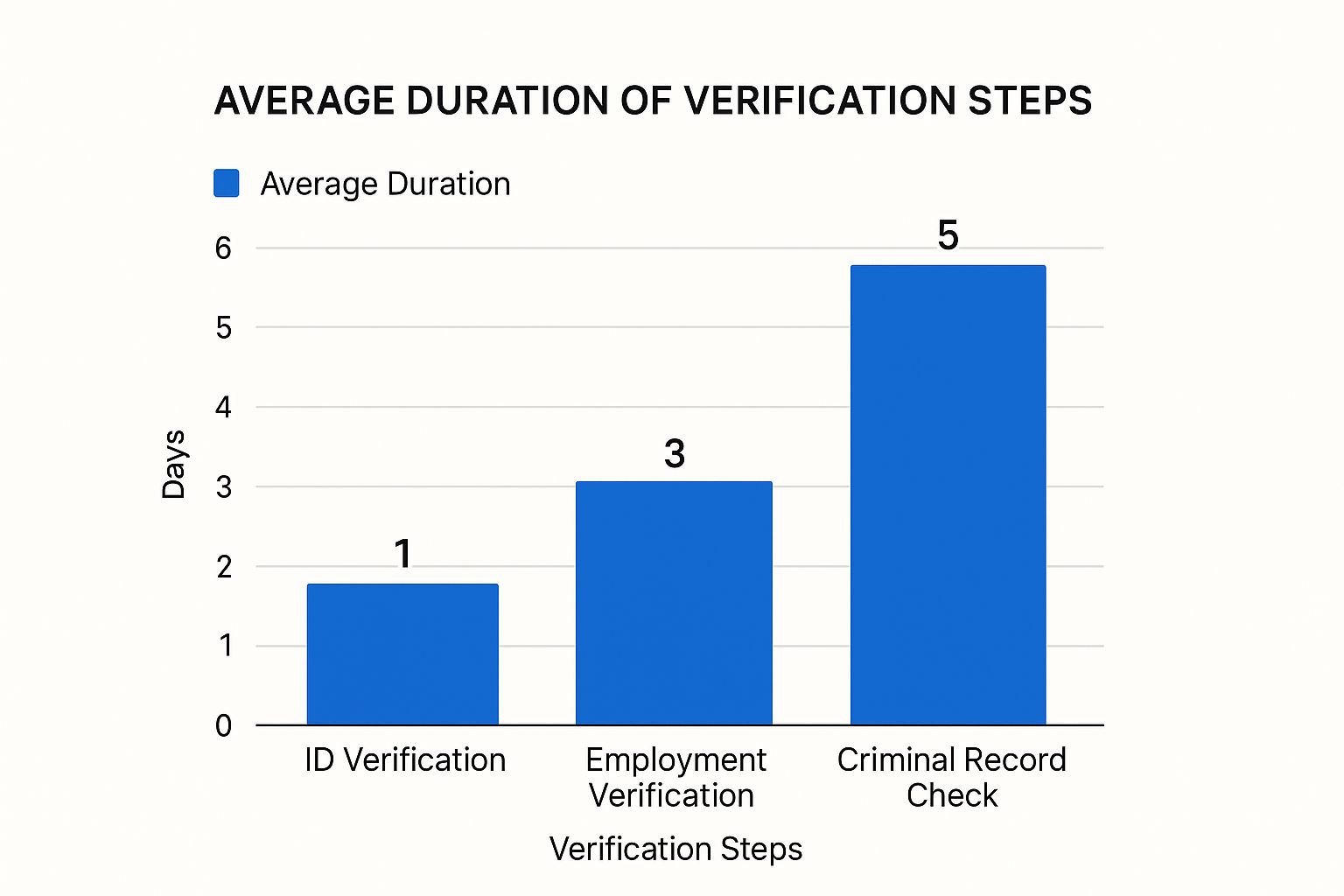
To understand the core components of background checks in India, let’s look at the following table. It breaks down the verification types, their purposes, and the usual timeframe involved.
Core Background Verification Components in India
| Verification Type | Purpose | Importance Level | Average Timeframe | Key Challenges |
|---|---|---|---|---|
| Employment History Validation | Confirm past employment details | High | 2-5 business days | Verifying experience from defunct companies |
| Education Credential Verification | Verify degrees and certificates | High | 5-10 business days | Verifying credentials from unaccredited institutions |
| Criminal Record Checks | Identify criminal history | High | 3-7 business days | Accessing comprehensive criminal records |
| Address Confirmation | Verify current and past addresses | Medium | 1-3 business days | Confirming addresses in remote areas |
This table provides a quick overview of the key background verification elements and challenges encountered in India.
Navigating the Complexities of Verification in India
Background verification in India presents specific hurdles. Verifying employment history from companies that no longer exist can be challenging. Similarly, authenticating credentials from unaccredited institutions requires specialized methods. Experienced verification partners are essential for overcoming these complexities.
Tailoring Verification Depth to Position Sensitivity
The extent of background checks should match the sensitivity of the position being filled. A C-suite executive role, for example, might require more rigorous verification than an entry-level position. This approach balances thoroughness with efficiency.
Best Practices for Implementing Background Checks
Effective implementation involves meticulous planning and execution. This includes open communication with candidates, strict adherence to data privacy laws, and choosing a reliable verification partner.
Prioritizing the Candidate Experience
While thorough verification is paramount, a positive candidate experience is also essential. It fosters trust and strengthens your employer brand. This involves transparent communication throughout the process and respecting candidate privacy. For more insights, check out SpringVerify’s blog post on candidate experience in background verification.
Ensuring Data Privacy and Compliance
In India’s evolving data privacy landscape, compliance is non-negotiable. Adhering to regulations like the Digital Personal Data Protection Act (DPDPA) is vital. Organizations must obtain informed consent, secure data properly, and maintain transparency. Staying informed about legal updates and adapting practices accordingly underscores a commitment to ethical and legal conduct. Learn more about the DPDPA here.
By integrating these practices, companies can establish a robust verification framework in India. This framework empowers informed hiring choices, creates a secure work environment, and promotes overall business success.
Industry-Specific Verification Strategies That Work
Background verification in India requires a nuanced approach. Different industries have unique needs and face distinct challenges. This means verification strategies must be tailored to address the specific risks and regulatory demands of each sector. This data chart illustrates discrepancy rates across different industries. Let’s explore how these approaches work in practice. As the chart shows, discrepancy rates vary across industries, with BFSI experiencing the highest rate.
BFSI: Prioritizing Financial History and Addressing Rising Discrepancies
The Banking, Financial Services, and Insurance (BFSI) sector faces considerable risks related to fraud and financial misconduct. Financial history checks, therefore, are paramount. These checks carefully examine credit history, loan defaults, and other financial indicators to assess a candidate’s financial responsibility.
Identity verification is also critical due to the sensitive nature of financial transactions. Background check discrepancies have seen a marked increase in the BFSI sector. During FY 2023-24, discrepancies rose to 10.4%, an 18.1% year-on-year increase.
Identity verification issues were the most common, accounting for 73.4% of reported inconsistencies. This increase correlates with India’s rising crime rate, emphasizing the need for robust verification processes. More detailed statistics can be found here. You can also explore SpringVerify’s solutions for Fintech companies.
IT: Focus on Technical Skills and Credential Validation
In the Information Technology (IT) sector, verifying technical skills and credentials is crucial. Confirming a candidate’s expertise in specific programming languages, software platforms, and other technical areas is essential. This often involves validating certifications and educational qualifications.
Healthcare: Emphasizing Background Checks and Compliance
The healthcare industry prioritizes patient safety and trust. Thorough background checks are essential, especially for roles involving direct patient interaction. These checks often include criminal record checks, license verification, and drug screenings.
Manufacturing: Verifying Employment History and Addressing Supply Chain Risks
In manufacturing, verifying employment history is key to ensuring supply chain integrity and preventing theft or sabotage. Address verification also plays a crucial role in logistics and supply chain management.
To further illustrate industry-specific discrepancies, let’s look at the numbers.
The following table presents key metrics on discrepancy rates, verification priorities, and risk factors across major industries in India.
| Industry | Overall Discrepancy Rate | Most Common Discrepancy Type | Verification Priority Areas | Key Risk Indicators |
|---|---|---|---|---|
| BFSI | 10.4% | Identity Verification | Financial History, Credit History, Identity Verification | Fraud, Financial Misconduct |
| IT | 7.8% | Credential Verification | Technical Skills, Certifications, Education Verification | Skill Gaps, Resume Fraud |
| Healthcare | 6.2% | License Verification | Criminal Records, License Verification, Drug Screening | Patient Safety, Compliance Violations |
| Manufacturing | 5.5% | Employment History | Employment History, Address Verification | Supply Chain Disruption, Theft |
This table summarizes the key differences in background verification priorities and risk factors across various industries. The data highlights the importance of tailoring verification strategies to the specific needs of each sector.
Adapting to Industry-Specific Requirements
Each industry’s unique risk profile demands a customized approach. This involves tailoring the depth and scope of verification to the specific requirements of each role and sector. This targeted approach ensures that organizations gather the most relevant information while maintaining operational efficiency. By understanding these industry-specific nuances and adapting verification strategies accordingly, companies can strengthen their hiring processes, improve workplace safety, and mitigate potential risks. This approach is crucial for building a strong and reliable workforce.
Technology Transforming India’s Verification Landscape
The background verification process in India is undergoing a significant shift, driven by the demand for faster, more precise, and efficient methods. Companies are increasingly turning to advanced technologies to streamline how they verify candidate information.
AI-Powered Document Validation and Automation
Artificial Intelligence (AI) is becoming increasingly important in automating various aspects of background checks. AI algorithms can analyze documents, extract crucial information, and flag potential discrepancies, significantly speeding up the process and minimizing manual work. Artificial Intelligence also enhances accuracy by catching subtle inconsistencies that human reviewers might miss.
This automation not only saves time but also improves the overall quality and reliability of the verification process. It allows HR teams to focus on other strategic tasks while ensuring thorough background checks.
Blockchain Credential Verification Systems
Blockchain technology provides a secure and transparent platform for credential verification. Storing credentials on a blockchain allows for easy confirmation of their authenticity, reducing fraud risk and simplifying verification. For example, educational institutions can issue verifiable digital diplomas on a Blockchain, streamlining the confirmation process for employers.
The Impact on Verification Timelines and Accuracy
These technological advancements significantly impact background verification in India, leading to reduced timelines for quicker hiring decisions. Improved accuracy minimizes the risk of hiring unqualified candidates, resulting in considerable cost savings and better hiring outcomes. This efficiency helps companies stay competitive and make informed decisions.
Balancing ROI With Complexity
While technology offers significant benefits, it’s essential to consider the Return on Investment (ROI) alongside the potential complexity of implementing new systems. Organizations must carefully evaluate the costs and benefits of various solutions to find the best fit for their needs. You might be interested in: How to master API integrations.
Practical Implementation Considerations
Implementing new technology requires careful planning. Organizations must consider factors such as integrating with existing HR systems, data security, and change management. Training HR staff to effectively use new tools is also critical for a successful implementation.
Emerging Verification Technologies
The field of verification is constantly evolving, with new technologies like biometric authentication and decentralized identity systems emerging. These promise to further enhance background checks, increasing security, efficiency, and reliability. Staying informed about the latest trends is crucial for adapting strategies effectively. By embracing these advancements, companies can optimize their processes, make well-informed hiring decisions, mitigate risks, and ultimately create safer workplaces. Background verification will continue to be a vital part of the hiring process in India.
Implementing Verification Excellence in Your Organization
Implementing a robust background verification process in India is more than just a series of checks. It’s about building a system of verification excellence. This involves carefully crafting policies, choosing the right partners, and integrating technology effectively. This approach transforms background checks from a routine task into a strategic advantage for your company.
Building a Verification Policy Tailored to Your Needs
Your verification policy should be specific to your organization’s needs and risk profile. Consider the sensitivity of different roles. For instance, a senior management role might require a more thorough background check than an entry-level position. This targeted approach ensures efficient use of resources while mitigating the most relevant risks. Clearly documenting this policy ensures consistency and clarity.
Selecting the Right Verification Partner
Choosing a reliable verification partner is crucial. Look for a partner with local expertise, especially in navigating India’s unique regulatory landscape. This includes the ability to verify credentials from a variety of institutions. AI is also playing a growing role in many aspects of hiring, including interview simulations. Strong technology integration capabilities are another important factor to consider. A partner with a proven track record of compliance with regulations like the Digital Personal Data Protection Act (DPDPA) is essential for protecting candidate data and avoiding penalties.
Establishing Efficient Workflows
Efficiency is paramount, especially for organizations with high hiring volumes. Integrating background checks directly into your existing HR systems and Applicant Tracking System (ATS) is essential. This eliminates manual data entry and streamlines the entire process. Automating tasks like sending consent requests and gathering candidate information saves time and increases accuracy.
Communicating with Candidates and Measuring Effectiveness
Transparency throughout the process improves the candidate experience. Clearly communicate which checks will be performed, the reasons for these checks, and the expected timeline. This open communication fosters trust and reduces candidate anxiety. Regularly assess the effectiveness of your verification program by tracking key metrics. Analyze discrepancy rates, turnaround times, and candidate feedback to identify areas for improvement.
Overcoming Implementation Challenges
Implementing a new or revamped verification program may present challenges. Stakeholder resistance can be addressed by highlighting the advantages of a robust process, like reduced risk and improved hiring quality. Budget concerns can be mitigated by demonstrating the long-term return on investment, including cost savings from lower turnover and fewer negligent hiring incidents. Address process inconsistencies by standardizing procedures and providing thorough training to your HR team.
By strategically addressing these key components, you can transform your background verification process into a competitive advantage, enabling you to make informed hiring decisions, cultivate a stronger workforce, and achieve your business goals. Ready to improve your background verification process and make more confident hiring decisions? Learn more about how SpringVerify can help.


