

A resume is just the beginning of a candidate’s story; background checks for employees reveal the rest. Think of it not as a procedural checkbox, but as a foundational pillar for managing risk. Verifying a candidate’s history is the first—and most critical—step in building a resilient and high-integrity organisation.
Table of Contents
Why Background Checks Are Non-Negotiable in Hiring

In the hiring game, what you don’t know can absolutely hurt you. A single bad hire can create a ripple effect, tanking everything from team morale and productivity to your company’s financial stability and brand reputation. Comprehensive screening isn’t just a precaution; it’s a proactive strategy to protect your most valuable assets: your people and your business.
The modern workforce, especially with the explosion of remote work, has brought new vulnerabilities to the surface. Digital skillsets and virtual interviews are efficient, but they’ve also swung the door wide open for employment fraud. This reality makes verifying a candidate’s credentials more crucial than ever before.
The Escalating Risk of Employment Fraud
The threat of falsified information isn’t some minor inconvenience—it’s a significant and growing problem. Recent findings highlight a troubling trend where discrepancies are popping up in a shocking number of applications.
A 2025 study from EY, which dug into over a million pre-employment screenings in India, revealed that roughly 10% of candidates had discrepancies in their backgrounds. The issue was particularly alarming in healthcare, where a staggering 83% of failed background checks were flagged. It wasn’t just junior roles, either. Experienced professionals were frequently caught, with 96% in healthcare and 88% in financial services submitting false information despite having years on the job.
These numbers hammer home the urgent need for technology-driven background checks as your primary defence against evolving threats to workforce integrity.
A comprehensive background check is more than a verification tool; it’s a strategic investment in building a trustworthy, safe, and productive work environment. It ensures that every new team member reinforces the integrity of your organisation.
Protecting Your Organisation’s Foundation
At its core, background checks are about building a team you can trust. Each verification serves as another brick in the foundation of a safer, more dependable workplace. By confirming a candidate’s history, you:
- Mitigate risk by spotting potential red flags before they become internal problems.
- Ensure a safe work environment for the people you already employ.
- Protect company assets from potential theft, fraud, or misuse.
- Uphold your brand’s reputation by hiring individuals who genuinely align with your company’s values.
For anyone growing their team, understanding the full scope of hiring your very first employee is key, and it all starts with proper vetting as a non-negotiable step. This foundational diligence sets you up for a more strategic and effective approach to bringing people on board.
Want to learn more about optimising your hiring strategy? Check out our complete guide to talent acquisition.
The Different Types of Employee Background Checks

Think of a background check like assembling a puzzle. Each type of verification is a unique piece, and you only get the full picture of a candidate when you put them all together. Just running a criminal check or verifying a degree is like looking at a single puzzle piece – you’re missing the context and the complete story.
To hire smartly, you have to choose the right combination of checks. The goal isn’t just to tick a box; it’s to gather the right intelligence so you can be confident that the person you’re bringing on board is not only qualified but also trustworthy.
Core Components of a Background Check
Here’s a hard truth: the most common fib on a CV isn’t about skills or a fancy degree. It’s about work experience. Candidates fudge job titles, stretch employment dates to cover up gaps, or even invent responsibilities out of thin air. That’s precisely why a multi-layered approach to background checks for employees is a must.
These are the foundational checks that form the bedrock of any solid verification process:
- Employment Verification: This is non-negotiable. It confirms a candidate’s work history—job titles, dates of employment, and sometimes why they left. It directly tackles the most frequent area of CV fraud and tells you if their experience is genuine.
- Education Verification: This check validates degrees, diplomas, and certifications. By going straight to the source—the educational institutions—you confirm that a candidate truly has the qualifications they claim. It’s vital for any role with specific academic prerequisites.
- Criminal Record Checks: This one’s all about safety. A criminal record check flags any history that might make a candidate unsuitable for a role. For jobs in finance, healthcare, or anything involving vulnerable people, this isn’t just a good idea; it’s an essential part of protecting your workplace.
- Identity Verification: A simple but critical first step. Using documents like an Aadhaar or PAN card, this check confirms your candidate is exactly who they claim to be. It’s your first line of defence against identity fraud.
Beyond the Basics: Additional Verifications
For certain roles, especially senior ones or those with greater responsibilities, you need to dig a little deeper. Some positions require a much higher level of scrutiny to protect company finances, sensitive data, or public safety.
For these high-stakes roles, you’ll want to layer in more specialised checks:
- Reference Checks: Yes, hiring managers often do this, but a professional check takes it to another level. It involves structured conversations with former managers to get real insights into a candidate’s performance, work ethic, and how they fit into a team. A professional service also verifies that the reference isn’t just a mate pretending to be a former boss.
- Credit History Checks: For any position involving money—handling company funds, managing budgets, or accessing financial data—a credit check provides a window into their financial responsibility. It’s a standard and necessary check in the banking and financial services sectors.
- Address Verification: In today’s world of remote and hybrid work, confirming where a candidate actually lives is more important than ever. This check helps verify their location and can be crucial for logistics and compliance.
Choosing the right checks is a strategic decision, not a procedural one. Customise your screening package based on the specific risks and requirements of each role to ensure you gather relevant, actionable information.
Overview of Common Employee Background Checks
To help you get a clearer picture, here’s a quick summary of the different types of checks, what they’re for, and how long they typically take in India.
| Type of Check | Purpose and Scope | Typical Turnaround Time |
|---|---|---|
| Identity Verification | Confirms a candidate’s identity using government-issued documents like Aadhaar or PAN. Prevents identity fraud. | Instant to 24 hours |
| Criminal Record Check | Searches court and police records for any criminal history. Essential for roles involving trust and safety. | 2-5 days |
| Employment Verification | Confirms past job titles, tenures, and reasons for leaving directly with previous employers. | 3-7 days |
| Education Verification | Validates degrees, diplomas, and other academic qualifications with educational institutions. | 3-10 days |
| Address Verification | Physically or digitally confirms a candidate’s current and permanent addresses. | 2-4 days |
| Reference Check | Gathers qualitative feedback on performance and character from former supervisors. | 2-5 days |
| Credit History Check | Reviews a candidate’s financial history for roles with financial responsibilities. | 1-3 days |
This table should give you a good starting point for understanding what’s involved. The key is to mix and match these checks based on the specific role you’re hiring for.
Customising Checks for Different Roles
A one-size-fits-all approach to background checks just doesn’t work. It’s often inefficient and can feel overly invasive to candidates. The trick is to match the intensity of the screening to the demands of the job.
Let’s say you’re hiring for two very different roles: a junior software developer and a Chief Financial Officer (CFO). Their screening requirements couldn’t be more different.
| Type of Check | Junior Developer | Chief Financial Officer |
|---|---|---|
| Identity Check | Standard | Standard |
| Education Verification | Essential (Confirms degree) | Essential (Confirms MBA, certifications) |
| Employment Verification | Important (Confirms internships/past roles) | Critical (Verifies senior-level experience) |
| Criminal Record Check | Standard | Comprehensive |
| Credit History Check | Not typically required | Absolutely Critical |
| Reference Checks | Good practice | Mandatory (Deep dive with board members) |
This shows how tailoring background checks for employees works in the real world. For the developer, you’re mainly confirming their foundational qualifications. But for the CFO, you’re conducting a deep dive into their financial history and professional integrity because the risks tied to that role are exponentially higher. A customised approach ensures your screening is both effective and respectful of a candidate’s privacy.
Navigating the Legal Landscape of Background Checks
Think of conducting background checks like navigating a busy intersection. You can’t just speed through an open gap; you have to follow the rules of the road. In the same way, employee screening isn’t just a box to tick in the hiring process—it’s governed by a strict legal framework that protects both your company and your candidates.
The two most important pillars of this legal world are candidate consent and data privacy. These aren’t just friendly suggestions; they’re legal must-haves that form the bedrock of any fair and defensible screening process. Getting this wrong can land you in serious legal and financial trouble.
The Cornerstone of Consent
Before you even think about verifying a single line on a CV, you must get explicit, written permission from your candidate. This is completely non-negotiable. A verbal “okay” just won’t cut it—you need a clear, documented record showing the candidate has authorised the check.
This consent form needs to be straightforward and specific, clearly laying out:
- What checks you’ll be running (e.g., employment, education, criminal).
- Who is doing the checking (your team or a third-party vendor).
- How the information you find will be used in the hiring decision.
This isn’t just about being polite. With regulations like the Digital Personal Data Protection Act of 2023 in play, getting consent is a mandatory legal step that respects an individual’s right to privacy. Moving forward without it is a serious compliance breach.
Handling Sensitive Data Responsibly
The moment you get consent and start gathering information, you become a custodian of someone’s sensitive personal data. Your responsibility doesn’t stop when the report lands on your desk. It extends to how you handle, store, and eventually get rid of that information.
Failing to protect candidate data isn’t just a compliance issue; it’s a breach of trust. A legally sound background check policy ensures that all personal information is managed with the highest standards of security and confidentiality.
Your entire process needs to be secure. This means using encrypted platforms to transfer data and making sure only the people directly involved in the hiring decision can access it. Any slip-up can expose your company to legal action and do real damage to your reputation as an employer. For a deeper dive into the necessary protocols, you can explore our resources on achiving compliance in background verification.
Making Fair and Lawful Hiring Decisions
So, what happens if a background check turns up a red flag? How you react to that information is just as legally important as how you got it in the first place. If you decide to disqualify a candidate, it must be based on findings that are directly relevant to the job they applied for.
For instance, a past financial issue might be a big deal for an accounting role but completely irrelevant for a graphic designer. It’s critical to apply your standards consistently to every candidate to avoid any claims of discrimination.
Background checks in India usually cover identity, education, employment history, criminal records, and address verification. The timelines can vary quite a bit—an identity check might take 1-2 days, while a criminal record verification could take up to 10 days, often due to decentralised record-keeping. Despite these hurdles, getting explicit consent and handling data securely under frameworks like the Digital Personal Data Protection Act of 2023 remains absolutely essential.
By building a compliant, transparent, and fair background check policy, you can turn a tricky legal obligation into a clear, manageable process that actually makes your hiring strategy stronger.
How to Implement a Step-by-Step Screening Process
Putting together a solid screening programme isn’t something you can just wing. It’s about building a practical, repeatable blueprint that gives you consistent results every time. When you have a well-defined process, background checks stop being a reactive chore and become a strategic tool that protects your organisation and keeps your hiring standards high.
The trick is to create a clear, step-by-step guide that anyone on your team can follow. This ensures fairness, compliance, and efficiency from the moment you post a job to the final decision. And believe it or not, this framework doesn’t start with the check itself—it starts with a bit of planning.
Define the Scope for Each Role
First things first: you need to tailor the depth of your screening to the job’s responsibilities. A one-size-fits-all approach is not just inefficient; it can feel intrusive and unnecessary. You wouldn’t run the same intensive checks on a junior graphic designer as you would on a Chief Financial Officer, simply because the risks tied to each position are worlds apart.
A great way to start is by grouping your roles based on their level of responsibility and access to sensitive information. For example:
- Executive and Senior Leadership: These roles demand the most thorough checks. Think deep dives into employment history, criminal records, credit reports, and extensive reference interviews.
- Finance and IT Roles: Anyone with keys to the financial kingdom or critical systems needs a careful look, including credit history and advanced criminal checks.
- Public-Facing Roles: For employees who are the face of your brand, verifying employment history and checking references is crucial for protecting your reputation.
- Entry-Level Roles: A standard package covering identity, education, and basic criminal checks usually does the job.
By customising the scope, you get the intelligence you need without overstepping, making the whole process both effective and respectful.
Obtain Compliant Consent
This is a big one. Before you run a single check, getting explicit, written consent from the candidate is a non-negotiable legal requirement. This step is absolutely fundamental to respecting data privacy laws and shielding your organisation from potential legal headaches.
Your consent form needs to be perfectly clear. It should spell out exactly which background checks for employees will be conducted and explain how that information will factor into the hiring decision. This transparency ensures candidates are fully informed and have given you their unambiguous permission to proceed.
A fair and transparent screening process begins with clear communication. Always ensure candidates understand what you are checking and why, turning a potentially anxious experience into a professional and respectful one.
Partner with a Verification Expert
Sure, you could try to handle some basic checks in-house, but partnering with a professional verification service is almost always the smarter move. These experts have the right tools and know-how to conduct checks efficiently, accurately, and in full compliance with all legal standards. They know how to navigate the tricky parts, like getting verifications from universities or unresponsive previous employers.
For a deeper dive into the entire process, including different types of checks and legal fine points, this complete guide to pre-employment screening is a fantastic resource.
A professional partner also brings a crucial layer of objectivity to the process, ensuring your decisions are grounded in facts, not unconscious bias. If you want to learn more about verifying past work history, we have a detailed guide on the best practices for employment verification.
This infographic breaks down the core stages of a well-structured screening process, from setting your policy to making the final call.
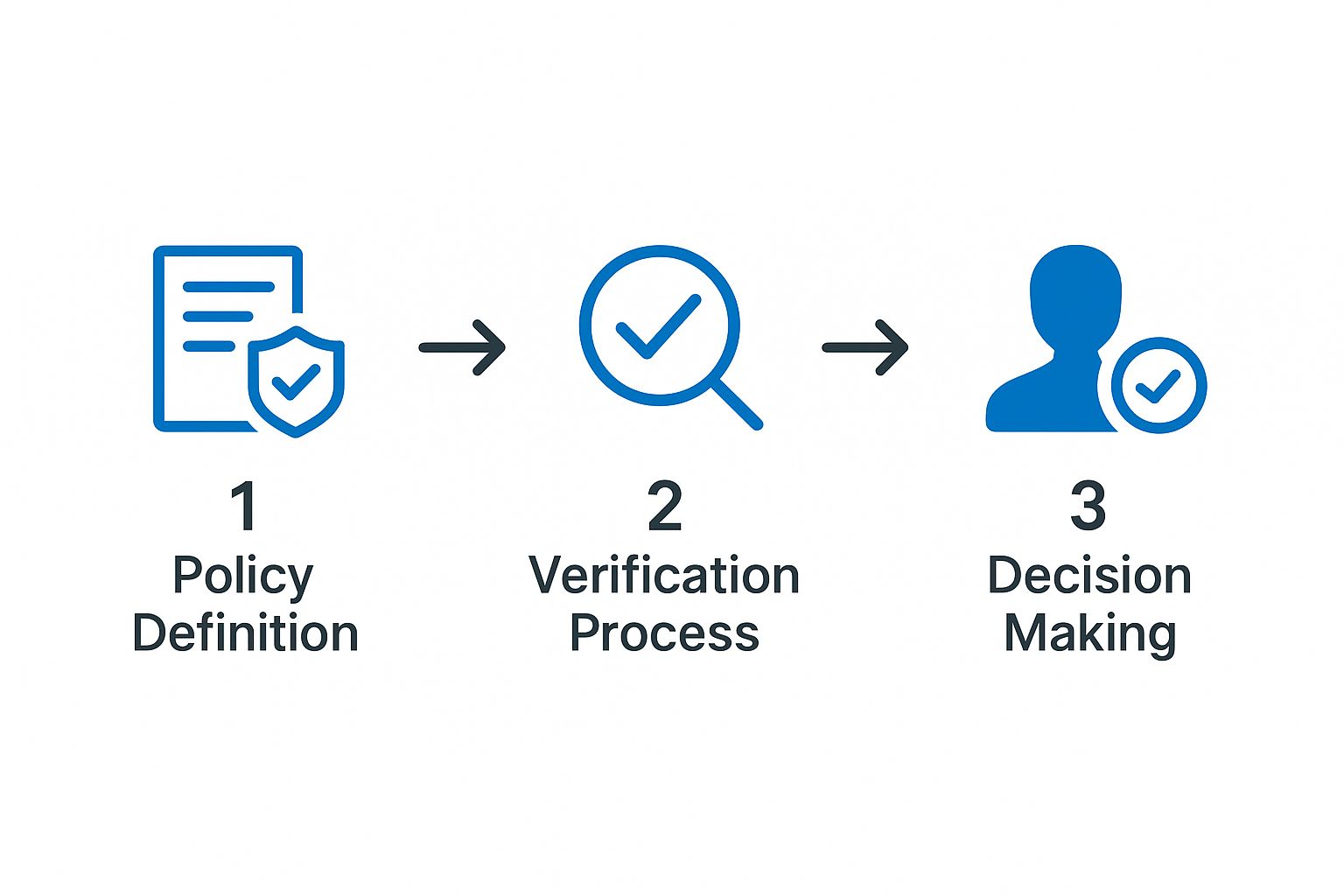
As you can see, a successful screening process relies on a systematic approach where each step builds logically on the last.
Interpret Reports and Handle Discrepancies
When the report lands on your desk, the final step is to make sense of it. A good report will be clear and easy to read, often using colours to highlight any areas of concern. Your job is to review the findings and consider them in the context of the role you’re hiring for.
But what happens if you find a red flag? The key is not to jump to conclusions. Instead, follow a fair and objective review process.
- Analyse the Discrepancy: First, figure out what you’re looking at. Is it a minor inconsistency, like a slightly off employment date, or something more serious, like an undisclosed criminal conviction?
- Communicate with the Candidate: Give the candidate a chance to explain what’s going on. It could be a simple clerical error or a misunderstanding.
- Make a Defensible Decision: Base your final decision on how relevant the finding is to the job’s core functions. Make sure to document your reasoning clearly—this ensures your decision is both defensible and compliant.
Following this structured approach means you’ll handle sensitive information fairly and make hiring decisions that are both well-informed and legally sound.
Best Practices for Efficient and Modern Screening

Moving beyond what to check, let’s talk about how you check. A modern, efficient screening process isn’t just about spotting red flags. It’s about speed, accuracy, and creating a positive candidate experience that actually boosts your employer brand.
In a competitive hiring market, a slow, clunky verification process can mean losing top talent to a competitor who moves faster. By using technology and automation, you can turn your screening from a frustrating bottleneck into a strategic advantage, helping you hire the best people with confidence and speed.
Integrate Screening into Your ATS
One of the most powerful changes you can make is to integrate background checks for employees directly into your Applicant Tracking System (ATS). Instead of juggling different platforms, this creates a single, unified workflow. You can kick off checks, track their progress, and see the final reports all in one place.
This integration does more than just save time; it creates a much smoother journey for everyone. For recruiters, it means no more repetitive data entry and everything stays organised. For candidates, it presents a cohesive and professional experience from the moment they apply to when they get an offer.
A key challenge for Indian companies is the sheer volume of discrepancies, especially in employment history. A 2023 EY survey analysis found that about 10% of employment background verifications had some kind of discrepancy, making it the most common issue uncovered. This has led to a greater reliance on third-party vendors offering specialised services, like on-site address checks and deep credential verification. For companies embracing remote work, these checks are crucial safeguards. To understand this trend better, you can explore the evolving landscape of employee background verification in India on ongrid.in.
Choosing the Right Verification Partner
Your choice of a third-party verification partner is critical. They aren’t all the same, and the right partner will feel like an extension of your own HR team. When you’re evaluating potential vendors, look past the price tag and focus on these essentials:
- Technology and Automation: How easily does their platform integrate with your existing HR tools? A solid tech stack is the foundation of an efficient process.
- Compliance Expertise: The legal landscape is always shifting. Your partner needs to have deep knowledge of data privacy laws and screening regulations to keep you compliant.
- Turnaround Times: Ask for their average completion times for different checks. Speed is vital, but never at the expense of accuracy.
- Candidate Experience: What is their process like for the applicant? A user-friendly portal and clear communication are signs of a modern, candidate-focused provider.
Your screening process is one of the first tangible interactions a candidate has with your company culture. A transparent, respectful, and efficient process reinforces that you are an organised and trustworthy employer.
Maintain Transparency and Communication
A background check can be a nerve-wracking experience for candidates. The best way to handle this is with proactive communication and total transparency. Let candidates know right from the start that a background check is part of your hiring process, and be clear about what you’ll be verifying.
Once a check is underway, keep them in the loop. Simple automated updates like, “Your education verification is now in progress,” can make a world of difference in reducing their anxiety.
If a potential issue pops up, it’s crucial to handle it with fairness and professionalism. Give the candidate a chance to review the findings and offer an explanation. This approach not only ensures a fair process but also protects your company from potential legal trouble while treating every single applicant with respect.
Common Questions About Employee Background Checks
Even with a crystal-clear process in place, questions about background checks for employees are always going to pop up. Let’s be honest, figuring out the timelines, making tough decisions based on the results, and staying on the right side of the law can feel like a maze.
This section tackles the most common questions we hear from HR managers and business owners. We’ll give you straightforward answers to help you navigate the screening process with confidence.
How Long Should a Background Check for an Employee Take in India?
The time it takes to complete a background check in India really depends on what you’re verifying. There’s no single timeline; it’s more like a sum of its parts. Simple identity verifications, like confirming an Aadhaar or PAN card, are usually the quickest and can often be wrapped up within 1-2 days.
However, the more detailed checks naturally need a bit more time.
- Education and Employment Verification: These checks typically take anywhere from 3 to 7 working days. The biggest variable here is how fast universities and past employers get back to the verification requests.
- Criminal Record Checks: This can be the longest leg of the journey, sometimes taking up to 10 days or even longer. The delay often comes from having to coordinate with various law enforcement agencies and piece together information from a decentralised system of records.
It’s always a good idea to build these timelines right into your hiring schedule. Just as importantly, keep your candidates in the loop about how long things might take. Managing expectations from the get-go makes for a much smoother experience for everyone.
Can We Reject a Candidate Based on Their Background Check Results?
Yes, you can decide not to hire someone based on what a background check uncovers, but you have to handle it carefully and legally. The key is that your decision must be based on findings that are directly relevant to the specific duties and responsibilities of the job.
For instance, a conviction for financial fraud is a perfectly valid reason to turn down a candidate applying for a senior finance role. On the other hand, a minor traffic violation from five years ago would be completely irrelevant for most office jobs.
A fair hiring decision based on a background check isn’t just about what you find. It’s about how that information directly impacts the candidate’s ability to do the job safely and effectively.
To steer clear of any discrimination claims, it’s crucial to have a consistent internal policy that you apply fairly to all candidates in similar roles. It’s also a great practice to give the candidate a chance to explain any negative information before you make a final call. This simple act of fairness is a cornerstone of a legally sound screening process.
What Is the Most Common Discrepancy Found During Background Checks?
By a long shot, the most common issue we see during background checks for employees in India is with employment history. This is the area where candidates are most tempted to bend the truth.
These discrepancies can range from tiny white lies to outright fabrications:
- Puffing up job titles or responsibilities to seem more qualified.
- Tweaking employment dates to cover up awkward gaps in their work history.
- Inflating their previous salary to get a better starting offer.
- Making up entire jobs or employers that simply don’t exist.
Coming in a close second are discrepancies in educational qualifications. This really drives home why you can’t just take a CV at face value. Thoroughly verifying past employment and education directly with the source is a non-negotiable step in building an honest, capable team.
Is It Mandatory to Take a Candidate’s Consent for a Background Check?
Absolutely. Getting explicit, written consent from a candidate before you start a background check is a mandatory legal requirement in India. This isn’t just a formality or a box to tick; it’s a fundamental issue of data privacy and personal rights.
Kicking off a check without consent is a serious legal misstep that could expose your company to hefty penalties and legal battles. Beyond that, it completely shatters the trust between you and a potential hire, which can seriously damage your employer brand.
The consent form itself needs to be perfectly clear. It should spell out:
- Which specific checks you’ll be running.
- How their personal data will be collected, handled, and stored.
- That the information gathered will be used to evaluate their application.
This requirement is backed by regulations like the Digital Personal Data Protection Act of 2023, which puts a major emphasis on the lawful and fair handling of personal data. Always make getting consent your first and most critical step.
Ready to build a trustworthy team with confidence? SpringVerify provides fast, accurate, and compliant background verification services designed for high-growth companies in India. Streamline your hiring process and make informed decisions with a partner you can trust. Learn more and get started today at SpringVerify.


