

Table of Contents
The Evolving Landscape of Background Checks in India

Background checks in India are no longer a simple formality. They’re now a vital risk management tool for businesses operating in India’s competitive job market. This change reflects a growing understanding of the importance of due diligence. Protecting company reputation, ensuring workplace safety, and making informed hiring decisions are key benefits. In the past, many companies relied solely on basic references.
Today, leading organizations are implementing more thorough, multi-layered screening procedures. Several factors are driving this change. The rise in resume fraud and misrepresentation of credentials requires more rigorous verification. The growth of remote work and the gig economy adds further complexity to candidate assessment. This demands robust systems for quick and efficient information verification. Furthermore, industry regulations, particularly in sectors like BFSI, require stricter background checks.
The Rise of Comprehensive Screening
The scope of background checks in India has broadened significantly. It includes various verification procedures:
- Identity verification
- Educational qualification checks
- Employment history verification
- Criminal record checks
- Address verification
- Social media screening
This approach gives employers a complete picture of a candidate’s background and suitability for a role. The Asia Pacific region, including India, is seeing significant growth in the business background check market. By 2025, India held 16.10% of the Asia Pacific market share. The region’s market grew from $115.308 million in 2021 to $166.188 million. This highlights the increasing importance of background checks for Indian businesses, driven by the need for secure hiring practices. The market is projected to reach $346.323 million by 2033, fueled by a 9.613% CAGR. This growth reflects the trend of integrating background checks into business operations to mitigate risk and ensure regulatory compliance. Learn more here.
Balancing Thoroughness and Efficiency
While thoroughness is essential, efficiency is just as important in today’s fast-paced hiring environment. Successful companies in India are striking a balance between these two. They are using technology and automation to streamline the verification process without sacrificing quality. This allows for faster hiring decisions, minimizing delays and improving the candidate experience. These advancements aren’t just about speed. They increase accuracy and reduce human error. As a result, background checks have become strategically vital for organizations in India. They help build trust, mitigate risks, and create a safe and productive work environment.
Navigating India’s Background Check Legal Framework
The legal landscape surrounding background checks in India is complex and ever-evolving. Staying informed is essential for any organization operating within India. Understanding these laws is vital for protecting both employers and candidates. This section clarifies the key regulations governing background verification practices.
Key Regulations Governing Background Checks
Several laws and regulations influence how background checks are conducted in India. The Information Technology Act, 2000, along with its amendments, establishes the foundation for data protection and online privacy. This is particularly relevant for the digital aspects of background checks. The Digital Personal Data Protection Act (DPDPA) of 2023, though facing implementation delays, signals a shift towards a more comprehensive data privacy framework.
This new act introduces concepts like explicit consent and data minimization, shaping the future of background verification. Learn more: How to master compliance. The DPDPA addresses legitimate purposes for data processing, individual rights concerning their data, and the processing of children’s data. It also covers cross-border data transfer rules and penalties for non-compliance. These provisions significantly impact background screening.
Consent and Privacy in Background Checks
A cornerstone of legal background checks in India is obtaining informed consent. Before starting a background check, employers must obtain explicit written consent from the candidate. This consent must detail the purpose of the check and the information that will be collected.
Employers must maintain transparency throughout the process. This includes informing candidates about the process and allowing them to review and correct inaccuracies. Transparency builds trust and promotes fairness. Employers must also handle all collected information confidentially, restricting access to authorized personnel. Strong data security measures are vital for protecting candidate data. This includes both physical and digital security protocols.
Industry-Specific Compliance Obligations
Different industries in India face unique compliance obligations regarding background checks. The BFSI sector often has stricter requirements due to the sensitive nature of the work. These might involve detailed checks and adherence to tighter regulatory standards.
Other sectors, like healthcare and education, also have specific guidelines. Staying abreast of these industry-specific regulations is essential for compliance. Certain roles, regardless of industry, might require more thorough checks. Positions with access to sensitive data, financial responsibilities, or interaction with vulnerable populations may necessitate deeper scrutiny. This ensures suitability for the role and mitigates potential risks.
Common Legal Pitfalls
Even experienced employers can encounter legal pitfalls related to background checks. One common mistake is collecting excessive or irrelevant data, potentially violating privacy laws. Another pitfall is failing to obtain proper consent or neglecting transparency principles.
These oversights can harm an organization’s reputation and invite legal challenges. Staying current on legal developments and best practices is essential for conducting effective background checks and avoiding these pitfalls.
To help you better understand the legal requirements, the following table provides a detailed breakdown:
Essential Legal Requirements for Background Checks in India
A practical breakdown of regulations that impact your verification process and how to address them effectively
| Legislation/Regulation | Key Requirements | Employer Obligations | Penalties for Non-Compliance |
|---|---|---|---|
| Information Technology Act, 2000 | Data protection and online privacy | Implement reasonable security practices and procedures | Penalties as per the Act |
| Digital Personal Data Protection Act (DPDPA) of 2023 | Explicit consent, data minimization, purpose limitation | Obtain explicit consent, minimize data collection, define purpose of data processing | Penalties as per the Act |
This table summarizes the key legal requirements impacting background checks in India. Understanding and adhering to these regulations is crucial for ensuring compliance and fostering a fair and transparent hiring process.
Building a Robust Background Check Framework
A robust background check framework isn’t just a checklist; it’s a strategic process. It involves carefully selecting the most relevant checks for different roles and industries within the Indian context. This means understanding the complexities of verification in India and aligning your checks with your organization’s risk tolerance and specific hiring needs.
Essential Background Check Components in India
Background checks in India cover various verification components. Each element is essential for creating a comprehensive profile of a candidate. Identity verification, for example, confirms a candidate’s identity using official documents like Aadhaar or PAN cards. Education verification is crucial, especially given India’s diverse educational landscape. It confirms the legitimacy of academic credentials by verifying degrees and certificates directly with universities and boards.
Employment verification validates a candidate’s work history, including their roles, tenure, and sometimes even performance. Navigating the intricacies of India’s unorganized sectors can make this component particularly complex, sometimes requiring innovative verification approaches. Address verification confirms a candidate’s current and past residences. This can also be challenging due to inconsistencies in address formats and available documentation.
To better understand the various components of background checks in India, the table below provides a comparison of different verification elements, their importance, typical turnaround times, discrepancy rates, and best practices.
Essential Background Check Components in India
| Verification Type | Importance | Average Turnaround Time | Discrepancy Rate | Best Practices |
|---|---|---|---|---|
| Identity Verification | Critical | 1-2 days | Low ( <1%) | Use Aadhaar/PAN based digital verification |
| Education Verification | High | 3-5 days | Medium (5-10%) | Direct verification with universities/boards |
| Employment Verification | High | 5-7 days | Medium (5-15%) | Use previous payslips, Form 16, and employment offer letters |
| Address Verification | Medium | 2-3 days | Medium (5-10%) | Physical verification, utility bill checks |
| Criminal Record Check | High for sensitive roles | 7-10 days | Low ( <2%) | Utilize police verification and court records |
This table highlights the importance of each verification type and offers insights into typical turnaround times and potential discrepancies. By understanding these factors, organizations can optimize their background check processes for both efficiency and thoroughness.
Discrepancies in background checks within the Indian BFSI (Banking, Financial Services, and Insurance) sector have been increasing. In the financial year 2023-24, discrepancies reached 10.4%, an 18.1% increase from the previous year. This increase is partly due to the rapid growth of the BFSI sector, which can create vulnerabilities. Education verification discrepancies were around 9.1%, and address verification inaccuracies stood at 6.4%. These statistics, coupled with the rising crime rate reported by the Indian National Crime Records Bureau, emphasize the need for stringent background checks. You can find more detailed statistics here.
Balancing Verification Depth and Efficiency
Finding the right balance between verification depth and efficiency is essential. Entry-level positions might only require basic identity and education verification. However, senior roles or those with significant financial responsibilities often require more comprehensive screening, including criminal record checks and credit history verification. Understanding Tenant Screening Criteria can be useful when navigating the legal framework for background checks in India, even though employment checks differ from tenant screenings. This helps gather the most relevant information without unnecessarily delaying the hiring process. Considering the turnaround time for each check and incorporating it into hiring timelines is also crucial for a smoother candidate experience.
Compliance and the Evolving Legal Landscape
The legal landscape for background checks in India is constantly changing. Employers must stay informed and adapt their processes accordingly. Key regulations, including the Information Technology Act, 2000 and the Digital Personal Data Protection Act (DPDPA) of 2023, govern data protection and privacy, significantly impacting how background checks are conducted. Obtaining explicit consent from candidates, ensuring transparency, and adhering to data minimization principles are crucial for compliance.
The following infographic compares the PPD Act and the Data Protection Bill across key areas like coverage scope, consent requirements, and penalty caps:
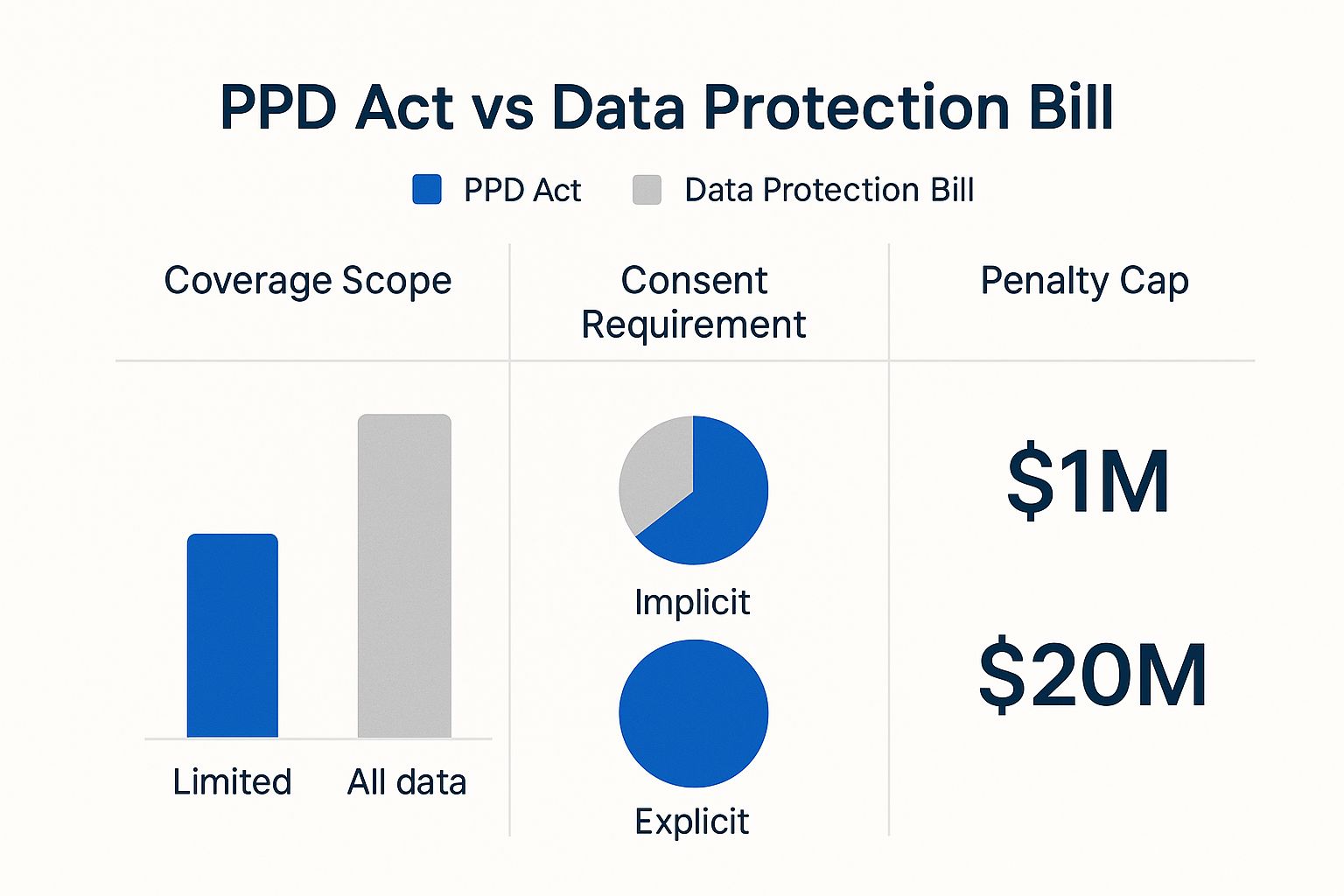
This comparison highlights the move towards stronger data protection under the Data Protection Bill, especially regarding consent and penalties. Organizations need to adjust their background check processes to reflect these changes. A robust framework must integrate these legal aspects into every step to ensure compliance while achieving hiring objectives. This includes establishing clear internal policies, training HR personnel, and partnering with reputable background check providers familiar with Indian regulations.
Implementing Background Checks That Actually Work
Establishing effective background checks in India requires a well-defined strategy. It’s about creating a system that delivers reliable results without slowing down your hiring process. This involves understanding the nuances of Indian verification practices and selecting the right partners.
Choosing the Right Verification Partner
A key decision is choosing a verification partner. Seek out providers specializing in the Indian market with a solid grasp of local regulations, such as the Digital Personal Data Protection Act (DPDPA) of 2023. This expertise is crucial for navigating data privacy and ensuring compliance. A strong partner will offer a comprehensive suite of verification services, from identity and education checks to employment and address verification. They should also prioritize data security with robust technologies to protect sensitive information, such as strong data encryption and secure storage systems.
Establishing Clear Background Check Policies
Well-defined background check policies are crucial for maintaining consistency and fairness. Your policies should clearly state which checks are required for specific roles, the process for obtaining candidate consent, and how you manage any discrepancies. These policies should be readily available to both HR personnel and candidates. Transparency is paramount. Openly communicate your policies to candidates and address any questions they might have. This builds trust and creates a positive candidate experience. You might find this resource helpful: How to master employment verification in India.
Integrating Verification into Your Workflow
Smoothly integrating background checks into your recruitment workflow is vital for efficiency. This can be achieved through APIs that connect your HRIS or ATS directly to your verification partner’s platform. Automating this process reduces manual work and speeds up hiring timelines. Understanding the background check process itself is important for effective implementation. For a helpful overview, see Background Checks. Automation also minimizes human error and ensures consistency. For example, automated systems can flag potential discrepancies for review, promoting thorough and accurate checks.
Candidate Communication and Transparency
Open communication with candidates throughout the process is essential. Keep them informed about the progress of their background check and what they can expect. This transparency builds trust and reduces anxiety. It also gives you a chance to address any candidate questions or concerns. This open dialogue emphasizes the check’s importance while respecting candidate privacy. Providing clear instructions on submitting required documentation also streamlines the process.
Measuring the Effectiveness of Your Program
Regularly assess your background check program for continuous improvement. Track key metrics like turnaround time, discrepancy rates, and candidate feedback. This data reveals what’s working and where you can make improvements. For instance, consistently long turnaround times might indicate a need to optimize your process or consider a different verification partner. Analyzing these metrics helps you refine your program, ensuring it remains efficient and effectively supports your hiring objectives in India. This ongoing evaluation maintains the program’s integrity and ensures it remains a valuable tool for building a strong and reliable workforce.
Transforming Verification With Modern Technology

The background check landscape in India is evolving. Driven by technological progress, this evolution emphasizes not only speed but also improved accuracy and a transformation of traditional verification methods. Progressive organizations are embracing digital solutions to tackle the difficulties posed by conventional background checks.
AI-Powered Document Authentication
The use of Artificial Intelligence (AI) in document authentication represents a major technological advancement. AI algorithms can swiftly and precisely analyze documents for signs of manipulation or forgery, bolstering the reliability of verifying educational certificates and employment records.
For instance, AI can identify discrepancies in fonts, layouts, and signatures, highlighting potentially fraudulent documents for closer inspection. This automation minimizes manual work and significantly accelerates the verification process, ultimately enhancing the overall precision of background checks in India.
Blockchain For Credential Verification
The integration of blockchain technology marks another significant development. Blockchain provides a secure and transparent platform for credential verification. By storing verifiable credentials on a blockchain, organizations establish a tamper-proof history of a candidate’s qualifications.
This simplifies verification, allowing employers to instantly confirm the authenticity of credentials without contacting third-party institutions. Moreover, blockchain empowers candidates with increased data control and privacy, letting them select which credentials to share with potential employers, thereby optimizing the background check process in India.
Streamlining the Candidate Experience With Digital Identity
Digital identity solutions are revolutionizing the candidate experience. These solutions make the process faster, more efficient, and less intrusive. They incorporate digital platforms that enable candidates to securely submit information and monitor their background check progress.
These platforms also facilitate real-time information verification, minimizing delays and errors. These improvements benefit both employers and candidates, creating a smoother, more efficient background check process.
Implementing Modern Technology In Your Organization
Integrating these technologies requires careful planning. Begin by pinpointing your organization’s unique needs and challenges to determine the most suitable technologies. Then, assess different vendors and select a partner offering the necessary support and expertise.
Background verification in India is rapidly evolving, with a strong emphasis on integrating these advanced technologies. By 2025, projections indicate that 80% of companies will incorporate advanced technologies into their verification processes. This underscores the growing importance of accurate and efficient background checks in the Indian market. Discover more insights here. Finally, ensure your implementation aligns with relevant regulations and data privacy laws in India. This includes obtaining proper consent from candidates and implementing robust security measures. Strategic implementation of these technologies allows organizations to significantly improve the accuracy, efficiency, and overall effectiveness of their background check processes in India.
Industry-Specific Verification Strategies That Deliver
Different industries in India face unique verification challenges. These challenges arise from specific regulations, varying levels of risk, and the nature of the work itself. Understanding these nuances is crucial for building effective background check frameworks. Let’s explore how different sectors are adapting their verification approaches.
BFSI: Prioritizing Security and Trust
The Banking, Financial Services, and Insurance (BFSI) sector prioritizes security and trust. Given the sensitive nature of financial data and transactions, thorough background checks are essential. Criminal record checks, credit history checks, and KYC (Know Your Customer) procedures are standard practice.
Additionally, the BFSI sector faces stricter regulatory scrutiny. Staying compliant with evolving requirements is essential for maintaining a secure and legally sound verification process. For example, adhering to the Digital Personal Data Protection Act (DPDPA) of 2023 is critical for protecting customer data.
IT/ITeS: Focus on Skills and Experience
The IT/ITeS sector focuses on skills and experience. While criminal record checks are still important, verifying education and employment history is paramount. Education verification often involves verifying degrees and certifications from various educational institutions.
Employment verification might require verifying experience from multiple previous employers, including startups and multinational corporations. The emphasis on specific technical skills may also necessitate specialized background checks tailored to a particular role.
Healthcare: Ensuring Patient Safety and Compliance
In healthcare, patient safety and compliance take center stage. Criminal record checks are essential, along with verification of medical licenses and certifications. You might be interested in: How to master healthcare compliance. Stringent verification processes help ensure the competency and ethical standards of healthcare professionals.
Manufacturing: Emphasizing Safety and Reliability
The manufacturing sector prioritizes safety and reliability. Verification focuses on criminal record checks, drug and alcohol testing, and previous employment history. These checks help ensure a safe and productive work environment and mitigate risks related to workplace accidents and security breaches.
Education: Protecting Students and Maintaining Integrity
In the education sector, background checks are vital for protecting students and maintaining the integrity of educational institutions. Criminal record checks are standard practice, along with verification of teaching credentials and experience. Thorough screening helps ensure the safety and well-being of students.
Building Tailored Verification Frameworks
Creating an effective verification framework requires understanding the specific needs of your industry. Consider these best practices:
- Identify critical verification components: Determine which checks are essential for your sector.
- Stay updated with industry regulations: Keep abreast of evolving legal requirements.
- Balance thoroughness with efficiency: Implement efficient processes to minimize hiring delays while maintaining thoroughness.
- Prioritize candidate experience: Communicate transparently with candidates throughout the process.
By understanding the unique challenges of each industry and implementing tailored strategies, organizations in India can establish effective background check systems that protect their interests and promote a safe and productive work environment.
Overcoming India’s Unique Verification Challenges
Background checks in India present unique hurdles. These challenges stem from issues like inconsistent record-keeping and regional variations in documentation. This section explores common obstacles employers face and provides effective strategies to overcome them. We’ll also examine how leading organizations are tackling these complexities while maintaining the integrity of their verification processes.
Verifying Credentials From Unaccredited Institutions
One significant challenge is verifying credentials from unaccredited institutions. India’s diverse educational landscape includes many institutions with varying levels of accreditation and record-keeping practices. This can make authenticating the legitimacy of degrees and diplomas difficult.
One solution is to partner with verification providers with extensive networks and access to primary source data. These providers can often leverage direct relationships with institutions, even unaccredited ones, to obtain reliable verification. Another approach involves using technology. AI-powered document authentication tools can help identify potentially fraudulent documents by analyzing inconsistencies in formatting and layout.
Navigating Inconsistent Public Records
Inconsistent public records pose another major challenge. Accessing criminal records and other public data can be difficult due to variations in record-keeping practices across different regions and jurisdictions in India.
One effective strategy is to work with verification providers who specialize in navigating India’s complex public records system. They often have established relationships with local authorities, which allows them to access the required information effectively. Another approach involves leveraging technology to aggregate and analyze data from multiple sources. This can provide a more comprehensive view of a candidate’s background.
Addressing Regional Documentation Variations
Regional variations in documentation add another layer of complexity. Different states and regions may have different formats and requirements for identification documents and address proof. This inconsistency can complicate verifying a candidate’s identity and address.
Partnering with verification providers with pan-India coverage and expertise in regional documentation nuances is crucial. They can navigate these variations and ensure accurate verification. Implementing standardized verification processes that account for these regional differences can also help maintain consistency. This might involve providing clear instructions to candidates on acceptable document formats.
Handling Candidate Concerns About Verification
Addressing candidate concerns about privacy and data security is paramount. Candidates may have reservations about sharing personal information, especially with increased awareness of data privacy rights.
Maintaining transparency throughout the verification process is essential. Communicate clearly with candidates about the purpose of the background check, the information being collected, and how it will be used. This openness fosters trust and addresses potential anxieties. Assure candidates that all data collected will be handled confidentially and securely, adhering to regulations like the Digital Personal Data Protection Act (DPDPA) of 2023.
Maintaining Verification Integrity in India’s Landscape
Maintaining verification integrity in India requires a multi-faceted approach. This includes partnering with reputable providers who adhere to strict ethical standards and comply with relevant laws. Implementing internal quality control measures is also vital.
Regularly auditing your verification processes and ensuring ongoing training for HR personnel helps identify and address potential weaknesses. Furthermore, leveraging technology can enhance accuracy and efficiency, allowing for quicker and more reliable background checks. This, in turn, allows organizations to make informed hiring decisions while mitigating risks.
Ready to experience a seamless and compliant background check process tailored for India? SpringVerify offers comprehensive solutions to address the unique challenges of the Indian market, ensuring secure and efficient verification. Visit SpringVerify today to learn more.


