

Table of Contents
Elevate Your Hiring Process with Seamless ATS Integrations
Struggling with a clunky, disconnected hiring process? This listicle showcases eight powerful ATS integrations designed to solve that. Discover how tools like SpringVerify, Zapier, and Workato, among others, can supercharge your existing ATS, streamlining everything from background checks to onboarding. Whether you’re a startup, SME, or large enterprise, learn how these ATS integrations boost efficiency, improve data security, and create a truly seamless HR workflow. Get ready to optimize your recruitment strategy for 2025 and beyond.
1. SpringVerify
Streamlining your hiring process and ensuring the credibility of your candidates is paramount, especially in today’s competitive market. For businesses in India, navigating the complexities of background checks can be a time-consuming hurdle. SpringVerify emerges as a powerful solution, offering seamless ATS integrations to automate and enhance your background verification process. This premier background screening platform caters to organizations of all sizes, from agile startups to established enterprises, empowering them to make informed hiring decisions swiftly and confidently. SpringVerify earns its place on this list due to its customized solutions, robust API, innovative use of technology like WhatsApp for KYC, and strong focus on data security and compliance within the Indian market.
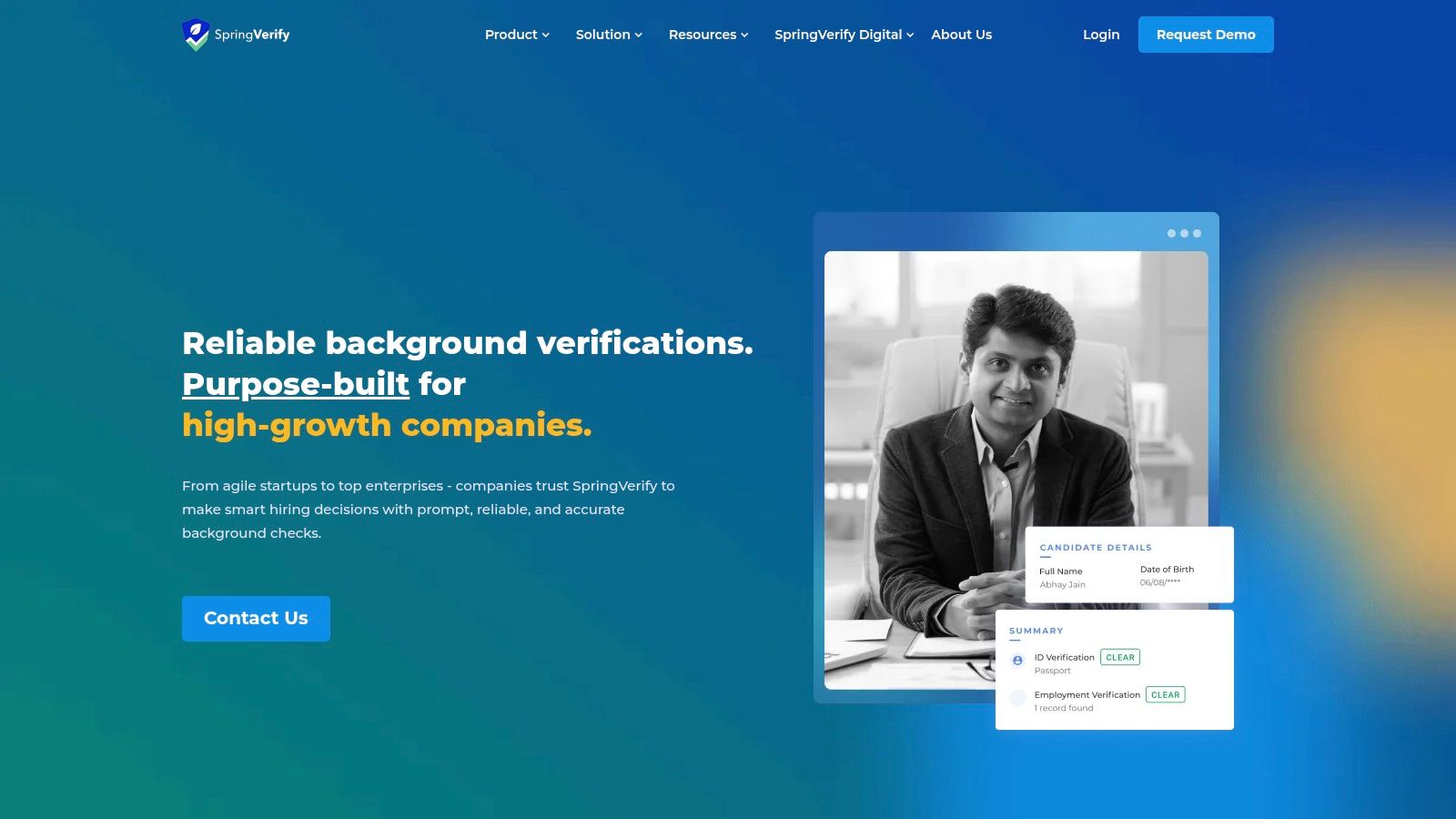
One of SpringVerify’s key strengths lies in its adaptable approach to background verification. Recognizing that every business has unique requirements, SpringVerify allows you to tailor verification workflows to precisely match your specific needs. This customization ensures that you’re gathering the most relevant information for each role, optimizing the screening process for efficiency and accuracy. Further bolstering its value proposition is the seamless integration with existing HRIS and ATS platforms via a powerful and flexible API. This integration eliminates manual data entry and automates repetitive tasks, significantly reducing the administrative burden on HR teams and allowing them to focus on strategic initiatives. Learn more about SpringVerify. This streamlined workflow not only saves valuable time but also enhances hiring productivity, allowing you to bring top talent on board faster.
SpringVerify’s innovative approach to KYC verification via WhatsApp is a game-changer. This feature allows candidates to submit information and complete verification steps on the go, significantly improving the candidate experience. Real-time verification and transparent status tracking further enhance the process, keeping candidates engaged and informed throughout the onboarding journey. The platform offers a comprehensive suite of verification services, covering everything from ID and employment history to education credentials, court records, credit history, and even drug screenings. This breadth of services ensures a thorough and comprehensive background check, minimizing risk and maximizing the chances of hiring the right fit.
For businesses operating in India, compliance and data security are critical. SpringVerify addresses these concerns with its robust security measures, certified by PCI and ISO27001:2013 standards. This commitment to data protection ensures the privacy and security of sensitive candidate information, building trust and maintaining compliance with relevant regulations. Furthermore, SpringVerify provides dedicated customer success managers and 24/7 support, ensuring a smooth and hassle-free experience for its users. This level of support is especially valuable for businesses navigating the complexities of background checks for the first time or those seeking expert guidance on optimizing their verification processes.
While SpringVerify offers a compelling solution for background verification, it’s important to consider a few factors. Pricing information isn’t readily available on the website, requiring potential users to contact the sales team for a quote. This lack of transparency can be a drawback for businesses seeking to compare pricing options quickly. Additionally, SpringVerify’s primary focus is on the Indian market and its specific compliance frameworks. While this makes it an excellent choice for businesses operating within India, its global applicability might be limited for companies with international hiring needs.
SpringVerify stands out as a valuable tool for businesses in India seeking to streamline their hiring processes with efficient and compliant background checks. Its highly customizable solutions, seamless ATS integrations, innovative use of technology, and robust security features combine to offer a compelling package for organizations looking to improve hiring efficiency and make informed decisions. While the lack of transparent pricing and a primary focus on the Indian market may be considerations for some, the overall benefits, especially for businesses operating within India, make SpringVerify a strong contender in the background verification space. Consider contacting their sales team for a customized demo and pricing details to assess how SpringVerify can effectively address your specific hiring and verification needs.
2. Zapier
Zapier is a leading automation platform renowned for its ability to connect thousands of applications, making it a powerful tool for streamlining ATS integrations. For businesses in the IN region seeking to optimize their hiring processes, Zapier offers a flexible and largely code-free solution to connect their ATS with a wide array of other essential HR tools. This connectivity eliminates manual data entry, reduces errors, and frees up HR teams to focus on strategic initiatives. By automating repetitive tasks, Zapier helps businesses of all sizes, from startups to large enterprises, improve efficiency and enhance the candidate experience.
Zapier boasts pre-built integrations with over 100 ATS platforms, including popular choices like Greenhouse, Lever, BambooHR, JazzHR, and Workday. This wide compatibility ensures that businesses using various ATS solutions can leverage Zapier’s automation capabilities. For instance, a company using Greenhouse can connect it with their CRM, like HubSpot, to automatically update candidate records as they progress through the hiring pipeline. Similarly, a business using BambooHR can integrate it with Slack to automatically notify hiring managers when a candidate accepts a job offer. These are just a few examples of how Zapier’s ATS integrations can transform recruitment workflows.
One of Zapier’s key strengths is its user-friendly interface, which allows even non-technical users to create automated workflows, known as “Zaps.” The visual workflow builder employs a drag-and-drop interface, simplifying the process of connecting apps and defining actions. Multi-step Zaps enable complex automations, allowing for multiple actions across different platforms triggered by a single event. For example, when a new candidate is added to your ATS, a Zap can automatically add them to your email marketing list, create a task in your project management tool, and send a welcome email – all without any manual intervention. This level of automation significantly reduces administrative overhead and ensures consistency in your recruitment processes.
Zapier offers a range of pricing plans to accommodate different needs and budgets. A free tier is available for basic automations, allowing businesses to explore the platform and experiment with simple workflows. Paid plans unlock more advanced features, such as higher task limits, multi-step Zaps, and premium app integrations. While Zapier can become expensive for high-volume operations that require premium features, its flexible pricing model allows businesses to scale their usage as needed. You can learn more about Zapier and other API integrations through resources like this: Learn more about Zapier. This can be particularly helpful for Indian businesses looking for information relevant to their region.
For businesses in India, Zapier’s ATS integrations offer a valuable solution for optimizing recruitment processes and improving overall HR efficiency. The platform’s ease of use, extensive integrations, and flexible pricing make it an attractive option for businesses of all sizes. While some limitations exist regarding complex enterprise requirements and occasional sync delays during peak usage, Zapier’s robust features and extensive community support make it a worthwhile investment for companies seeking to automate their HR workflows and gain a competitive edge in the talent acquisition landscape. Consider factors such as your ATS platform, integration needs, budget, and technical expertise when evaluating Zapier for your business. By carefully assessing these factors, you can determine if Zapier is the right solution to streamline your ATS integrations and enhance your hiring processes.
3. Workato
Workato is a powerful, enterprise-grade integration and automation platform specifically designed to connect disparate business applications, with a strong focus on HR systems, including Applicant Tracking Systems (ATS). This makes it a compelling option for organizations looking to streamline their recruitment processes and enhance data flow between their ATS and other crucial business tools. It offers a blend of pre-built integrations, called “recipes,” and the flexibility to create custom integrations, catering to businesses with both simple and complex ATS integration needs. For Indian companies navigating the complexities of a rapidly evolving technological landscape, Workato offers a robust solution for creating a seamless and efficient HR ecosystem.
Workato distinguishes itself through its comprehensive features, ensuring data security and compliance, a critical factor for businesses in India and globally. With SOC 2 Type II compliance and data encryption, it provides peace of mind for organizations handling sensitive candidate information. Its AI-powered recipe recommendations further simplify the integration process, suggesting optimal workflows for ATS integrations. This is especially beneficial for companies new to automation, reducing the learning curve and accelerating time to value. Whether dealing with large volumes of applicant data or requiring real-time updates, Workato’s real-time and batch processing capabilities provide the necessary scalability. Furthermore, its advanced error handling, monitoring, and detailed analytics dashboards give administrators the tools they need to proactively manage their integrations and ensure smooth operations.
For organizations with proprietary or less common ATS platforms, Workato’s custom API connector builder offers the flexibility to integrate with virtually any system. This extensibility ensures that businesses are not limited by pre-built integrations and can connect their unique HR tech stack. This capability is especially relevant for larger enterprises or businesses with specialized hiring needs.
Practical Applications and Use Cases in India:
- Integrating ATS with CRM: Connect your ATS with your CRM to automate lead nurturing and improve candidate relationship management. For example, automatically transfer candidate data to your CRM after they reach a certain stage in the hiring process, triggering automated follow-up communications.
- Synchronizing HRIS and ATS: Ensure seamless data flow between your HRIS and ATS, automating tasks like onboarding paperwork and employee data updates. This eliminates manual data entry, reducing errors and saving valuable time for HR teams.
- Automating Background Checks: Integrate your ATS with background check providers to automate the verification process, accelerating time-to-hire while maintaining compliance with regulations.
- Connecting ATS with Collaboration Tools: Streamline communication by integrating your ATS with platforms like Slack or Microsoft Teams. Automatically notify hiring managers of application updates, interview schedules, and other crucial information.
Comparison with Similar Tools:
While tools like Zapier or IFTTT offer basic integration capabilities, Workato’s enterprise-grade features and focus on complex HR integrations set it apart. Zapier and IFTTT excel in connecting individual apps for simple tasks, while Workato is designed for orchestrating complex workflows across multiple systems, particularly within the HR domain.
Implementation and Setup Tips:
- Start with pre-built recipes: Leverage Workato’s library of pre-built recipes to quickly integrate common ATS platforms and other applications.
- Utilize the AI-powered recommendations: Explore the AI-driven suggestions for optimizing your workflows and automating key processes.
- Engage with Workato’s support team: For complex integrations or custom API connections, leverage Workato’s comprehensive customer support and dedicated success managers.
Pricing and Technical Requirements:
Workato’s pricing is typically subscription-based and tailored to the specific needs of the organization. It’s best to contact their sales team for a detailed quote. Technical requirements are minimal as Workato is a cloud-based platform, primarily requiring a stable internet connection and user accounts.
Pros:
- Robust enterprise security and compliance features
- Excellent performance handling large volumes of recruitment data
- Comprehensive customer support with dedicated success managers
- Flexible deployment options including cloud and on-premise
Cons:
- Higher cost point making it less suitable for small businesses
- Steeper learning curve compared to simpler automation tools
- Requires more technical knowledge for advanced customizations
- Limited free trial options for evaluation
Website: https://www.workato.com
Workato deserves its place on this list because it provides a comprehensive and powerful solution for ATS integrations. Its focus on security, scalability, and flexibility makes it an ideal choice for organizations in India seeking to optimize their HR tech stack and streamline their recruitment processes. While the cost might be a barrier for smaller businesses, the robust features and enterprise-grade capabilities make it a worthwhile investment for larger organizations and those with complex integration needs.
4. MuleSoft Anypoint Platform
MuleSoft Anypoint Platform, Salesforce’s comprehensive integration solution, stands out as a powerful option for connecting your Applicant Tracking System (ATS) with a wide range of enterprise applications. This platform facilitates seamless data flow between your ATS and other crucial systems like CRM, HRM, and even background check providers, streamlining your entire recruitment and onboarding process. Its strength lies in its ability to handle complex integration architectures, making it particularly attractive for larger organizations with intricate workflows. For companies in the IN region seeking to enhance their HR and recruitment processes through efficient ATS integrations, MuleSoft offers a robust, albeit complex, solution.
MuleSoft leverages an API-led connectivity approach, meaning it uses reusable APIs as building blocks for integrations. This promotes consistency and reduces redundancy in your integration architecture. Pre-built connectors for popular ATS platforms like Workday and SuccessFactors accelerate the integration process, saving valuable time and resources. Moreover, the platform’s DataWeave transformation language empowers you to handle complex data mapping and processing between systems with different data structures, ensuring data integrity and consistency.
For instance, imagine a large enterprise in India using SuccessFactors as its ATS and Salesforce as its CRM. With MuleSoft, they can seamlessly integrate these two systems. When a candidate accepts a job offer in SuccessFactors, that information automatically triggers a workflow in Salesforce, creating a new customer record and initiating the onboarding process. This eliminates manual data entry, reduces errors, and accelerates the onboarding cycle. Similarly, MuleSoft can integrate your ATS with background check providers, automating the initiation and retrieval of background checks, ensuring compliance and streamlining the hiring process.
Furthermore, MuleSoft’s robust API management and monitoring capabilities provide granular control over access, usage, and performance of your integrations. This is particularly crucial for large enterprises and companies prioritizing data security and compliance. The CloudHub deployment platform offers auto-scaling and high availability, ensuring your integrations can handle peak loads and remain operational even during disruptions.
While MuleSoft offers significant advantages, it’s essential to consider its complexities. Implementing and managing MuleSoft requires specialized technical expertise, and startups or SMEs with limited resources might find it challenging. The licensing costs and implementation expenses can also be significant, making it a substantial investment. Furthermore, building complex integrations can involve longer implementation timelines. For simpler ATS integrations, MuleSoft might be over-engineered, and other lighter-weight solutions might be more suitable.
Features:
- API-led connectivity with reusable integration assets
- Pre-built connectors for major ATS platforms like Workday and SuccessFactors
- DataWeave transformation language for complex data mapping
- Comprehensive API management and monitoring capabilities
- CloudHub deployment platform with auto-scaling and high availability
Pros:
- Highly scalable architecture
- Strong Salesforce ecosystem integration
- Robust API management and governance
- Extensive documentation and training
Cons:
- Requires specialized technical expertise
- High licensing and implementation costs
- Longer implementation timelines for complex integrations
- Can be over-engineered for simple needs
Pricing: MuleSoft offers various pricing tiers based on the features and support required. Contact MuleSoft directly for detailed pricing information.
Implementation Tips:
- Clearly define your integration requirements and scope before starting.
- Leverage MuleSoft’s pre-built connectors where possible.
- Invest in training your team on MuleSoft’s platform and best practices.
- Start with a pilot project to test the integration before a full-scale rollout.
Website: https://www.mulesoft.com
In summary, MuleSoft Anypoint Platform offers a robust and scalable solution for ATS integrations, particularly suited for large enterprises in the IN region with complex needs. However, its complexity and cost should be carefully considered, especially by smaller organizations with limited resources. If your organization requires a powerful integration platform to connect your ATS with a wide range of applications and you have the technical expertise to manage it, MuleSoft Anypoint Platform is a strong contender.
5. Microsoft Power Automate
Streamlining your Applicant Tracking System (ATS) with other business applications is crucial for efficient recruitment. Microsoft Power Automate (formerly Microsoft Flow) stands out as a powerful automation tool that seamlessly integrates with various ATS platforms, making it a valuable asset for HR teams, particularly those operating within the Microsoft ecosystem. This integration allows for the automation of tedious, repetitive tasks, freeing up HR professionals to focus on strategic initiatives. Power Automate’s ability to connect your ATS with other applications makes it a worthy contender in the realm of ATS integrations. For businesses in the IN region, especially startups and SMEs looking for efficient hiring solutions or large enterprises requiring scalable background check processes, its ease of use and integration with familiar Microsoft products offer compelling advantages.

Power Automate leverages a low-code/no-code approach, enabling even non-technical users to create automated workflows. This empowers HR teams to build custom integrations tailored to their specific needs without relying heavily on IT support. Imagine a scenario where a new candidate is added to your ATS. With Power Automate, you can automatically trigger a series of actions: send a welcome email through Outlook, create a new task in Teams for the hiring manager, and even initiate a background check process with a third-party provider. This streamlined process significantly reduces manual effort and ensures consistency in communication and onboarding.
One of Power Automate’s key strengths lies in its native integration with the Microsoft 365 suite and Azure services. For organizations already utilizing these platforms, the synergy is undeniable. Seamless data flow between applications like Outlook, SharePoint, and Teams simplifies tasks such as interview scheduling, document sharing, and team collaboration throughout the recruitment process. This deep integration also extends to AI Builder, allowing for intelligent document processing and candidate screening, further enhancing efficiency.
Power Automate offers a tiered pricing structure. While some basic functionalities are included with certain Microsoft 365 business plans, more advanced features, including AI Builder and Robotic Process Automation (RPA) capabilities, require a premium license. You can explore specific pricing details on the Microsoft Power Automate website (https://powerautomate.microsoft.com). Technical requirements are minimal, primarily revolving around access to a Microsoft account and the necessary permissions within your chosen ATS and other integrated applications.
Compared to dedicated integration platforms, Power Automate might offer slightly less flexibility outside the Microsoft ecosystem. While over 400 pre-built connectors cater to a vast array of applications, including popular ATS platforms, some specialized ATS integrations might face connector limitations. Additionally, while generally user-friendly, highly complex automations could require deeper technical expertise. Performance, while usually adequate, can sometimes be slower than dedicated platforms, especially for extremely high-volume processes.
Implementing Power Automate with your ATS involves selecting the appropriate connector for your ATS platform and configuring the desired workflows. The user-friendly interface makes this relatively straightforward. Start with simple automations, like email notifications, and gradually expand to more complex workflows. Microsoft provides extensive documentation and tutorials to guide you through the setup process.
For businesses in the IN region, particularly those already leveraging Microsoft 365, Power Automate presents a compelling value proposition for ATS integration. Its low-code/no-code approach empowers HR teams to build automated workflows, streamlining processes, and improving efficiency. While some limitations exist concerning integrations outside the Microsoft ecosystem and potentially slower performance compared to dedicated integration platforms, the ease of use, native Microsoft integration, and robust mobile capabilities make it an attractive option for businesses seeking to optimize their recruitment processes. The mobile app, in particular, is a boon for HR professionals managing recruitment activities on-the-go, further enhancing flexibility and responsiveness. This blend of features positions Power Automate as a valuable tool for startups, SMEs, and large enterprises alike seeking to enhance their ATS functionality within a familiar and integrated environment.
6. Boomi AtomSphere
Dell Boomi AtomSphere earns its place on this list as a robust, cloud-native integration platform specifically designed to handle the complex data flows often required for efficient ATS integrations. It offers a comprehensive suite of tools for application integration, data management, and API management, facilitating seamless data synchronization between your ATS and other vital HR applications. This makes Boomi particularly attractive to organizations grappling with multiple interconnected HR systems and striving for data consistency. It’s a powerful solution, particularly beneficial for larger enterprises with complex integration needs, but its complexity may pose challenges for smaller organizations.
Consider this scenario: a large enterprise uses an ATS for recruitment, a separate HRM system for onboarding, and another platform for performance management. Manually transferring candidate data between these systems is not only time-consuming and prone to errors but also creates data silos. Boomi AtomSphere steps in to automate this process, ensuring seamless data flow between these disparate systems. As soon as a candidate is marked as “hired” in the ATS, Boomi automatically transfers the necessary data to the HRM system to initiate onboarding. This eliminates manual data entry, reduces errors, and ensures data consistency across the organization.
Boomi’s features cater to diverse ATS integration needs. Its visual process designer empowers users, even those without deep technical expertise, to create complex integration workflows using a drag-and-drop interface. For instance, you can easily map data fields between your ATS and your background check provider to automate the background verification process. This feature is particularly useful for startups and SMEs in India looking to streamline their hiring process and ensure compliance with local regulations. The Master Data Management (MDM) capability ensures consistent and accurate candidate records across all connected systems, eliminating data discrepancies and improving data integrity. This is crucial for large enterprises dealing with high volumes of candidate data.
Furthermore, Boomi offers both real-time and batch integration modes with scheduling capabilities, catering to different data synchronization requirements. Real-time integration is ideal for time-sensitive processes like offer letter generation, while batch integration is suitable for less urgent tasks like updating employee records. The comprehensive API management and monitoring suite provides complete visibility into integration health, enabling proactive identification and resolution of any issues.
Features:
- Cloud-native architecture with distributed deployment capabilities
- Visual process designer for creating complex ATS integration workflows
- Master Data Management (MDM) for maintaining consistent candidate records
- Real-time and batch integration modes with scheduling capabilities
- Comprehensive API management and monitoring suite
Pros:
- Strong data governance and master data management capabilities
- Flexible deployment options including hybrid cloud configurations
- Excellent performance for high-volume data processing
- Comprehensive monitoring and analytics for integration health
Cons:
- Higher learning curve for non-technical users
- Premium pricing structure may not suit smaller organizations
- Complex setup process for initial implementations
- Limited pre-built templates compared to some competitors
Pricing and Technical Requirements:
Boomi offers tiered pricing based on the number of connections, data volume, and features required. Specific pricing details are available upon request. Technically, Boomi requires a stable internet connection for cloud-based deployment. For hybrid cloud configurations, on-premise infrastructure requirements will vary based on the specific setup.
Implementation Tips:
- Clearly define your integration requirements and map out your existing systems before implementation.
- Leverage Boomi’s training resources and documentation to familiarize yourself with the platform.
- Start with a small pilot project to test the integration before rolling it out across the organization.
- Consider engaging Boomi’s professional services for complex implementations.
Comparison with Similar Tools:
While Boomi offers robust features, other iPaaS solutions like MuleSoft Anypoint Platform and Zapier offer a wider range of pre-built connectors and a potentially easier learning curve. Zapier, in particular, is often more suitable for smaller organizations with simpler integration needs, while MuleSoft, like Boomi, caters to larger enterprises with more complex requirements. The best choice depends on your specific needs and budget. For organizations prioritizing robust data governance and complex integration workflows, Boomi offers a powerful solution.
For more information, visit the Boomi website.
7. Integromat (Make)
Integromat, now rebranded as Make, stands out as a powerful visual automation platform specifically designed for creating intricate integration scenarios between your Applicant Tracking System (ATS) and other essential business applications. This makes it a valuable tool for streamlining your recruitment workflows and enhancing overall hiring efficiency. Its advanced features, such as robust error handling, data transformation capabilities, and conditional routing, make it particularly well-suited for complex recruitment processes that demand granular customization and multi-step automation. Make empowers you to build automated workflows that go beyond simple tasks, allowing for more sophisticated and tailored ATS integrations. This is especially beneficial for businesses operating in India’s dynamic and competitive job market, where optimized hiring processes are essential for attracting and securing top talent. If your organization seeks to leverage ATS integrations for more than just basic automations, Make is a platform worth exploring.
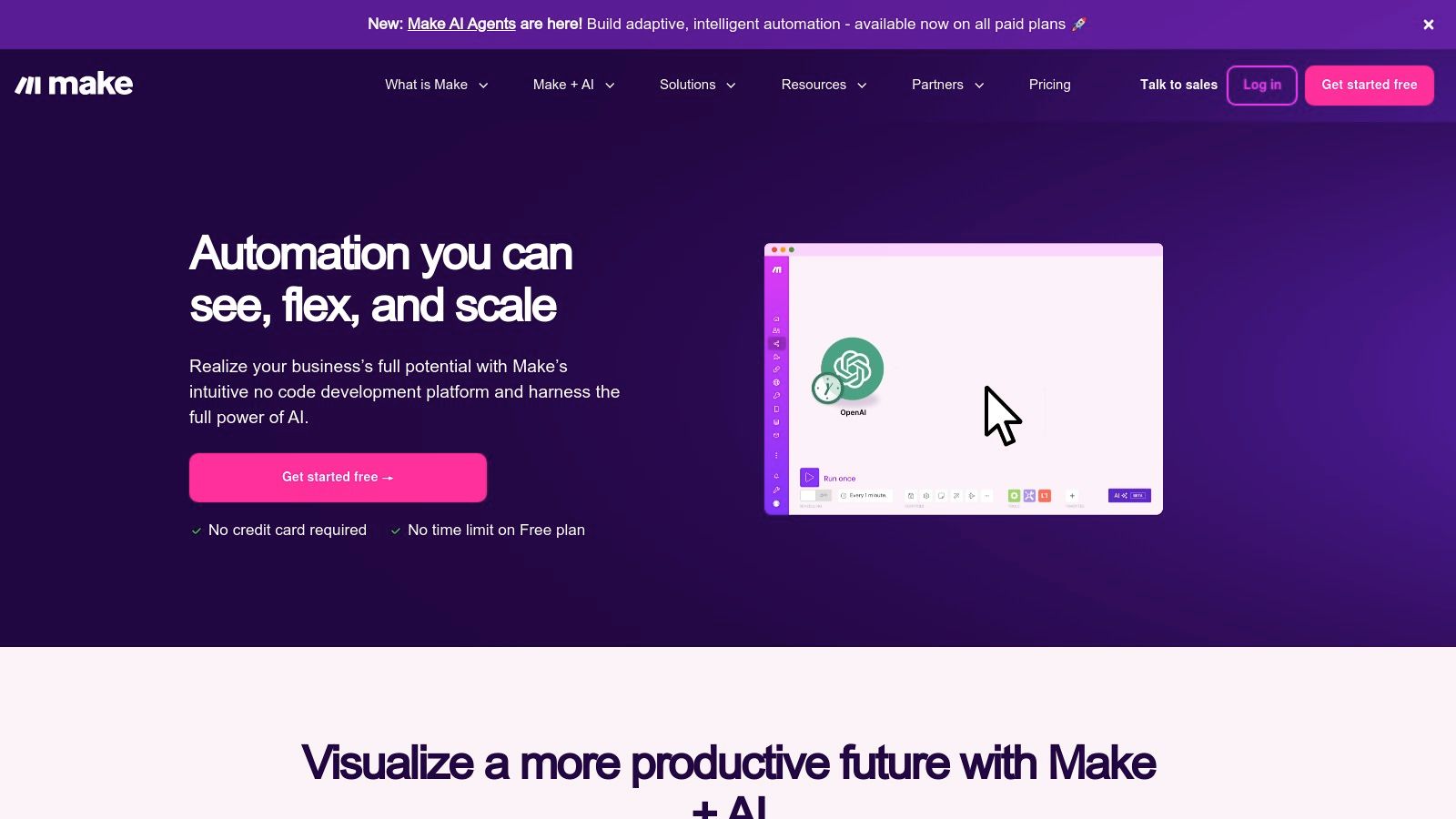
Make’s visual scenario builder is its core strength. Using a drag-and-drop interface, you can visually map out your integration workflows, defining how data flows between your ATS and other applications. Advanced routing and conditional logic allow you to create dynamic scenarios where different actions are triggered based on specific criteria. For example, you could automatically send a rejection email to candidates who don’t meet specific qualifications outlined in the ATS, while simultaneously notifying the hiring manager about potentially suitable candidates. This level of automation frees up your HR team to focus on more strategic tasks.
Data transformation capabilities within Make are another highlight. You can manipulate and reformat data as it passes through your integration workflows, ensuring compatibility between different systems. This is especially useful when integrating your ATS with other HR tools, CRM systems, or background check providers, which might have different data formatting requirements. Make also offers advanced error handling and retry mechanisms, ensuring your ATS integrations operate reliably and minimizing disruptions. Webhook support allows for real-time processing of ATS events, such as new applications or candidate updates, further enhancing the responsiveness and efficiency of your recruitment process.
Compared to simpler integration tools like Zapier, Make offers a more robust and flexible platform, albeit with a slightly steeper learning curve. While Zapier excels at connecting apps for basic tasks, Make’s strength lies in its ability to handle more complex integration scenarios with its sophisticated routing and data transformation features. This makes Make a better fit for companies, particularly SMEs and large enterprises in India, with more intricate ATS integration needs. For instance, large enterprises needing scalable background check processes would find Make’s ability to handle large data volumes and complex logic beneficial.
While Make’s pricing is competitive and offers generous data transfer limits, it’s essential to consider the learning curve associated with its advanced features. Implementing complex scenarios might require some dedicated time and effort to master the platform’s capabilities. Additionally, while Make has a growing community and marketplace for shared templates, its ecosystem is not as extensive as Zapier or Microsoft’s Power Automate. The platform could also benefit from enhanced enterprise-grade security and compliance features, which are crucial for organizations prioritizing data security, particularly within the HR function. Finally, customer support response times can sometimes be variable.
For startups and SMEs in India looking for efficient hiring solutions, Make offers a powerful way to integrate their ATS with other critical tools, automating key processes and improving overall recruitment efficiency. Its flexible pricing and generous data limits make it a cost-effective solution for growing businesses. Larger enterprises needing scalable background check processes or other complex ATS integrations can also leverage Make’s advanced features to streamline their workflows. HR professionals seeking deep integration with existing systems will appreciate the platform’s ability to handle complex scenarios and data transformations.
Getting started with Make involves creating a free account and exploring the available templates and connectors. The platform’s visual interface makes it relatively intuitive to build basic scenarios. For more advanced functionalities, Make offers comprehensive documentation and tutorials. The website, https://www.make.com, provides further details on pricing, features, and support.
8. Talend Data Integration
Talend Data Integration is a powerful, enterprise-grade platform designed for complex Applicant Tracking System (ATS) integrations. It goes beyond simple data transfer, offering robust Extract, Transform, Load (ETL) and Extract, Load, Transform (ELT) capabilities that address the unique challenges of HR data management. This includes candidate record deduplication, data cleansing, and ensuring data integrity across various recruitment systems and data warehouses. This makes it a compelling choice for organizations looking for a comprehensive solution for managing their ATS data, especially those dealing with large volumes of data or complex integration needs. For companies prioritizing data quality and robust processing, Talend offers a highly effective, albeit complex, solution.
Talend Data Integration stands out due to its advanced data quality and profiling tools, which are crucial for maintaining accurate and consistent candidate records. Imagine automatically identifying and merging duplicate candidate profiles, standardizing data formats, and cleansing inconsistencies, all within a streamlined workflow. This not only saves significant time and resources for HR teams but also ensures a higher level of data accuracy for better decision-making. The platform also supports both real-time and batch processing with scheduling and monitoring features, allowing for flexible data synchronization based on your specific requirements. Need to update your data warehouse nightly? Talend can handle it. Need near real-time synchronization for critical candidate information? That’s possible too. Furthermore, Talend boasts an extensive library of pre-built connectors for major ATS and HR systems, simplifying the integration process and reducing the need for custom coding. This is a significant advantage for organizations in India, where diverse HR tech solutions are prevalent. Learn more about Talend Data Integration in the staffing agency context.
One of the key strengths of Talend Data Integration is its focus on data governance and lineage tracking. In today’s regulatory environment, maintaining a clear audit trail and ensuring data compliance is paramount. Talend provides the tools to track data origin, transformations, and destinations, offering complete transparency and facilitating compliance with data privacy regulations. This is particularly important for organizations handling sensitive candidate data.
While Talend offers substantial benefits, it’s essential to be aware of its complexities. Implementing and managing Talend Data Integration often requires significant technical expertise. Organizations may need dedicated data engineers or integration specialists to fully leverage the platform’s capabilities. This complexity also extends to the user interface, which can be overwhelming for non-technical users. Furthermore, Talend’s robust features come at a cost. Its pricing structure is geared towards enterprise clients, potentially making it less accessible for smaller businesses or startups with limited budgets. Finally, organizations should anticipate longer implementation timelines compared to simpler integration tools due to the platform’s comprehensive nature.
For large enterprises in India with complex ATS integration needs and a focus on data quality, security, and compliance, Talend Data Integration offers a compelling solution. Its comprehensive features and powerful processing capabilities make it ideal for handling large datasets and complex transformations. However, smaller organizations or those lacking in-house technical expertise may find the platform’s complexity and cost prohibitive. If your organization requires a robust, scalable, and feature-rich ATS integration solution and you are prepared to invest in the necessary technical resources and budget, Talend Data Integration is worth serious consideration.
While specific pricing information for Talend Data Integration isn’t readily published, it typically involves a subscription-based model tailored to the specific needs and scale of the enterprise. Contacting Talend directly is recommended to obtain a customized quote. Technical requirements vary based on the chosen deployment method (cloud, on-premise, or hybrid) and the specific integrations required. However, generally, a robust IT infrastructure with adequate processing power, storage, and network bandwidth is necessary to support Talend’s operations. Organizations should be prepared to invest in the necessary hardware and software resources to ensure optimal performance.
ATS Integration Tools Comparison
| Solution | Core Features & Integrations | User Experience & Quality | Value & Pricing | Target Audience | Unique Selling Points |
|---|---|---|---|---|---|
| SpringVerify | Customizable background verification; API integration; Instant KYC on WhatsApp | ★★★★☆ Reliable, user-friendly UI; 24×7 support | 💰 Contact sales; tailored pricing | 👥 Startups to large enterprises in India | ✨ Instant WhatsApp KYC; PCI & ISO27001 certified; dedicated success managers |
| Zapier | 6000+ app integrations; visual workflow builder; multi-step automation | ★★★★☆ No-code, extensive templates | 💰 Free tier + scalable premium plans | 👥 HR teams needing easy ATS automation | ✨ Easy drag-drop; broad ATS support |
| Workato | Enterprise-grade security; AI recipe recommendations; custom API connectors | ★★★★☆ Robust, technical support available | 💰 Premium pricing, enterprise level | 👥 Large enterprises with complex IT stacks | ✨ SOC 2 compliance; advanced error handling |
| MuleSoft Anypoint Platform | API-led connectivity; pre-built ATS connectors; advanced API management | ★★★★ Complex, requires skilled users | 💰 High licensing and implementation cost | 👥 Large enterprise users & Salesforce ecosystem | ✨ Scalable, reusable integration assets |
| Microsoft Power Automate | Native MS 365 integration; 400+ connectors; RPA and AI Builder | ★★★★ User-friendly, mobile app | 💰 Included in MS 365 plans + premium options | 👥 MS ecosystem users, mid to large firms | ✨ Strong Office 365 synergy; approval workflows |
| Boomi AtomSphere | Cloud-native; MDM; real-time & batch mode; API monitoring | ★★★★ Professional, technical focus | 💰 Premium pricing, tailored solutions | 👥 Mid to large enterprises demanding data governance | ✨ Master Data Management; hybrid cloud deployment |
| Integromat (Make) | Visual scenario builder; error handling; webhook support | ★★★☆ Flexible, good debugging tools | 💰 Competitive pricing, generous limits | 👥 SMEs and tech-savvy users | ✨ Advanced conditional logic; team collaboration |
| Talend Data Integration | ETL/ELT for ATS data; data quality tools; governance & lineage | ★★★★ Technical, enterprise oriented | 💰 Enterprise pricing model | 👥 Large enterprises with complex data needs | ✨ Comprehensive data governance and profiling |
Choosing the Right ATS Integrations for Your Needs
Selecting the right ATS integrations is crucial for optimizing your recruitment process. From background verification solutions like SpringVerify to automation platforms like Zapier, Workato, Microsoft Power Automate, and Integromat (Make), and robust integration platforms like MuleSoft Anypoint Platform, Boomi AtomSphere, and Talend Data Integration, the options available cater to various needs and budgets. This article explored eight key ATS integrations, highlighting their functionalities and potential benefits. The most important takeaway is that the “best” integration depends entirely on your specific requirements.
For startups and SMEs in the IN region looking for efficient hiring solutions, a user-friendly and cost-effective integration might be the priority. Larger enterprises needing scalable background check processes should consider solutions offering high-volume processing and robust security. HR professionals seeking integration with existing systems need to evaluate compatibility and data flow carefully. Data security and compliance should be a primary concern for all organizations, regardless of size, making it essential to choose providers with strong security protocols.
Implementing ATS integrations requires careful planning. Consider factors like your current ATS system’s capabilities, the technical expertise available within your team, budget constraints, and the specific functionalities you aim to enhance. By carefully evaluating these factors and choosing the right ATS integrations, you can transform your hiring process into a streamlined, data-driven operation, saving time and resources while improving the overall candidate experience.
Streamline your hiring process and ensure a secure, efficient background check process with seamless ATS integrations. Learn how SpringVerify, a leading background verification platform, can integrate directly with your ATS to simplify candidate verification. Visit SpringVerify to explore our solutions and enhance your recruitment strategy today.


